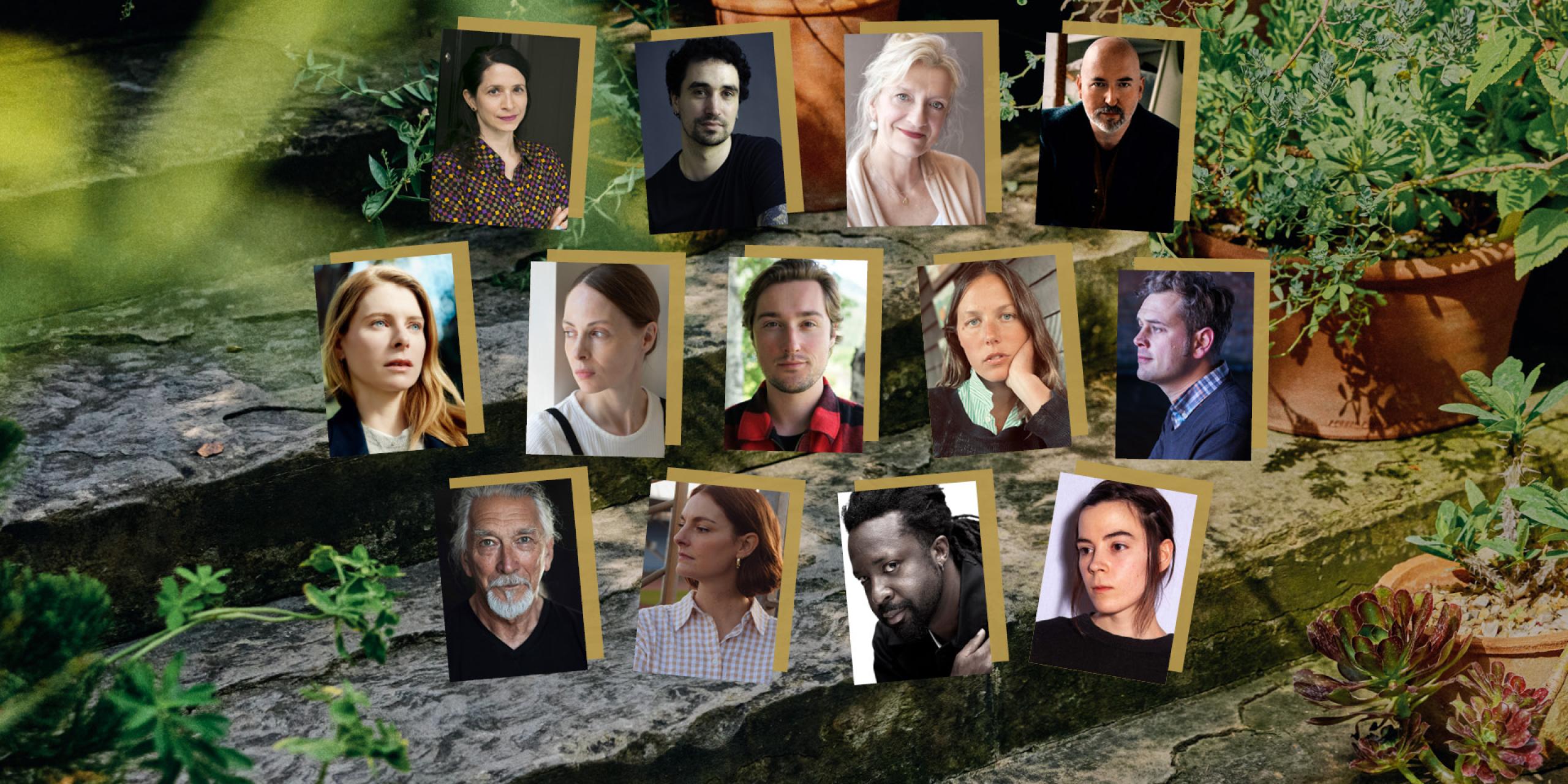

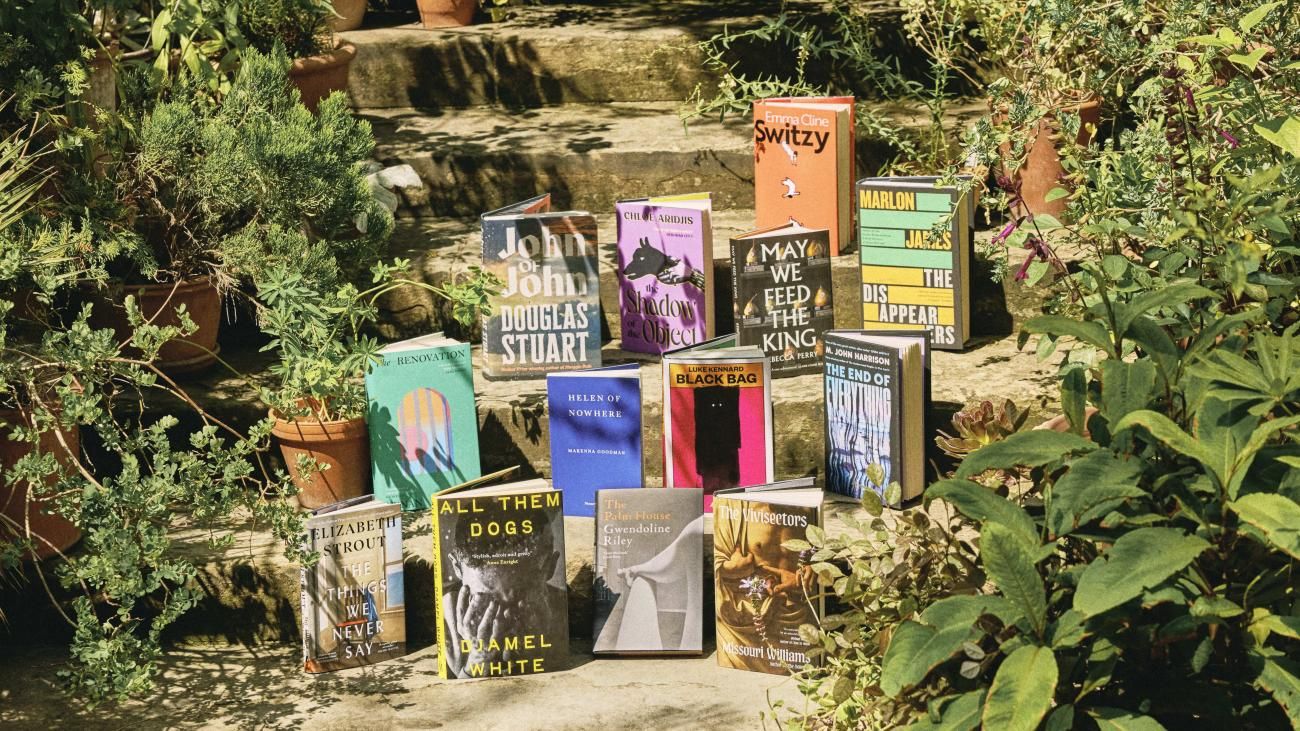
We asked the authors nominated for this year’s Booker Prize about the inspirations behind their longlisted works; their favourite books; and where they love to read, and write
- Written by
- Grace Sansom
- Published
Here, the Booker Prize 2026 authors reveal the books that set them on the path to becoming the storytellers they are today
Chloe Aridjis, author of The Shadow of the Object
‘A collection of Baudelaire’s prose poems. These 50 vignettes, mostly set in Paris, teemed with urban alienation and fraught encounters between the charmed and the damned. Baudelaire wrote them late in life, but as a teen I was thrilled and unnerved by how easily a scene, a reverie, could tip into anguish or something grotesque. The language might occasionally feel dated now, but the sentiments are still so modern. These prose poems always remind me to focus on the periphery rather than the well-trodden centre.’
Emma Cline, author of Switzy
‘It actually might have been the Betsy-Tacy books – the series follows Betsy from age five through her early twenties, and somewhere early on in there, Betsy decides to be a writer when she grows up. That was probably all it took for me to think that I wanted to be a writer, too.’
Makenna Goodman, author of Helen of Nowhere
‘Anything by Virginia Woolf when I was young and fancied myself writerly but didn’t really know what that meant, just that writing was a way someone could possibly get closer to understanding consciousness or madness, magic or hell.’
Writing was a way someone could possibly get closer to understanding consciousness or madness, magic or hell
Makenna Goodman, author of Helen of Nowhere
Marlon James, author of The Disappearers
‘I was eight years old, and the novel was Laura Ingalls Wilder’s Little House in the Big Woods. It was the first novel where I experienced what John Gardner called the ‘vivid continuous dream’, and it happened by accident. Up until that point, I found the idea of a book without pictures ridiculous, as in: why would anyone subject themselves to such a ghastly thing. Along came my library copy of Little House, but someone had torn out all the pictures. I read it anyway. With no pictures to limit my imagination, it was as if my head exploded. I still feel that way when I read a good book. The first thing I thought was ‘how can I do that?’
Kenan Orhan, author of The Renovation
‘It was probably Jim Shepard’s Like You’d Understand Anyway that finally convinced me to abandon my dreams of being a history professor and pursue writing fiction. He spans such incredible ranges of character, of time, of space, of action. Reading that collection, I found myself wanting to emulate it. I’m still mesmerised by his narratives, and I still hope to write a short story as good as his one day.’
Rebecca Perry, author of May We Feed the King
‘At the risk of cliché, I never made a decision that I wanted to become a writer – I’ve just written for as long as I can remember. To answer an adjacent question, Percival Everett’s The Trees was the book that opened my mind to the possibility that I might be able to write a novel. It was like a kind of magic – that book and May We Feed the King have almost nothing in common, but I doubt my book would exist without it. And I always credit Federico García Lorca with being the writer that opened my eyes to the capacities of language.’
It was as if my head exploded. I still feel that way when I read a good book. The first thing I thought was ‘how can I do that?’
Marlon James, author of The Disappearers
Djamel White, author of All Them Dogs
‘There isn’t one that comes to mind. It could very well be The Witches, or Fantastic Mr. Fox, or any number of the books that my teacher had read to me when I was seven years old. I remember that we had a few creative writing exercises in that classroom that I took to with a passion, so really my love of reading and my love of writing were born together.’
Elizabeth Strout, author of The Things We Never Say
‘The book that made me want to be a writer may have been The Catcher in the Rye, which my mother gave me soon after To Kill a Mockingbird. I thought – I want to do this! To write things like this! (Even though from around the age of four I had known I would be a writer because my mother had given me notebooks and told me to write down what I did that day. So as soon as I could form sentences, I understood I was going to be a writer.)’
M. John Harrison, author of The End of Everything
‘I was offered Autobiography of a Super-Tramp by W.H. Davies as a secondary school text. Hobo life. Riding the rails. Dirt, hunger, weather, adventure, amputated limbs. At 13, what more can you ask? A perfect entry to what would become an obsession with dirtbag rock-climbing and led to the sad, domesticated, UK version of that experience I presented in Climbers. (And see also ‘The Water Rat’s Tale’ in The Wind in the Willows.)’
I thought – I want to do this! To write things like this!
Elizabeth Strout, author of The Things We Never Say
Douglas Stuart, author of John of John
‘The first novel I ever read was Jude the Obscure by Thomas Hardy. I was 17 and the only kid in my English class. My teachers were incredibly patient, because before I could read any novel, they had to teach me how to focus, how to quiet myself and sit with a book. This novel about rural life in 1880s Wessex; a story of fate, class, and the struggle to build a better life, spoke to me on such a profound level. Jude began my love of reading and it gave me the dream that maybe someday I would grow up and write something that might endure like that.’
Luke Kennard, author of Black Bag
‘I think it might have been Iain Banks’s The Bridge – the one with the car accident where the narrator spends the whole novel in a coma vision of a city state in the shape of a giant bridge (it owes a bit to Alisdair Gray’s Lanark, which I read much later). Something in that detailed creation of a world that’s simultaneously magical and mind-numbingly bureaucratic – a fantasy that sabotages itself! For a while, as a teenager, everything I wrote was a rip-off of The Bridge.’
Gwendoline Riley, author of The Palm House
‘That wasn’t how it worked for me. It was a feeling of apprehension – in several senses of the word – that indicated that I had to write novels.’
Missouri Williams, author of The Vivisectors
‘There have been so many novels that have made me realise just how rich and masterful the form can be. Reading Dostoevsky’s The Idiot as a teenager astonished me. I remember that after I finished, the world suddenly seemed so full of possibility; everything had a strange and hidden meaning, a secret significance.’



Features


- Reading guides
Reading guide: The End of Everything by M. John Harrison

- Reading guides
Reading guide: John of John by Douglas Stuart

- Reading guides
Reading guide: May We Feed the King by Rebecca Perry

- Reading guides
Reading guide: The Things We Never Say by Elizabeth Strout


- Book recommendations
The Booker Prize 2026 shortlist: what our judges said

- Reading guides
Reading guide: Black Bag by Luke Kennard

- Reading guides
Reading guide: The Disappearers by Marlon James

- Book recommendations