

Oh William!
by Elizabeth Strout
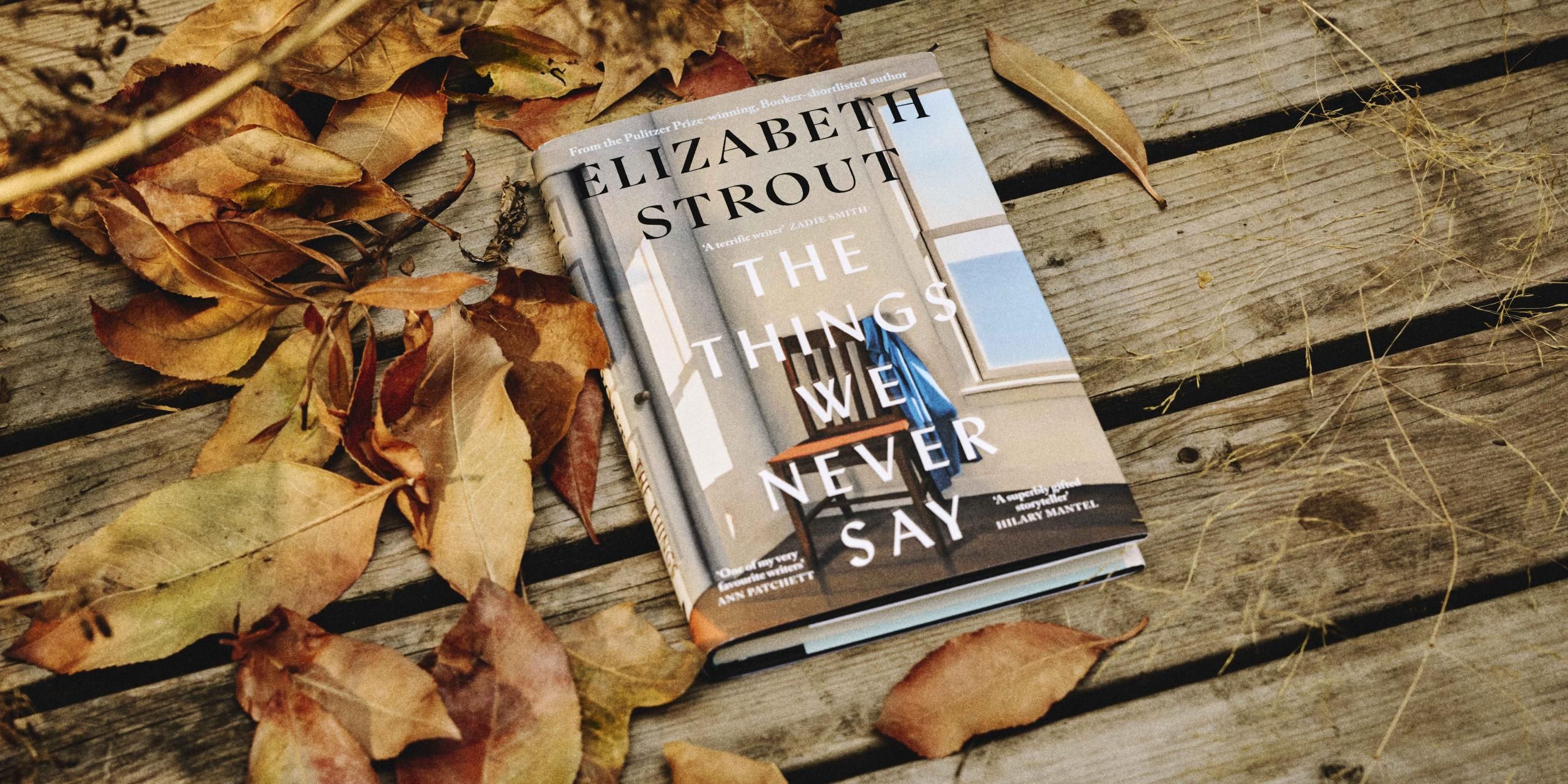
In her Booker Prize 2026 shortlisted novel, Elizabeth Strout offers a devastating look at the dangerous cracks in family life and in the contemporary world at large
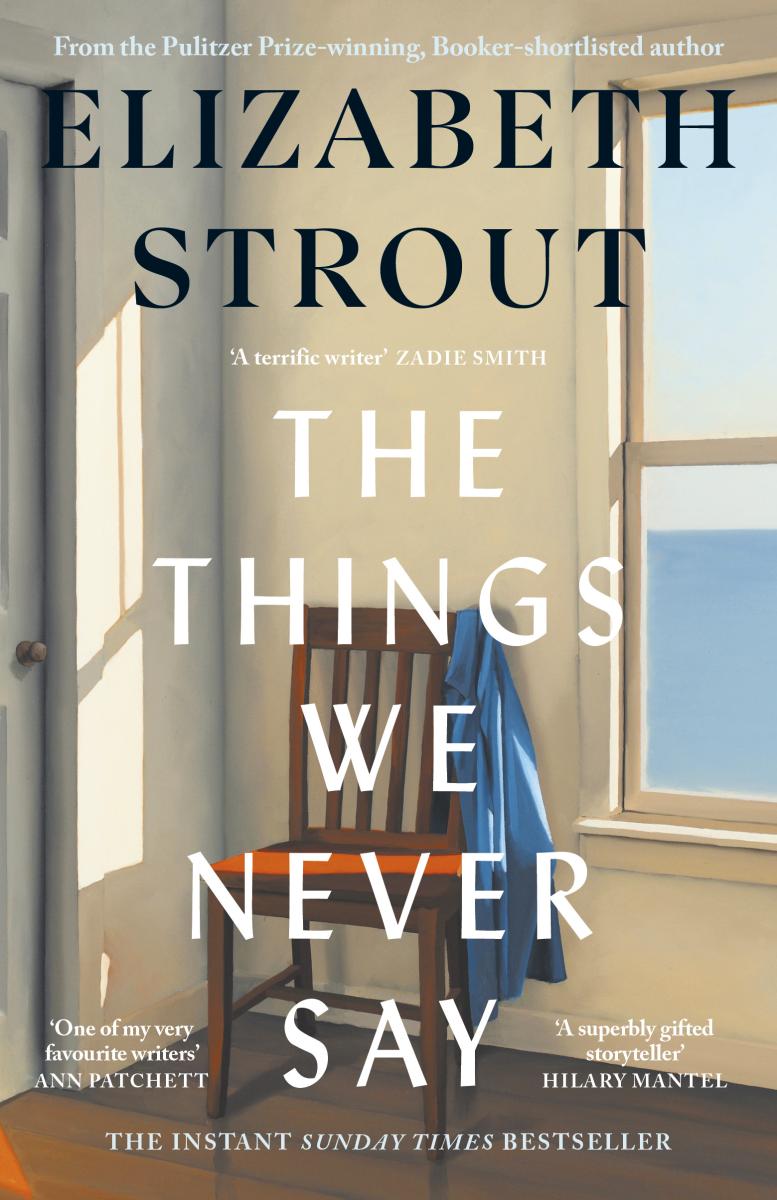
Whether you’re new to The Things We Never Say or have read it and would like to explore it more deeply, here is our comprehensive guide, featuring insights from critics, our judges, and the book’s author, as well as discussion points and suggestions for further reading.
Artie Dam is a man with a secret. He spends his days teaching history to high schoolers, expanding their young minds, correcting their casual cruelties, and lending a kind word to those who need it most. He goes to holiday parties with his wife of three decades, makes small talk with neighbours, and, on weekends, takes his sailboat out on the beautiful Massachusetts Bay. He is, by all appearances, present and alive. But inside, Artie is plagued by feelings of isolation. He looks out at a world gone mad – at himself and the people around him – and turns a question over and over in his mind: how is it that we know so little about one another, even those closest to us?
And then, one day, Artie learns that life has been keeping a secret from him, one that threatens to upend his entire world. Once he learns it, he is forced to chart a new course, to reconsider the relationships he holds most dear – and to make peace with the mysteries at the heart of our existence.
With exquisite prose and profound insight, Elizabeth Strout captures the way grief reverberates through decades, the comfort found in deep friendships and the freedom that comes when we break free of our secrets.
The Things We Never Say was shortlisted for the Booker Prize 2026.
Artie Dam
A 57-year-old history teacher at a local high school. Despite an outwardly happy life and affable persona, Artie is secretly struggling. He thinks very little of himself. He is disconnected from his wife. Evie. Outside his home, he feels as if the whole post-pandemic world is changing in ways that he cannot understand.
Evie Dam
Artie’s wife. She is from a different class to Artie – he feels that she has ‘married down’. She retrains as a family therapist and is always buried in her work. She is easily frustrated by Artie, finding him considerate but irritating.
Rob Dam
Artie and Evie’s son. He was in a car accident 10 years before the book begins. He survived but his girlfriend was killed. He has been quiet and withdrawn ever since.
Elizabeth Strout has been nominated for the Booker Prize three times.
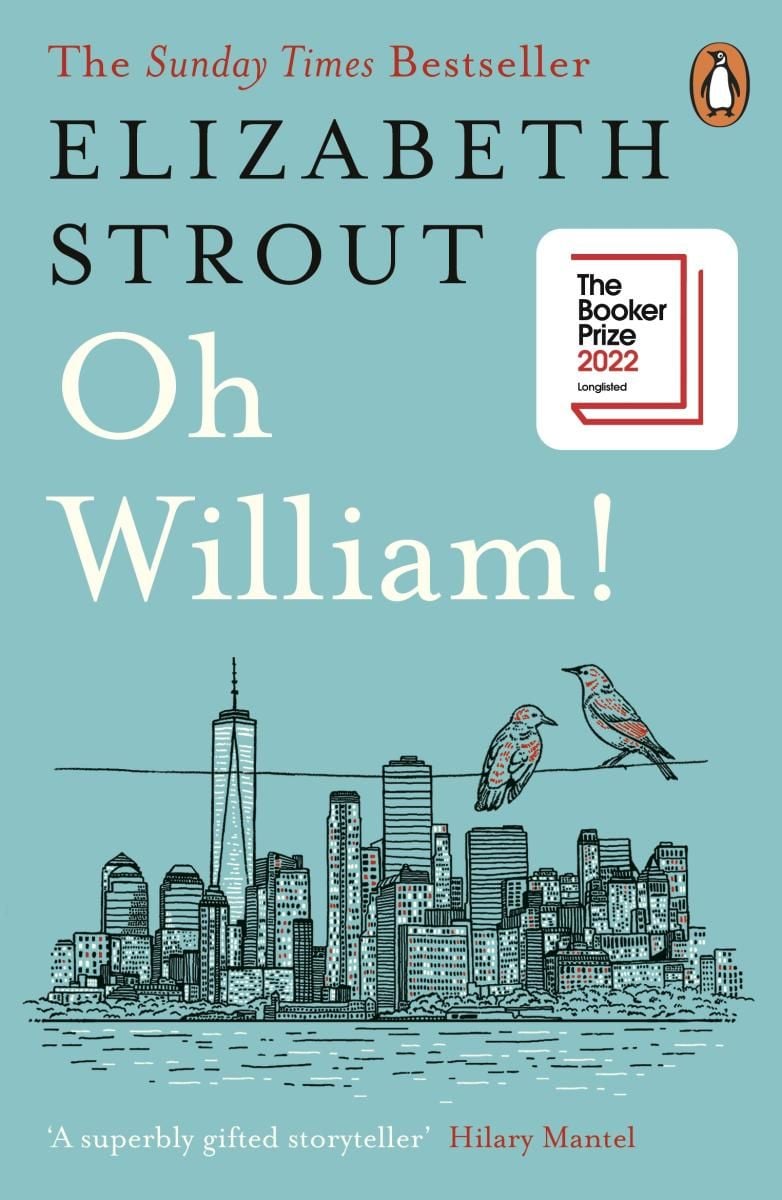
She was longlisted in 2016 for My Name Is Lucy Barton and shortlisted in 2022 for Oh William! Her other books include Tell Me Everything, Anything is Possible, Amy and Isabelle, Abide With Me, The Burgess Boys, Olive Kitteridge, and Olive, Again. She won the Pulitzer Prize in 2009 for Olive Kitteridge, which was made into an Emmy-winning television mini-series. She has also been nominated for the PEN/Faulkner Award, and the Orange Prize. She lives in Maine.
Elizabeth Strout
© Ali Smith/Guardian/eyevine
Adam Begley, The Atlantic
‘They aren’t exotic, her characters, but they’re quirky—some cantankerous, some bafflingly passive, all convincingly real. Thinking about them, I keep coming back to the bedrock of her work, what she has called “the singularity and mystery of each person.” She shows us how strange we are, and how similar (an insight verging on homily but thankfully sugar-free). She’s not a minimalist, but Elizabeth Strout does more with less than any writer I can think of.’
Blake Morrison, London Review of Books
‘The short sections of Strout’s fiction are versatile in accommodating different stories and points of view. Here she accommodates herself, the author as sage. No longer self-effacing, she affects to be all-seeing. And what she sees is how little empathy and self-knowledge humans have.’
Maggie Shipstead, The New York Times
‘A loss of innocence is possible at any age, but the pain of disillusionment can have a silver lining: the opportunity to live with a deeper understanding of reality. Artie Dam, the 57-year-old protagonist of Elizabeth Strout’s new novel, The Things We Never Say, is depressed yet outwardly genial, blind to a secret buried in his own past — until he isn’t.’
Rohan Maitzen, Times Literary Supplement
‘“I wonder why people never say anything real”, the history teacher Artie Dam muses to his wife, Evie, early in Elizabeth Strout’s uncharacteristically dispiriting new novel. Not that Strout’s fiction is typically buoyant, but hints of underlying tenderness do usually warm her stark narratives and soften her spartan prose. Any such glimmers in The Things We Never Say are faint against the encroaching darkness: the novel is sombre, even bleak, both because Artie is having a rough time and because, as he observes, “his country was committing suicide”.’
‘My inspiration for The Things We Never Say came from two rather odd places. The first was an old obituary I saw from decades ago. My friend in upstate New York sent me a page of them, and there was one man who had the last name Damm. (I dropped one of the m’s for my character’s last name.) The man in the obituary haunted me because he looked so entirely ordinary and pleasant. He wore big wire-framed glasses and just had an exceptionally kind look to his face.
‘The second part of the inspiration came from a brief conversation with a man I know in Maine who told me that one day he and his father were riding in a boat off the coast of Massachusetts, and they saw a man’s head in the water. They rode up to him and pulled him out and the fellow telling me the story said that a few nights later his father had called the man and taken him for a drink. From these two images sprang forth the story of Artie Dam.’
Elizabeth Strout in an interview with the Booker Prizes.
‘Set in the contemporary United States, Strout’s novel focuses on Artie Dam, a 50-something high-school history teacher in a small coastal town with decent friends and wholesome hobbies. The Things We Never Say quietly unpicks all that, to show that the ordinary is not quite as ordinary as it might seem. Strout’s prose is about as far from a rant as you could imagine, brilliantly understated and all the more powerful for that. It’s a devastating look at the dangerous cracks in family life and in the contemporary world at large.’
The Booker Prize 2026 judges – Raymond Antrobus, Patricia Lockwood, Rebecca Liu, Jarvis Cocker and Mary Beard – with the longlisted books
© Neo Gilder for Booker Prize Foundation
Drawing on the novel’s title, Strout writes about all that remains unsaid in everyday lives. Why do you think she chooses to give so much weight to these silences? And why do many of the characters’ thoughts and desires remain unspoken?
Artie is a much-loved teacher at a high school, yet he struggles to communicate honestly in his own life. Why does he seem able to connect with his students in ways that he cannot always connect with those closest to him?
Suicide is a recurring theme, and after a boating accident, Artie reflects: ‘I did not want to die’, yet immediately counters that he ‘just did not want to live.’ (Page 22). How do you interpret this distinction, and what does it reveal about Artie’s state of mind?
Water also reoccurs throughout the novel, from Artie’s love of sailing to his near-death experience at sea. What do you think the sea represents for Artie? How does Strout use water to reflect his inner life?
The 2024 US presidential election casts a shadow over Artie’s life and relationship, and his private struggles are set against a backdrop of intense political division. How does Strout connect the turmoil in Artie’s personal life with the wider tensions in American society?
Strout is renowned for writing sparely about ordinary moments that many readers will recognise from their own lives. In The Things We Never Say, what makes these everyday moments emotionally significant, and how does she use them to reveal something deeper about her characters?
The characters in The Things We Never Say struggle to confront what they regret. What roles do you think guilt and remorse play in the novel?
Secrets and secrecy also run throughout the novel, raising the question of how well we can ever truly know those closest to us. As readers, we discover things about the characters that remain hidden from one another. Discuss how these revelations shaped your understanding of the characters – did your sympathies shift as you learned more about their lives?
Strout suffuses the story with the ever-present past, showing how memories continue to shape the future. How important are the characters’ memories in understanding their present lives? Can we trust their versions of the past?
The Booker Prize 2026 judges said the book was an example of a new genre: ‘radical normalcy’. After reading the book, do you agree with their sentiment?
London Review of Books: Swimmy Head
Time: How Elizabeth Strout Gets Inside People’s Minds
Books and Bits Substack: INTERVIEW: Elizabeth Strout
The Atlantic: The Secret of Elizabeth Strout’s Appeal
by Elizabeth Strout
by Elizabeth Strout
by Anne Tyler
by Mary Lawson
by Claire Keegan
by Julian Barnes (prize winner)