With exquisite prose and profound insight, Elizabeth Strout captures the way grief reverberates through decades, the comfort found in deep friendships and the freedom that comes when we break free of our secrets
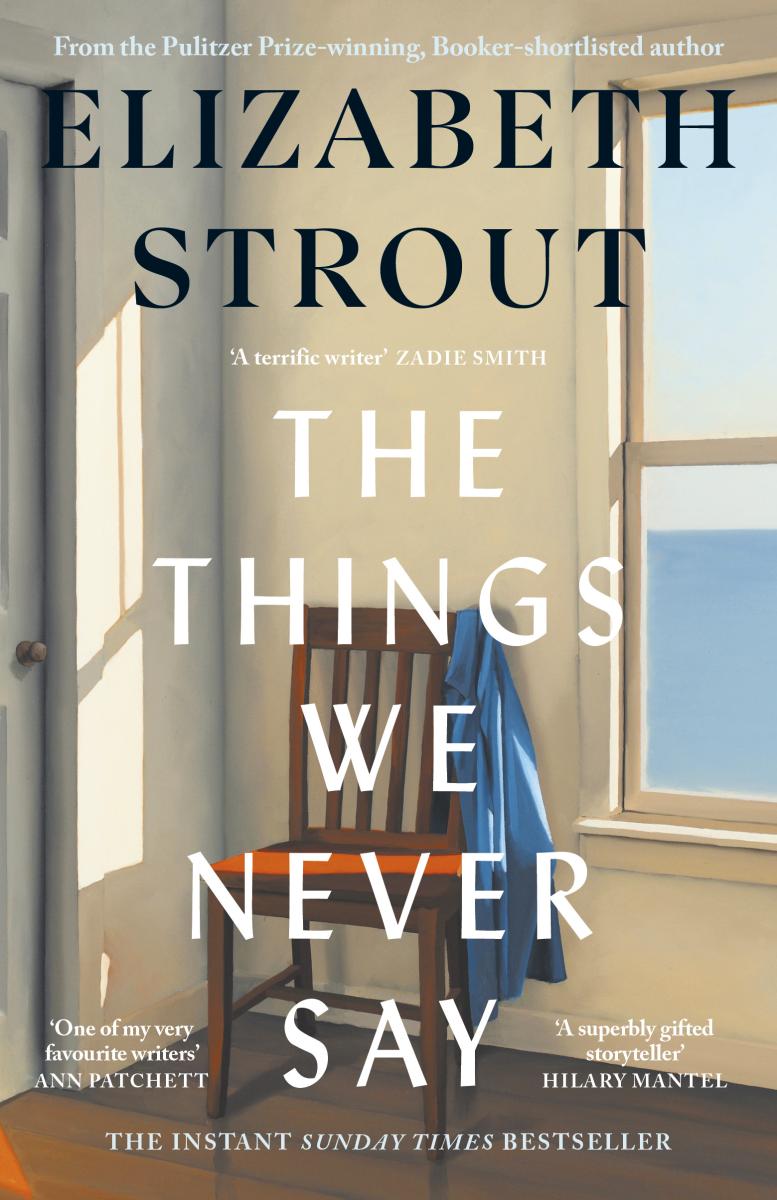
The Things We Never Say
Written by Elizabeth Strout
- Shortlisted
- The Booker Prize 2026
- Published by Viking
Buy the book
With exquisite prose and profound insight, Elizabeth Strout captures the way grief reverberates through decades, the comfort found in deep friendships and the freedom that comes when we break free of our secrets
Artie Dam is a man with a secret. He spends his days teaching history to high schoolers, expanding their young minds, correcting their casual cruelties, and lending a kind word to those who need it most. He goes to holiday parties with his wife of three decades, makes small talk with neighbours, and, on weekends, takes his sailboat out on the beautiful Massachusetts Bay. He is, by all appearances, present and alive. But inside, Artie is plagued by feelings of isolation. He looks out at a world gone mad – at himself and the people around him – and turns a question over and over in his mind: how is it that we know so little about one another, even those closest to us?
And then, one day, Artie learns that life has been keeping a secret from him, one that threatens to upend his entire world. Once he learns it, he is forced to chart a new course, to reconsider the relationships he holds most dear – and to make peace with the mysteries at the heart of our existence.
The Things We Never Say was shortlisted for the Booker Prize 2026.

Elizabeth Strout
Elizabeth Strout has been nominated for the Booker Prize three times
More about Elizabeth Strout Elizabeth Strout on The Things We Never Say
‘My inspiration for The Things We Never Say came from two rather odd places. The first was an old obituary I saw from decades ago. My friend in upstate New York sent me a page of them, and there was one man who had the last name Damm. (I dropped one of the m’s for my character’s last name.) The man in the obituary haunted me because he looked so entirely ordinary and pleasant. He wore big wire-framed glasses and just had an exceptionally kind look to his face.
The second part of the inspiration came from a brief conversation with a man I know in Maine who told me that one day he and his father were riding in a boat off the coast of Massachusetts, and they saw a man’s head in the water. They rode up to him and pulled him out and the fellow telling me the story said that a few nights later his father had called the man and taken him for a drink. From these two images sprang forth the story of Artie Dam.’
Read the full interview here.
‘A devastating look at the dangerous cracks in family life and in the contemporary world at large. Strout’s prose is brilliantly understated and all the more powerful for that’
The Booker Prize 2026 judges
What the judges said
‘Set in the contemporary United States, Strout’s novel focuses on Artie Dam, a 50-something high-school history teacher in a small coastal town with decent friends and wholesome hobbies. The Things We Never Say quietly unpicks all that, to show that the ordinary is not quite as ordinary as it might seem. Strout’s prose is about as far from a rant as you could imagine, brilliantly understated and all the more powerful for that. It’s a devastating look at the dangerous cracks in family life and in the contemporary world at large.’
What the critics said
Elizabeth Lowry, The Telegraph
‘The real moral engine of the novel lies in its reckoning with the characters’ pervasive sense of shame. Artie’s shoplifting is a form of shame; the deceptions practised by almost everyone in the book stem from shame. Strout’s tenderness towards human frailty is immense. Artie concludes that “to say anything real was to say things that nobody wanted to know”. Once he learns what Evie has withheld, he realises not only that he does not know his wife, but that he “had somehow missed this fact about every single person: that they held within themselves a vast, unknowable universe”. Our irreducible loneliness is summed up near the end of this lucidly bleak novel in a single sentence: “It was a private thing, to be alive.” Private and, ultimately, unsayable.’
Claire Adam, the Guardian
‘Readers will delight in the discovery of this new fictional world around Artie Dam, and the possibilities that lie ahead. What of Evie, and the “deep and sudden pockets of grief” she has felt since Rob’s accident? What of Rob himself, and the “unbearable shame” he lives with? What of the English teacher, Anne Merrill, who is “a little bit in love” with Artie? There is so much here to explore, so many endless human mysteries. Let’s hope that this fine author continues steadily along her path, delivering unto her loyal readers story upon story, gift upon gift.’
Adam Begley, The Atlantic
‘How does she do it? Not just the neat trick of beguiling highbrow critics while at the same time pleasing millions of readers who don’t care about literary bona fides. The real feat is harpooning the reader artlessly (or so it seems), with language as plain as a Congregational church, a paucity of dramatic incident, and a cast of characters no more exotic than your neighbors. They aren’t exotic, her characters, but they’re quirky—some cantankerous, some bafflingly passive, all convincingly real. Thinking about them, I keep coming back to the bedrock of her work, what she has called “the singularity and mystery of each person.” She shows us how strange we are, and how similar (an insight verging on homily but thankfully sugar-free). She’s not a minimalist, but Elizabeth Strout does more with less than any writer I can think of.’
Diane Evans, Financial Times
‘This is a profound, resplendent novel that stares our present moment in the face while throwing a lifeboat to cling to in the storm. And Artie Dam is someone you may never be able to forget, not least for his white socks and how they irritate his wife — these are the things we remember, which Strout, a titan of the most intricate storytelling, understands well.’


Other nominated books by Elizabeth Strout
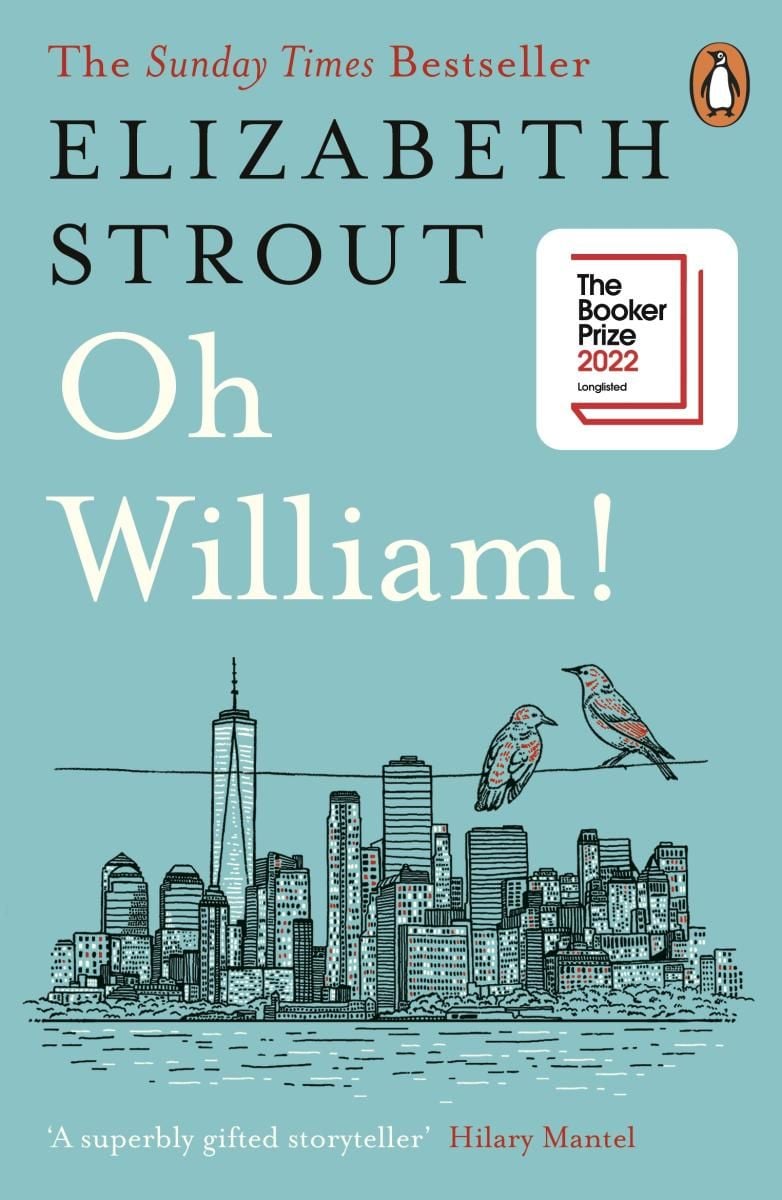
Bestselling author Elizabeth Strout returns to her beloved heroine Lucy Barton in a luminous novel about love, loss, and the family secrets that can erupt and bewilder us at any time
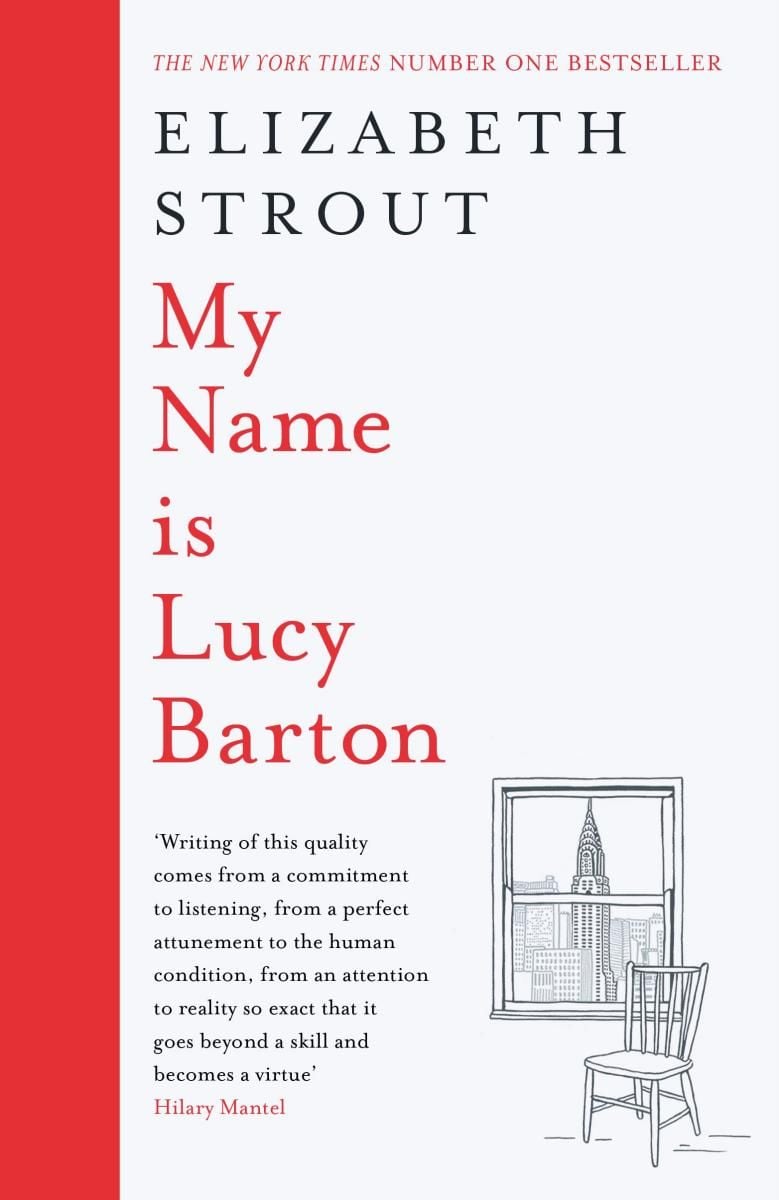
Elizabeth Strout’s moving story shows how a simple hospital visit illuminates the tender relationship between an estranged mother and daughter
Features

- Reading guides
Reading guide: The Things We Never Say by Elizabeth Strout


- Book recommendations
The Booker Prize 2026 shortlist: what our judges said


- Book recommendations