
We’re a charity partner of ethical online bookshop BookKind. You can save over £30 when you buy all six Booker Prize-shortlisted books for the special price of £79 from BookKind. Receive fast and free UK shipping; international shipping rates apply. Plus, 10% of the value of your purchase will be donated to the Booker Prize Foundation, helping fund our work to support readers and writers of the future.
The Booker Prize 2026 shortlist: what our judges said

The Booker Prize 2026 shortlist: what our judges said
- Published
Wondering which of the six Booker Prize 2026 shortlisted novels to read first? We asked our judges to tell us what they loved about the books – and why you’ll love them too
Buy the book
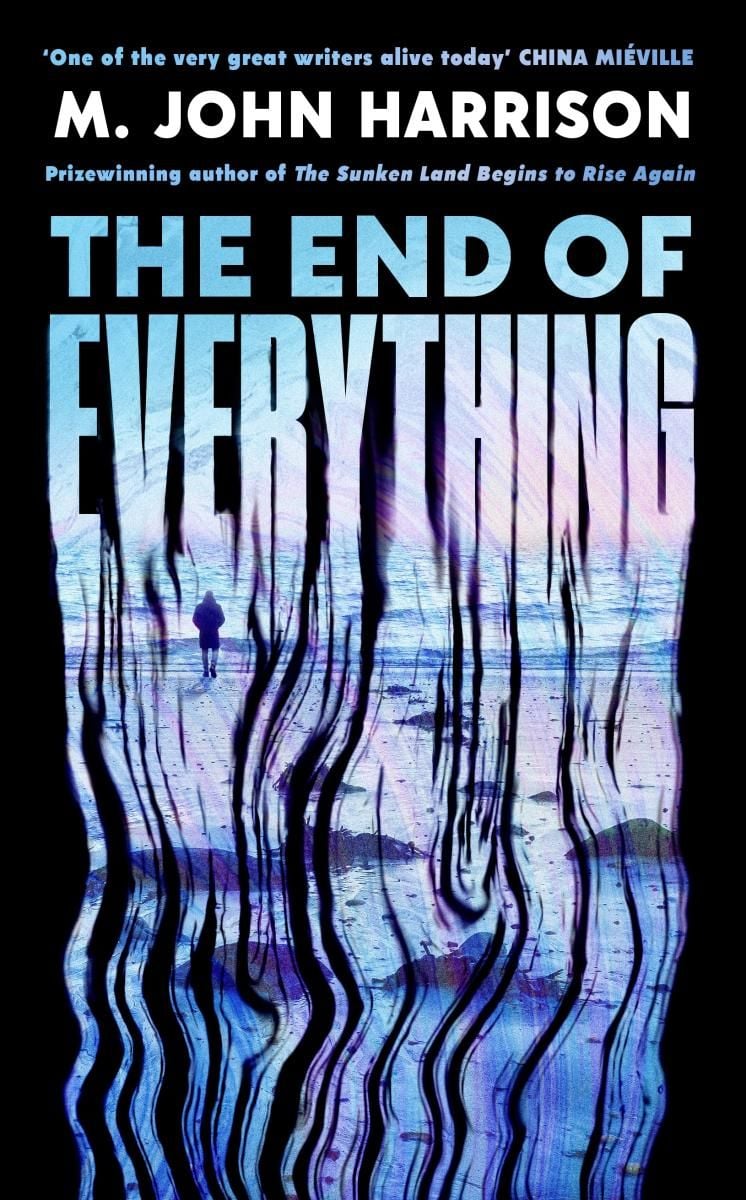
The End of Everything by M. John Harrison
How would you summarise this book in a sentence to encourage readers to pick it up?
The End of Everything can be read as a thriller, a mystery, a satire, a dystopia, a road novel, a work of realism; whatever the reader is looking for can be found here, albeit told at a slant and with a twist. The book offers something for everyone!
Is there something unique about this book, something that you haven’t encountered in fiction before?
The use of overheard dialogue – bits of flotsam and jetsam that are scavenged from the environment of the book and then repurposed – struck us as being unique, a high-level form of assemblage or decoupage that complements the makeshift nature of this unsettling universe.
What do you think it is about this book that readers will not only admire, but really love?
The humour, which is subtle, surreal, and sly. The landscape may be bleak, the catastrophe may be immersive, yet there still were moments we found ourselves laughing aloud.
Can you tell us about any particular characters that readers might connect with, and why?
A particular kind of reader who may wonder why we have structured civilization the way we have, why we speak the way we do, wear the things we wear, may find themself identifying with the ‘artefact’, who in a very short period of time must learn to credibly impersonate a human being.
Although it’s a work of fiction, is there anything about it that’s especially relevant to issues we’re confronting in today’s world?
The End of Everything is a panoramic view of the modern moment. It addresses everything from the climate crisis to the aftershocks of Brexit to the creep of artificial intelligence, but it does so through the story of one poignant human relationship.
There is a sharp, staccato explosion of violence early on in the book that we won’t spoil for readers, but which is so unexpected that you suddenly realise that anything can happen in this universe. GIVE MARNIE MORE WEAPONS!
Buy the book
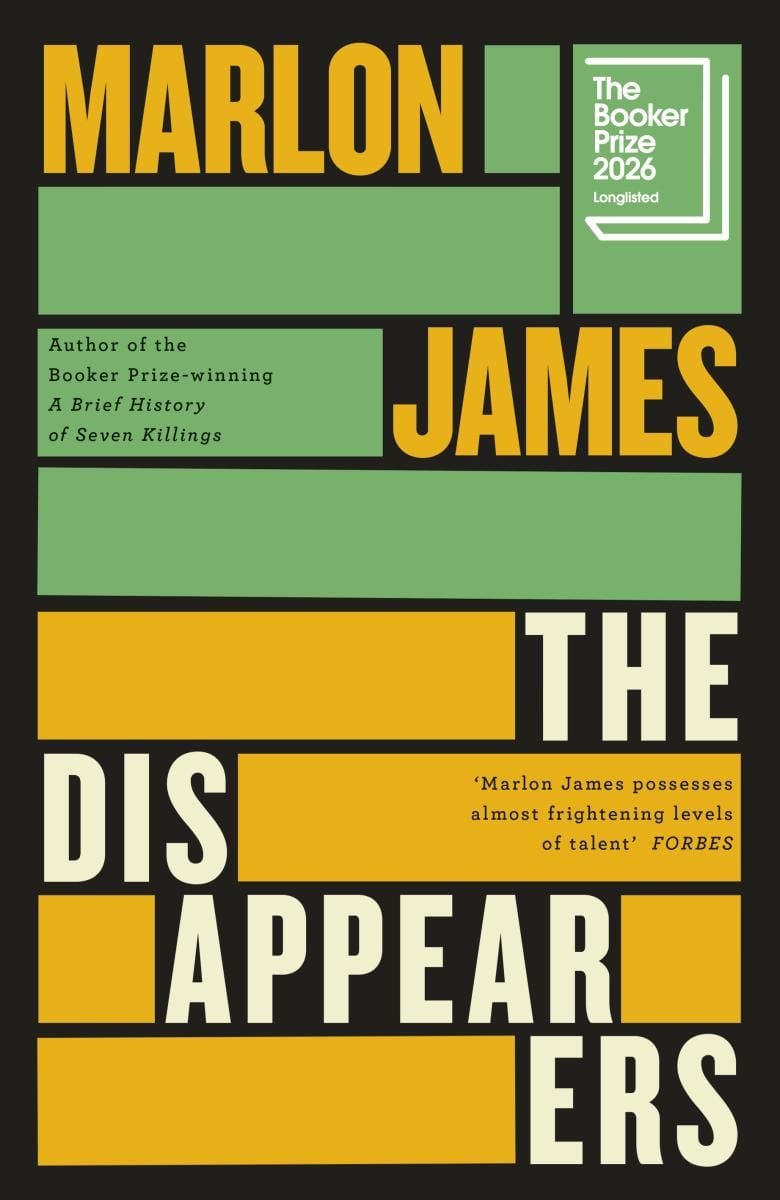
The Disappearers by Marlon James
How would you summarise this book in a sentence to encourage readers to pick it up?
The Disappearers is a queer, voice-led Jamaican epic from one of the most impactful and celebrated Caribbean novelists since V.S Naipaul and Jean Rhys.
Is there something unique about this book, something that you haven’t encountered in fiction before?
The novel offers a hard, bruising look at the pains and pleasures of eight gay Jamaican men in the late eighties and early nineties, a period James twins deliberately with two historical timelines – the peak of the AIDS epidemic (‘one long set of disappearing acts’) and the golden era of Jamaican reggae and dancehall, when some of the biggest hits carried openly, bombastically homophobic lyrics (‘the time of Boom Bye Bye’). Within this realist mode, James stitches together a fictionalised narrative that holds, arguably, more truth than any work of nonfiction could manage inside the same setting.
What do you think it is about this book that readers will not only admire, but really love?
Readers attuned to the uptown/downtown divide in Kingston, Jamaica, will recognise the island and the era immediately, and will love how that specificity never tips into travelogue. Readers will love the shifting register of the dialogue and poetic phrasings often pierced through with sharp double-edged humour. Also, readers of classic literary fiction will find pleasure in the novel’s dense web of allusions – Anthony Trollope and Charles Dickens are both occasionally evoked and needled throughout - while readers steeped in queer literary history will delight in characters who argue, in real time, over literary philosophy, politics, and the canon, summoning a litany of figures like Oscar Wilde, Edmund White, John Rechy, W.H. Auden, as well as grunge and rock musicians, not as decoration but as live ammunition in the characters’ own arguments about how to live and survive in a hellish homophobic world, seemingly bent on their destruction.
Can you tell us about any particular characters that readers might connect with, and why?
Edmond ‘Eddy’ Porteous, glimpsed through his own teenage diary entries, is the youngest of the novel’s eight protagonists, and likely the one readers will feel most protective of from the start. That instinct only deepens as the novel goes on: his obnoxiousness, which reads at first as simple adolescent bravado, gradually reveals itself as a front for real vulnerability underneath. By the novel’s conclusion, it’s this vulnerability, glimpsed but never fully resolved, that readers are most likely to find themselves haunted by.
Is there one specific moment in the book that has stuck in your mind and, if so, why?
When a singer is kidnapped, tied up and confronted with his role in the homophobic attack that centres the novel. The violence becomes more explicitly literal and figurative, (as does the sex in a scene involving a certain ‘conflicted lover’), the conclusion of these scenes lingers as readers digest the novels resolution with the heat of ‘shock and sorrow’ in a way that only an immersive, well-rendered (brutal and tender) novel can.
Although it’s a work of fiction, is there anything about it that’s especially relevant to issues we’re confronting in today’s world?
The chunky brick size book could serve as a missile in the ‘anti-woke’ culture war; its size and heft alone can be justified by the historical, global oppression and erasure of queer existence.
Buy the book
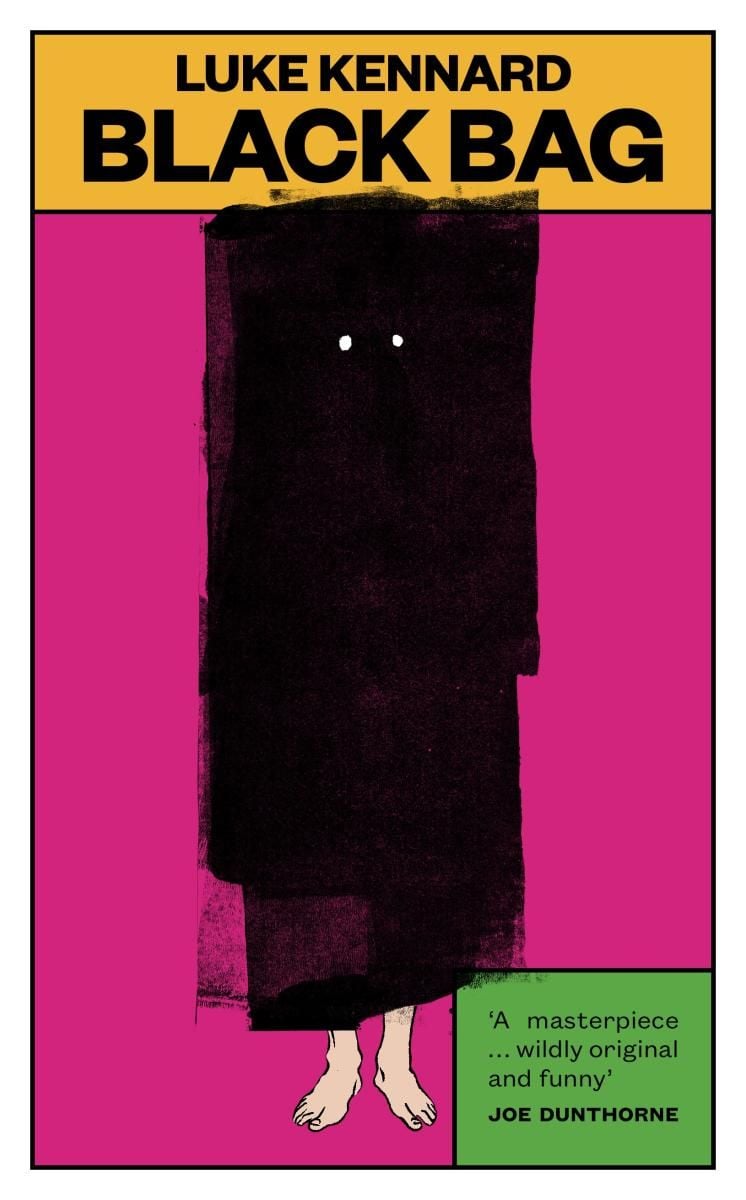
Black Bag by Luke Kennard
How would you summarise this book in a sentence to encourage readers to pick it up?
In a wonderfully quirky campus novel, a struggling actor (who usually doesn’t rise beyond parts in themed murder-mystery dinner parties) takes a job of dressing up in a large black leather bag for a psychology experiment – and in the process meets a professor who wants their relationship to be more than academic.
Is there something unique about this book, something that you haven’t encountered in fiction before?
You don’t often find a comic novel that makes you laugh out loud on second reading. And you don’t often find a zany plot that manages to sustain its zaniness right through to the end.
What do you think it is about this book that readers will not only admire, but really love?
The whole scenario is based on an actual 1960s experiment – designed to discover whether other students would eventually adjust to, even befriend, a man in a black bag sharing their classes. But the most memorable thing about the novel is the way it combines that absurd experiment with a moving story about human frailty, passion, confusion and identity.
Can you tell us about any particular characters that readers might connect with, and why?
There’s something for everyone here. Not just the uncertainties and anxieties of the hapless Black Bag himself, but the ambitions of his hi-tech friend who is trying to monetise Black Bag’s image and the passions of the post-humanist professor – who can think of nothing more fittingly post-humanist than a relationship with a Black Bag whose human face she never sees.
Although it’s a work of fiction, is there anything about it that’s especially relevant to issues we’re confronting in today’s world?
This is the best sort of comedy, wittily and sharply exposing all kinds of contemporary debates. What does masculinity look like from inside a leather bag? What is sex without human identity? Can everything make a profit online? Have universities gone mad?
Is there one specific moment in the book that has stuck in your mind and, if so, why?
There are any number of memorable, often poignant, moments. One, in particular, drives Kennard’s point home. Black Bag is on a train, and he realises that one of the other passengers is none other than his lover, the post-humanist professor. But she does not recognise him as she has never seen him bagless, even for sex (how they do it is another story). He says nothing. But we all realise that post-humanism has terrible costs.
Buy the book
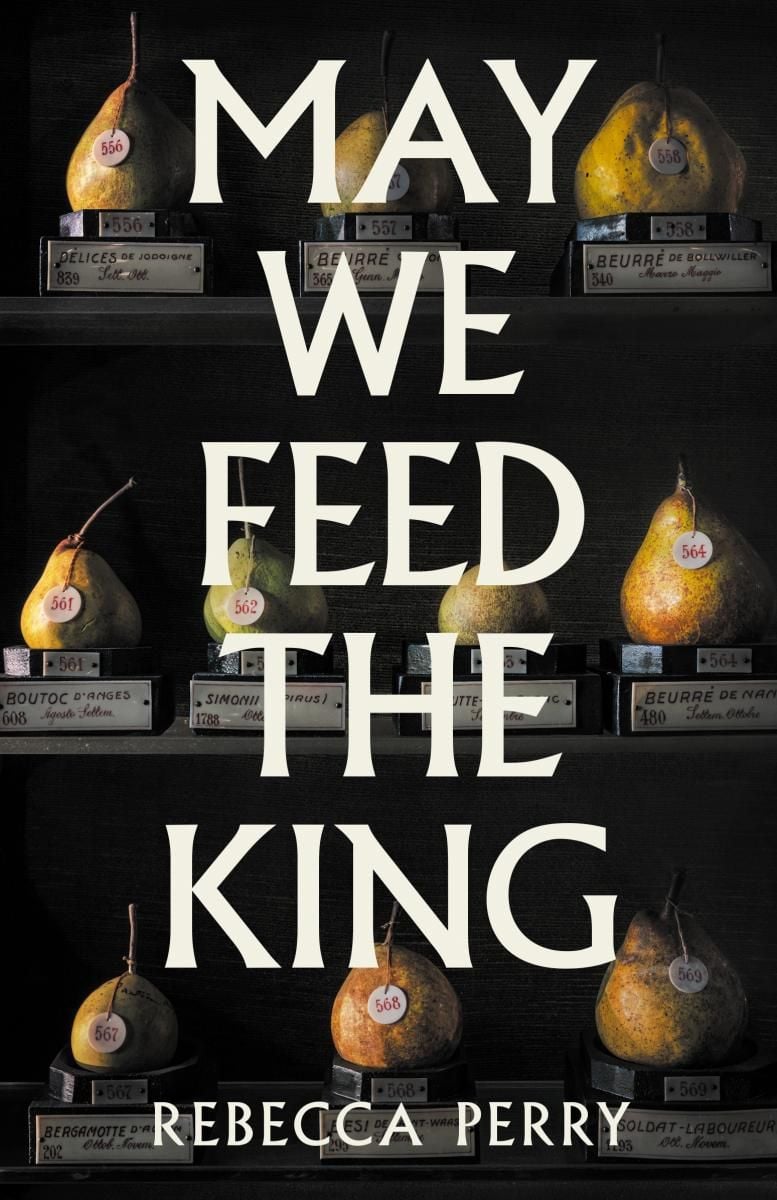
May We Feed the King by Rebecca Perry
How would you summarise this book in a sentence to encourage readers to pick it up?
An affecting and lush jewel of a novel that moves between our present-day world to a medieval court, as a museum curator begins to research her puzzling new subject, an obscure but fascinating king.
Is there something unique about this book, something that you haven’t encountered in fiction before?
I’ve never thought closely about the work of assembling historical tableaux, and loved the passages in which the curator shares the secrets of the plastic food replica trade (Camembert looks the best of the cheeses, with its ‘tactile powdery skin’; while new potatoes are disappointing and best avoided, the small potatoes ‘are so faithful you can almost feel the fine grit of them in your mouth.’)
We admired the novel’s perspectival shifts as it moves from our present-day reality to the king’s court: here the characters feel so brilliantly alive, as though they are reaching out their hands towards us across the centuries – as well as the artful puzzle-box that is the story, which unsettles the idea that there’s ever one universal historical truth.
What do you think it is about this book that readers will not only admire, but really love?
It’s a book that holds so much within itself, but with an admirably light touch. Questions about the nature of power and the retelling of history are threaded with a magnetic story about the reluctant king. The curator wants to stage historic scenes that feel full of life, still imbued with the presence of these historical figures; Perry’s tale of the medieval court likewise brims with that brilliant sense of life. The characters are so richly realised, filled with recognisable insecurities and desires, that you find yourself getting swept up in the drama and emotions of the court, feeling deeply for the characters, and wondering, at the very end: what really was the truth – and can we ever know?
Can you tell us about any particular characters that readers might connect with, and why?
We judges reread our shortlisted books several times throughout the process, and we found that each time we read this book, we got a slightly sharper understanding of the king (albeit within the shroud of conflicting opinions, gossip and controversy that attends any major historical figure.) He’s a fascinating figure: a man who does not crave power or bloodlust or domination – in fact, he just wants to garden – and by rejecting what is seen as universally desirable male ideals, becomes contemptible.
When considering the king, I was reminded of something that the film director Park Chan-Wook said of his protagonist in his latest feature, No Other Choice, who is also a man caught between his love of horticulture and his brutal, violent world: in a better universe, he’d be left alone to tend his plants!
Although it’s a work of fiction, is there anything about it that’s especially relevant to issues we’re confronting in today’s world?
The current waves of hardened, embittered nationalism across the world, and the new wars, have been bolstered by certain historical narratives: about what a country once was versus what it is now; about what a country has been deprived of and now deserves to have back; about how a very country came to be. While these narratives vary in content, they all are infused with a strident sense of certainty and impassioned grievance. Our glorious past looked like this, their proponents say; our power was mighty, and the claims we are now making upon the world are our unequivocal right.
To read May We Feed the King is to wonder: just how solid are these certainties? The transmission of history is a slippery, shifting thing, moulded by ancient and modern powers and contemporary interests; history is a living thing, not a fully intact snow globe to be plucked off a shelf.
Is there one specific moment in the book that has stuck in your mind and, if so, why?
Without spoiling too much, one line in the book has really stuck with me. The curator is giving a public lecture about the importance of historical records. They mention an Italian man who in the 1800s recorded the 286 types of apples growing in Italy at the time, and ask the audience why they think he did it. Some guess it was a job; others venture that it was a personal obsession. Then it arrives: ‘to make us confront, one day, what we have lost.’
‘I let this comment hang in the air’, the archivist says, ‘allowing time for the weight of its perfection to settle on everyone’s shoulders.’
I love this exchange because it’s the moment when the historical shape of the book comes full circle. It’s easy for us today to read about past civilisations while smugly glowing in the knowledge of our own progress, our enlightened morals, the things we now know. With that sentence, Perry reminds us that we, too, will become the stuff of history, thus urging us to look at the world around us with a renewed appreciation. What do we have now that we would mourn losing? What do we want our gift to the future to be? It can be hard to love the world, especially these days, but to do so, it helps to recognise the many things here that are worth holding dear.
Buy the book
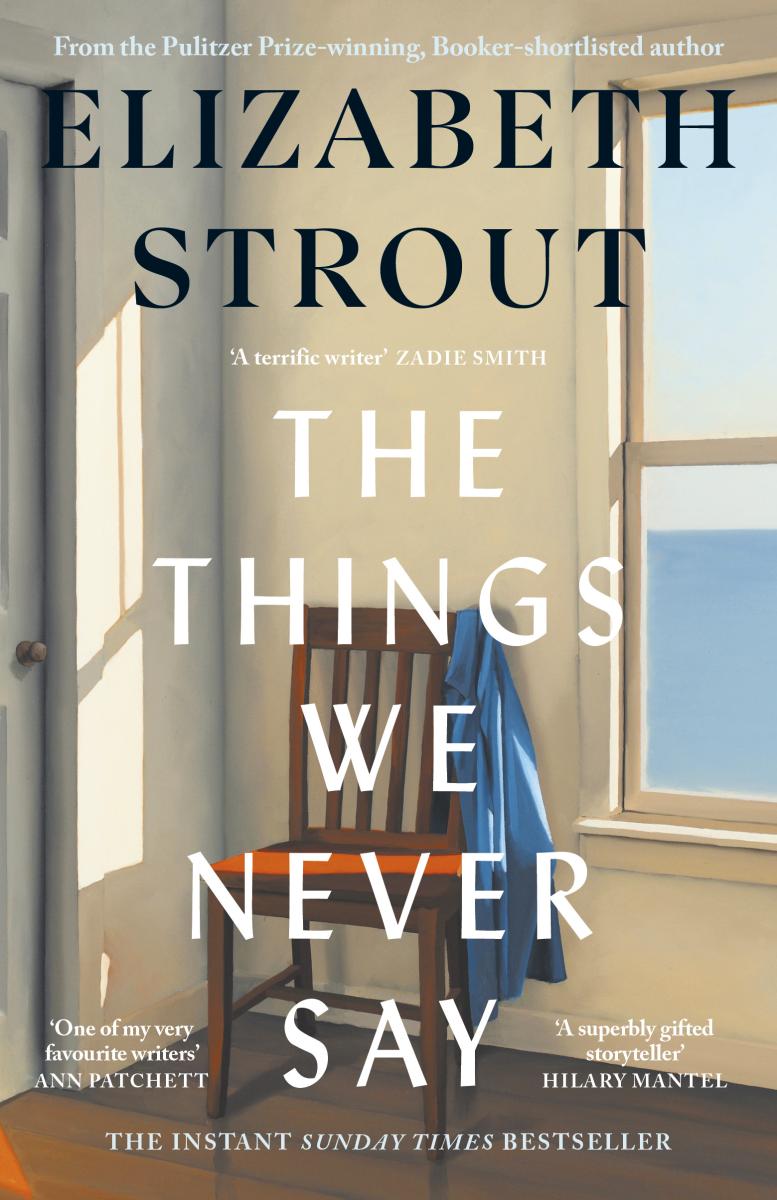
The Things We Never Say by Elizabeth Strout
How would you summarise this book in a sentence to encourage readers to pick it up?
A picture of where America is now.
Is there something unique about this book, something that you haven’t encountered in fiction before?
This book does something quite difficult: it engages with the deeply divisive politics of present-day America without itself becoming divisive. Set in the run-up to the 2024 election and capturing its result, it offers insights into American culture and the country’s changing position in the West, while resisting being defined as a political book.
We thought it was an example of what could be a new genre in fiction: ‘radical normalcy’. Although it is set in the present day, it may one day be read as an historical novel because it captures this particular moment in time with such clarity.
What do you think it is about this book that readers will not only admire, but really love?
It’s a short, simply written book, but that simplicity is an amazing achievement. It handles a complicated and divisive subject while remaining accessible, without being linguistically complicated. Through the story of a schoolteacher – an ordinary man living an ordinary life – it paints a picture of what’s happening in America and how that affects the community. Yet, for all its heavy subject matter, it is also entertaining. And that accessibility matters: anybody could read it, and everybody should.
Can you tell us about any particular characters that readers might connect with, and why?
Artie Dam is a high-school history teacher, and much of the story is about his relationships with his pupils. We also see his home life, his relationship with his son, and his experience of now being mid-life, in his late fifties. Artie is relatable because he doesn’t really know what he’s doing – and that’s how most people go through life. Some parts are good, others aren’t, and you stumble from day to day, trying to do the right thing. Along the way, things happen that leave an imprint on him, just as they do for us.
He’s the everyman: a normal guy doing a normal job, trying to make his way through modern America. He’s someone you root for, and the person through who you experience the whole story. And he wears white socks – that’s quite a thing.
Although it’s a work of fiction, is there anything about it that’s especially relevant to issues we’re confronting in today’s world?
It offers insight into what it feels like to be an ordinary person living in America and realising that things are changing – and not for the better. Elizabeth Strout has done something radical with this book. She has made a frightening moment in history accessible to everyone, but in a gentle way. Her writing has an old-fashioned quality even as she tackles very contemporary subjects. It’s the kind of book we need now, or that many people are looking for now: a calm antidote to contemporary events.
Is there one specific moment in the book that has stuck in your mind and, if so, why?
One of Artie’s sons is married to a pianist, and there’s a scene in which Artie goes to a concert and watches his daughter-in-law play. It feels like a moment of escapism. Strout presents music and art as a way of stepping outside the turmoil and uncertainty of the world, which feels very true to life.
Buy the book
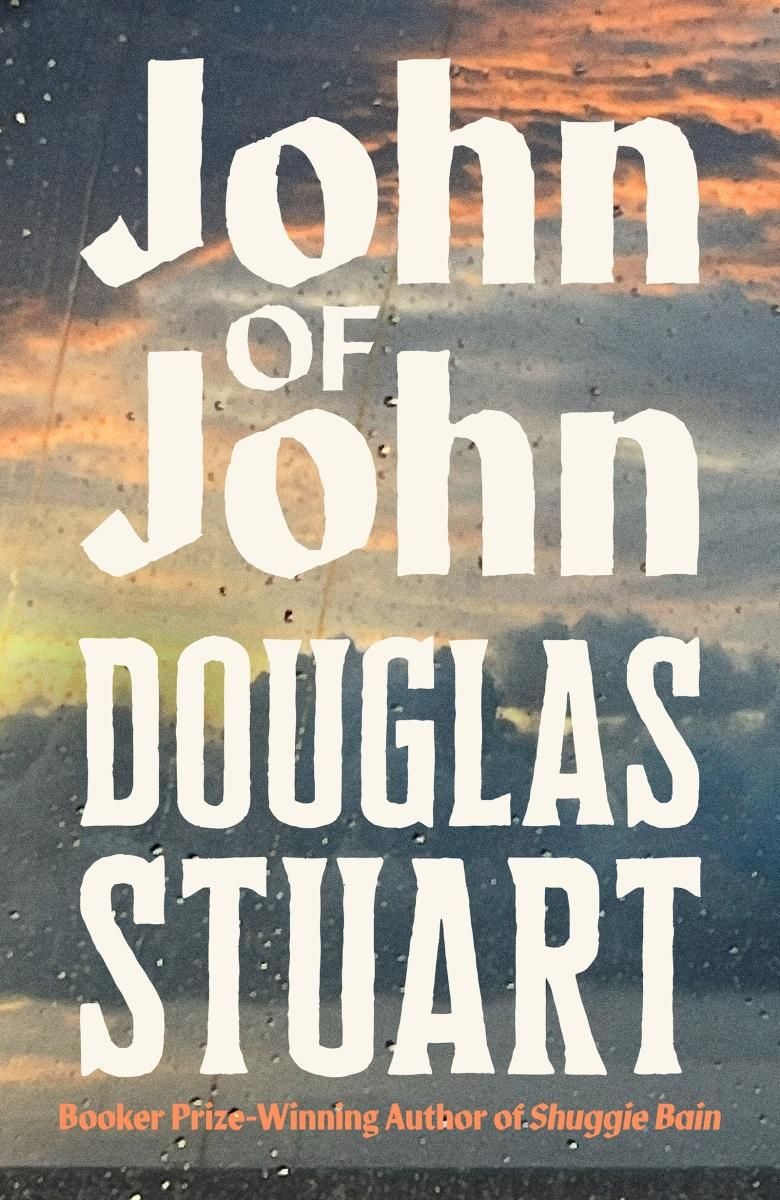
John of John by Douglas Stuart
How would you summarise this book in a sentence to encourage readers to pick it up?
A rich and moving novel about a father and son who live on a remote Scottish island in the 1980s, where small-town secrets and buried shame reverberate to surprising, devastating and even joyous effect.
Is there something unique about this book, something that you haven’t encountered in fiction before?
It’s often said that contemporary literary fiction lacks texture and richly realised exterior worlds; John of John bucks the trend by evoking a vivid and immersive sense of time and place. Though its island of Falabay itself is fictional, Stuart wrote the novel while travelling the Western Isles; his Falabay is a claustrophobic place caught between tradition and modernity, struggling to adjust to the new American capitalist world order of the 1980s. Though perhaps what feels truly ‘revolutionary’ about the novel is its commitment to a classic kind of storytelling: one that luxuriates in describing things, places and people, sets up a slow-burning plot, and isn’t afraid to take its time.
What do you think it is about this book that readers will not only admire, but really love?
Douglas Stuart writes with such beautiful and sustained attention to detail: we come to appreciate the significance of the colour of a swollen foot, the winding ribbon shape of a main road, the scent of Imperial Leather radiating off a lover’s skin. The dynamics between the islanders feel immediately recognisable to anyone who has grown up in similarly cloistered environments (say one feminine-sounding thing as a boy and it’s over for you!) And while the novel does illuminate the many ways in which life can be disappointing, dishonest and brutal, it is also threaded with a sense of hope; the suggestion that things may still be capable of change, and that what was always thus does not have to be what will be.
Can you tell us about any particular characters that readers might connect with, and why?
The relationship between Cal and his John forms the heart of the book, and they are both devastating and extremely human figures. On a first reading, it’s easy to identify with Cal, a young graduate in Edinburgh who resents having to go home and stifle his personality to appease his father (we’ve all been there.) On a second reading, it’s clearer to see the pained love that John has for his son, a love he just cannot express. There’s also much to admire about their neighbour, Innes, a man who has grown up feeling isolated and unseen, but has managed to hold on to his sense of optimism and hunger for life.
Although it’s a work of fiction, is there anything about it that’s especially relevant to issues we’re confronting in today’s world?
The book’s consideration of the halting and inarticulable love that can exist between repressed men – and the self-hatred and violence that results from such repression – feels very relevant to our world, as does its depiction of the sense of resentment that comes with living in places left behind by global capitalism.
We also admired the book’s commitment to the idea of craft itself. Cal and John spend their days weaving at their loom, paying close attention to the consistency of stitches in the cloth. The novel, too, reads like the wonderful result of Stuart sitting at his desk, paying patient attention to his labours. At a time when it’s possible to generate entire blocks of text within seconds with the help of machines, there’s something radical in the idea of choosing to apply this sustained commitment to your craft, of sitting down and doing it yourself.
Is there one specific moment in the book that has stuck in your mind and, if so, why?
One of the pleasures of reading John of John is seeing the world through Stuart’s keen, imagistic eye; you can tell that he’s had a career in fashion. There’s a scene where Cal and John visit the mill to drop off their cloth. John loses track of his son and searches for him throughout the mill’s many departments, and ends up at the warehouse where colours are mixed in a blending machine. He sees Cal defying health warnings (‘wool lung!’) to stand in the very centre of the blending shed with his arms outstretched, in a state of rapture. ‘None of the magic was diminished’ Stuart writes; ‘The fans spun as the air filled with puffs of colour. The colours fell all around him like technicolour snowflakes and sat in drifts that reached his waist.’
It’s a virtuosic passage that captures the many layers of the book: yes, there is the tension between father and son, the urge to obliterate the self, and the undercurrent of danger – but then, existing alongside that, and particularly evident if you truly look, moments of true grace and beauty.



Features


- Reading guides
Reading guide: The End of Everything by M. John Harrison

- Reading guides
Reading guide: John of John by Douglas Stuart

- Reading guides
Reading guide: May We Feed the King by Rebecca Perry

- Reading guides
Reading guide: The Things We Never Say by Elizabeth Strout

- Reading guides
Reading guide: Black Bag by Luke Kennard

- Reading guides
Reading guide: The Disappearers by Marlon James


- Book recommendations