Reading guide: The End of Everything by M. John Harrison

Reading guide: The End of Everything by M. John Harrison
- Written by
- Donna Mackay-Smith
- Published
In his Booker Prize 2026 shortlisted novel, M. John Harrison offers a panoramic view of the modern moment through the story of one poignant human relationship
Whether you’re new to The End of Everything or have read it and would like to explore it more deeply, here is our comprehensive guide, featuring insights from critics, our judges, and the book’s author, as well as discussion points and suggestions for further reading.
Synopsis
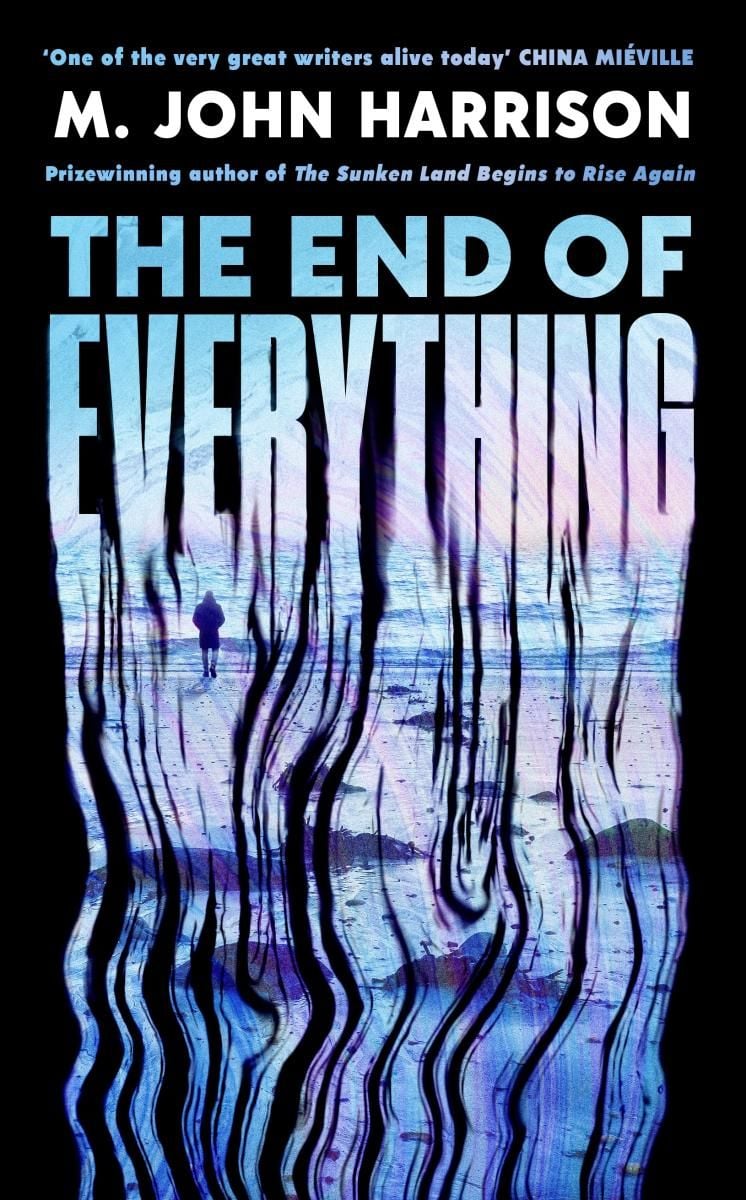
Buy the book
Phillip Tennent makes his living at the tideline, collecting artefacts that wash up from the Channel. It’s been years since the crisis changed everything, but its exact nature remains obscured. Government barely functions, the seas are full of new creatures, Europe has been mislaid. It feels like the end.
Now Phillip has fished out of the water an object he can’t keep. A creature that keeps changing. An artefact he must take inland, before it destroys everything he thinks he knows. A slyly satirical and unsettling post-apocalyptic adventure into the limits of human understanding from the acknowledged master of science fiction
The End of Everything was shortlisted for the Booker Prize 2026.
The main characters
Phillip Tennent
Phillip Tennent is a beachcomber living on the English coast, making a modest living from the objects he finds washed ashore. When he discovers an unusual ‘artefact’, he becomes convinced that it could be of value and takes it inland, hoping to sell it. As the object grows and begins to mimic human behaviour, Phillip’s attempts to understand and find a buyer for it draw him deeper into the novel’s fractured new world.
Marnie
Marnie is 70 years old. She is Phillip’s aunt and a former artist. After killing a teenage boy, she leaves her home and sets off towards London, navigating a world in which familiar structures of society have begun to change. Self-reliant and capable of sudden violence, Marnie responds to the dangers she encounters with a matter-of-factness that often contrasts with the reactions of those around her.
About the author
M. John Harrison is a genre-defying British author and literary critic. Harrison has been hailed by writers including Olivia Laing, Robert Macfarlane and Neil Gaiman as one of the most brilliant prose stylists alive today.
He sold his first story in 1965, and in 1969 joined the staff of the UK speculative fiction magazine New Worlds, where he edited the books pages until 1978.
His novels include Climbers, which won the Boardman Tasker Prize for Mountain Literature in 1989; Nova Swing, which won the Arthur C. Clarke Award in 2007; and The Sunken Land Begins to Rise Again, which won the 2020 Goldsmiths Prize for innovation in fiction. A collection of short stories, You Should Come With Me Now, was published in 2017, and a volume of selected stories written between 1970 and 2020 was published under the title Settling the World.
He has reviewed a broad spread of fiction for the TLS, the Telegraph, the Guardian and the New York Times; co-authored a quartet of fantasy novels about talking cats; and ghostwritten on behalf of a legendary British rock climber. He was a judge of the Booker Prize 2022.

M. John Harrison.
© Hugo Glendinning
What the critics said
Catherine Taylor, Financial Times
‘This is a formidable book: dusky, casually horrifying, unexpectedly compassionate. Its ending takes a deceptively conventional form, but the blank pages that follow invite the reader either to accept the end of everything as the title conveys, or imagine a continuous, ambiguous present — one that extends beyond the unexpected survivor of this particular story.’
Olivia Ho, Literary Review
‘Harrison has explained that he initially conceived the novel around 2010. But The End of Everything acutely refracts the anxieties of the present, in which a sense of imminent collapse has become ingrained in everyday existence. The novel doesn’t make clear sense of this; instead, it grasps at where language falls short of meaning, treating its subject like a lost continent just out of reach. The result is a work of uncanny beauty, tender and terrifying in equal parts.’
Helen Macdonald, The Observer
‘It’s fitting that this book has arrived in this post-pandemic, post-neoliberal, post-Brexit, post-everything summer, a time of pernicious prediction markets, AI gumming up the works, TikTokers memorialising sodium streetlights, looksmaxxers, floods, failing infrastructure, Ukrainian fields glittering with drifts of fibre-optic cable and a cage-fighting arena being built on the White House lawn. I don’t think I’ll read a better book this year, perhaps decade. The world is falling apart and The End of Everything properly fucks one up.’
Simon Ings, The Telegraph
‘Harrison isn’t weirder than most other writers, just better. Reading The End of Everything, you feel you’re not so much reading as dreaming. Or, to put it another way, this novel is like a painting by Paul Nash, chalky, degreased and illumined. As Harrison himself says: by “a pure 1930s light, from an imagination stocked when people could use words like ‘spiritual’ and still mean something”.’
Niall Harrison, Locus Mag
‘Many of M. John Harrison’s previous novels warn about the fantastic as a consolation, and the risks of exceeding the appropriate prescription, and I think The End of Everything may also be read as a depiction of a world subject to overdose, where lives have been saturated by the unreal. There is a grain of ambiguous hope in one character’s declaration that it doesn’t matter that the world has ended, “because another one will be along soon enough,” but what I felt when the novel released me was more immediate. I felt the urge to go outside, to run around and shout, not to celebrate the novel’s brilliance (although I think it is brilliant), but simply to prove that, for now, something real still exists.’
What M. John Harrison said about The End of Everything
‘The art towns of the UK’s East Coast provided the setting. I love that coast, all the way round from Hastings to the Thames – even up into Suffolk. Current affairs provided the themes and the satire: what happens when all of our expectations and explanations of the world become an ongoing disaster, but we still have to make a life?’
M. John Harrison in an interview with the Booker Prizes.
What the judges said
‘Two beachcombers meet and exchange words at the intertidal; we are in Kent, and it is the near-future, but one that recognises itself to be in the middle of a catastrophe. The sky is glitching, and something strange, formless and growing is soon to come out of the sea, to imitate our speech, forms, and customs. Our left-behind inhabitants scavenge where and what they can, provisional alliances are made and broken, shocking violence occurs, and no one can agree on exactly what has happened. A book not just about everything but about now. Shimmering and oblique, it holds the reader to the surface of something very grave and deep.’

The Booker Prize 2026 judges – Raymond Antrobus, Patricia Lockwood, Rebecca Liu, Jarvis Cocker and Mary Beard – with the longlisted books
© Neo Gilder for Booker Prize Foundation
Questions and discussion points
Early in the novel, readers are introduced to the concept of the iGhetti. Theories suggest they may have ‘come out of the internet’, are ‘associated with dark matter’, ‘the banking crisis’, or have come from ‘the astral plane’. They manifest as ‘a kind of transparent jelly that was not to be confused with ectoplasm’, and a ‘sophisticated hydrogel’, and take various other forms. Their name echoes Apple products such as the iPhone and iPod, suggesting a link to the digital world we carry with us. What might Harrison’s intention be in giving readers so many possible explanations for the iGhetti, and what does this ambiguity add to the novel?
The motives of the iGhetti remain mysterious, and while they initially appear innocuous, their arrival in London prompts a large-scale military response and eventually brings about a fundamental shift in the British establishment. Why might Harrison have chosen to set their arrival in the heart of London’s financial district?
Phillip is a beachcomber. One day he discovers an ‘artefact’ on the beach. It morphs and grows from an object into something that mimics human behaviour, speaking and communicating. As the artefact develops, it becomes increasingly difficult to distinguish between imitation and intelligence. How does Harrison use the artefact to explore ideas about artificial intelligence and what it means to create something that appears human?
At one point, a feral child attempts to urinate on Marnie and traps his foot in an effort to get away. Without a second thought, Marnie severs an artery in his leg, then goes to speak to his father, who calmly decides to retrieve his body. It’s at this point we realise the boy is dead. What does the scene reveal about the moral codes in this new world where the boundaries of society have shifted?
Harrison sets much of The End of Everything along a stretch of the English coast once shaped by industries such as fishing and shipbuilding, where former industrial sites have now been transformed into museums or upmarket flats. The artefact observes: ‘Your present day, like ours, is always already-vanishing. No history will be left at this site. Only heritage – an interpretation of the past as much an act of theft as the appropriation of another culture’s artefacts and customs’ (Page 168). How does the story explore the relationship between past and place?
The novel’s short chapters are often merely pages long. They resemble scenes from a film, moving rapidly between characters and moments in time. Discuss the purpose and intention behind the structure and how it influences the reading experience.
Harrison uses a fluid third-person narration, beginning largely with Phillip’s perspective before shifting attention towards Marnie. Name changes occur with little warning, leaving readers to fill in the gaps: Phillip is sometimes referred to as ‘Tennent’, while the artefact itself is described in shifting and contradictory ways. How does Harrison’s manipulation of viewpoint and language affect our understanding of the characters and the world they inhabit?
Events often occur with little exposition or dramatic emphasis, leaving the reader to work out their significance for themselves. What does Harrison gain by refusing to signal which moments are important, shocking or worthy of explanation?
The End of Everything has been described by critics and readers as post-apocalyptic fiction, speculative fiction and science fiction. However, Harrison resists conforming to the conventions of any one genre. How does this fuel the novel’s wider sense of uncertainty?
The plot gives nods to Brexit, economic and environmental collapse, and artificial intelligence, yet no single explanation seems to account for the new world Marnie and Philip inhabit. What contemporary socio-political anxieties did you see reflected, and what does Harrison’s refusal to settle on a single explanation allow him to explore?
Resources and further reading
Literary Listings London: 10 Questions with M. John Harrison
How To Academy Podcast: M. John Harrison – The End of Everything
The Guardian: M John Harrison: ‘If we met a real alien we’d have no clue what they thought’
If you enjoyed this book, why not try
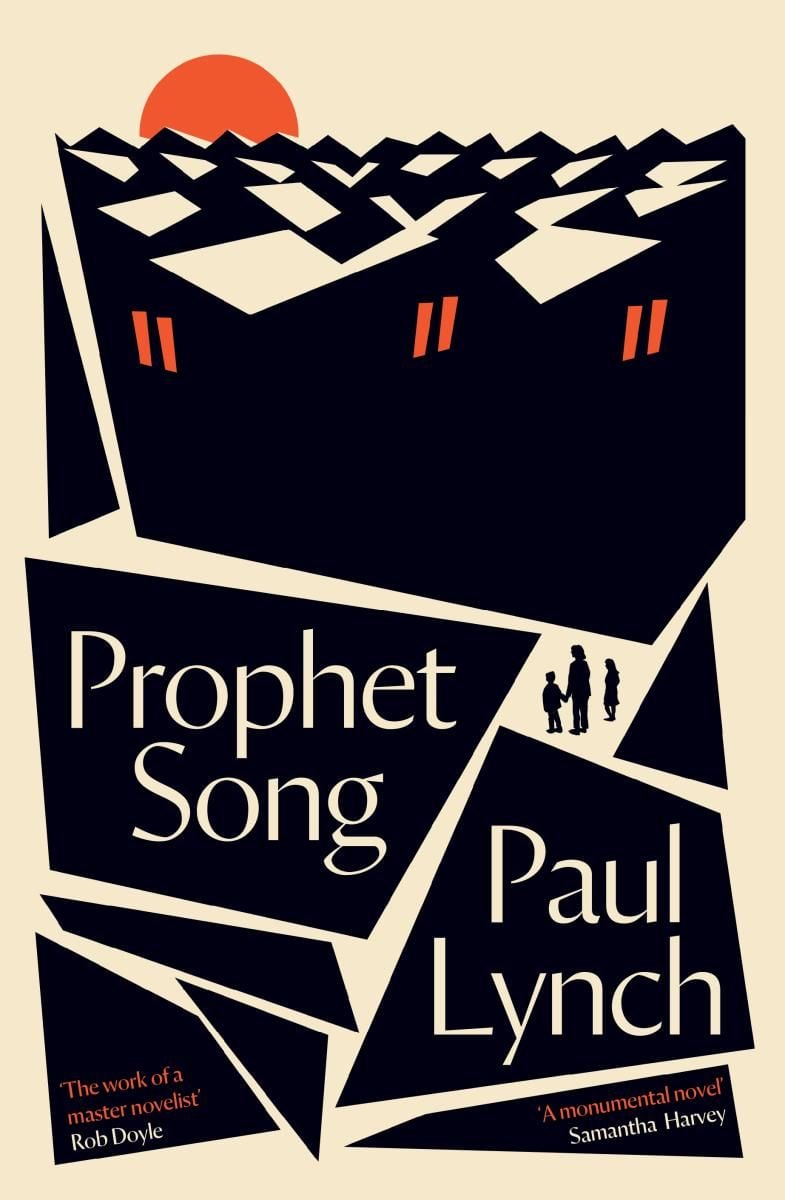
Prophet Song
by Paul Lynch (prize winner)

The Sirian Experiments
by Doris Lessing
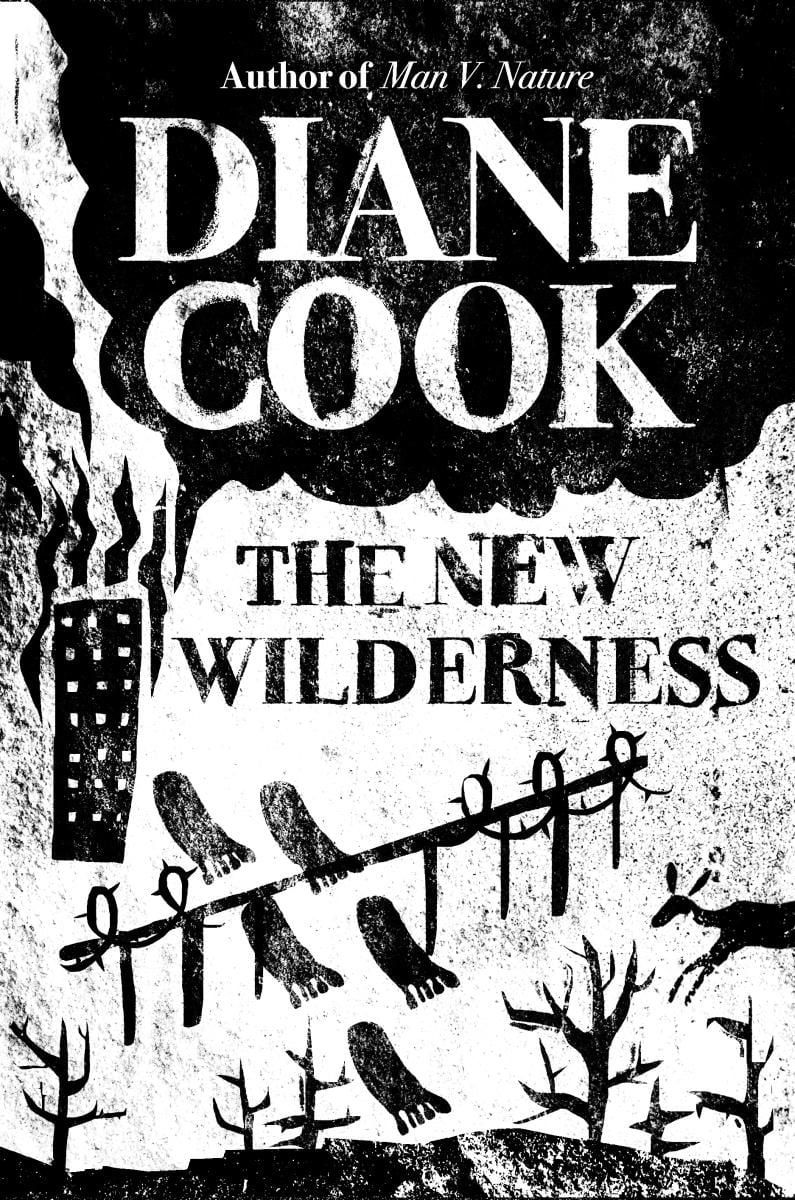
The New Wilderness
by Diane Cook
Oryx and Crake
by Margaret Atwood


Features


- Book recommendations
The Booker Prize 2026 shortlist: what our judges said


- Book recommendations