A slyly satirical and unsettling post-apocalyptic adventure into the limits of human understanding from the acknowledged master of science fiction
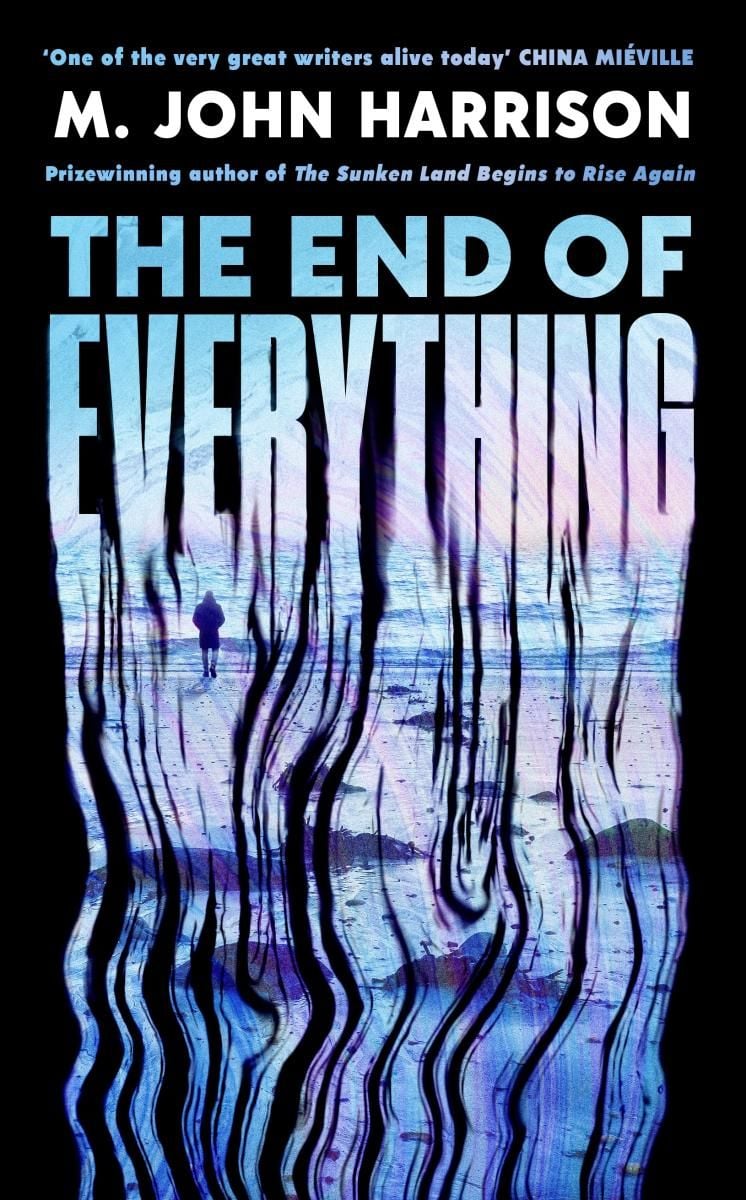
The End of Everything
Written by M. John Harrison
- Shortlisted
- The Booker Prize 2026
- Published by Serpent's Tail
Buy the book
A slyly satirical and unsettling post-apocalyptic adventure into the limits of human understanding from the acknowledged master of science fiction
Phillip Tennent makes his living at the tideline, collecting artefacts that wash up from the Channel. It’s been years since the crisis changed everything, but its exact nature remains obscured. Government barely functions, the seas are full of new creatures, Europe has been mislaid. It feels like the end.
Now Phillip has fished out of the water an object he can’t keep. A creature that keeps changing. An artefact he must take inland, before it destroys everything he thinks he knows.
The End of Everything was shortlisted for the Booker Prize 2026.

M. John Harrison
M. John Harrison is a genre-defying British author and literary critic
More about M. John Harrison M. John Harrison on The End of Everything
‘The art towns of the UK’s East Coast provided the setting. I love that coast, all the way round from Hastings to the Thames – even up into Suffolk. Current affairs provided the themes and the satire: what happens when all of our expectations and explanations of the world become an ongoing disaster, but we still have to make a life?’
Read the full interview here.
A book not just about everything but about now. Shimmering and oblique, it holds the reader to the surface of something very grave and deep
The Booker Prize 2026 judges
What the judges said
‘Two beachcombers meet and exchange words at the intertidal; we are in Kent, and it is the near-future, but one that recognises itself to be in the middle of a catastrophe. The sky is glitching, and something strange, formless and growing is soon to come out of the sea, to imitate our speech, forms, and customs. Our left-behind inhabitants scavenge where and what they can, provisional alliances are made and broken, shocking violence occurs, and no one can agree on exactly what has happened. A book not just about everything but about now. Shimmering and oblique, it holds the reader to the surface of something very grave and deep.’
What the critics said
Catherine Taylor, Financial Times
‘This is a formidable book: dusky, casually horrifying, unexpectedly compassionate. Its ending takes a deceptively conventional form, but the blank pages that follow invite the reader either to accept the end of everything as the title conveys, or imagine a continuous, ambiguous present — one that extends beyond the unexpected survivor of this particular story.’
Helen Macdonald, The Observer
‘It’s fitting that this book has arrived in this post-pandemic, post-neoliberal, post-Brexit, post-everything summer, a time of pernicious prediction markets, AI gumming up the works, TikTokers memorialising sodium streetlights, looksmaxxers, floods, failing infrastructure, Ukrainian fields glittering with drifts of fibre-optic cable and a cage-fighting arena being built on the White House lawn. I don’t think I’ll read a better book this year, perhaps decade. The world is falling apart and The End of Everything properly fucks one up.’
Simon Ings, The Telegraph
‘Harrison isn’t weirder than most other writers, just better. Reading The End of Everything, you feel you’re not so much reading as dreaming. Or, to put it another way, this novel is like a painting by Paul Nash, chalky, degreased and illumined. As Harrison himself says: by “a pure 1930s light, from an imagination stocked when people could use words like ‘spiritual’ and still mean something”.’
Niall Harrison, Locus Mag
‘Many of M. John Harrison’s previous novels warn about the fantastic as a consolation, and the risks of exceeding the appropriate prescription, and I think The End of Everything may also be read as a depiction of a world subject to overdose, where lives have been saturated by the unreal. There is a grain of ambiguous hope in one character’s declaration that it doesn’t matter that the world has ended, “because another one will be along soon enough,” but what I felt when the novel released me was more immediate. I felt the urge to go outside, to run around and shout, not to celebrate the novel’s brilliance (although I think it is brilliant), but simply to prove that, for now, something real still exists.’
Edmund Gordon, London Review of Books
‘“What’s the point of an alien artefact you can recognise?” Harrison asked in Wish I Was Here. “As a branch of the fantastic, science fiction should accept that its currency is the inexplicable, not the explicable.” That principle could hardly be taken much further than it is in The End of Everything. There’s little point in trying to make it all add up. The iGhetti are both here and not here. The world is ending and it isn’t. It’s 2040-something; it’s 2026; it’s still 1967.’


Features

- Reading guides
Reading guide: The End of Everything by M. John Harrison


- Book recommendations
The Booker Prize 2026 shortlist: what our judges said


- Book recommendations