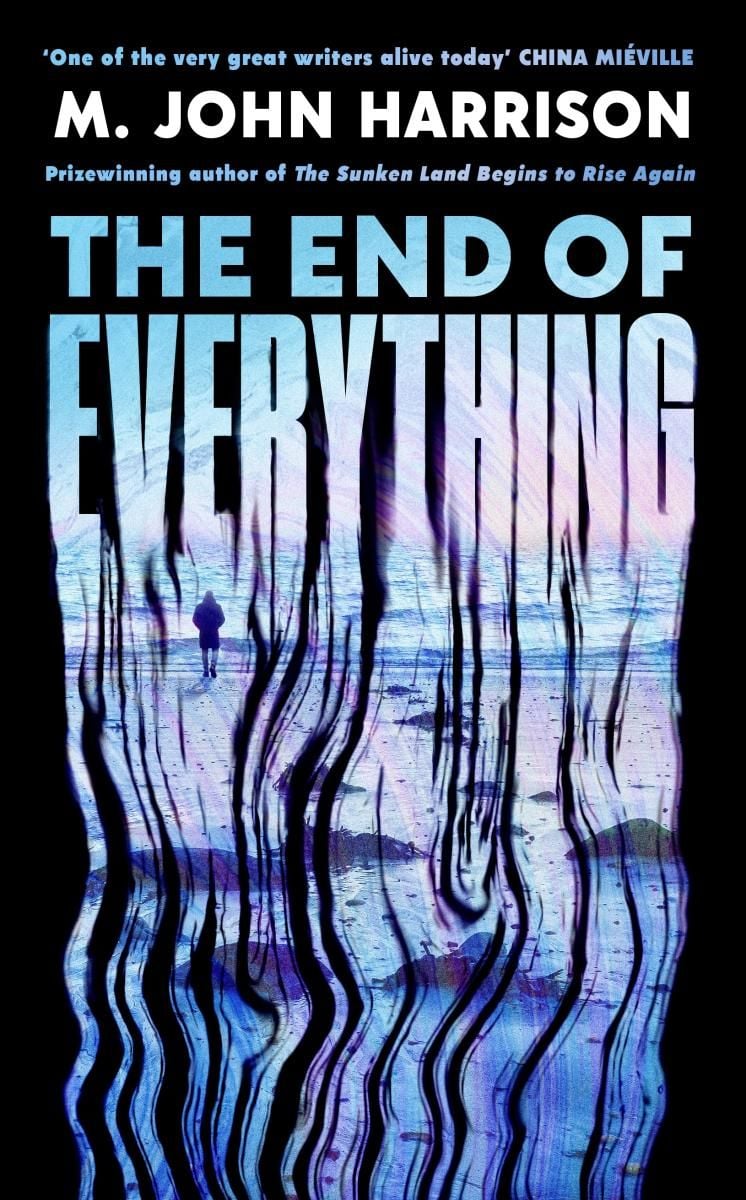

A slyly satirical and unsettling post-apocalyptic adventure into the limits of human understanding from the acknowledged master of science fiction
Everything you need to know about The End of Everything by M. John Harrison, winner of the Booker Prize 2026

Everything you need to know about The End of Everything by M. John Harrison, winner of the Booker Prize 2026
- Published
As The End of Everything by M. John Harrison takes home this year’s prize, we take a closer look at the winning book – and the author behind the work
Why did The End of Everything win the Booker Prize 2026?
Mary Beard, Chair of judges, said:
‘The Booker judges spent a whole day debating the six remarkable novels on this year’s shortlist, before agreeing unanimously to award the 2026 prize to The End of Everything by M. John Harrison.
‘It’s a book that turns you upside down, raises a wry smile – and surprisingly, given the subject matter, leaves you with a twinge of optimism. Central to the story are Phillip Tennent and his elderly aunt Marnie, living on the south coast of England, a few decades into the future, some years after a mysterious catastrophe: an invasion of “iGhetti” (the “i” hinting at something digital, but you can’t be sure).
‘Social norms have been eroded, law and order have fallen into the hands of vigilantes, and you may well have a crashed plane lodged in your garden. People try to muddle through nonetheless, even making a show of business as usual (children’s parties and a morning coffee at a seaside café).
‘Some try desperately to make sense of what has happened. But one main point of the book is that if, or when, such an apocalypse comes it will be incomprehensible. And the old rules won’t matter either. Phillip is landed with an “item” he found on the beach, a blob of jelly which quickly grows, develops speech and starts to tell his human minders what to do. This is the politics of now seen through the lens of the future.’

M. John Harrison at the Booker Prize 2026 shortlist readings, in the Southbank Centre
© David Parry for Booker Prize Foundation
What is The End of Everything about?
Buy the book
A slyly satirical and unsettling post-apocalyptic adventure, The End of Everything pushes readers to the limits of human understanding.
Phillip Tennent makes his living at the tideline, collecting artefacts that wash up from the Channel. It’s been years since the crisis changed everything, but its exact nature remains obscured. Government barely functions, the seas are full of new creatures, Europe has been mislaid. It feels like the end.
Now Phillip has fished out of the water an object he can’t keep. A creature that keeps changing. An artefact he must take inland, before it destroys everything he thinks he knows.
Who is M. John Harrison?
M. John Harrison is a genre-defying British author and literary critic. The End of Everything is his first nomination for the Booker Prize.
Harrison has been hailed by writers including Olivia Laing, Robert MacFarlane and Neil Gaiman as one of the most brilliant prose stylists alive today.
He sold his first story in 1965, and in 1969 joined the staff of the UK speculative fiction magazine New Worlds, where he edited the books pages until 1978.
His novels include Climbers, which won the Boardman Tasker Prize for Mountain Literature in 1989; Nova Swing, which won the Arthur C. Clarke Award in 2007; and The Sunken Land Begins to Rise Again, which won the 2020 Goldsmiths Prize for innovation in fiction. A collection of short stories, You Should Come With Me Now, was published in 2017, and a volume of selected stories written between 1970 and 2020 was published under the title Settling the World.
He has reviewed a broad spread of fiction for the TLS, the Telegraph, the Guardian and the New York Times; co-authored a quartet of fantasy novels about talking cats; and ghostwritten on behalf of a legendary British rock climber. He was a judge of the Booker Prize 2022.

M. John Harrison
© Hugo Glendinning
How does the book begin?
For years Phillip Tennent lived at the edge of the sea, where artefacts were washed up every day. Scavengers, professional and otherwise, came and went. Turnover was higher than you’d expect given the relaxed lifestyle, the constant good weather, the ease with which some sort of existence could be pursued.
Most of the beachcombers took away the first item they could easily carry and sold it on elsewhere. If you had contacts in the hinterland, there was no doubt about how slickly that could be done. But the hard core like Tennent hung on, out there dawn and dusk, shine or shine, throwing the small ones back, waiting for an item that would give them pause for thought. They were committed. They could be seen from orbit. Their living structures glowed at night a hundred miles up and down the coast. By day you saw that temporary qualities had defined over the decades a permanent aesthetic: bothies and benders made of whitened sticks; mirrors and bits of rag; almost anything the tide left, although to incorporate an artefact would have been considered bad taste as much as bad luck. The beachcombers had their limits. Their superstitions gave the tideline its social structures and distinctive quality on the palate.
Further back from the shore, the hinterland was dark, a little more threatening, with its flattened hashmark of streets and its differing sets of rules. There was a lot of poured cement and half-functioning neon, a lot of territoriality; you had to talk your way through the bars, blockhouses and abandoned car parks to get your item out to market.
Coming up from the intertidal, out of the dusty salt wind with his latest find under one arm, Tennent met a woman on her way down. She looked at the object – which was at that time about the size of a baby, and which he had wrapped in some bleached-out rags – and nodded with a kind of measured approval. They studied the horizon together for a moment, and she asked him what condition the sea was in down there that day.
‘Eventually it’ll turn into speech,’ Tennent said, without knowing why.
They both laughed.
Read a longer extract from the first chapter of The End of Everything.
Watch Kathryn Hunter read from The End of Everything
What did the panel of judges say about The End of Everything?
Classicist, writer and broadcaster Mary Beard chairs the Booker Prize judging panel and is joined by award-winning poet, writer and educator Raymond Antrobus; musician, writer and broadcaster Jarvis Cocker; journalist, editor and critic Rebecca Liu; and Booker Prize-shortlisted novelist, poet and essayist Patricia Lockwood. Here’s what they had to say about The End of Everything when it was shortlisted for this year’s prize:
How would you summarise this book in a sentence?
The End of Everything can be read as a thriller, a mystery, a satire, a dystopia, a road novel, a work of realism; whatever the reader is looking for can be found here, albeit told at a slant and with a twist. The book offers something for everyone!
Is there something unique about this book, something that you haven’t encountered in fiction before?
The use of overheard dialogue – bits of flotsam and jetsam that are scavenged from the environment of the book and then repurposed – struck us as being unique, a high-level form of assemblage or decoupage that complements the makeshift nature of this unsettling universe.
What do you think it is about this book that readers will love?
The humour, which is subtle, surreal, and sly. The landscape may be bleak, the catastrophe may be immersive, yet there still were moments we found ourselves laughing aloud.

The Booker Prize 2026 judges with the shortlist
© Dave Parry for Booker Prize Foundation
What have the critics said?
Catherine Taylor, Financial Times: ‘This is a formidable book: dusky, casually horrifying, unexpectedly compassionate. Its ending takes a deceptively conventional form, but the blank pages that follow invite the reader either to accept the end of everything as the title conveys, or imagine a continuous, ambiguous present — one that extends beyond the unexpected survivor of this particular story.’
Helen Macdonald, The Observer: ‘It’s fitting that this book has arrived in this post-pandemic, post-neoliberal, post-Brexit, post-everything summer, a time of pernicious prediction markets, AI gumming up the works, TikTokers memorialising sodium streetlights, looksmaxxers, floods, failing infrastructure, Ukrainian fields glittering with drifts of fibre-optic cable and a cage-fighting arena being built on the White House lawn. I don’t think I’ll read a better book this year, perhaps decade. The world is falling apart and The End of Everything properly fucks one up.’
Simon Ings, The Telegraph: ‘Harrison isn’t weirder than most other writers, just better. Reading The End of Everything, you feel you’re not so much reading as dreaming. Or, to put it another way, this novel is like a painting by Paul Nash, chalky, degreased and illumined. As Harrison himself says: by “a pure 1930s light, from an imagination stocked when people could use words like ‘spiritual’ and still mean something”.
What has M. John Harrison said about The End of Everything?
Speaking to the Booker Prizes website, Harrison detailed the inspiration for The End of Everything: ‘The art towns of the UK’s East Coast provided the setting. I love that coast, all the way round from Hastings to the Thames – even up into Suffolk.’
He continued: ‘Current affairs provided the themes and the satire: what happens when all of our expectations and explanations of the world become an ongoing disaster, but we still have to make a life?’
In an interview with BBC Radio 4’s Front Row programme, Harrison said his first prompt was ‘the 2008 financial crisis,’ and that he ‘wanted to write a novel about the failure of explanation in society. A disaster was a good starting point for that jump off.’
Speaking to The Telegraph, he revealed more about the new order that his characters face in The End of Everything: ‘They’re people acting out of desperation because they don’t know what the world is anymore. It seems to me that in a real catastrophe, it wouldn’t be a question of survival – the point is the world doesn’t work the way it used to. Your entire philosophy, your entire epistemology, is based on what you know. And suddenly you don’t know anything.’
Watch a video interview with M. John Harrison
Who published The End of Everything?
This is the first Booker Prize win for The End of Everything publisher, Serpent’s Tail, an imprint of independent press Profile Books, and its fifth nomination for the prize. The imprint’s previous nominations were: Booth by Karen Joy Fowler, longlisted in 2022; Washington Black by Esi Edugyan, shortlisted in 2018; We Are All Completely Beside Ourselves by Karen Joy Fowler, shortlisted in 2014; and Half Blood Blues by Esi Edugyan, shortlisted in 2011.


Features

- Reading guides
Reading guide: The End of Everything by M. John Harrison


- Book recommendations
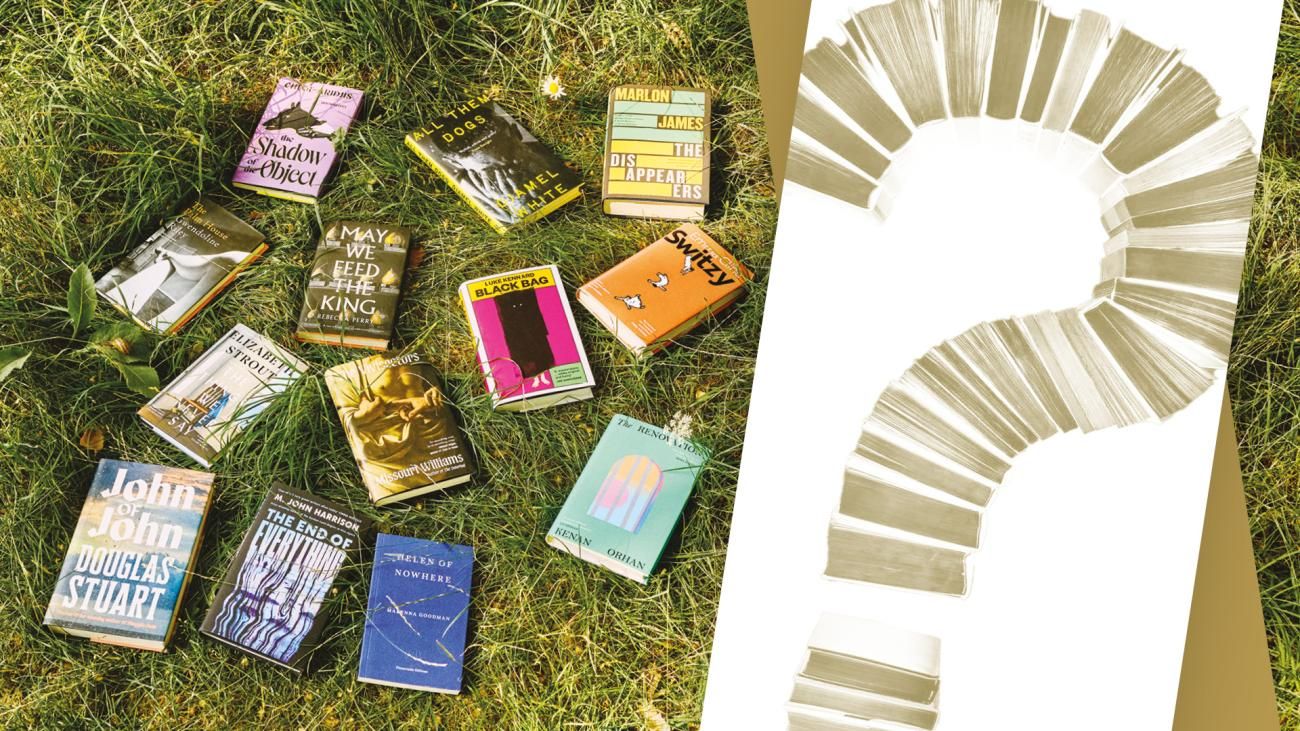
The Booker Prize 2026 shortlist: what our judges said


- Book recommendations