
‘He tries to work out if his friend is telling the truth or if he’s lying. Though he would prefer him to be lying, he thinks that he’s probably telling the truth’
- Published
The author of Flesh, winner of the Booker Prize 2025, reflects on the most inspiring books from his youth, his love of Samuel Pepys’s diaries, and why 6am is his best time to write
This interview was conducted after Flesh was longlisted for the Booker Prize 2025. Read interviews with all the authors longlisted for the Booker Prize 2025
Buy the book
The inspiration behind my Booker-longlisted book
It can be hard to identify the starting point of a novel. Flesh sort of evolved into existence. I knew I wanted to write a book with a Hungarian end and an English end, since I was living very much between the two countries at the time and felt that that needed to be reflected in my choice of subject. And given that, writing about a Hungarian immigrant at the time when Hungary joined the EU seemed like an obvious way to go. So it would be, to some extent, a novel about contemporary Europe, and about the cultural and economic divides that characterise it. I also wanted to write about life as a physical experience, about what it’s like to be a living body in the world – whatever divides us, we all share that. Those were the ingredients that I started with.
The book that made me fall in love with reading
There was this book, My Side of the Mountain. I read it when I was about 10 or 11, I suppose. My memory of it is so intense, and yet so vague, that I actually had to look it up to make sure it really exists, that it wasn’t just something I dreamed. It does exist, and it’s easy to see why I loved it so much: it presents a vision of an idealised solitude – a 12-year-old running away from society and civilisation and fending for himself in some American wilderness – that obviously touched something in me at the time. It’s my earliest memory of falling in love with a book.
The book that made me want to be a writer
I have to say that I think this is just another way of putting the previous question. It’s also doubtful that there was a single book that did it. But a love of reading in general is certainly, I think, what makes anyone, in childhood anyway, want to be a writer. I think that the desire to be a writer is essentially a desire to imitate, to recreate the effect that other people’s writing has had on you. In that sense all fiction is fan fiction.
The book I read again and again
A book I return to again and again is Samuel Pepys’s Diary. It’s the most moreish book I know. Picking it up to read a few pages, I can easily get stuck with it for an hour. As fascinating as the differences between our world and the world of the 1660s are the similarities – it’s easy to imagine Pepys having a substantively identical life in contemporary London.
The desire to be a writer is essentially a desire to imitate, to recreate the effect that other people’s writing has had on you. In that sense all fiction is fan fiction
The book that changed the way I think about the world
I suppose it’s early in life that this phenomenon is most dramatically possible. I was 11, I think, when I first read Animal Farm. It left me outraged and upset at the reality of hypocrisy and injustice, at the hard immovable fact that people (or animals) are just not always very nice to each other, and don’t always get what they deserve, either positively or negatively.
The book that changed the way I think about the novel
Again, this happened more than once when I was in my teens and early twenties. (Maybe it happened every few weeks…) But I’ll take one of those instances: Updike’s Rabbit, Run. And I guess what it made me see was the way in which a total commitment to contemporary reality (which for Updike of course was the late 1950s), in all its tawdry specificity, could be the basis for asking essential questions about the nature of human existence, with exhilarating results.
The book I’m reading right now
At the moment I’m reading A Cat at the End of the World by Robert Perisic, the Croatian writer. It’s set about 2,500 years ago, and is about the establishment of a Greek colony on what in now the Croatian island of Vis. And about the arrival there, with the colonists, of the first cats ever to travel so far north into the mysterious barbarian wilderness. The central human character is an escaped slave. He narrates every second chapter. The ones in between are narrated by a personified wind who has inhabited the island for millennia and is still there today. It’s a strange, humane and beautiful book.
The Booker-nominated book everyone should read
I wish I could disclose a hidden gem, but the book I’m going to recommend, because it’s the one that instantly comes to mind when I read the question, is a famous winner: Alan Hollinghurst’s The Line of Beauty. It has, in full, the qualities I was talking about in the context of Rabbit, Run in my earlier answer. It’s also wonderfully funny.
Where and when I most like to write, and the tools I need
Where: my desk. When: six o’clock in the morning. Necessary tools: my laptop, silence and a cup of coffee. I know that it’s going well when I realise that I didn’t finish the coffee and that what’s left of it is an hour cold.
My dream book club, what we’d read and where we’d meet
We’d meet in a pub. I don’t really mind what we read – bad books are just as interesting to talk about as good ones. (Best of all would be a situation where some people think it’s a bad book and others violently disagree.) As for the people themselves, the important thing is that they shouldn’t be predictable. I should be surprised at their opinions. They should make me think.
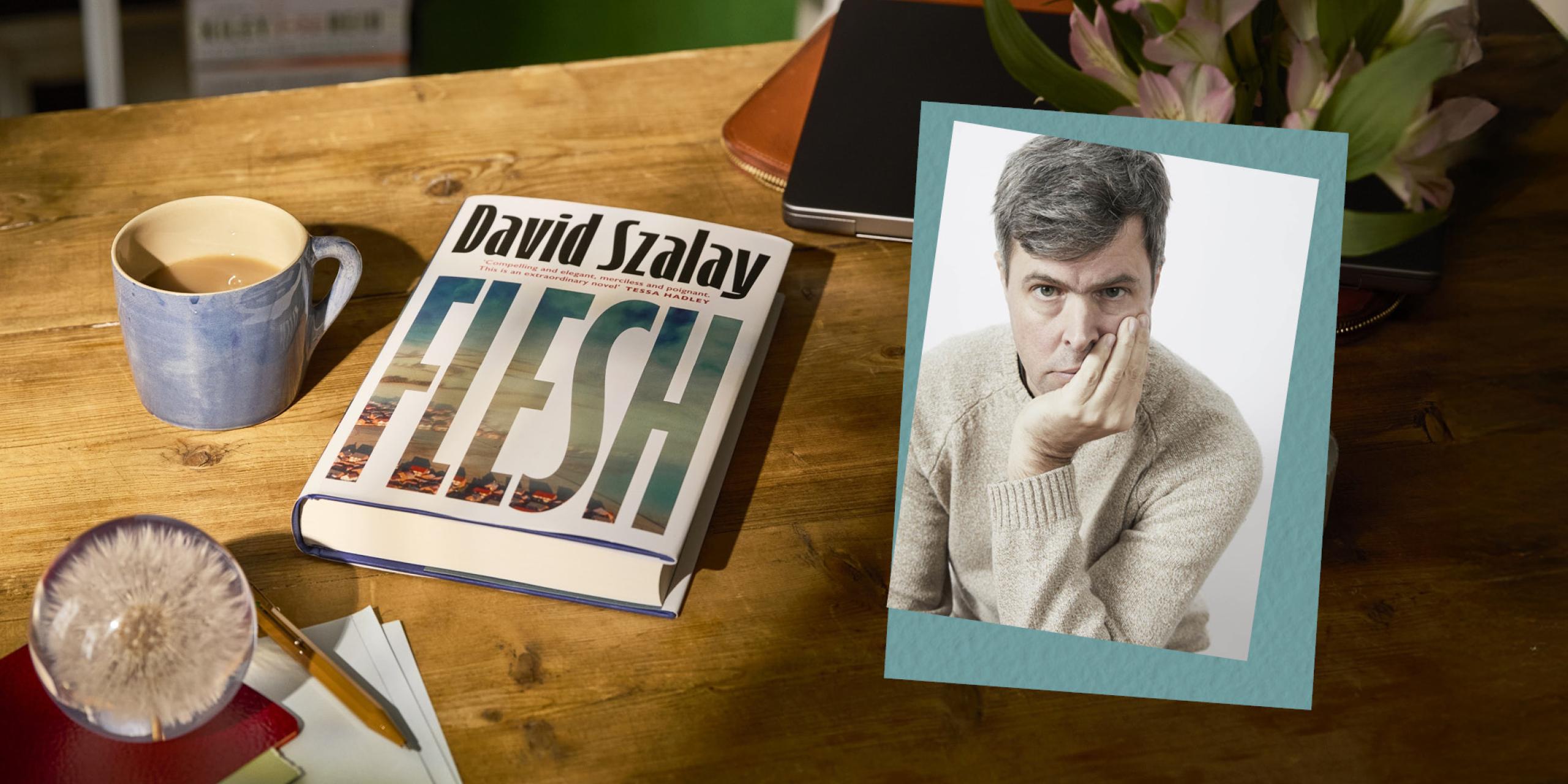
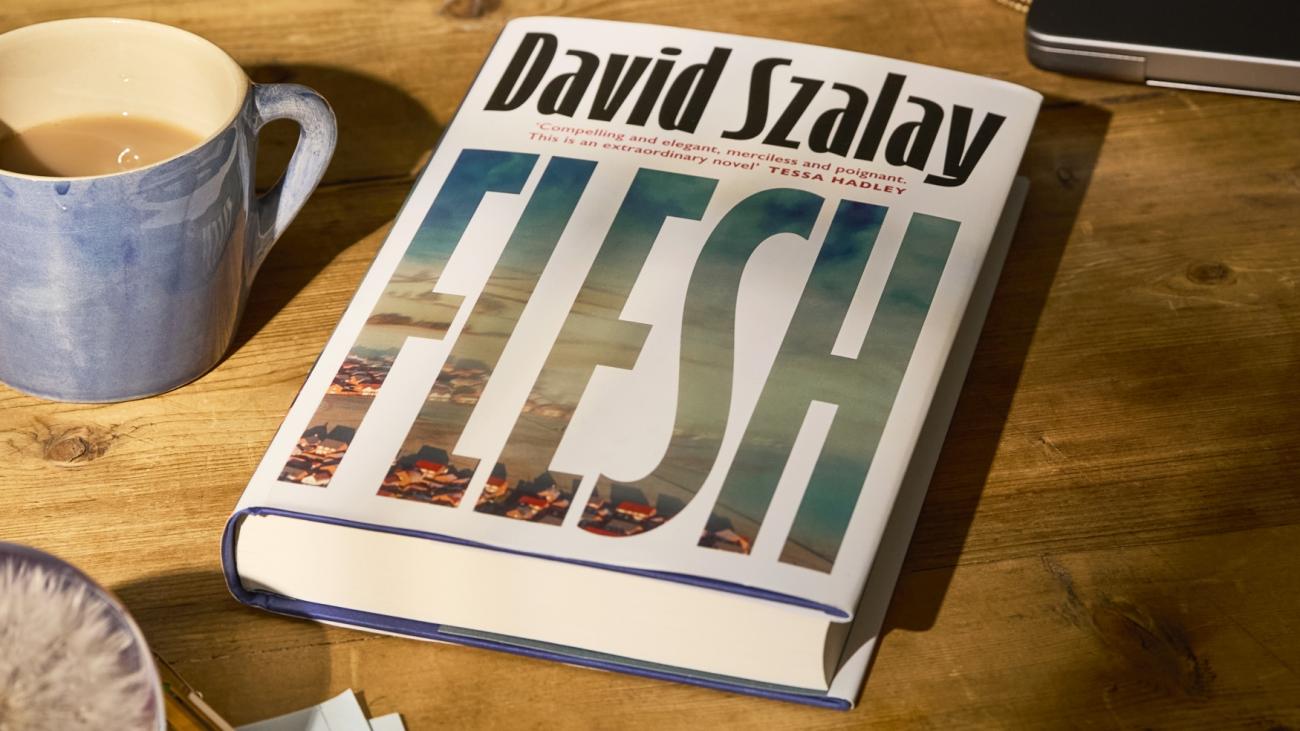
Flesh
Winner of The Booker Prize 2025
- By
- David Szalay
- Published by
- Jonathan Cape
Flesh is the winner of the Booker Prize 2025. A propulsive, hypnotic novel about a man who is unravelled by a series of events beyond his grasp


Features


- Book recommendations
The Booker Prize 2025 longlisted authors on the books they reread again and again

- Book recommendations
Booker Prize authors on the childhood books that made them fall in love with fiction

- Book recommendations