Flashlight
by Susan Choi
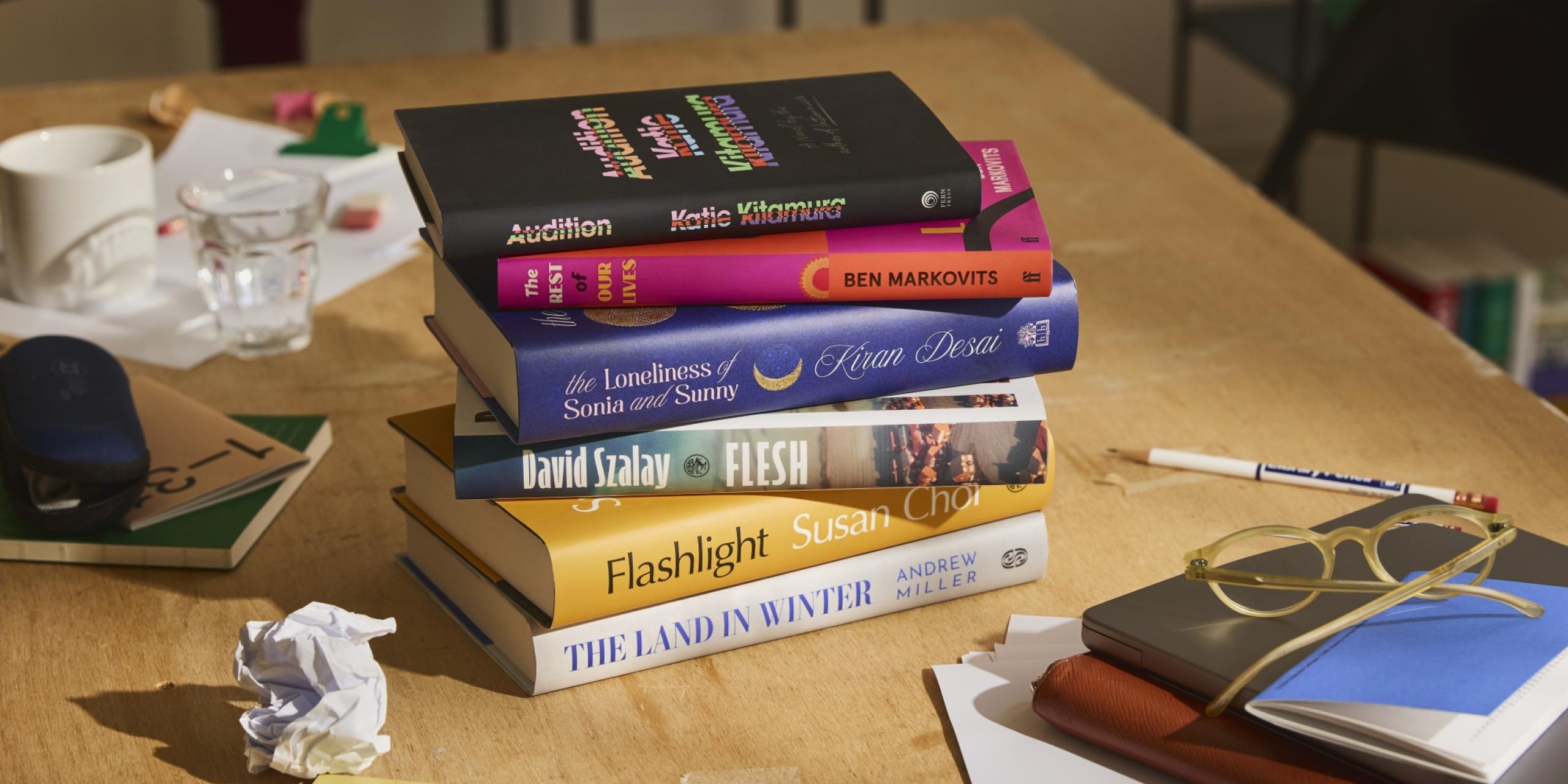
As the Booker Prize 2025 shortlist is announced, we’ve picked out the most interesting facts, trends and themes that have emerged in this year’s selection
As Roddy Doyle, Chair of the Booker Prize 2025 judges, says: ‘The six [shortlisted books] have two big things in common. Their authors are in total command of their own store of English, their own rhythm, their own expertise; they have each crafted a novel that no one else could have written. And all of the books, in six different and very fresh ways, find their stories in the examination of the individual trying to live with – to love, to seek attention from, to cope with, to understand, to keep at bay, to tolerate, to escape from – other people. In other words, they are all brilliantly written and they are all brilliantly human.’
Doyle, along with fellow judges Ayọ̀bámi Adébáyọ̀, Sarah Jessica Parker, Chris Power and Kiley Reid, selected this year’s shortlist from 153 works of long-form fiction, written in English and published in the UK and/or Ireland between 1 October 2024 and 30 September 2025. The winning book will be announced on Monday, 10 November at a ceremony in London, and the winning author will receive £50,000.
by Susan Choi
by Kiran Desai
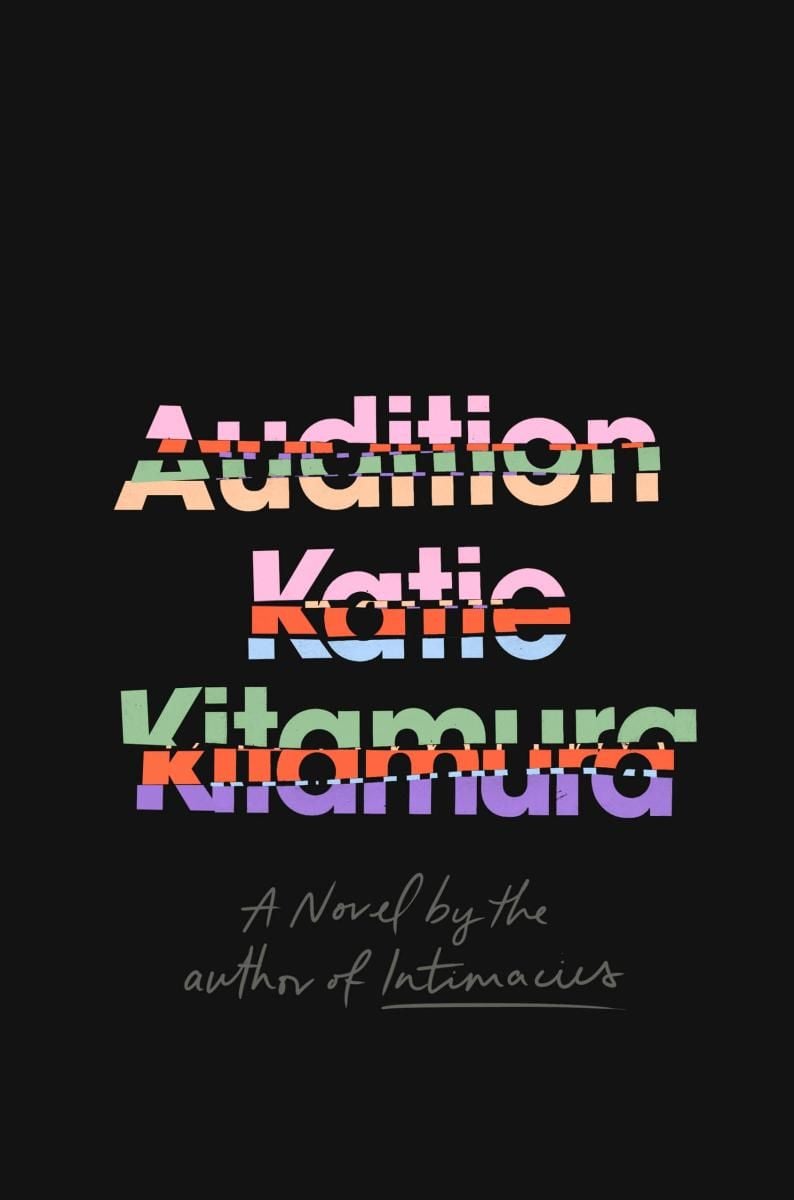
by Katie Kitamura
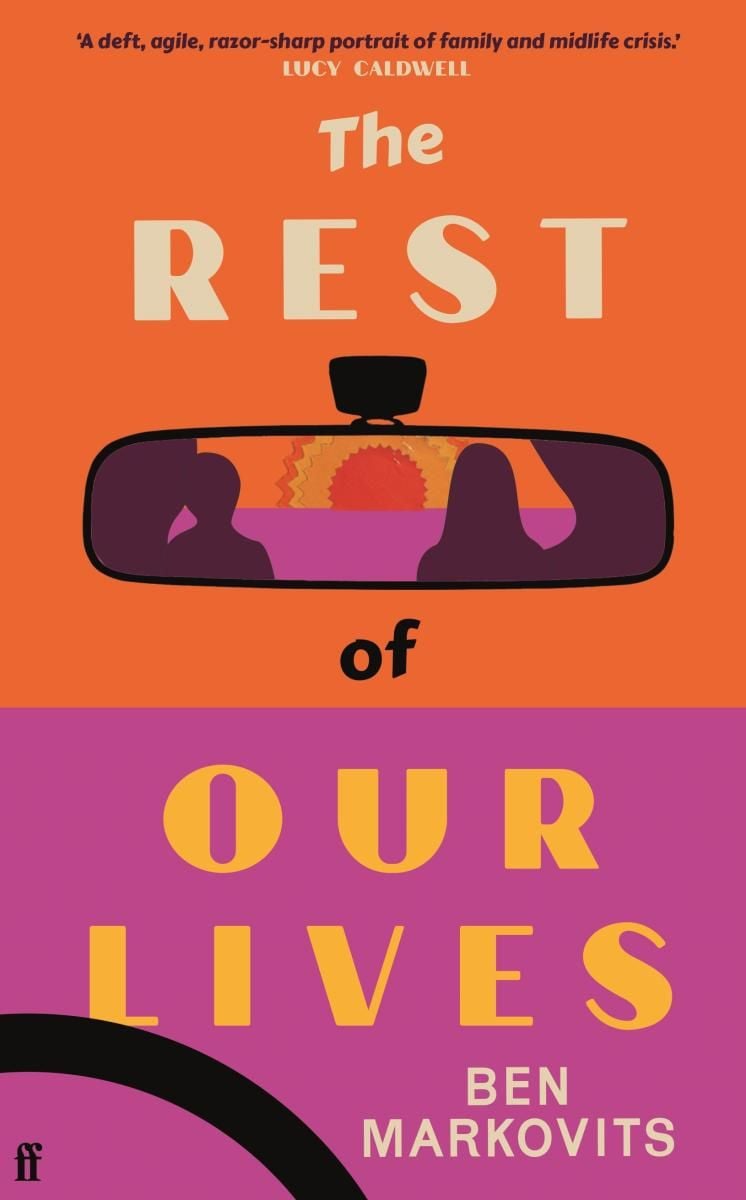
by Ben Markovits
by Andrew Miller
by David Szalay (prize winner)
Encapsulating a range of international experiences, the six shortlisted books transport readers from Hungary to Japan, from Venice to New York, from India to England’s West Country, and feature often rootless characters far from the places they once called home.
Kiran Desai’s The Loneliness of Sonia and Sunny is a globetrotting epic featuring a pair of young Indians whose paths cross and uncross over several years before they eventually fall in love. Flesh by David Szalay – who was born in Canada and has lived in Lebanon, Belgium, Hungary and the UK – follows the course of one man’s rags-to-riches life, as he drifts passively from a housing estate in Central Europe to the mansions of London’s super-rich.
The Rest of Our Lives by Ben Markovits – who grew up in Texas, London and Berlin – features a midlife crisis in the form of a meandering road trip from Cape Cod to California. Susan Choi’s Flashlight, which began life as a short story in the New Yorker, features a man, having been raised in Japan by Korean parents, seeking a better life in America, and chronicles his wife and daughter’s pain in the aftermath of his mysterious disappearance.
In Audition by Katie Kitamura, the life of a successful New York-based actress is cleaved in two by the appearance of a young man who may or may not be who he says he is. In Andrew Miller’s The Land in Winter, love turns cold for two married couples in post-War rural England.
Through classical storytelling (The Land in Winter, The Loneliness of Sonia and Sunny) and jaw-dropping, head-scratching experimentation (Audition), these are books that delve deep into human behaviour and the scars that we all bear. Some books take place over the course of a few days or weeks (The Rest of Our Lives, The Land in Winter, Audition); others over several decades (Flashlight, Flesh).
In unexpected and memorable ways, all feature characters navigating – and sometimes trapped in – familiar domestic situations. We find the power dynamic shifting between parents and their children (Audition, The Rest of Our Lives), couples whose marriages have come adrift (The Land in Winter, Flashlight), men incapable of expressing emotion or processing past trauma (Flesh, The Rest of Our Lives), families collapsing under the weight of their own history (Flashlight, The Loneliness of Sonia and Sunny), and individuals burdened by the roles others expect them to play (Audition, The Land in Winter, The Loneliness of Sonia and Sunny). Several books also explore the challenges of immigrant life (Flashlight, Flesh, The Loneliness of Sonia and Sunny), with protagonists often caught between nations, finding it hard to fit in, and struggling with loneliness or isolation.
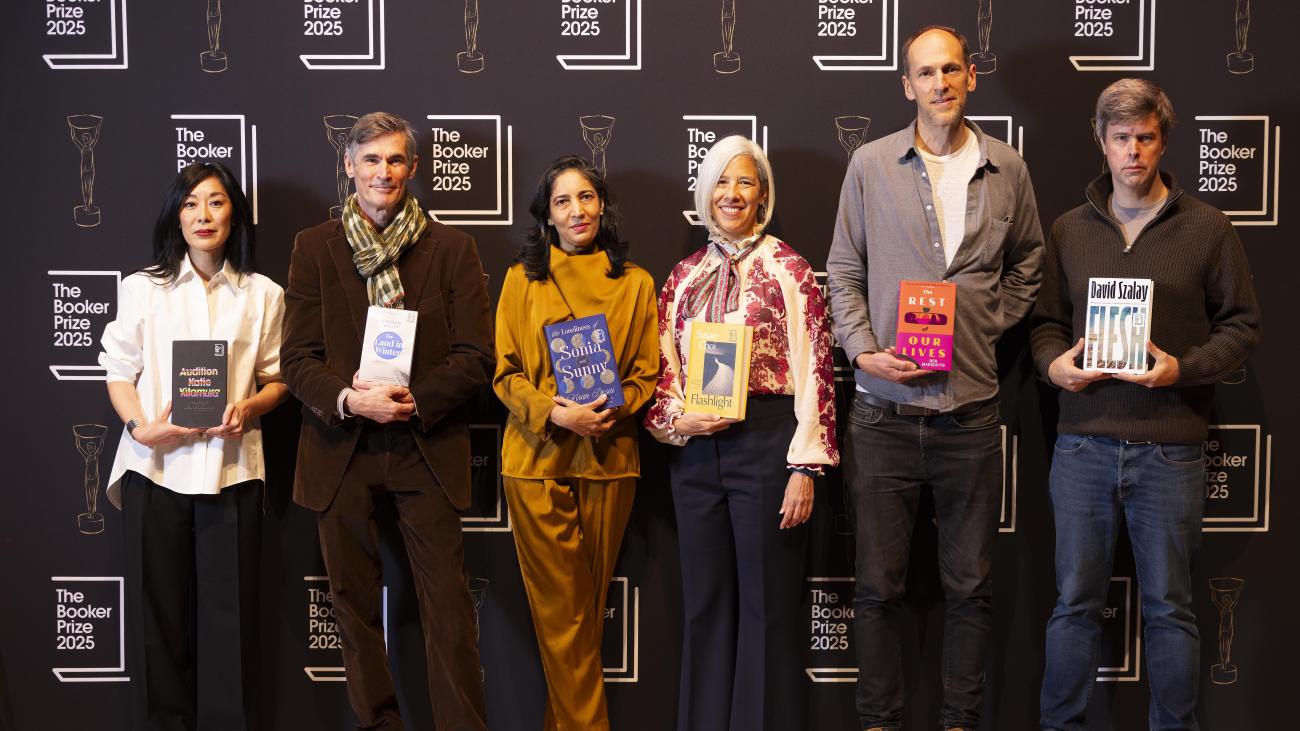
The Booker Prize 2025 shortlist
© Yuki Sugiura for Booker Prize Foundation
The shortlisted authors – three men and three women, for the first time since 2022 – are Indian (Kiran Desai), British (Andrew Miller), Hungarian-British (David Szalay) and American (Susan Choi, Katie Kitamura and Ben Markovits). Should Kiran Desai win, India would complete an unprecedented clean sweep of 2025’s Booker Prizes, after author Banu Mushtaq and translator Deepa Bhasthi won the International Booker Prize for their short-story collection Heart Lamp earlier this year.
Three of the authors – Susan Choi, Katie Kitamura, Ben Markovits – are shortlisted for the Booker for the first time. Andrew Miller (Oxygen, 2001) and David Szalay (All That Man Is, 2016) are both making their second appearance. There’s one previous winner on the list – Kiran Desai, who won the prize in 2006 for her book, The Inheritance of Loss – her mother Anita Desai was shortlisted for the Booker three times. Should she win again in 2025, Kiran Desai would become only the fifth author to win the prize twice, and would join a distinguished quartet of double winners made up of Margaret Atwood, Peter Carey, J.M. Coetzee and Hilary Mantel.
With no debut authors featured this year, the 2025 shortlist is instead packed with experience, and with well-established writers deep into successful literary careers. The shortlistees have written 41 adult novels (plus a couple of children’s books) between them: The Rest of Our Lives is Ben Markovits’ 11th adult novel (he has also written a middle-grade children’s book, Home Games). The Land in Winter is Andrew Miller’s 10th novel, while Flesh is David Szalay’s sixth. Flashlight is Susan Choi’s sixth novel (she has written a children’s book, Camp Tiger, too), and Audition is Katie Kitamura’s fifth. Kiran Desai has written the fewest novels – The Loneliness of Sonia and Sunny is her third, and took 20 years to write. Perhaps unsurprisingly, it’s the longest book on the shortlist, at almost 700 pages. ‘It’s been a very hard book for her to write,’ Desai’s friend Salman Rushdie said recently, ‘and I hope it doesn’t take her another 20 years to write the next book.’
Despite writing so many novels, the shortlistees have lives beyond books, too. Katie Kitamura, who trained as a ballerina, also works as an art critic. Andrew Miller is a keen sailor, plays the mandolin in a folk band and has a black belt in aikido. After college, Ben Markovits was a professional basketball player in Germany (sport features in several of his books). Susan Choi was once a fact-checker for the New Yorker, while David Szalay has written a number of radio dramas for the BBC.
The Booker Prize 2025 shortlist
© Yuki Sugiura for Booker Prize Foundation
Four of the six shortlisted books are published in the UK by Penguin Random House, including two published by its Jonathan Cape imprint, which has published nine previous Booker Prize winners, including last year’s winner, Orbital by Samantha Harvey. PRH imprint Hamish Hamilton has published three Booker Prize winners (including Kiran Desai’s previous novel), most recently Bernardine Evaristo’s Girl, Woman, Other, in 2019, while another PRH imprint, Fern Press, appears on the shortlist for the first time.
Faber – the only indie on this year’s shortlist – has published seven Booker winners, the most recent of them Anna Burns’ Milkman in 2018. Hodder & Stoughton imprint Sceptre is seeking to win the prize for the first time, having published six Booker-shortlisted novels.
The Booker Prize 2025 judges: Ayọ̀bámi Adébáyọ̀, Chris Power, Kiley Reid, Roddy Doyle and Sarah Jessica Parker, photographed at Fortnum & Mason in London
© Tom Pilston for Booker Prize Foundation
Reviewing Flashlight in the Washington Post, Ron Charles called it a ‘formidable’ novel in which ‘geopolitics are sharpened to a diamond point that crushes one little family’. He added that the book is ‘severely allergic to summary, so watch what you read about it. Even categorizing this story as a mystery risks prematurely exposing the novel’s intricate structure to too much light. But what can be safely revealed is that Choi is writing about people who struggle and fail to find a stable sense of identity in a shifting world conspiring against them.’
In the Guardian, Alex Clark described The Loneliness of Sonia and Sunny as an ‘immensely entertaining and generative novel’, that is ‘capacious and shape-shifting’ and ‘filled with subtexts and shadow narratives’. Writing for Indian business publication Mint, Somak Ghoshal said the book ‘demands serious commitment from the reader – and it’s not difficult to give it’. The prose, Ghoshal added, ‘flows like a mountain stream, uninhibited even when faced with obstacles’.
Reviewing Audition for the TLS, Ellen Wiles wrote: ‘Kitamura’s prose is remarkable for its minimalist quality, characterized by brief, declaratory observations and acute psychological insights. Reading her can be a bit like watching a play through binoculars, allowing her readers to examine the characters’ movements and facial expressions in close-up.’ Writing for the Chicago Review of Books, Dez Dehaies said: ‘What Kitamura achieves in Audition is great not only because of the two competing narratives, but because of the interplay between them, and the questions they raise about which (or if both) are performances. How many realities can the narrator be separate from at once, and from how many does she know that she has removed herself?’
In the Telegraph, George Cochrane said of The Rest of Our Lives, ‘Novels of midlife disappointment have become Markovits’s stock-in-trade over the past decade or so. He does them arguably better than anyone else.’ Noting the influence of John Updike and Richard Ford, Cochrane added: ‘Fluently written and effortlessly wise about families and middle age, [the novel] tells a compelling story that packs a serious emotional punch.’ Writing in the Spectator, Jude Cook said: ‘Written in a disarmingly flat yet piercingly truthful voice, The Rest of Our Lives confirms Markovits as one of America’s premier writers. A slam dunk of a novel.’
In the Independent, Martin Chilton called The Land in Winter a ‘brilliant novel’, adding: ‘wrap your emotions up tight because Miller steers it expertly towards a desolate, distressing ending’. In the Times, James Walton wrote: ‘These days we seem to have a frankly needy desire to see our forebears as benighted and ourselves as the best people who’ve ever lived. The Land in Winter is a gently persuasive reminder that every age gets some things right and plenty wrong – and that at the time it’s not always clear which is which.’
Reviewing Flesh in the Sunday Times, Johanna Thomas-Corr wrote: ‘It’s rare to find prose this sparse that doesn’t feel affected, but Szalay handles surface and depth with skill, as only great novelists can. Flesh is a revelatory novel that will make you look afresh at every eastern European doorman or bouncer you encounter.’ In the Financial Times, Luke Brown wrote: ‘Such novels are now rare, as male writers seem increasingly frightened to describe and reckon with the potentially destructive aspects of their character. In this context Flesh feels especially refreshing, illuminating and true. More than that, it is a moving work of art with a plot that compels and surprises and devastates.’
The Booker Prize 2025 shortlist
© Yuki Sugiura for Booker Prize Foundation