



- Book recommendations
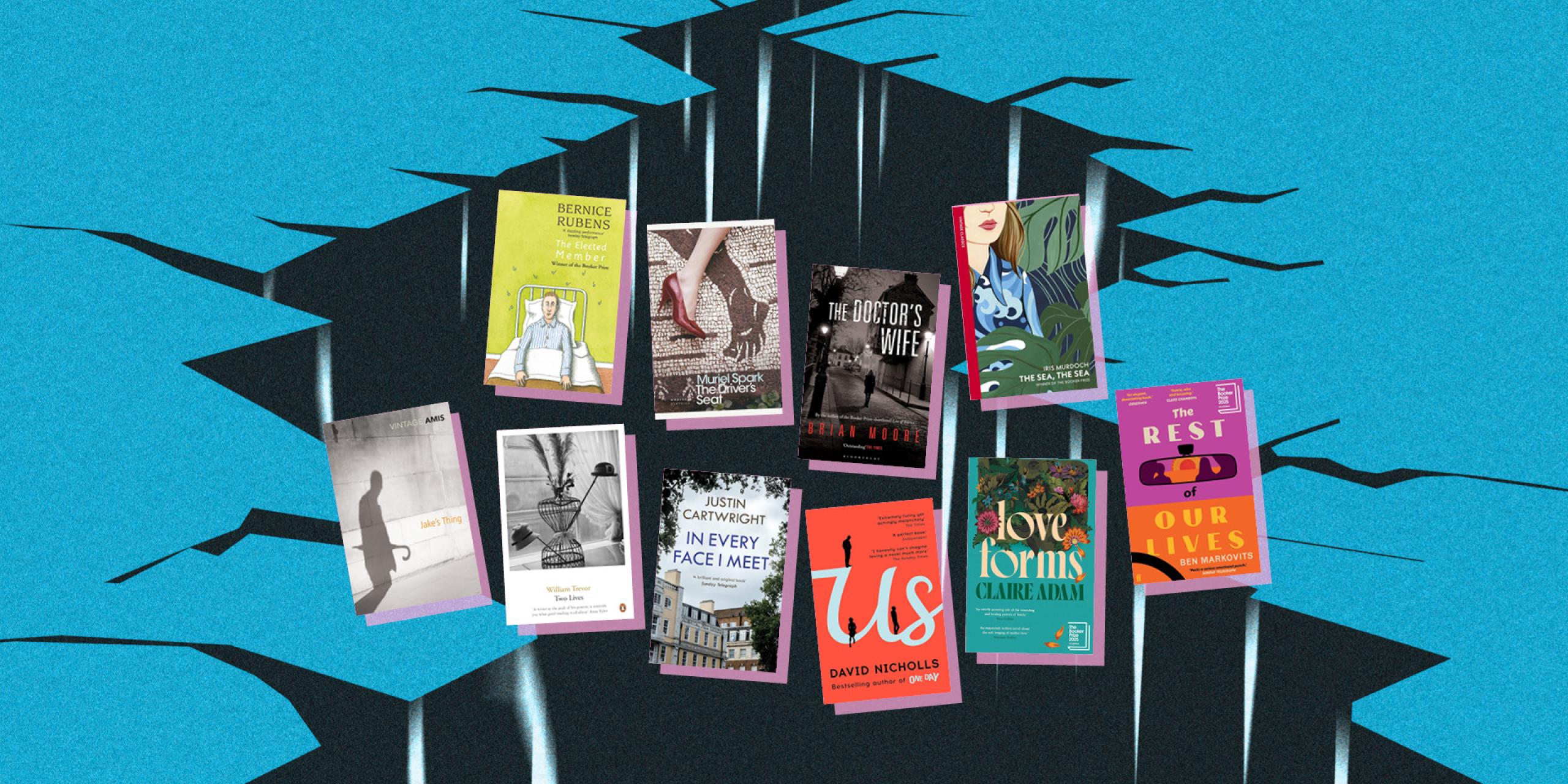
10 Booker Prize-nominated books that explore mid-life crises
10 Booker Prize-nominated books that explore mid-life crises
- Written by
- John Self
- Published
From Bernice Rubens in 1970 to Ben Markovits in 2025, the mid-life crisis has long been a rich source of material for Booker-nominated novelists
The mid-life crisis is having a moment. A handful of last year’s Booker Prize novels, at least in part, featured middle-aged protagonists having a wobble one way or another – Flesh, The Rest of Our Lives, even The Land in Winter.
It’s rich territory for a novel: conflict, regret, the echoing past and the narrowing future – and writers may even draw on their own experience to write about it. Martin Amis said of his novel The Information that the book wasn’t about a mid-life crisis, the book was the mid-life crisis.
Here are 10 books from the Booker Library that take apart a mid-life crisis – and sometimes put it back together again.
Buy the book
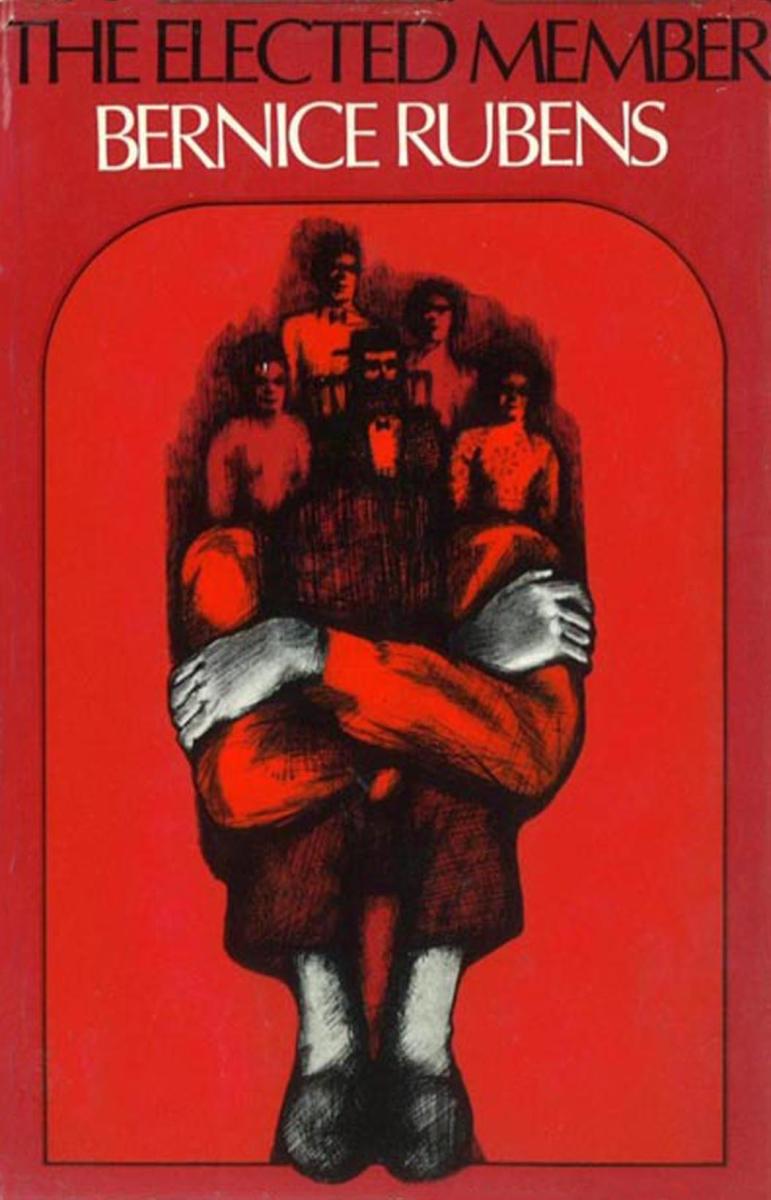
The Elected Member by Bernice Rubens (winner, 1970)
Norman Zweck, 41, his family’s cleverest child, has had a nervous breakdown, caused by drug addiction. In London’s East End Jewish community, his family are horrified. ‘To be driven mad by one’s own genius, that was something, that was respectable. But from drugs, that was unpardonable.’ His visions of silverfish in his bedroom see him committed to a psychiatric hospital – ‘they’re putting me in a loony bin!’ – where the nurse wheels around the tranquiliser trolley, or as Norman thinks of them, ‘drugs that made him blind to the silverfish’.
Meanwhile his family scour their memories for the cause of ‘his disintegration’, from Norman’s childhood to his work as a brilliant barrister. ‘Of course he’ll get better,’ says one local. ‘What else should he get?’ We’ll find that out, in a vigorous, lively style that sharpens the dark subject matter. Things get very twisty indeed as family members reappear, and secrets fracture open.
Bernice Rubens was the first woman to win the Booker Prize, and Norman’s trials were inspired by the hospitalisation of her older brother. Once asked during a school visit, ‘How do you write your books?’ she replied, ‘Very quickly’. True or not, her prodigious output included 24 novels, including one other that was shortlisted for the Booker, A Five-Year Sentence (1978), which opens in unmistakable style. ‘Miss Hawkins looked at her watch. It was two-thirty. If everything went according to schedule, she could safely reckon to be dead by six o’clock.’
Buy the book
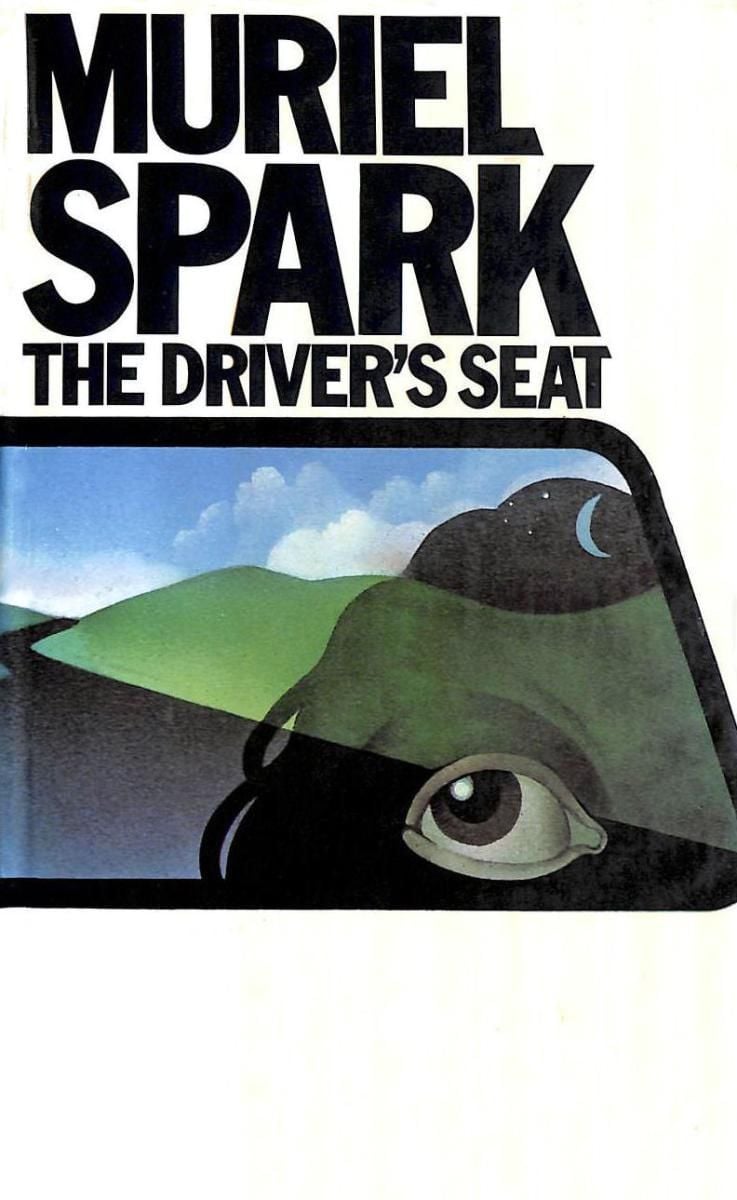
The Driver’s Seat by Muriel Spark (shortlisted, The Lost Booker Prize, 1970)
Lise, the central character of Muriel Spark’s stiletto-sharp novel, seems young to be having a mid-life crisis: she’s only 34. But she’s closer to the end than you might think: Lise, we find out early on, is travelling to Italy to arrange her own death. She’s a fascinating person, with a staid exterior (‘her lips are normally pressed together like the ruled lines of a balance sheet’) covering a core of eccentricity. Right from the start her behaviour is topsy-turvy, as she pulls off a new dress because the shop assistant says it doesn’t stain. Lise doesn’t want to repel stains: she wants all evidence preserved.
Everything in her life points toward erasure – her furniture at home folds away – but once abroad, Lise makes herself memorable to everyone she meets. She needs witnesses, after all. The Driver’s Seat is a horror story in broad daylight, and irresistible because even though we know what will happen, we need to find out how. The title relates to the way Lise expects to be later described (‘She made me go. She was driving’). But it also reminds us that Spark, as in her other books, is never one to hide the author beneath the page. When we read one of her novels, we know who is really in the driver’s seat.
The book was Spark’s favourite among her own novels, and she coined the term ‘whydunnit’, which Lise herself uses in the book. It was also made into a film in 1974, which starred Elizabeth Taylor. No, not the Booker-shortlisted Elizabeth Taylor: the other one.
Buy the book
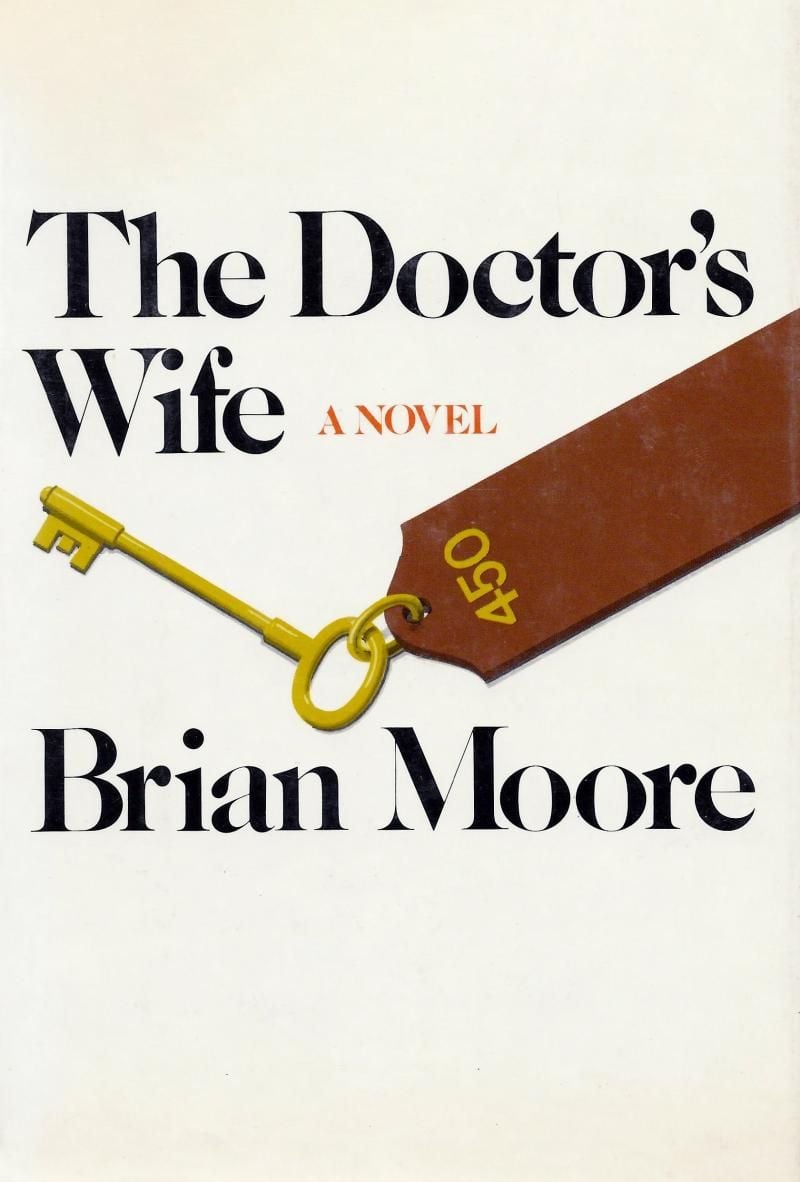
The Doctor’s Wife by Brian Moore (shortlisted, 1976)
This novel is evidence that the oldest subject can be made fresh and exciting. It’s the story of an extra-marital affair – the classic mid-life crisis symptom – between Sheila Redden, the attractive wife of a dull doctor in Troubles-torn Belfast, and a student she meets on a trip to Paris. Once her husband was ‘always wanting’, but no more, and she loves being found desirable again, especially by a handsome younger man. Moore’s other two Booker shortlistings were for thrillers, and The Doctor’s Wife, with its fast pace and shocking developments, is a thriller, too: the reader races through to see how this moral quandary works out.
Moore was renowned for his novels told from a woman’s viewpoint – he knew that, because of the arrangements of Irish society, there were pressures for a woman protagonist that wouldn’t apply to a man. This book also, like many of Moore’s novels, showed an Irish person filling the gap left by the decline of belief in God: in other books it was art or alcohol, but for Sheila it was sex, and living in the moment. ‘There is no past, there is this, just this.’ But the explicit scenes famously meant it was vetoed from winning by one judge, Mary Wilson. She was so squeamish about sex that she even referred to it by a euphemism: ‘PD’ or ‘physiological detail’.
Brian Moore was born in Belfast but left before he began writing books; he lived in Canada and California, but set many novels in his home city. He once told his friend Julian Barnes that he hoped he wouldn’t die in the middle of a novel, ‘in case some other bastard came along and finished it for me’. As it happens, he did die in the middle of a novel – about the French poet Arthur Rimbaud – but no one has done the dirty on him, yet.
Buy the book
The Sea, The Sea by Iris Murdoch (winner, 1978)
Charles Arrowby, the anti-hero of Iris Murdoch’s Booker-winning novel, would deny that he is having a mid-life crisis, but he is not a reliable narrator. He’s a former actor who has retired to the coast to write his memoirs (though ‘it feels more like a diary’), where he will ‘repent a life of egoism’. Some chance. So he tells his story: the swims he takes in the sea, which boils like his own eccentric personality; the people in the village, whose lives he ruins; and the disgusting meals he meticulously describes (‘Boiled onions served with bran, herbs, soya oil and tomatoes, with one egg beaten in’). It’s all as energetic, engaging and funny as anything Murdoch wrote. ‘A readable novel is a gift to humanity,’ Murdoch told The Paris Review, and she proved it time and time again – not least with her seven Booker Prize nominations.
Charles Arrowby’s mad meals in The Sea, The Sea have attained cult status, with one writer recreating his recipe for breakfast sausage with apples and boiled onions. (‘I didn’t think that the tea-stewing did much for the apples.’) Murdoch herself was no foodie: her husband John Bayley did the cooking, and some of his methods had a distinctly Arrowby-ish tint. ‘Boil eggs in an electric kettle, then use the water for Nescafé,’ he told Harpers & Queen magazine. After Murdoch’s death, Bayley’s tastes simplified, and he largely survived on Pringles and sherry. The two lived all their married life in a famously chaotic home in Oxford, where, in the clutter of the kitchen, they once lost a ‘large and rather expensive pork pie’. It never turned up.
Buy the book
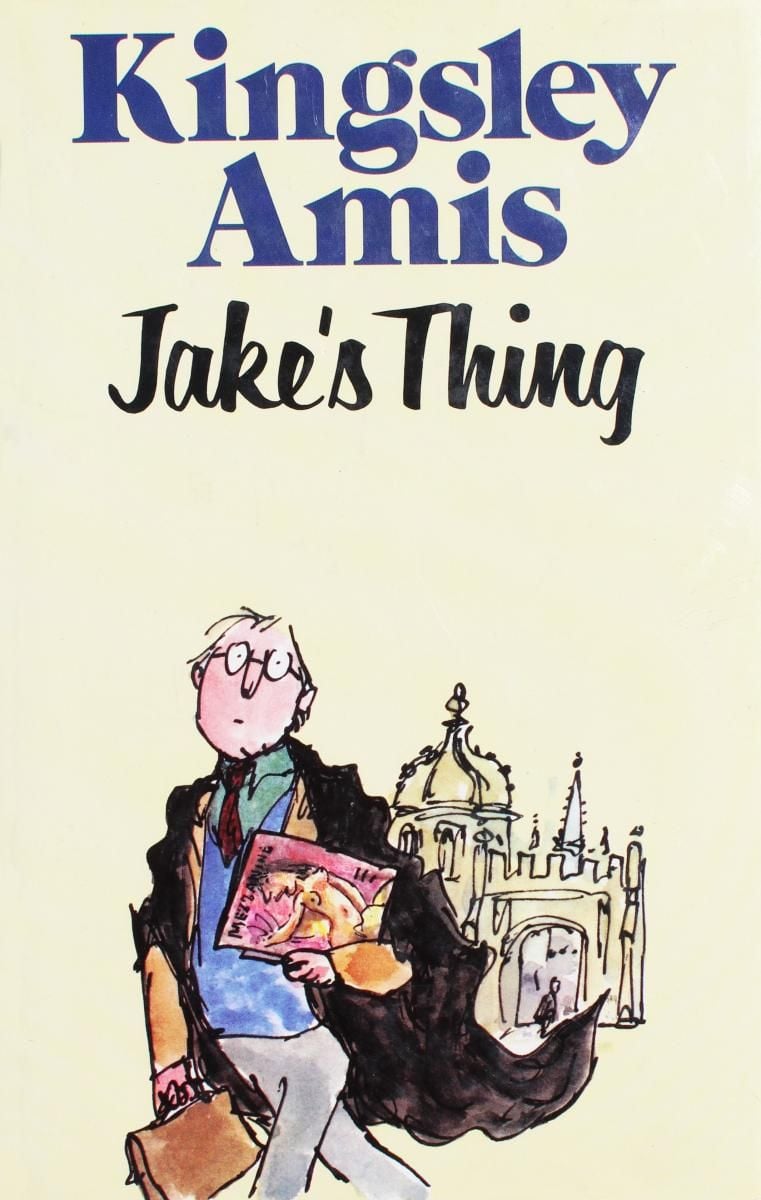
Jake’s Thing by Kingsley Amis (shortlisted, 1978)
If the stereotypical mid-life crisis involves a man, then the crisis here is definitely ‘what you might call a man’s thing’ – Jacques ‘Jake’ Richardson, an academic, is suffering from erectile dysfunction. In one sense the book has the air of a feverish dream, as every possible humiliation is piled upon Jake in his quest to sort out ‘whatever’s wrong with you’. He must wear a device to record his nocturnal erections. He exposes himself before a group of medical students while a researcher ‘will hook you to an electric circuit and introduce sexual stimuli’. Hardest of all, he must learn how to have sex again with his wife, using guidance notes. ‘He put his glasses on again. “Female breast area, here we are”.’
This being a Kingsley Amis novel, it is very funny, with riffs on everything from snooker players to pornographic magazines. There is a precise understanding of our relationship with doctors, as Jake tries to impress his GP with the number of women he has slept with (‘to Jake’s distinct annoyance he merely nodded’) and worries what he’s not being told. One specialist, examining Jake’s test results, stares at him with the ‘signal of a desire to fix in the mind something to tell one’s grandchildren’.
Jake’s Thing is interesting in itself, and as an example of the differences of the recent past. This lies not just in the time-specific jokes (Jake, on doctor’s orders, tries to masturbate to a photo of ‘a very pretty girl who at the same time looked like President Carter’), but also in the attitudes recorded. Would an equivalent book now make a comic point about Jake’s wife Brenda being fat? However, it’s self-aware, too: when Jake meets the medical students, it represents the objectification of a man who has spent much of his time objectifying women; and there’s a parallel plot about Jake’s Oxford college not admitting women students. And, ever the prescriptive linguist (he even wrote a book, The King’s English, about it), Amis rails against modish words like ‘workshop’ and ‘facilitator’. He lost that one.
Buy the book
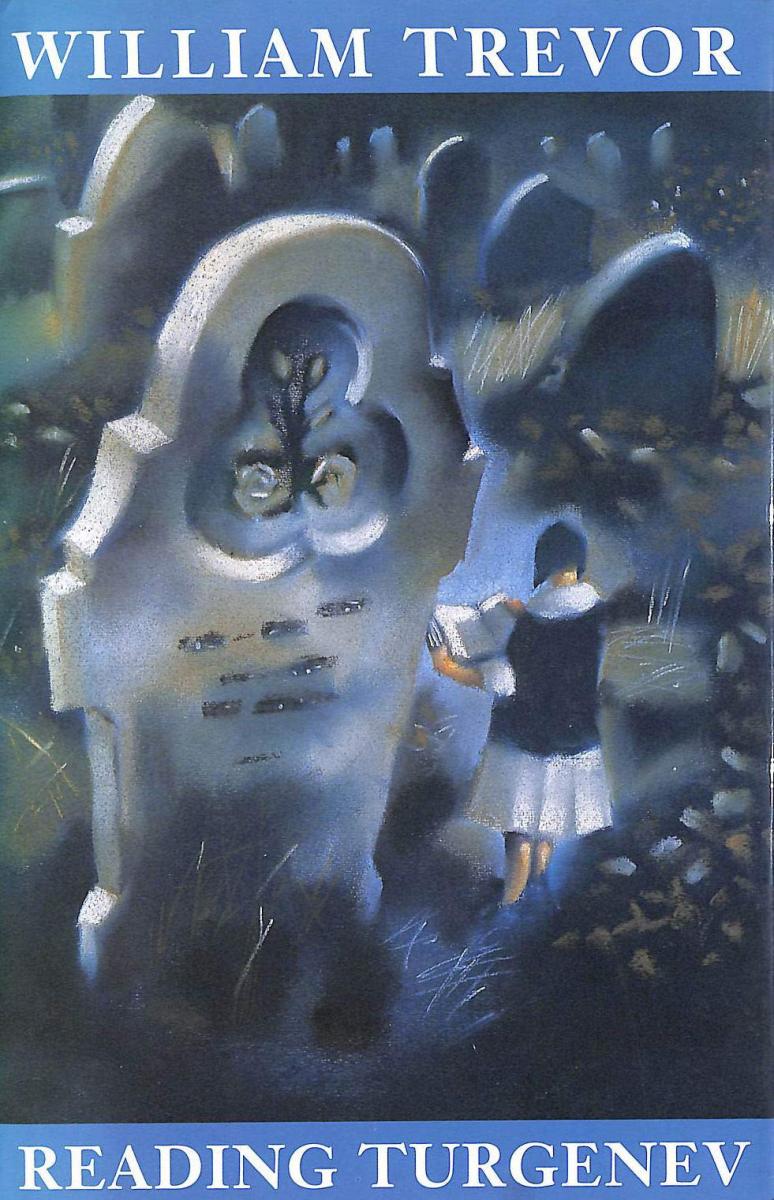
Reading Turgenev by William Trevor (shortlisted, 1991)
This novel gives us two mid-life crises for the price of one. In 1950s rural Ireland, two souls meet – or at least, make do. Young Mary Louise Dallon marries the older Elmer Quarry (‘he could nearly be your father’), heir to the town’s drapery business. Both families are unenthusiastic about the pairing. Mary Louise’s family members offer faint praise – ‘she could have done worse’ – while Elmer’s grasping sisters smell the loss of their money from the business. For them Mary Louise is ‘a penniless creature whom their brother might have bought at a fun-fair’.
This is a beautifully rendered account of the perils of closed communities and closed minds. Its smooth style takes nothing away from the brutal tragedies it inflicts on its characters, from an excruciating honeymoon to Elmer’s increasing reliance on alcohol. But if, as one character puts it, ‘only love matters in the bits and pieces of a person’s life’, then there is some hope for Mary Louise when she meets her cousin Robert, who thinks her ‘a beauty’ and shares his love for Russian novelists. But some bumps and shocks are coming, from a stolen watch to poisoned steak rissoles.
Trevor’s career spanned more than 50 years, and he was nominated for the Booker throughout: first in 1970 for Mrs Eckdorf in O’Neill’s Hotel, and last for his final novel Love and Summer in 2009. Reading Turgenev is unique in Booker Prize history: it makes up only half of a book – Two Lives – along with another, shorter, novel that wasn’t shortlisted. Trevor felt the stories ‘just seemed to belong together’: both feature constrained lives and escape into the imagination. On his creative process generally, he was less forthcoming. ‘I don’t quite know how it happens,’ he concluded.
Buy the book
In Every Face I Meet by Justin Cartwright (shortlisted, 1995)
This novel opens with a mystery – a murder trial is taking place, but who did what, and why? That’s what the rest of the book teasingly tells us. It takes us through the worst day in the life of 41-year-old Englishman Anthony Northleach. Anthony lightly mocks his mother’s ‘obsession with the decline of the country’, but she’s not alone. Even his peers ‘complain that the eyes of the young cannot be detained by the sight of people over forty’, and in his banking business, ‘the truth is, nobody has a clue’.
And so Anthony may well be having a crisis himself but then, it seems to him, so is everyone else. A middle-aged white man in 1990, he feels himself growing further from the centre of things, as London’s racial diversity grows, as gay men become out and proud. But a bigger crisis is heading Anthony’s way, as his chapters alternate with those of young Chantelle, a sex worker, and her pimp Jason. As their paths collide, we get a smart understanding of how differently others see us – to Chantelle, Anthony is just ‘a timid-looking bloke with round face and thinning hair’ – and an explosive conclusion.
Like other Booker authors Salman Rushdie and Fay Weldon, Cartwright worked in advertising before turning to fiction, and also directed a sex comedy film – the sort of film ‘that never ends up on anyone’s CV’. The response to his first literary novel, Interior (1988), galvanised him to make writing a career, though, 10 books later, he ruefully acknowledged that ‘I don’t think I’ve ever had such unequivocally good reviews since’. Not that this disturbed his self-belief: he once reflected that despite being a contemporary of Ian McEwan and Martin Amis, he was ‘thought of as trailing just behind them’. How did this make him feel? ‘Very bad, because I’m way better than all of them.’
Buy the book
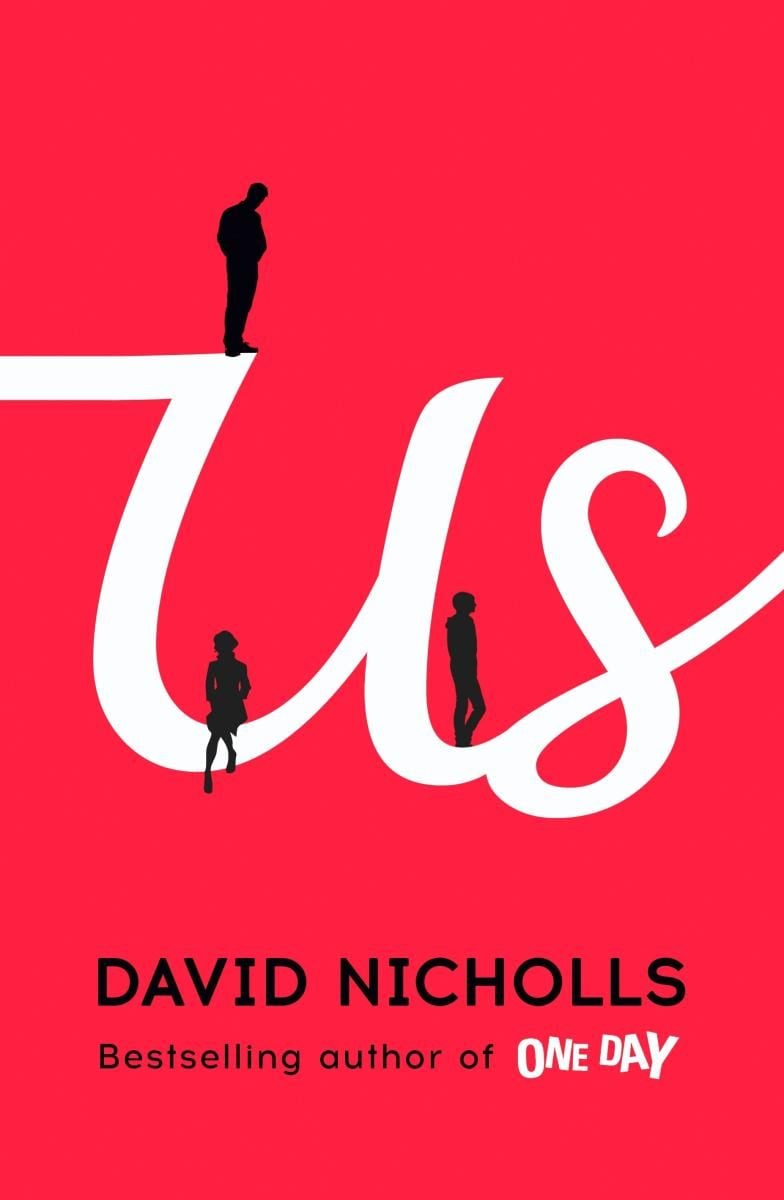
Us by David Nicholls (longlisted, 2014)
Here, a mid-life crisis extends to a marriage in crisis and a family in crisis. Douglas is a 50-something biochemist; his wife Connie an artist. They appear mismatched from the start: Douglas is a bit, well, dull (‘I never met a biochemist I didn’t like’) and finds Connie’s friends ‘noisy, cynical and obsessed with appearances’. Connie has recently declared the marriage over: Douglas disagrees, and sees a family trip, a traditional Grand Tour of Europe with their teenage son, as a final chance to make things good.
‘Ageing happens in a rush,’ Douglas tells us, ‘like snow falling off a roof’ – and it happens to relationships as well as people. Us is a bittersweet treat, full of unexpected swerves and rich comment on how families do and don’t work, such as the unrequited love of parents for their children, and father-son relationships. And Douglas’s nerdy, restrained ways – in making planning notes for the trip, he reminds himself to ‘maintain a sense of fun and spontaneity’ – mean that when he does break into emotional memories, the effect is devastating.
The clever travelogue structure, which informs the ideas in the novel as well as shaping it, is a speciality of Nicholls’s: his most famous novel One Day (2009) is set on the same date each year, over decades; his latest, You Are Here (2024), follows the path of a walk across the breadth of England. With Us, the structural cleverness even extends to a satisfying conclusion that comes on the turn of a page. As for his Booker longlisting, Nicholls was philosophical about not making the shortlist. ‘I knew I was never the top runner,’ he said. ‘It was great while it lasted!’
Buy the book
Love Forms by Claire Adam (longlisted, 2025)
Dawn, the middle-aged narrator of this novel, has a life with a hole in it. If parenting is the root of one type of mid-life crisis – ‘the children feed off the parents. As they grow, the parents diminish,’ she tells us – then a missing child is worse. Dawn grew up in Trinidad and, as we learn in the gripping opening section, had a child when she was 16 – but the child was taken away. Since then she has grown up, married, moved, had more children, but the loss has never left her.
This is a book of exceptional depth and richness, one of the fullest portraits of family life to be nominated for the Booker. It is subtle and restrained – Dawn’s cautious personality is summed up when she confesses to us, as though admitting a crime, ‘I’m just going to come out and say that I took half a sedative pill’. It balances scenes of action – birth, pursuit, conflict – with reflections on what gives our lives purpose.
Claire Adam had a Trinidadian father and Irish mother, and both countries’ strong literary traditions are evident in her work. She counts several other Booker authors among her influences: she has read J.M. Coetzee’s Disgrace ‘a zillion times. That is what I wanted to achieve’; and attended writing workshops with Claire Keegan. And she is convinced that William Trevor once gave her a lift in Ireland. ‘I said I wanted to be a writer and he just smiled a regretful, knowing smile.’
Buy the book
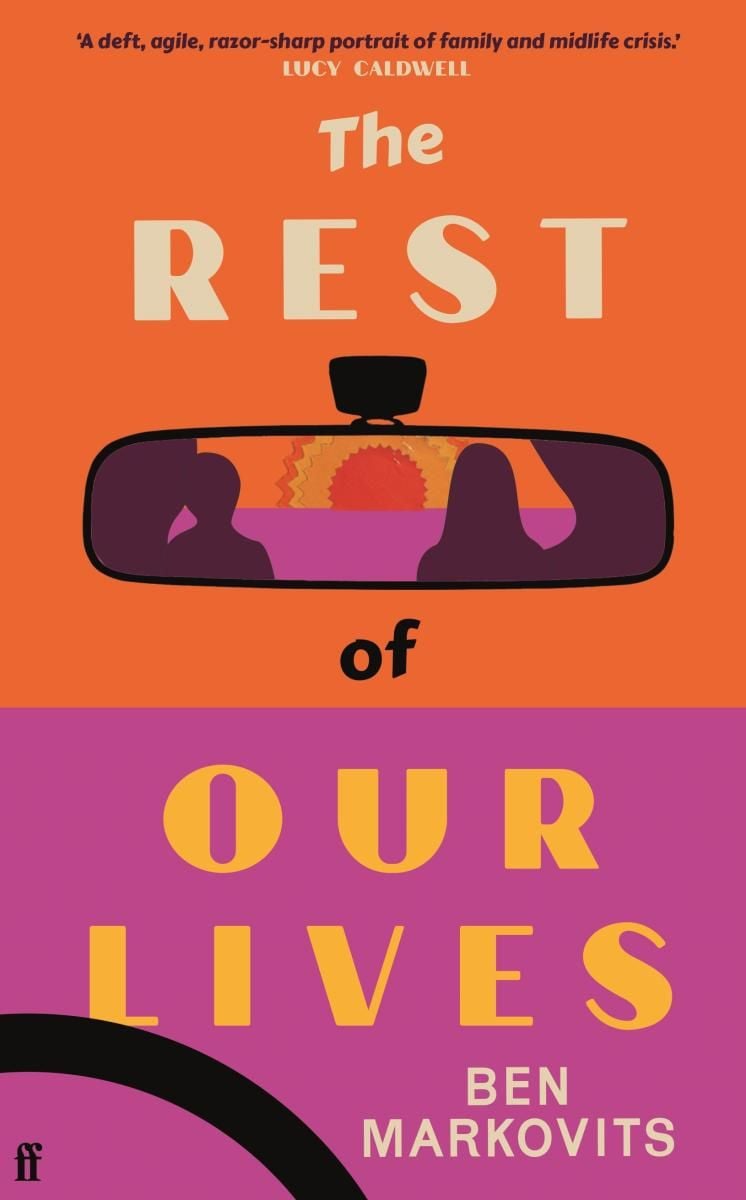
The Rest of Our Lives by Ben Markovits (shortlisted, 2025)
If there’s one Booker book that nails the modern male mid-life crisis, it’s this one. Tom is a classic case: a middle-aged (check) academic (check) who’s too wrapped up in himself to notice his wife Amy getting close to another man. ‘Fine, what do I care. It’s nice for her to get a little attention.’ But Tom’s laissez-faire attitude has limits, and now he’s off on a road trip after dropping his daughter – who calls him ‘Angry White Male’ – off at university.
The reader has to work out Tom’s true feelings, as he – typical man again – isn’t always honest about them. But he knows that ‘I had reached the age where I was the trouble’, and as he meets other old friends on his trip, he realises they’re all fed up or angry or just unable to find a new place in ‘a world that isn’t filled with people who love you’. Something has to give, and Markovits chooses a good one.
Ben Markovits didn’t want to be a writer – he always longed to be a basketball player. Unfortunately, ‘I’m really not very good at basketball. I spent years pretending to myself that I was better than I was’ – but for a writer nothing is wasted. ‘Compared to other things I know about, I know a lot about basketball,’ says Markovits – which is why the sport features in four of his 12 novels. And his next book? That will be ‘a kind of counterpart to The Rest of Our Lives’ – so watch this space.
Features

- Book recommendations
Taiwan Travelogue and 10 more Booker-nominated novels that are perfect for foodies

- Book recommendations
The Booker Prize 2025 longlisted authors on the books they reread again and again

- Book recommendations
10 of the best Booker-nominated murder mysteries, for Knives Out fans

- Book recommendations
- Long read
10 of the best memoirs by Booker Prize-winning authors

- Book recommendations
The best Booker audiobooks to curl up with this winter, chosen by you

- Book recommendations
The best children’s books for Christmas written by Booker Prize authors

- Book recommendations
The best wintry reads from the Booker Library, chosen by you

- Book recommendations