
‘I don’t know what made her do that – it was only afternoon – but maybe she was possessed by the same feeling of shame as I was, and the sense that a part of our lives was coming to an end’
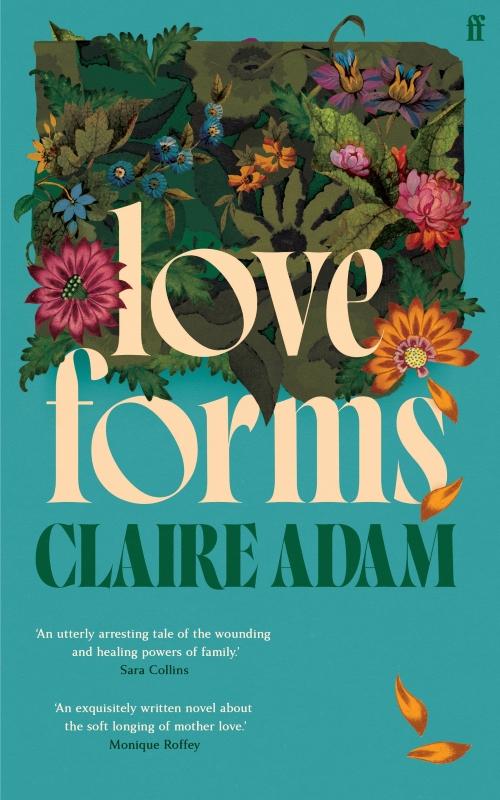
Love Forms
Written by Claire Adam
- Longlisted
- The Booker Prize 2025
- Published by Faber
Buy the book
In this heart-aching novel, a mother searches for the daughter she left behind a lifetime ago
Trinidad, 1980: Dawn Bishop, aged 16, leaves her home and journeys across the sea to Venezuela. There, she gives birth to a baby girl, and leaves her with nuns to be given up for adoption.
Dawn tries to carry on with her life – a move to England, a marriage, a career, two sons, a divorce – but through it all, she still thinks of the child she had in Venezuela, and of what might have been.
Then, 40 years later, a woman from an internet forum gets in touch. She says that she might be Dawn’s long-lost daughter, stirring up a complicated mix of feelings: could this be the person to give form to all the love and care Dawn has left to offer?

Love Forms is a rare and low-pitched achievement. It reads like a hushed conversation overheard in the next room
The Booker Prize 2025 judges
What the judges said
‘Claire Adam returns to Trinidad for her sophomore novel. We first meet Dawn, a pregnant 16-year-old, on a clandestine journey across the sea to Venezuela. There, she gives birth and returns home without the baby, just as her parents had prescribed. Now, at 58, Dawn is the divorced mother of two adult men, but the loss of the baby girl consumes her every move. The story, heartbreaking in its own right, comes second to its narration. Dawn’s voice haunts us still, with its beautiful and quiet urgency. Love Forms is a rare and low-pitched achievement. It reads like a hushed conversation overheard in the next room.’
What the critics said
John Self, Financial Times
‘With its rich creation of all the elements that make up a life, Love Forms achieves a sort of alchemy. Even when there isn’t much happening — accounts of her sons’ jobs; reflections on her marriage — it all goes to nourish the reader’s deepening understanding of Dawn. She feels real. A book that started by tantalising the reader ultimately delivers satisfaction.’
Alice Peake-Tomkinson, Spectator
‘Adam is a thoughtful writer and this is a soulful, unflashy narrative… Love Forms does not have the same propulsive quality as the kidnap narrative of Golden Child, but it’s a reflective novel that sensitively explores love and motherhood.’
Features

- Book recommendations
10 Booker Prize-nominated books that explore mid-life crises

- Book recommendations
The best Booker audiobooks to curl up with this winter, chosen by you

- Book recommendations
Booker Prize authors on the childhood books that made them fall in love with fiction


- Book extract


