

- Book recommendations
An extract from Love Forms by Claire Adam
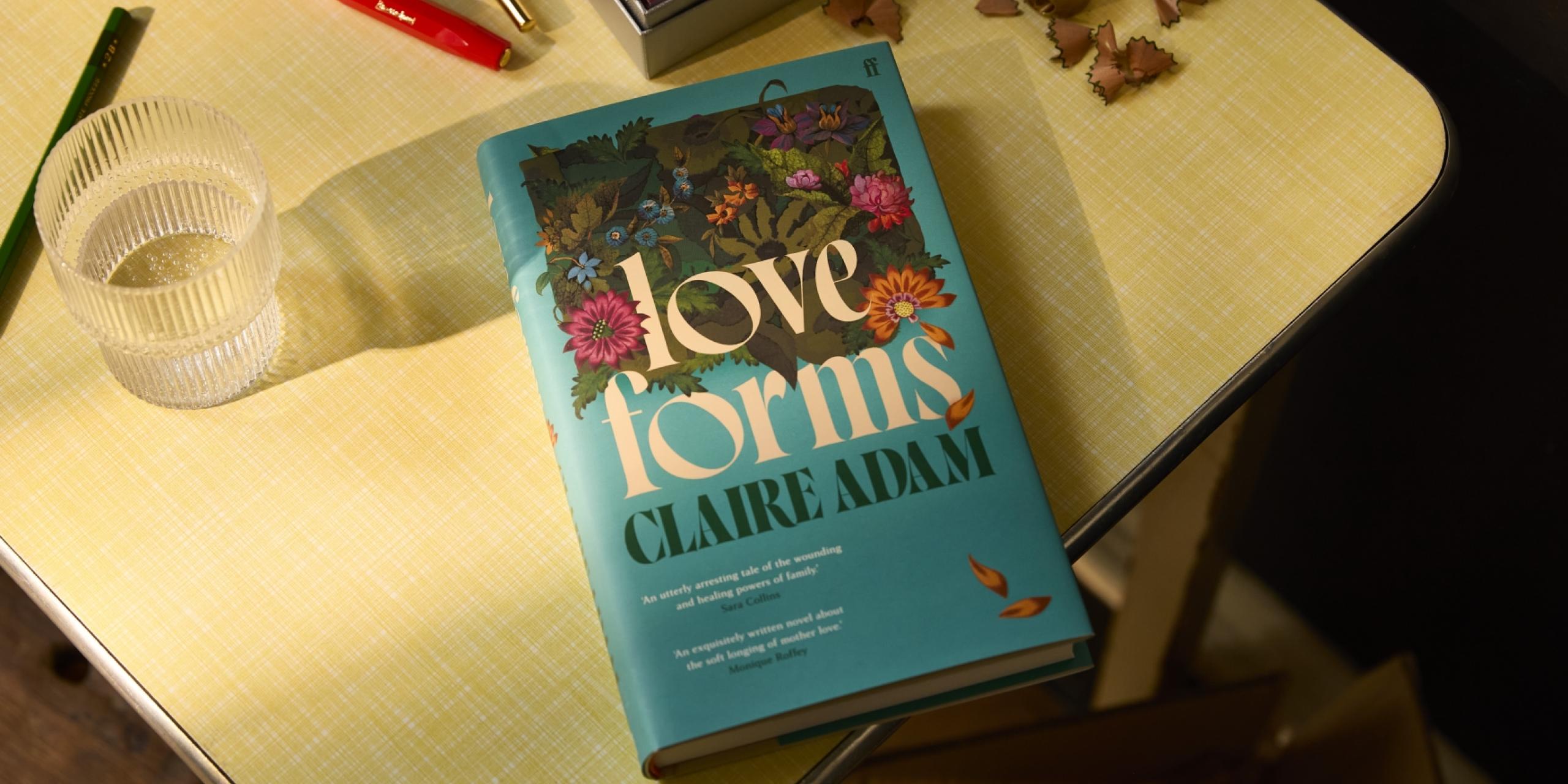
An extract from Love Forms by Claire Adam
- Written by
- Claire Adam
- Published
Love Forms is longlisted for the Booker Prize 2025. Read an extract here
Trinidad, 1980: Dawn Bishop, aged 16, leaves her home and journeys across the sea to Venezuela. There, she gives birth to a baby girl, and leaves her with nuns to be given up for adoption.
Dawn tries to carry on with her life – a move to England, a marriage, a career, two sons, a divorce – but through it all, she still thinks of the child she had in Venezuela, and of what might have been.
Then, 40 years later, a woman from an internet forum gets in touch. She says that she might be Dawn’s long-lost daughter, stirring up a complicated mix of feelings: could this be the person to give form to all the love and care Dawn has left to offer?
Love Forms is published in the UK by Faber. This extract is taken from the novel’s opening chapter.
Buy the book
It was my father who made the arrangements. My uncle helped, since he lived down south, where all this kind of business is carried out. I’m talking south-south: down past the airport, past the swamp, past the oilfields, everything. Way down at the bottom of the island, down where Columbus landed, long ago. There’s hardly anything down there, just fishing villages. Peaceful, old-time places: a few ramshackle wooden houses, and children playing marbles in the shade under the trees. Everywhere you look, in those places, you see pirogues pulled up onto the sand: little wooden boats, fishing boats, supposedly – although how much fishing the men really do nowadays is anybody’s guess. The boats are very basic. Open-topped, maybe twenty feet long, with just a plank of wood to sit on and a boat-engine clamped onto the back. But somehow they manage to make the journey across those seven miles of ocean between Trinidad and Venezuela – and carrying all kinds of things, not just fish. It’s a dangerous journey, though, even when special arrangements are made, as they were for me.
My father brought me the clothes I was to wear: black T-shirt and long-pants; a big long-sleeved men’s shirt to wear over the T-shirt, also in black, and with the buttons cut out. We’d be travelling by night, and anything that might catch in torchlight had to be covered, including my own skin. The Trinidad and Tobago Coast Guard was one difficulty, the Guardia Nacional on the Venezuelan side was another, but the worst problem was bandits. Bandits would steal the engine off the back of the boat and leave you out there to drift, or they would take the whole boat, and throw you in the sea. I also had a pillowcase to go over my head: the reflection of torchlight against things like eyeballs and teeth had been known to give people away.
The shirts, the trousers, the pillowcase – all these things were cheap, cheaply made; they weren’t things I would normally have worn, or owned. Probably, they came from some roadside vendor in central Trinidad. I doubt my father bought them himself: more likely, he sent one of his men out to do it – someone unimportant and unknown, who wouldn’t be recognised and connected to our family. I’m only guessing, of course. I didn’t ask about these details at the time. If I had asked, I’m sure someone would have said, ‘Dawn, girl, the less you know, the better.’
I don’t know what made her do that – it was only afternoon – but maybe she was possessed by the same feeling of shame as I was, and the sense that a part of our lives was coming to an end
It was early August when I made the journey. In my room, alone, I changed out of my shorts and T-shirt, into the black clothes my father had brought. My knapsack was already packed, hidden at the bottom of my wardrobe. I set it on the floor at the foot of my bed, looked through it, then zipped it closed again. I was full of a nervous energy; I would have liked to tidy up, or clean the room, but there was nothing left to do – the bed was made, the floor swept; the desk and bookshelves, still full of my ordinary school things, were tidied and dusted. I took my posters down from the walls. (The posters showed close-up photos of boys from music bands that were popular at the time.) I sat at my desk and pulled the tacks from my little pink-framed cork-board on the wall. All my revision schedules, exam schedules, my friends’ phone numbers, my motivational sayings handwritten on little scraps of paper – I took them all down from the cork-board, and crumpled them up. Then with nothing else to do but wait, I sat on the floor, my elbows on my knees, leaning against the side of the bed.
Only my mother was at home with me that afternoon. I don’t know how she passed the time; we didn’t speak. At some point, I heard her footsteps downstairs: she slid the patio doors shut, and then turned the key in the lock. I heard her pull the curtains shut too. I don’t know what made her do that – it was only afternoon – but maybe she was possessed by the same feeling of shame as I was, and the sense that a part of our lives was coming to an end. Or maybe she was just like me – filled with the same nervous energy, her hands searching for things to keep busy with, to help pass the time. I don’t know. After that, it went quiet: I heard nothing. I imagined her sitting on the sofa in the living room, her arms folded, her handbag and car keys waiting nearby on the kitchen counter. In any case, for quite a long time, maybe half an hour, we stayed in our different parts of the house, each thinking our own private thoughts, and watching the hands of the clock tick forward.
My mother drove. I sat beside her in the front seat: we wanted me to be seen, to look as if I were on my way to the airport. We went down the hill, first, along the road that my father had cut through the forest, then along the bumpy, potholed road by the golf course. A pause at the bend, waiting for a chance to merge onto the main road, and then the same old sharp acceleration as always – first gear, then quickly into second, then third – as she turned onto the stretch that runs alongside the Maraval river. Nowadays, there are gated communities all along that road, low-rise apartment blocks with pools and tennis courts, but back in 1980, on the day that my mother and I set out, it was still just bush. The picture I have of it in mind now is not so much from that day, as from all the other ordinary days that had gone before: thick wild grass grown to shoulder-height; forest trees, branches heavy with ripe fruit; bright flashes of birds amongst the green leaves.
The first handover was made in mid-afternoon, somewhere between the university campus and the airport. An unfamiliar road, and one I’ve never been able to find again. I remember squat brick houses sparsely placed, the rain just fallen, rising again now as vapour from the hot asphalt. My mother slowed outside one of the gates, and then pulled over in front of a parked car. A man appeared at her window: clean-shaven, neatly dressed; probably black nylon trousers and a light-coloured shirt-jac. I can still bring to mind something of his manner: courteous, eager, important; full of reassurance that his mind was only on the task at hand. ‘Right, Mrs Bishop,’ he might have said. ‘Right, right. Everything good. Everything done fix up. We ready.’

Love Forms by Claire Adam
© Yuki Sugiura for Booker Prize Foundation
Love Forms
- By
- Claire Adam
- Published by
- Faber
In this heart-aching novel, a mother searches for the daughter she left behind a lifetime ago
Features

- Book recommendations
The Booker Prize 2025 longlisted authors on the books they reread again and again

- Book recommendations
The best Booker audiobooks to curl up with this winter, chosen by you

- Book recommendations


