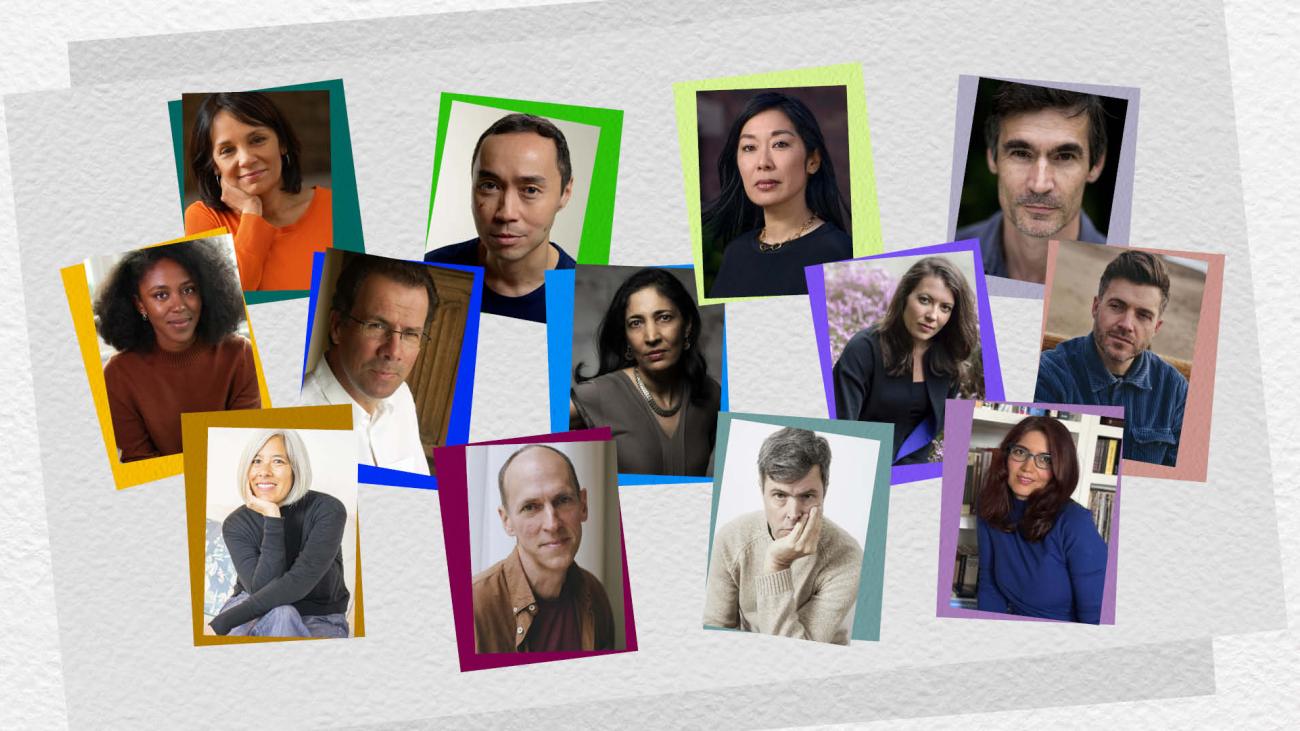
We asked the authors nominated for this year’s Booker Prize about the inspirations behind their longlisted works, their favourite books, and where and when they most like to write
- Published
From D.H. Lawrence to Derek Walcott, and from The Borrowers to Beloved, this year’s longlistees reveal the authors and books that inspired them to become writers
Claire Adam, author of Love Forms
‘One of our O-level texts in Trinidad was a play by Derek Walcott called Ti-Jean and His Brothers. It’s about three brothers from a poor family in rural Trinidad who pit themselves against the Devil. It was my first experience of a story that seemed to belong to us – the Caribbean – and that was told to us in our own language. It was thrilling. One felt as if one were being welcomed onto a huge stage, invited to join the party. I’m grateful to him for that.’
Tash Aw, author of The South
‘Toni Morrison’s Beloved, because it was a book I dreamed of emulating, knowing that I could never match its greatness. I still feel the same about both the writer and book now.’
Natasha Brown, author of Universality
‘Rather than a book, it was Roland Barthes’ essay ‘Myth Today’. In the essay, Barthes explores how ‘myths’ – language and images taken out of their original context and used to signify something new – can be used to make history (man-made constructs) appear as nature (things that have always existed). He makes the case that novels have the potential to reveal the effects of our cultural myths. The essay inspired me to start writing.’
Jonathan Buckley, author of One Boat
‘No book gave rise to any thought of my becoming a writer, and at no point did I ever envisage becoming a novelist. It was rather that I found that writing was something I had to do – at first, the writing was sporadic; it soon became a daily necessity.’
Susan Choi, author of Flashlight
‘All of the books I most loved as a child fall into this category, but Mary Norton’s series The Borrowers, C.S. Lewis’ Narnia books, and Susan Cooper’s The Dark is Rising series were the chief influences, the books that made me start writing very imitative, derivative stories, when I was seven or eight years old. I still totally idealise The Borrowers and The Dark is Rising – which I have not actually re-read since childhood – but I had a painful parting of the ways with Narnia, probably because I’ve read them in adulthood, since I was most determined to impose them on my own children. When I did, I realised that the books were not as I remembered them. Me and my kids put them aside.’
Kiran Desai, author of The Loneliness of Sonia and Sonny
‘Calvino is an author who carries the playfulness and inventiveness of a child’s world into works for adults. The Baron in the Trees, translated by Archibald Colquhoun, was in my mind when I wrote my first novel in my 20s. I loved the character of Cosimo, who fights with his family over eating snails, and goes off in a huff to live in a tree. I wrote an Indian version of a boy living up in a tree.
‘How do I feel about the writer now? Much later I read Calvino’s Six Memos for the Next Millennium, a work that proffers a code of aesthetics titled: Lightness, Quickness, Multiplicity, Visibility. The last one, unwritten, was to be Consistency, and was likely meant to stress underlying unity to an abundance of images and realised fantasies. I thought these tenets had an eerie parallel in Eastern philosophy, in Hindu and Buddhist thought. I became interested in the consequence – secular, artistic, spiritual – of these ideas.’
Katie Kitamura, author of Audition
‘The books I really love are not the books that make me think, ‘I could do that’ – instead, they’re books where I think, where I know, I could never do that. To put it another way, the books that have influenced me are not the ones that invite comparison, but the ones that remind me of how capacious the novel is as a form, and make me alive to its possibilities, all over again.’

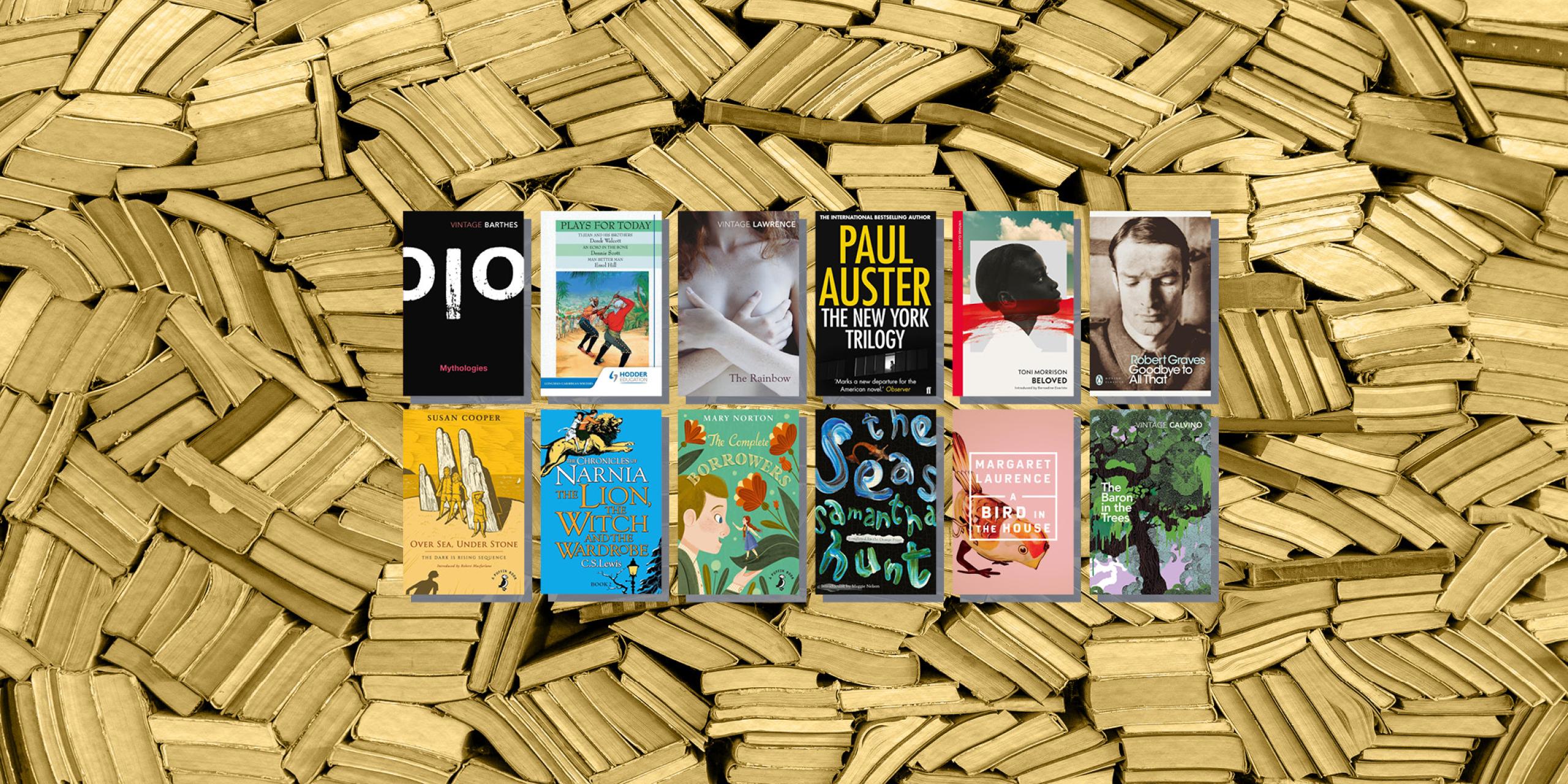
Some of the books that made the authors longlisted for the Booker Prize 2025 want to write: Ti-Jean and His Brothers, Beloved, Mythologies, The Borrowers, The Lion, The Witch and The Wardrobe, and Over Sea, Under Stone from The Dark is Rising series
The books that have influenced me are the ones that remind me of how capacious the novel is as a form, and make me alive to its possibilities, all over again
Katie Kitamura, author of Audition
Ben Markovits, author of The Rest of Our Lives
When I was 17, my family lived in Berlin for a year. We had moved often in my childhood, but for some reason I had reached the limit of how often I was willing to start over socially. So I read instead, any English-language books I could lay my hands on. One of them was Goodbye to All That by Robert Graves. Something about the low-key prose, his descriptions of teenage awkwardness, his interest in family and writing, hooked me, as much as his account of the First World War. I reread it several times that year, just for its conversational stye. It kept me company.
Andrew Miller, author of The Land in Winter
‘D.H. Lawrence’s The Rainbow. I think I’m prepared to physically fight anyone who wishes to be dismissive about DHL. He wrote as well as Hardy about the natural world. He wrote beautifully about children. He’s an intensely romantic writer (the courting of the Polish woman in The Rainbow shaped my ideas about loving as powerfully as anything else I can easily think of). He was serious about writing and he was serious about life. He cared deeply about the need – for individuals and for societies – to stay connected to what was most alive in them and most intuitive – and issued many warnings about what would happen if we failed in this.’
Maria Reva, author of Endling
‘A Bird in the House by Canadian writer Margaret Laurence. The book was assigned reading in high school, and I remember being intrigued by its linked story structure – I’d never seen that done before. It gave the best of both worlds: the punchiness of the story with the long arc of a novel. I’ve read many linked collections since, but hers still stirs me, like the memory of a first love. Its structure inspired the one in my first book, Good Citizens Need Not Fear.’
David Szalay, author of Flesh
‘It’s doubtful that there was a single book that did it. But a love of reading in general is certainly, I think, what makes anyone, in childhood anyway, want to be a writer. I think that the desire to be a writer is essentially a desire to imitate, to recreate the effect that other people’s writing has had on you. In that sense all fiction is fan fiction.’
Benjamin Wood, author of Seascraper
‘Paul Auster’s The New York Trilogy was the book that first inspired me to write fiction. I noticed a paperback copy of it in WHSmith’s display when I was sheltering from the rain one afternoon in my late teens. It caught my eye because the blurry photo on the cover had the look of a Radiohead album sleeve. I read it over a couple of days and realised there were things a novel could do that I hadn’t understood before, like conjuring an atmosphere so dark and moody it compels you to keep reading, no matter where the plot is leading you.’
Ledia Xhoga, author of Misinterpretation
‘Reading, at first, discouraged me from wanting to be a writer. As a child, when I’d read a book I particularly loved, I’d think – what a good deal I’m getting now. I’m sitting here doing nothing, yet I’m in this other world. The writer had to imagine everything, write lines and lines of dialogue and descriptions! I did enjoy writing poems and short prose for school assignments but never considered writing as a career. Much, much later on, I remember picking up Samantha Hunt’s The Seas and admiring the skill it took to create such deliberate, exquisite prose and starting to think of writing as a craft. To be clear, I did not think oh yeah, I can do that. I was infinitely more hesitant and intimidated. But it made me think about the possibility. And I still love her writing.’

Some of the books that made the authors longlisted for the Booker Prize 2025 want to write: The Baron in the Trees, Goodbye to All That, The Rainbow, A Bird in the House, The New York Trilogy and The Seas


Features


- Book recommendations
South Asian Heritage Month: 12 books to read from the Booker Library

- Book recommendations
10 Booker Prize-nominated books that explore mid-life crises

- Book recommendations
Eight Booker Prize-nominated books that celebrate ‘spinster lit’
- Book recommendations
Eight Booker-nominated books for fans of Wuthering Heights

- Book recommendations
11 of the best debut novels that were nominated for the Booker Prize

- Book recommendations
The Booker Prize 2025 longlisted authors on the books they reread again and again

- Book recommendations
The best Booker audiobooks to curl up with this winter, chosen by you

- Book recommendations
The best children’s books for Christmas written by Booker Prize authors

- Book recommendations