
This selection of books from the Booker Library promises jaw-dropping twists that showcase the art of great storytelling
The Booker Prize 2025 longlisted authors on the books they reread again and again
The Booker Prize 2025 longlisted authors on the books they reread again and again
- Published
If you’re looking for great fiction to re-visit over the Christmas break, take a look at what the authors nominated for the Booker Prize 2025 recommend
David Szalay, author of Flesh
‘A book I return to again and again is Samuel Pepys’s Diaries. It’s the most moreish book I know. Picking it up to read a few pages, I can easily get stuck with it for an hour. As fascinating as the differences between our world and the world of the 1660s are the similarities – it’s easy to imagine Pepys having a substantively identical life in contemporary London.’
Benjamin Wood, author of Seascraper
‘In Cold Blood by Truman Capote. I have a battered old hardback edition on my desk which a friend of mine salvaged from the back room of a charity shop and gave to me, knowing I was a fan. Whenever I need inspiration, I just open it at a random page and read a passage of Capote’s prose. He doesn’t miss a beat of rhythm. Every detail resounds and adds meaning to the whole. I find something new and unexpected in it every time: he had an extraordinary facility for articulating the smallest things he observed in people, good or bad.’
Kiran Desai, author of The Loneliness of Sonia and Sonny
‘Pedro Paramo by Juan Rulfo, translated by Margaret Sayers Peden. I read this book when I learned that Gabriel García Márquez knew it by heart (Love in the Time of Cholera was an inspiration for The Loneliness of Sonia and Sunny, as was Chronicle of a Death Foretold). This is a story about a story that will not be put to rest, one of a brutal history driven by a loveless man, of souls that have transgressed and will never find peace. The first lines still give me goosebumps: ‘I came to Comala because I had been told that my father, a man named Pedro Paramo, lived there.’ A man makes a promise to his dying mother to journey into the land of the dead to seek the justice she never received during her life.
‘Over years of re-reading it, I learned that Mexico had something to say to India, not just to the United States. And Mexico had something to say to me. Emigrant stories are ghost stories and murder stories. I could write a book, I thought, incorporating these ideas, even if in a very different form. I think it is important that artists in countries previously only in communication through a former colonial power, now communicate directly.’

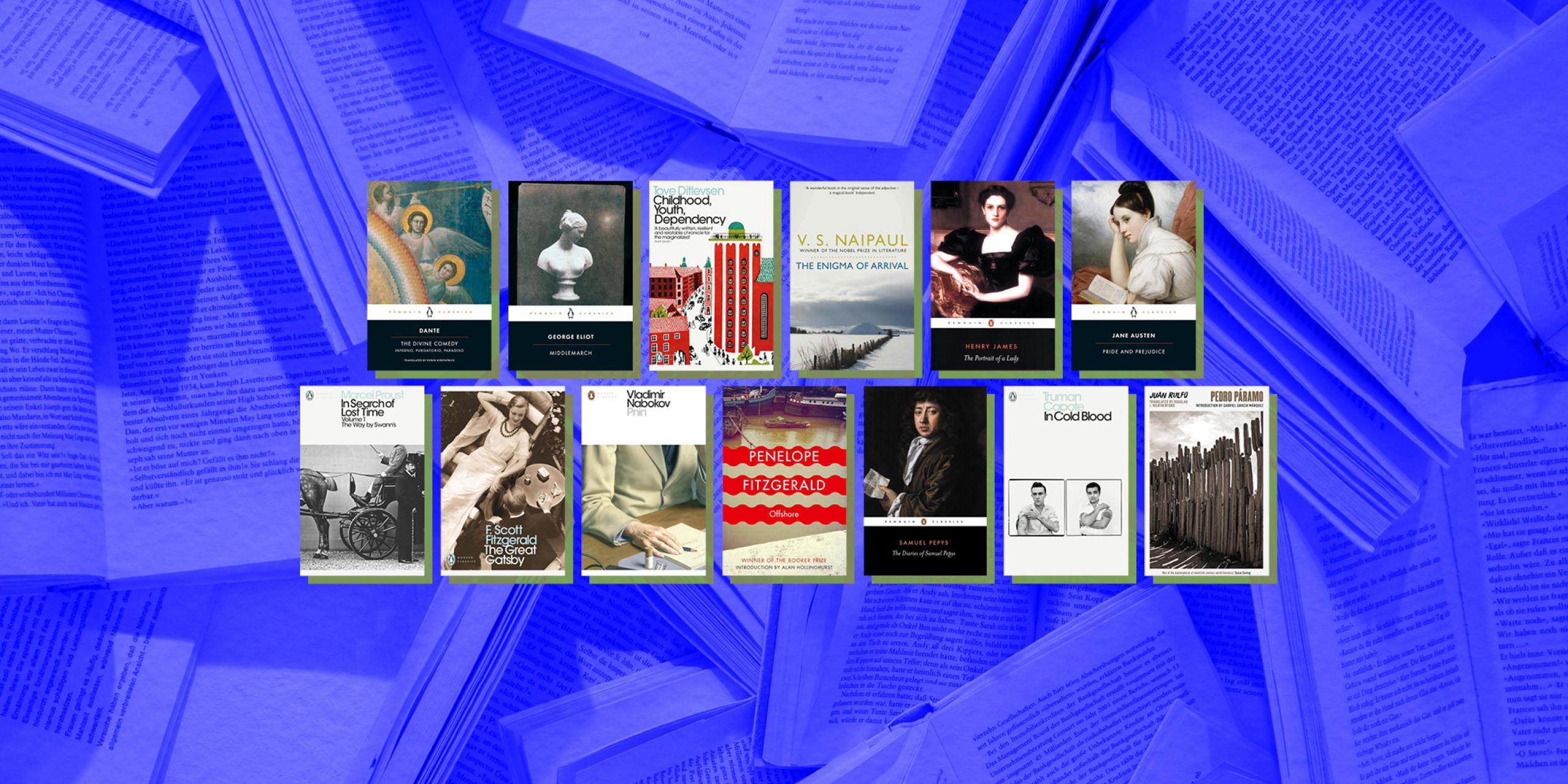
The Diaries of Samuel Pepys, In Cold Blood by Truman Capote, and Pedro Paramo by Juan Rulfo
Susan Choi, author of Flashlight
‘Because I love to read and to teach short novels, I re-read The Great Gatsby and The Prime of Miss Jean Brodie – among others – all the time, and every time I do, I’m amazed by how much the authors are layering in there, despite how short the books are.’
Ben Markovits, author of The Rest of Our Lives
‘Pnin by Nabokov. Partly because I teach it but also because I love it – I’m always glad to come back to it. It’s very clever, but very warm, too. One of the great things about it is that, even though on some level it’s a novel about the culture gap between Russians and Americans (and the misunderstandings between them, often played for comedy but not always), Pnin loves America, and most of the Americans are charmed by Pnin.’
Andrew Miller, author of The Land in Winter
‘Anything by Penelope Fitzgerald. So shrewd, so tough-minded, and often very funny. She is on the side of oddballs and the down-trodden. Her novels – all short – are never obvious, but you come away feeling you’ve been told something important about life. Undoubtedly one of the half-dozen best British writers of the second half of the 20th century. She won the Booker once and probably should have done so again.’

The Great Gatsby by F. Scott Fitzgerald, Pnin by Vladimir Nabokov, and Offshore by Penelope Fitzgerald
Katie Kitamura, author of Audition
‘I regularly reread The Portrait of a Lady and The Good Soldier. The Portrait of a Lady is one that changes almost every time I read it; it’s an infinitely renewable text, a book that reads the reader as much as the reader reads it. The Good Soldier is a book that at first glance might seem to have a somewhat loose or organic structure; its intricate structure becomes more and more impressive to me with each subsequent read.’
Natasha Brown, author of Universality
‘Jane Austen’s Pride and Prejudice.’
Tash Aw, author of The South
‘I’m currently re-reading Proust’s In Search of Lost Time, which is meant to be read repeatedly; meant to be savoured and grappled with; meant to inspire both wonder and at times boredom, but mainly, as the years go by, wonder. It’s a very long work and I’m only on my second reading in as many decades, but yes, my memory of characters and scenes changes in a magical way, which isn’t so surprising given that the book is about how we remember life.’

The Portrait of a Lady by Henry James, Pride and Prejudice by Jane Austen, and In Search of Lost Time by Marcel Proust
Jonathan Buckley, author of One Boat
‘I’ve returned to Ulysses and Finnegans Wake many times, and for the past decade I’ve read Dante’s Divine Comedy every year, one canto per day for three months. Dante, like Joyce, is inexhaustible.’
Ledia Xhoga, author of Misinterpretation
‘Middlemarch by George Eliot. I’m a bit obsessed with Dorothea Brooke and how her pious empathy is a strong motivation in everything she does, whether it is improving the cottages of farmers in her uncle’s 19th-century English estate or marrying a gloomy and boring clergyman. I love the characters and their psychological complexity. The novel has humour, heart, and the most beautiful last sentence ever written, which almost makes me cry each time. Yes, I do find different things in Middlemarch every time I read it, especially when I’m part of a reading group – the discoveries multiply!’
Maria Reva, author of Endling
‘Tove Ditlevsen’s The Copenhagen Trilogy, a three-piece memoir written in the late 1960s and early 1970s and translated into English by Tiina Nunnally in 2019. It follows her artistic fruition under the Nazi occupation as well as her struggle with addiction. Ditlevsen’s writing is sparse and immediate and diary-like, with deadpan, offhand descriptions of difficult events, sometimes to comedic effect. If I feel my sentences becoming gnarly and overwrought, I often return to her voice for calibration.’
Claire Adam, author of Love Forms
‘The Enigma of Arrival by V.S. Naipaul. It’s centred around his time living in Wiltshire, and it documents a journey of seeing and understanding, or a journey of learning to see and understand. I’m aware he’s a controversial writer, both hated and revered. I’ve learned a lot from reading him.’

The Divine Comedy by Dante, Middlemarch by George Eliot, Childhood, Youth, Dependency: The Copenhagen Trilogy by Tove Ditlevsen, and The Enigma of Arrival by V.S. Naipaul


Features


- Book recommendations
South Asian Heritage Month: 12 books to read from the Booker Library

- Book recommendations
10 Booker Prize-nominated books that explore mid-life crises

- Book recommendations
Eight Booker Prize-nominated books that celebrate ‘spinster lit’
- Book recommendations
Eight Booker-nominated books for fans of Wuthering Heights

- Book recommendations
11 of the best debut novels that were nominated for the Booker Prize

- Book recommendations
The best children’s books for Christmas written by Booker Prize authors

- Book recommendations
11 Booker-nominated books with the most memorable endings
- Book recommendations
Booker Prize authors on the childhood books that made them fall in love with fiction

- Book recommendations