

Shuggie Bain
by Douglas Stuart (prize winner)
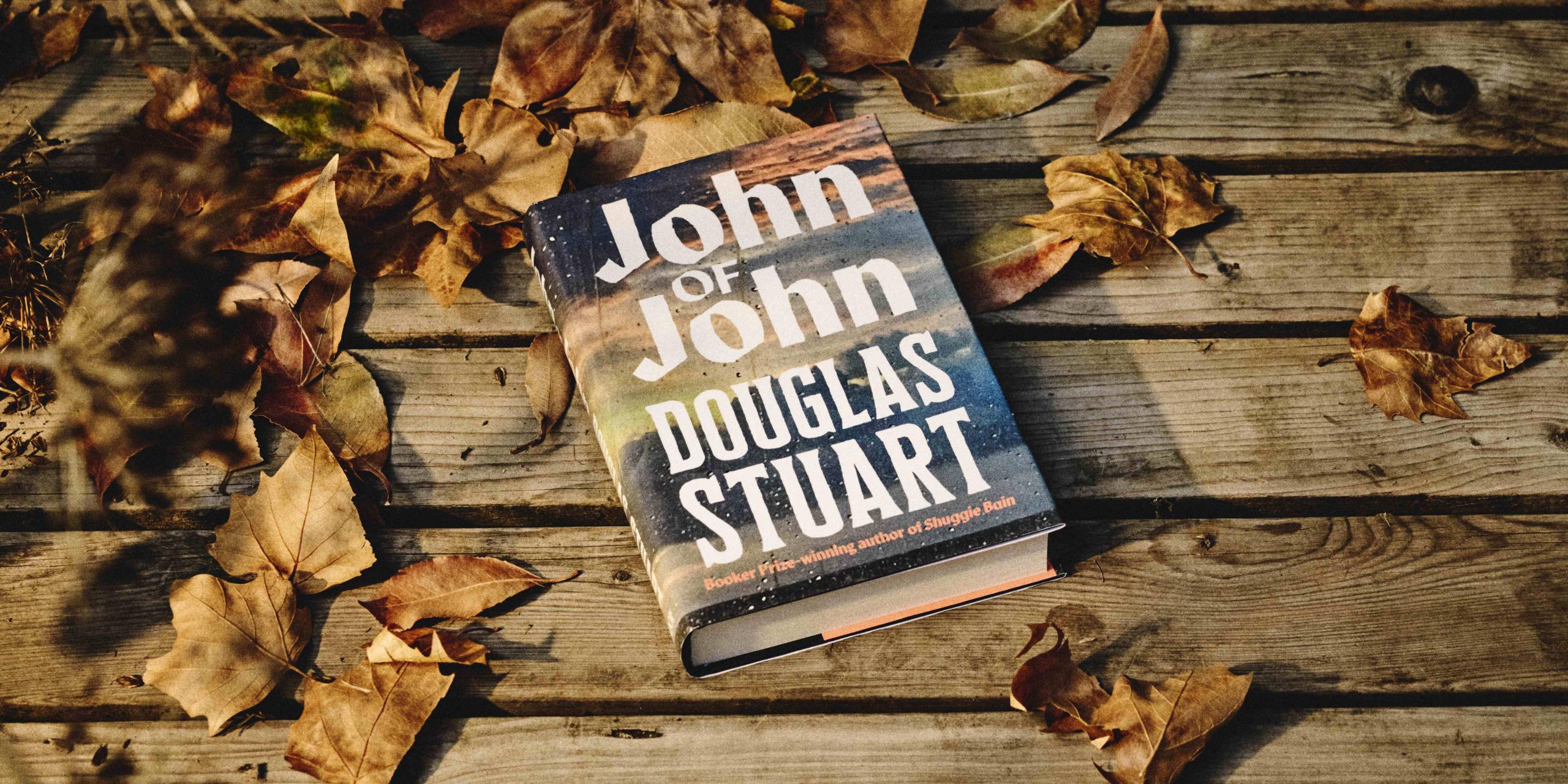
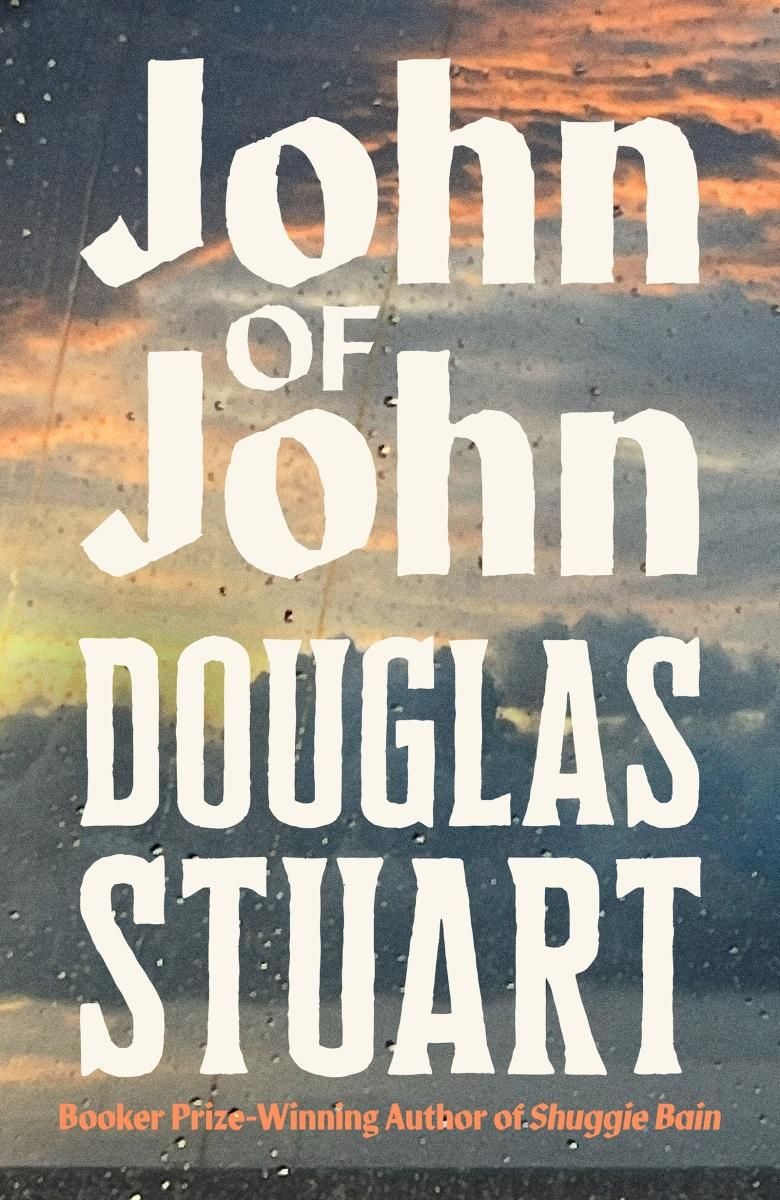
In his Booker Prize 2026 shortlisted novel, Douglas Stuart transports readers to a remote Scottish island, where small-town secrets and buried shame reverberate to surprising, devastating and even joyous effect
Whether you’re new to John of John or have read it and would like to explore it more deeply, here is our comprehensive guide, featuring insights from critics, our judges, and the book’s author, as well as discussion points and suggestions for further reading.
John of John is the heartbreaking story of a young man’s return home and how the bonds of family life are torn by the weight of expectation.
Out of money and with little to show for his art school education, John-Calum Macleod takes the ferry home to the island of Harris to find that not much has changed except for him. In the windswept croft where he grew up, Cal resumes his old life, caught between the two poles of his childhood: his father John, a sheep farmer, weaver, and pillar of their local Presbyterian church, and his Glaswegian grandmother Ella, who has kept a faltering peace with her son-in-law for decades.
While Cal wonders if any lonely men might be found on the barren hillsides of home, John is dismayed by his son’s long hair and how he seems unwilling to be Saved. As the seasons pass, everything is poised to change as the threads holding together the fragile community become increasingly entangled.
John of John was shortlisted for the Booker Prize 2026.
John Macleod
John is a sheep farmer, weaver and respected figure in the Free Presbyterian Church on the Isle of Harris. He is the father of one child, Cal. He struggles to accept Cal’s independence after going to university, as well as his apparent rejection of the faith that governs his own life. John conceals a long-standing love for his best friend and neighbour, Innes, for which he feels deep shame. He is caught between religious duty and desire.
Cal Macleod
John-Calum, known as Cal, is a 22-year-old art school graduate who returns to Harris from Edinburgh with little to show for his time away but debt and uncertainty about his future. After his father asks him to return to the family croft, he struggles to reconcile his own desires with the expectations of his father and their close-knit religious community. Cal longs for connection and a life beyond the island, but must reckon with the complicated ties that bind him to his family home.
Ella Morrison
Ella is Cal’s Glaswegian grandmother, who has lived on Harris for decades and shares the family croft with John. She is outspoken and full of life, and often at odds with her son-in-law’s strictness. Ella cares deeply for Cal and offers him a source of warmth and understanding, much to John’s dismay. She is fiercely protective of her grandson and wants him to build a life on his own terms.
Innes MacInnes
Innes is John’s neighbour and close friend. He is a gentle, unmarried man who lives with his elderly father and brother. He has loved John for decades, but their relationship remains hidden because of the conventions of island life and the demands of the Church. Innes is Patient and thoughtful, and longs for a future in which he and John can be together openly. The years of secrecy he has endured leave him questioning how much longer he can wait.
Douglas Stuart won the Booker Prize in 2020 with Shuggie Bain. He was born and raised in Glasgow
Douglas Stuart was born and raised in Glasgow. After graduating from the Royal College of Art, he moved to New York, where he began a career in fashion design. Shuggie Bain, his first novel, won the Booker Prize and both ‘Debut of the Year’ and ‘Book of the Year’ at the British Book Awards. It was also shortlisted for the US National Book Award for Fiction, among many other awards. His second novel, Young Mungo, was a number one Sunday Times Bestseller. His short stories have appeared in The New Yorker and his essay on gender, anxiety and class was published by Lit Hub.
Author and winner of the 2020 Booker Prize, Douglas Stuart at the Booker Prize 2024 ceremony
© David Parry for the Booker Prize Foundation
Sam Worley, Vulture
‘Stuart has spoken of the ways queer literature is “so middle class it very rarely intersects with the working class,” and it’s refreshing to read stories in which the psychodrama of the coming-out process is just one of many challenges his characters face as they find their footing in the world. But it has also meant Stuart’s novels have had less to say about gayness as such. What they have said has felt a bit tentative and superficial — as in Shuggie Bain — or, worse, morally schematic. Young Mungo groaned under the weight of its intent to make a big statement about the harms of patriarchy (and about the antidote, which turns out to be — shocker — love). John of John changes tack dramatically toward a sprawling, emotionally rich saga that extends Stuart’s investigation into masculinity while sketching a world in which his gay characters come fully, finally alive. It’s his best yet.’
Michael Welch, Chicago Review of Books
‘When struggling artist John-Calum Macleod returns to his parents’ home on the Isle of Harris, he finds himself at odds with his preacher father. But as their lives crash together once more, he discovers that his father may also be keeping secrets. From the author of Shuggie Bain comes a tender tale of isolation and self-discovery that tackles the complexities of faith and identity with refreshing vulnerability. Douglas Stuart may just be our new king of drama.’
Dazed
‘John of John follows John-Calum – better known as Cal – a 22-year-old who returns to his home on the remote Isle of Harris after a stint at an art school near Edinburgh. He’s come back at the insistence of his strict, Presbyterian father, John, who has told Cal that his maternal grandmother, Ella, is sick (her feet, he explains over the phone, are as purple as “calf’s liver”). Back on weather-beaten Harris, Cal struggles to reconcile his queer identity with his father’s rigid expectations and the oppressive, small-town environment – but gradually it becomes clear to Cal that the island community has its own secrets too. John of John grapples with all the usual themes of a Douglas Stuart novel – intergenerational trauma, substance abuse, religion, masculinity – but, in contrast to the bleakness of Young Mungo and Shuggie Bain, is shot through with tenderness, hope, and love.’
‘I set out to write about the bond between a father and son despite the deep silence between them. I was drawn to the Outer Hebrides because when we talk about class or sexuality or social upheaval our rural places are so often overlooked. On Harris I found a rich, inspiring culture; a culture shaped by community, with a history of crofting and weaving, in a place that is the stronghold of the Gaelic language and a very devout form of Presbyterianism. There was such richness that I couldn’t help but be inspired. It’s not that I wanted to tell this story now – although the world is as divided as it ever was, and queer people are under increasing attack – but it’s more that this is the story I had to write, and there was nothing that I could do but to write it.’
Douglas Stuart in an interview with the Booker Prizes.
‘A 22-year-old arts student reluctantly returns from Edinburgh to his home on the Isle of Harris in Douglas Stuart’s third novel. We loved the rich, textural detail of the story, which is set in the 90s and examines young Cal’s fraught relationship with his domineering father. There’s a vivid sense of time and place, as the island becomes the site of bristling tensions between secret lovers, feuding families, and a stand-off between tradition and modernity. This excavation of family, violence, and shame is woven through with beautiful imagistic detail, and – unexpectedly but wonderfully – shades of hope.’
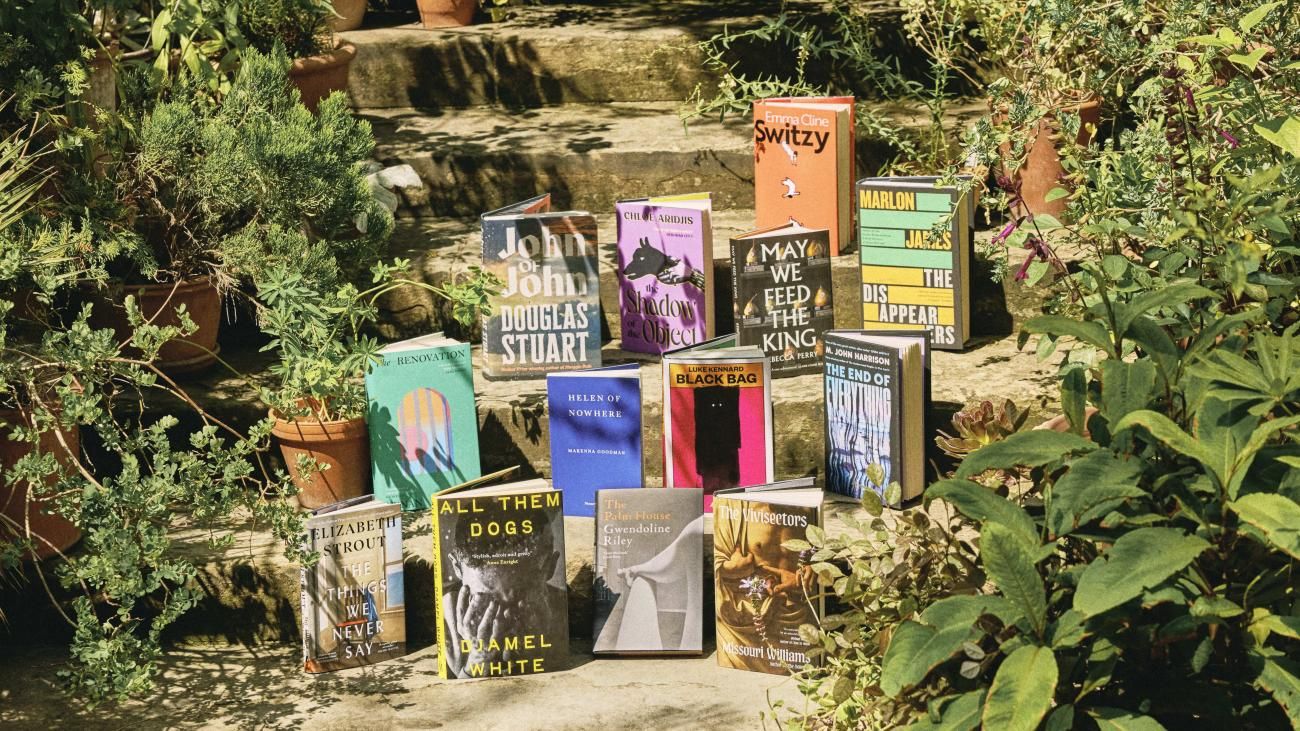
The Booker Prize 2026 judges – Raymond Antrobus, Patricia Lockwood, Rebecca Liu, Jarvis Cocker and Mary Beard – with the longlisted books
© Neo Gilder for Booker Prize Foundation
In the first chapter of John of John, Cal is travelling home by ferry to the Isle of Harris where he meets a woman who asks him who he ‘belongs to’. He replies: ‘I’m John of John of Iain of Iain the Breabadair [weaver].’ (Page 9). What does this exchange reveal about the importance of family and belonging on the island?
The novel is written in the third person, shifting between the perspectives of Cal, John and others. How does this narrative technique shape your understanding of the characters and their relationships?
The Presbyterian Church, the ‘Wee Frees’, has a stronghold on the island. The minister describes the congregation there as ‘captive, not just geographically, but by the expectations of their neighbours’ and notes that ‘they policed themselves through shame and slights and petty judgements much better than he could in his sermons.’ (Page 99). Discuss the pressure to conform within small communities such as Harris, and how religion might regulate behaviour.
John is deeply devoted to the Presbyterian Church, yet, as a gay man, his relationship with Innes places him in conflict with the beliefs that govern his life. How does Stuart explore the contradiction between John’s faith and his actions, and the hypocrisy of his judgement of others?
Throughout the novel, there is striking use of colour. Cal describes his arms as ‘pearlwort, maybe crowdie’ followed by the colour of ‘January light on the back wall of the church’; his veins are ‘lapis, cornflower, gin bottle’. Discuss the importance of this detail in John of John and what it reveals about the characters and the way they see the world.
John’s relationship with Cal is marked by extremes of both love and violence. He uses violence to control and discipline his son, and eventually, Cal perpetuates the cycle. What does the novel suggest about the ways violence can be inherited?
Woven through John of John is a tension between loyalty to family and the need to build a life as an individual. How do Cal and John each navigate this conflict, and what do their choices reveal about the cost of forging a life on their own terms?
Through John and Cal, Stuart examines masculinity, from their roles as providers to the emotional restraint expected of them. How do such expectations shape the way John and Cal understand themselves and their relationship with each other?
In an interview with the Booker Prizes, Stuart said he ‘set out to write about the bond between a father and son despite the deep silence between them.’ This sense of the unsaid runs throughout the story, and John in particular is often caught between what he wants to say and what he is able to say. How do these moments of omission reveal John’s inner life?
Scottish Gaelic appears throughout the book, within the chapter headings as well as in the text, where it is distinguished from standard English through italics. What effect does this use of native language have on your reading of the novel, and how does Stuart use it to explore ideas of intimacy and power?
NPR: In ‘John of John,’ father and son are gay — and they’re keeping it from each other
Scottish Field: Douglas Stuart on John of John: ‘The islands have been calling me for decades’
Dazed: Douglas Stuart: ‘Homosexuality and faith have been a struggle all my life’
Financial Times: Douglas Stuart: ‘I write to make sense of my nation’
by Douglas Stuart (prize winner)
by James Kelman (prize winner)
by Gordon Williams
by Brandon Taylor
by Anna Burns (prize winner)
by Benjamin Wood