An extract from John of John by Douglas Stuart
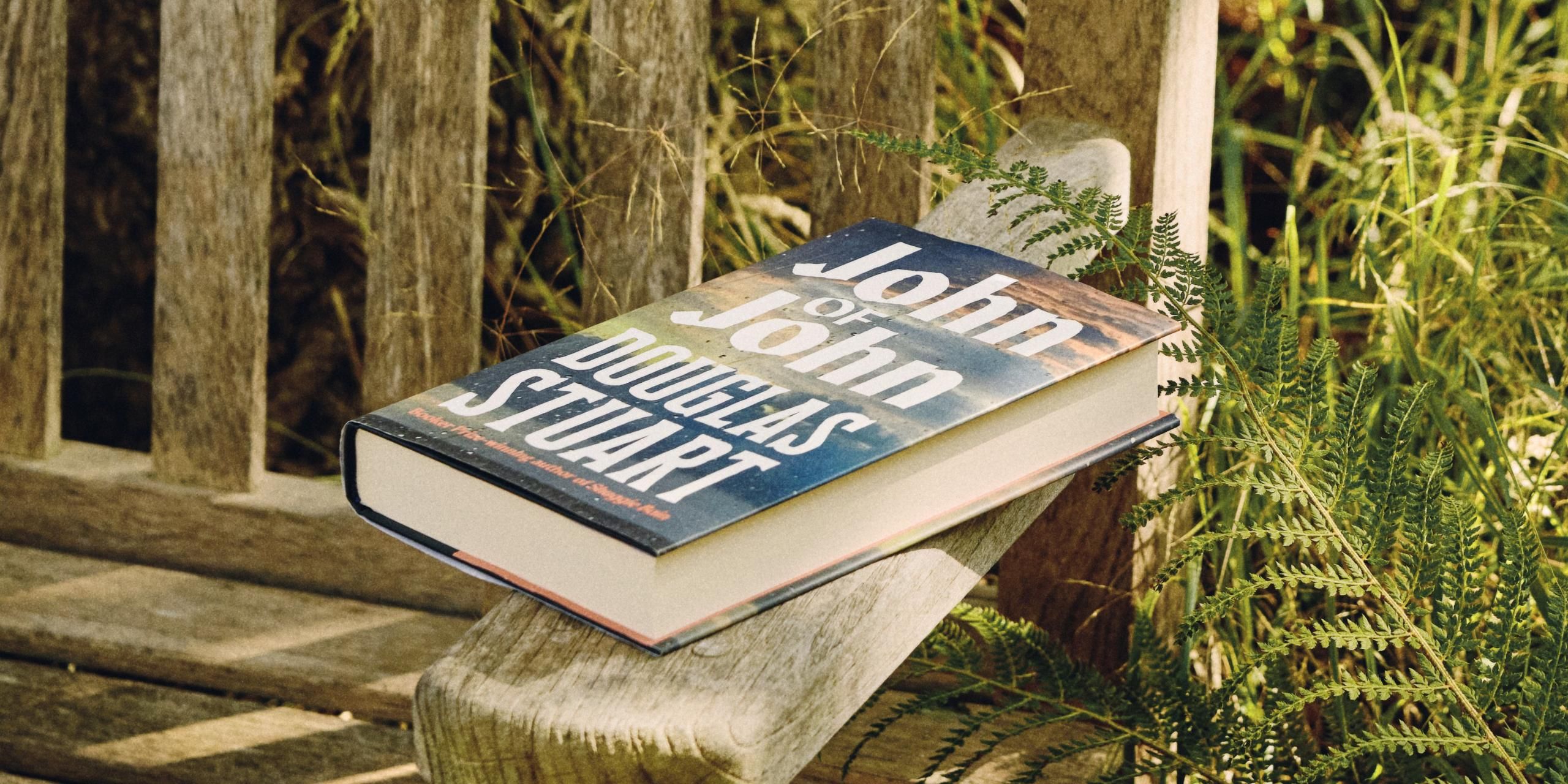
An extract from John of John by Douglas Stuart
- Written by
- Douglas Stuart
- Published
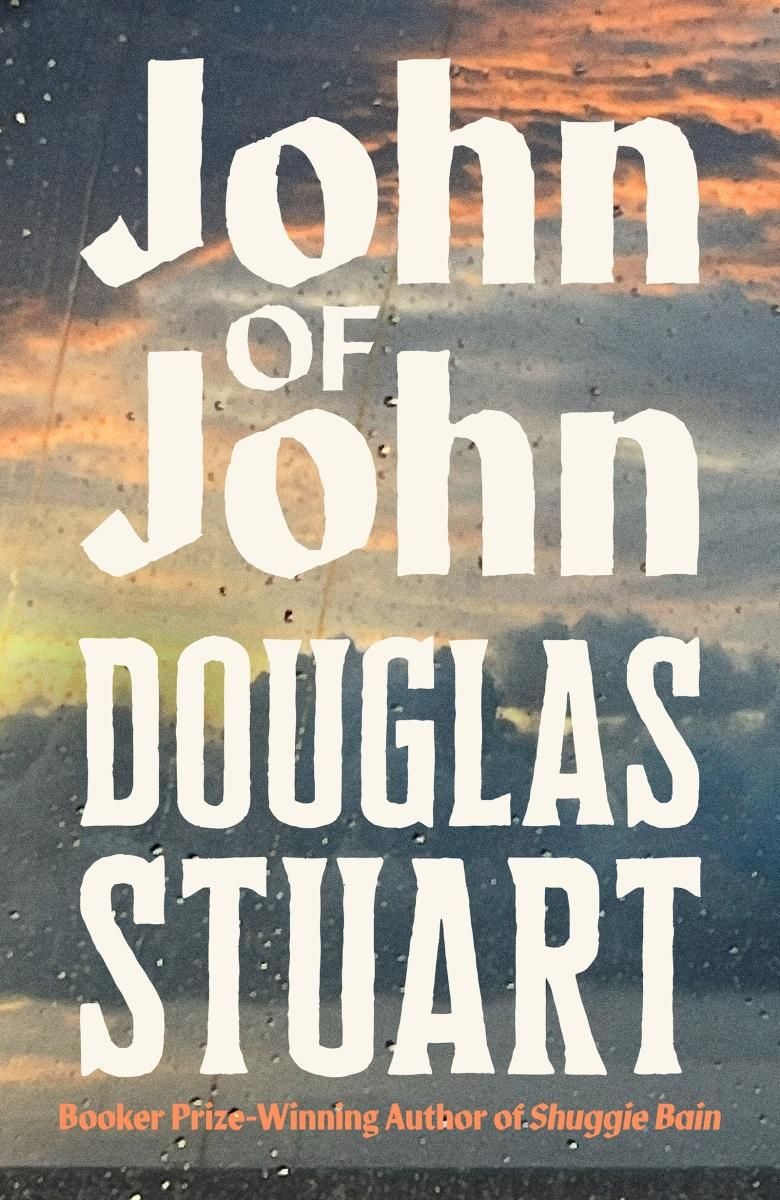
John of John is shortlisted for the Booker Prize 2026. Read an extract here
John of John is the heartbreaking story of a young man’s return home and how the bonds of family life are torn by the weight of expectation
Out of money and with little to show for his art school education, John-Calum Macleod takes the ferry home to the island of Harris to find that not much has changed except for him. In the windswept croft where he grew up, Cal resumes his old life, caught between the two poles of his childhood: his father John, a sheep farmer, weaver, and pillar of their local Presbyterian church, and his Glaswegian grandmother Ella, who has kept a faltering peace with her son-in-law for decades.
While Cal wonders if any lonely men might be found on the barren hillsides of home, John is dismayed by his son’s long hair and how he seems unwilling to be Saved. As the seasons pass, everything is poised to change as the threads holding together the fragile community become increasingly entangled. John of John confirms Douglas Stuart as one of the great British writers at work today.
Buy the book
Halfway across the Minch, a steward came out to check on him. The rain was almost horizontal. The steward approached him cautiously before ordering him to move indoors.
The interior was quiet. It was easy to tell the islanders from the visitors because the islanders rarely looked out at the sea. They read quietly, or filled out crosswords in discarded newspapers. They sprawled on benches, sleeping soundly, their hands clasped over their chests, their bodies twisted as they kept both feet respectfully on the floor.
Cal was dripping wet, dragging a large bin bag, his jaw grinding on the pill as he roamed the lounges in search of an empty corner. He looked down at his toes coming through his burst Converse. If he was seen – and he was sure that he had been – then his father would hear about the state of him long before he reached home.
Everything he owned fit into a backpack and one doubled bin bag. It had taken him less than ten minutes to pack up four years of his life. It had taken a little longer to fold himself away, to hide all the bits of himself that had slowly been unfurling since he had arrived on the mainland. In truth, he had not changed that much since he had been at college, and as he roamed the ferry he wondered if he had always known he would be forced to come home eventually.
He tucked himself into the quietest row he could find. He shoved his hands into his oxters and rested his head against the panelled wall. Across from him sat a well-dressed woman he was certain he didn’t know. She wore a fine tweed suit and her snow-white hair was curled and set. There was no make-up on her face and the only shiny parts of her were a discreet wedding band and the small pearls at her ear-lobes. The tossing didn’t seem to bother her and he knew her to be an islander. She had her eyes closed and she sat in quiet reflection, her hands clasped on top of her copy of the Authorised Version.
The old ferry churned slower than he remembered. Whenever it carried him away, it skited across the waves like a skimming stone. Now it groaned and protested as it made its dogged way towards the islands, as though it shared his own reluctance. The engine sound was a comfort to him, that muffled whoosh-whoosh that felt like blood pulsing in his throat, a thrum that travelled through his soles and up his spine till it hummed in his mind.
“Dè thachair dha d’ aodann?” said the woman. Her eyes were open now, her expanding pupils swallowing him whole.
He touched his face and felt the heat on his forehead where he had picked at a spot until it bled.
The woman took a tissue from her handbag. She gave it to him to wipe the blood and said in Gaelic, “And what do you have to be grinning about?”
“Nothing. I’m just happy to be heading home.”
“You should take your hat off. You’ll not feel the benefit.”
John Macleod. It was a name as common as white sheep. He preferred Cal, which is what everyone called him. It was less of a constant reminder of his father
He was wearing a lime-green knitted cap, a colour so acidic it could ruin appetites. It was still pulled low over his ears and Cal considered removing it, but then he remembered what was concealed underneath. “I’m fine.”
“And you’re white as a ghost. Not a fan of the boat, I see.” She unwrapped a roll of sugary pastilles and leant forwards to offer him one. She must have smelt the drink on him because she sniffed and her face curdled. As she sat back her knees clicked. “Would you listen to that. I’m nothing but a bag of kindling.”
The pastille helped concentrate his gurning. “It’s the damp. I can feel it already.”
“Oh? I’m surprised you can feel anything at all. The state you’re in.” The woman sat a while turning all the buttons on her coat the right way up. She peered at him without blinking. “I feel like I know you, son. Where are you from?”
“Falabay.”
“Oh, they like their drink there.” The woman chuckled bitterly. “I’m from Shawbost, myself, but Falabay … that’s a hard place. Hard, but beautiful,” she conceded. “Though why anyone would want to live on those rocks is beyond me.”
He had never considered it optional before. It had been his maternal great-grandfather’s tenancy, his livelihood, and in the way of these things, it had passed to Ella and eventually one day it would be his.
She sucked on her sweetie, her cheek a rattling blister. “And what did you say your name was?”
The boat lurched and Cal closed his eyes against the drop. “John Macleod. John-Calum.”
John Macleod. It was a name as common as white sheep. He preferred Cal, which is what everyone called him. It was less of a constant reminder of his father.
The woman frowned. “And who do you belong to?”
It was a question that islanders always asked. With families struggling on for centuries wherever they had a spit of intractable land, the same names echoed on and on and so they needed to know his sloinnti-reachd, his lineage. “I’m John of John of Iain of Iain the Breabadair.”
The woman considered this. “I know you,” she said eventually. “I knew your grandfather. He volunteered at the lifeboat society with my father. Good man. Is your grandmother still alive?”
He never knew his father’s mother – nor had his father; Granny Macleod had died when John was a baby. She died in bed, a few days after she had given birth to John, who she had named with the Anglicised version of Iain, in the hope that the family would soon emigrate to Detroit where her husband had been promised work as a panel beater. Cal assumed this woman must mean his mother’s mother. “Our Ella? Yes. My father looks after her. Or, she looks after my father, depending on who you ask.”
“Ella. Eh-la. That’s it. The Glaswegian. She is a right one, eh? No man could tell her!” The woman patted her heart but whether it was in reverence or disgust Cal could not quite tell.
“You’ve been away a while, I see.” He wondered how she could see such a thing, but before he could respond she added, “You’re dressed for city weather.”
John of John
- Published by
- Picador
John of John is the heartbreaking story of a young man’s return home and how the bonds of family life are torn by the weight of expectation
Features


- Reading guides
Reading guide: John of John by Douglas Stuart


- Book recommendations
The Booker Prize 2026 shortlist: what our judges said


- Book recommendations
What our judges said about the Booker Prize 2026 longlist

- Book recommendations