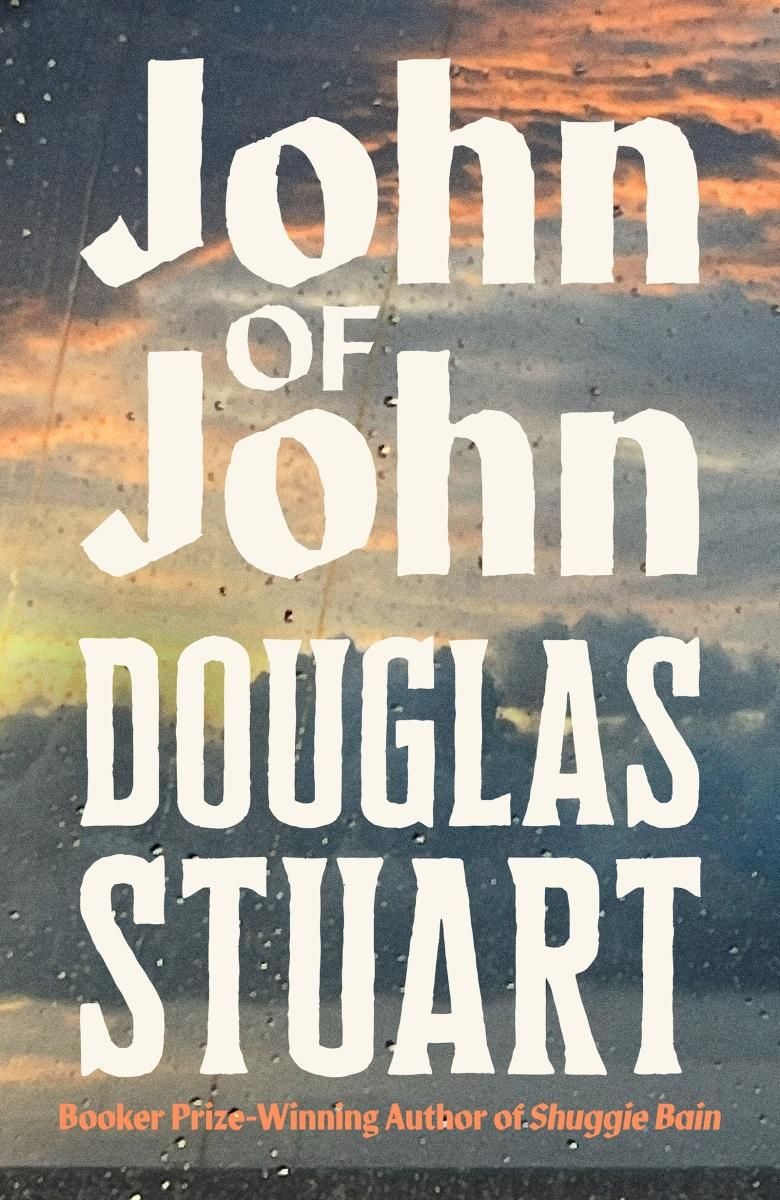
John of John is the heartbreaking story of a young man’s return home and how the bonds of family life are torn by the weight of expectation
John of John
Written by Douglas Stuart
- Shortlisted
- The Booker Prize 2026
- Published by Picador
Buy the book
John of John is the heartbreaking story of a young man’s return home and how the bonds of family life are torn by the weight of expectation
Out of money and with little to show for his art school education, John-Calum Macleod takes the ferry home to the island of Harris to find that not much has changed except for him. In the windswept croft where he grew up, Cal resumes his old life, caught between the two poles of his childhood: his father John, a sheep farmer, weaver, and pillar of their local Presbyterian church, and his Glaswegian grandmother Ella, who has kept a faltering peace with her son-in-law for decades.
While Cal wonders if any lonely men might be found on the barren hillsides of home, John is dismayed by his son’s long hair and how he seems unwilling to be Saved. As the seasons pass, everything is poised to change as the threads holding together the fragile community become increasingly entangled. John of John confirms Douglas Stuart as one of the great British writers at work today.
John of John was shortlisted for the Booker Prize 2026.

Douglas Stuart
Douglas Stuart won the Booker Prize in 2020 with Shuggie Bain. He was born and raised in Glasgow
More about Douglas Stuart Douglas Stuart on writing John of John
‘I set out to write about the bond between a father and son despite the deep silence between them. I was drawn to the Outer Hebrides because when we talk about class or sexuality or social upheaval our rural places are so often overlooked. On Harris I found a rich, inspiring culture; a culture shaped by community, with a history of crofting and weaving, in a place that is the stronghold of the Gaelic language and a very devout form of Presbyterianism. There was such richness that I couldn’t help but be inspired. It’s not that I wanted to tell this story now – although the world is as divided as it ever was, and queer people are under increasing attack – but it’s more that this is the story I had to write, and there was nothing that I could do but to write it.’
Read the full interview here.
This excavation of family, violence and shame is woven through with beautiful imagistic detail, and – unexpectedly – shades of hope. We loved the rich, textural detail of the story
The Booker Prize 2026 judges
What the judges said
‘A 22-year-old arts student reluctantly returns from Edinburgh to his home on the Isle of Harris in Douglas Stuart’s third novel. We loved the rich, textural detail of the story, which is set in the 90s and examines young Cal’s fraught relationship with his domineering father. There’s a vivid sense of time and place, as the island becomes the site of bristling tensions between secret lovers, feuding families, and a stand-off between tradition and modernity. This excavation of family, violence, and shame is woven through with beautiful imagistic detail, and – unexpectedly but wonderfully – shades of hope.’
What the critics said
Suzi Feay, Times Literary Supplement
‘There is a slower pace in John of John than in Stuart’s previous books, and a tamped-down quality; the outbursts of violence are fewer but just as shocking. Though Ella, in her cunning, eccentricity and humour, is a vivid creation, she is no match for Shuggie’s vivacious, hellacious mother, Agnes. While Cal’s talent echoes the artistic bent of Shuggie’s brother Leek, and that of young Mungo (and their creator, who pursued a career in fashion design), he is more wary and reticent than either of his predecessors. The characters’ language is less inventively foul, but their “loch-deep rage” is just as potent…
‘Stuart steadily tightens the knot on his islanders, trapped in their love and hatred along the “ribbon road” that threads the crofts “like a string through too few pearls”. Comings and goings are visible to all, but the characters still manage to keep a surprising amount of secrets, and Stuart tenderly teases these out in all the shades of shame, despair and guilt, like the myriad colours in a fine tweed.’
Mark Harris, New York Times
‘Stuart is not just a very good writer but an immensely skilled storyteller who is more than up to the extraordinarily challenging task he sets himself – to build bridges between characters who are so cut off from one another and from themselves that they are, as Cal’s grandmother puts it, “islands within islands.”
‘Notwithstanding the novel’s striking setting, he’s not given to rhapsodic fugues about the sky and the sea and the crags; he’s more interested in the seams and faults and chasms within people who have come to believe that they’re living past any expectations of pleasure.’
Sam Worley, Vulture
‘Stuart has spoken of the ways queer literature is “so middle class it very rarely intersects with the working class,” and it’s refreshing to read stories in which the psychodrama of the coming-out process is just one of many challenges his characters face as they find their footing in the world. But it has also meant Stuart’s novels have had less to say about gayness as such. What they have said has felt a bit tentative and superficial — as in Shuggie Bain — or, worse, morally schematic. Young Mungo groaned under the weight of its intent to make a big statement about the harms of patriarchy (and about the antidote, which turns out to be — shocker — love). John of John changes tack dramatically toward a sprawling, emotionally rich saga that extends Stuart’s investigation into masculinity while sketching a world in which his gay characters come fully, finally alive. It’s his best yet.’
Kirkus
‘The central question of the book, which is facing all the main characters, is whether it’s possible to inhabit the place one calls home as one’s genuine self. Stay or go? Life or death? By the end, this issue is resolved in a variety of tragic and hopeful ways.
‘With his gift for creating vibrantly specific characters and settings, Stuart again taps profound human truth.’


Other nominated books by Douglas Stuart
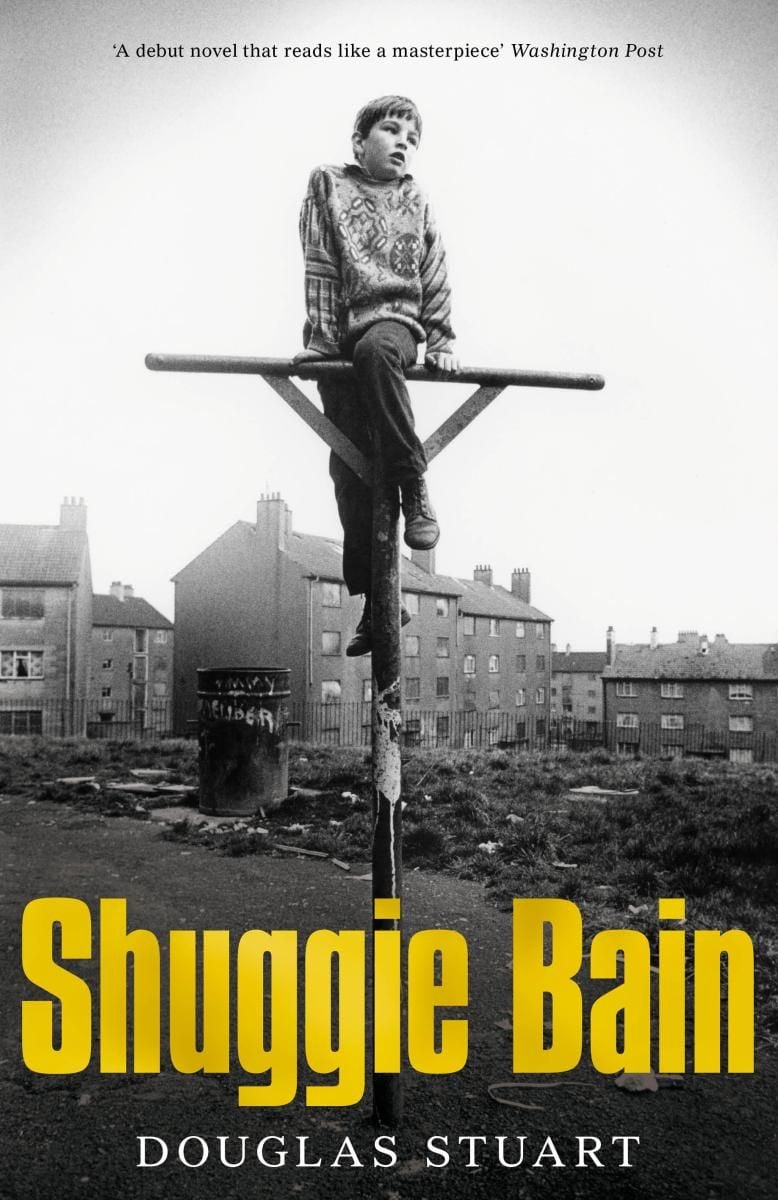
Douglas Stuart’s blistering and heartbreaking debut is an exploration of the unsinkable love that only children can have for their damaged parents
Features

- Reading guides
Reading guide: John of John by Douglas Stuart


- Book recommendations
The Booker Prize 2026 shortlist: what our judges said


- Book extract
An extract from John of John by Douglas Stuart

- Book recommendations