

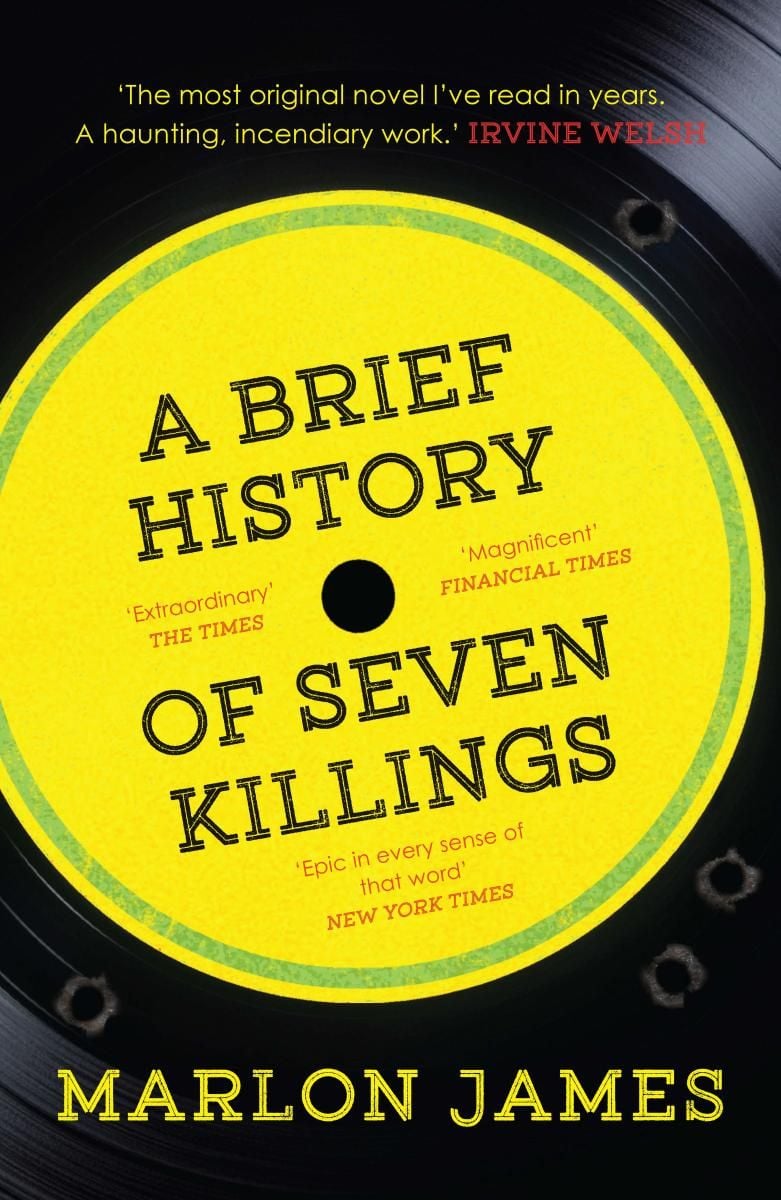
A Brief History of Seven Killings
by Marlon James (prize winner)
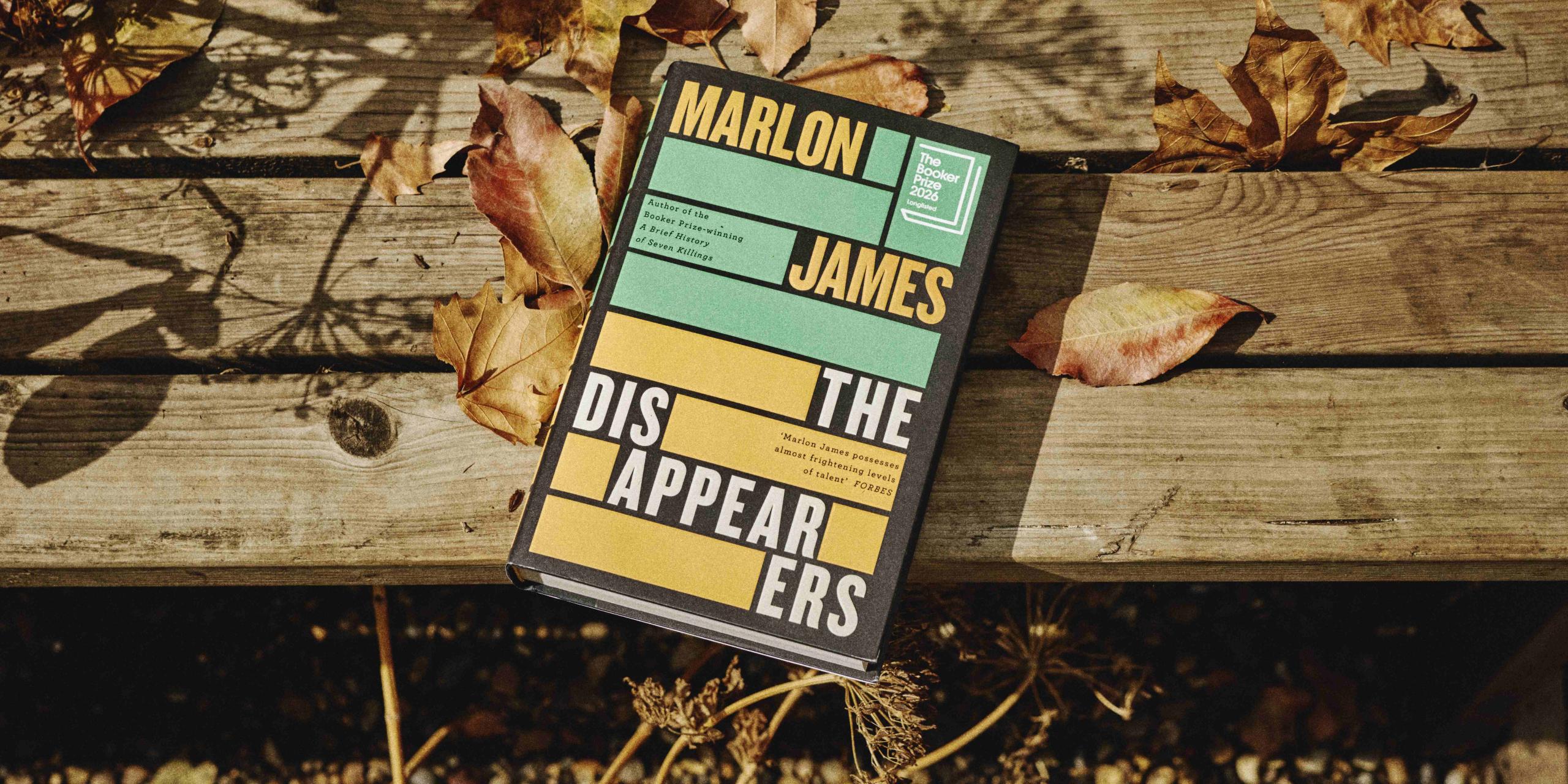
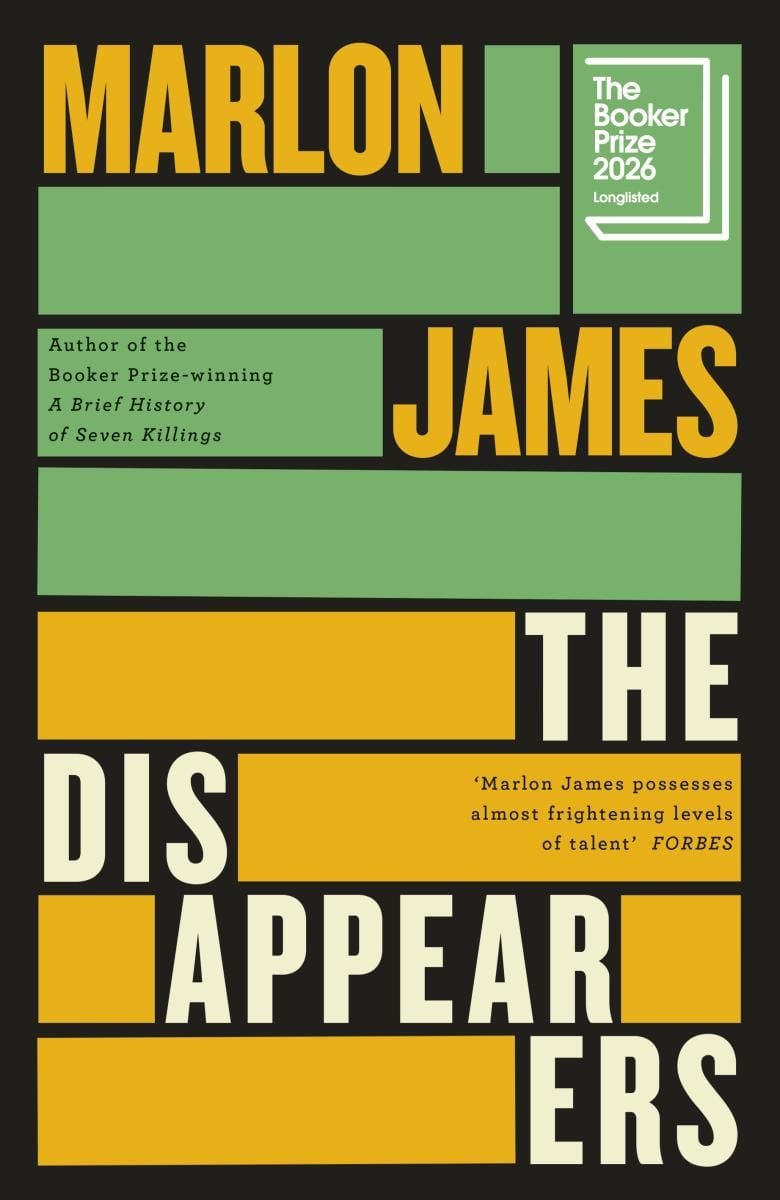
In his Booker Prize 2026 shortlisted novel, Marlon James offers a clear-eyed confrontation with Jamaican homophobia, which is unflinching in its honesty
Whether you’re new to The Disappearers or have read it and would like to explore it more deeply, here is our comprehensive guide, featuring insights from critics, our judges, and the book’s author, as well as discussion points and suggestions for further reading.
In 1988, eight men in Kingston, Jamaica, begin rehearsals for a play. The men are strangers to one another and each has a different reason for being involved. But they all share one inescapable truth: all of them are gay – a ‘batty man’ in Jamaican argot – and all of them must contend with the dangers that such a truth lays bare.
One night a mob savagely attacks them, killing one of the men. For the survivors, their recovery is as much emotional as it is physical: as their bodies heal, each man must grapple with the violence, the hatred, and the rage that the attack made plain. Some try to ignore what the attack has unearthed, while others double down on retribution.
The Disappearers is both a dramatic page-turner and an unflinching exploration of queer life in Jamaica during the 1980s and 1990s. It was shortlisted for the Booker Prize 2026.
Edmond ‘Eddy’ Porteous
A ‘white-ish’ Belgian Jamaican college student from a well-heeled family. His diary entries over the course of the month preceding the assault make up the novel’s first quarter. Eddy isn’t present for the attack and reckons with survivor’s guilt.
Jordan Brown
Eddy’s fellow actor. The pair team up to find the attackers, and Jordan becomes the novel’s beating heart. He is gleeful, foul-mouthed and an obsessive reader of John Rechy’s 1977 book, The Sexual Outlaw, which he reads seeking validation. The pair journey into Jamaica’s gay underground and the country’s darker undercurrents.
Havelock Titus
The play’s director. An urbane Jamaican man whom the novel follows back in time to Oxford University, when he studied there and was treated as a sexual toy by the posing aristocracy. He was an early AIDS patient and recalls a time when he could be hacked to death for wearing eyeshadow. He was at the doomed rehearsal before the assault and is ashamed that he ran away.
Paul Royale
A significant character that lingers at the novel’s margins. He is a well-connected, yet recessive, Gatsby-esque figure that helps gay men in crisis. He is a groomer and follows exploitative methods in his pretence of do-gooding, representing the ever-present danger in Jamaica’s homosexual communities.
Marlon James won the Booker Prize in 2015. He was born in Kingston, Jamaica.
James is the author of the New York Times bestselling Moon Witch, Spider King; the Sunday Times bestselling, National Book Award-finalist Black Leopard, Red Wolf; the Booker Prize-winning A Brief History of Seven Killings; The Book of Night Women and John Crow’s Devil. In addition to the Booker Prize, his novels have won the American Book Award, the Los Angeles Times Ray Bradbury Prize for Science Fiction, the Anisfield-Wolf Award and the Dayton Literary Peace Prize. James now lives in New York City.
A Brief History of Seven Killings not only won the Booker Prize 2015, but was also the winner of the American Book Award and the Anisfield-Wolf Award for Fiction, as well as being a finalist for the National Book Critics Circle Award. The Book of Night Women won the Minnesota Book Award and was a finalist for the National Book Critics Circle Award, as well as the NAACP Image Award.
James is the creator of the HBO/Channel 4 crime drama series Get Millie Black. He is a professor at Macalester College in St Paul.
Marlon James in 2015
© Sipa US / Alamy
Dwight Garner, The New York Times
‘This masterpiece is the novel of the decade, if not the century. Marlon James’s story of gay experience and murderous homophobia in Jamaica is a maximalist’s banquet — and the Booker Prize winner’s finest book yet.’
Hamilton Cain, The Boston Globe
‘In his polyphonic The Disappearers, longlisted for the Booker Prize, Marlon James tracks a cadre of closeted Kingston men across two decades as they maneuver around the clear and present dangers of families, communities, the law, and their own desire. It’s a harrowing, hilarious, magnificent novel that will stand the test of time.’
Yagnishsing Dawoor, the Guardian
‘The Disappearers is a bleak and uncompromising exploration of rage and survival; of trauma and its afterlife; of the terrible intimacy that binds victims to their perpetrators, and survivors to the dead, as well as revenge’s lure for those who are not given their due… Fizzing with filth, snark and venom, the novel hawks and spits at convention, especially the politics of respectability that insists on restraint; it strafes down on homophobia with ruthless abandon. Few books have mapped the beleaguered realities of queer existence with such psychological depth, harrowing realism and searing condemnation.’
Stephanie Burt, The Atlantic
‘Within The Disappearers, that’s one character’s speculation, dismissed as soon as it’s raised. But it’s also another hint of hope. And this novel, which ends in 2005, does offer hope: not just for gay Jamaican men but for trans teens, nonbinary adults, and anyone else since then who’s felt as though their society has kept asking them to hide, or lie, or die, or just go away. The Disappearers is a harrowing book, to be sure, but never nihilist, or defeatist, or cynical. Its joy in ultimate survival comes through.’
‘The Disappearers is based on a violent incident that was rumoured to have happened but was never proven, at least not up to the point when I began writing. But in Jamaica we trust rumours more than facts, so the fact that people kept whispering about it meant it was true. But I’m more concerned with an incident’s aftermath than the thing itself, and fiction is ideally placed to bring what might be a closed-off chapter right into the open.’
Marlon James in an interview with the Booker Prizes.
‘The Disappearers is among Marlon James’s most ambitious and history-making works, a novel that examines territory Caribbean literature has rarely dared to occupy. Beginning in late 1980s Kingston, it follows eight male actors rehearsing what is billed as Jamaica’s first openly gay play. When the men become victims of brutal homophobic violence, the novel shifts register: in the years that follow, one survivor sets out to investigate the fates of the others, and what begins as a theatrical story becomes something closer to a reckoning.
‘James is a singular literary talent. His dialogue is sharp and propulsive, his phrasing is poetic, visceral and capable of moving from the painful to the darkly hilarious within a single exchange. The Disappearers could be read as a long overdue, clear-eyed confrontation with Jamaican homophobia: unflinching in its honesty, but written with the full complexity and love of someone who knows the place and its contradictions from the inside.’
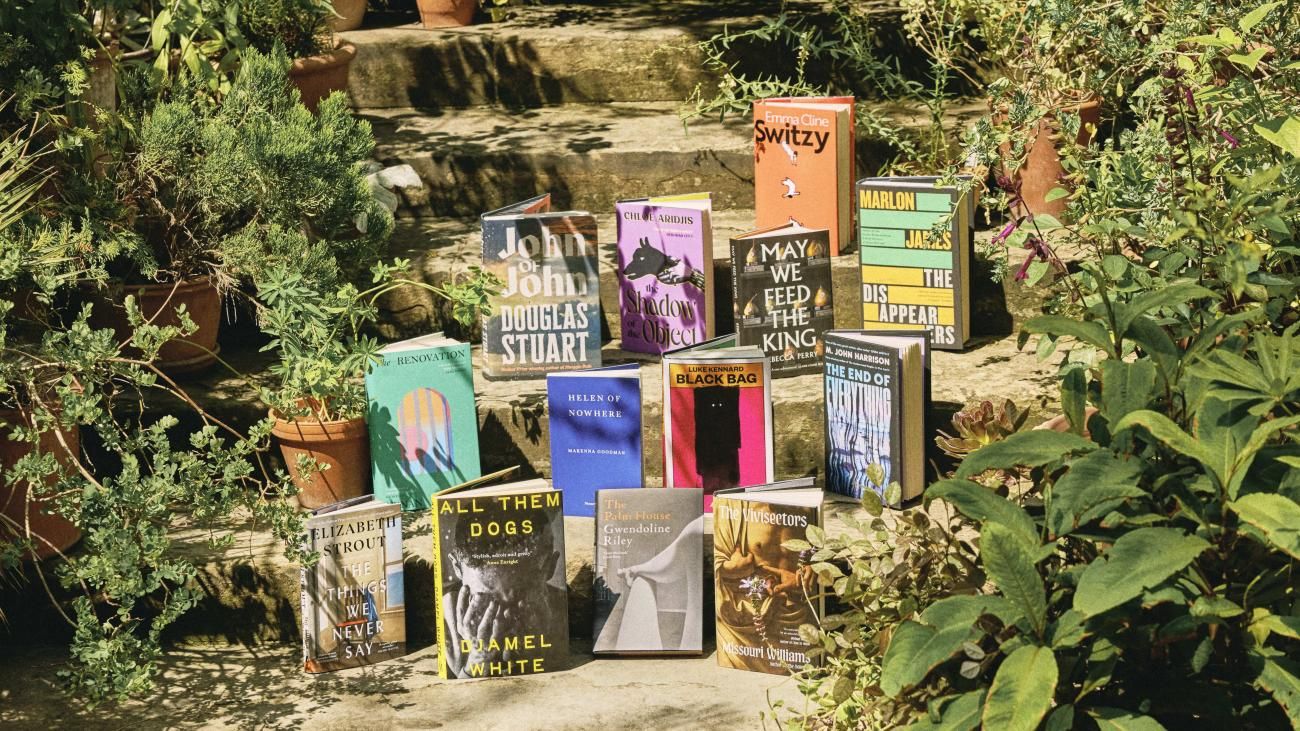
The Booker Prize 2026 judges – Raymond Antrobus, Patricia Lockwood, Rebecca Liu, Jarvis Cocker and Mary Beard – with the longlisted books
© Neo Gilder for Booker Prize Foundation
What do you think the titular theme of disappearance means in The Disappearers, beyond simply vanishing? What might it suggest for who gets to disappear, and who is forced to remain visible?
The Disappearers is a sweeping tome, moving from 1950s England to AIDS-era Kingston in the 80s and 90s, and 2000s United States. When reading, how did you find the novel’s shifting timelines, voices and realities? Did the rumbling uncertainty deepen the story for you?
Jamaica feels like a character in the novel, a shapeshifting presence with many faces. How does James’ Jamaica function as more than simply a setting? What role do place and community play in The Disappearers?
James uses the novel to confront Jamaica’s history of homophobia. A review in The Conversation declares it gives voice to the gay men the country erased, at a time when ‘dancehall lyrics, AIDS, and evangelical sermons created a crucible of loathing that legitimised violent denial’. Discuss how The Disappearers explores the impact of this history on gay people, and the ways in which homophobia intersects with race, class and masculinity.
The novel features many allusions to the queer canon, alongside references and homages to writers and literary figures. The revenge scenario draws specifically on Toni Morrison’s Song of Solomon, in which a vigilante society of Black men called the Seven Days takes the law into its own hands, killing a white person whenever a Black person is murdered. Why might James have chosen to draw on these literary traditions so explicitly, and how does this intertextuality shape readers’ understanding of themes, such as identity and revenge?
Many of the book’s characters are performers themselves, and The Disappearers contains stories within stories. What did you think this narrative technique added to the novel’s exploration of truth and fiction?
The novel is kaleidoscopic, featuring many characters and narratives, all with different and changing motivations. Which characters did you trust, and which did you distrust? Did your loyalties change as the novel progressed?
The Disappearers consistently toys with ideas of storytelling and authorship. What do you think James is saying about who gets to and who has the power to tell a story?
James is a very funny writer at times, using humour and absurdity alongside intense violence, grief and trauma. How did you find this use of levity, and how did it shape your reading experience?
The Disappearers is the longest novel on the Booker Prize 2026 shortlist, at 640 pages. Throughout its length, it varies in viewpoint and is often told through diary entries and changing narratives. How did you find this structure affects the novel’s pacing?
by Marlon James (prize winner)
by Douglas Stuart (prize winner)
by Yael van der Wouden
by Alan Hollinghurst (prize winner)
by Bernardine Evaristo (prize winner)