A mesmerising portrait of an ageing man’s last pilgrimage, from the New York Times bestselling author
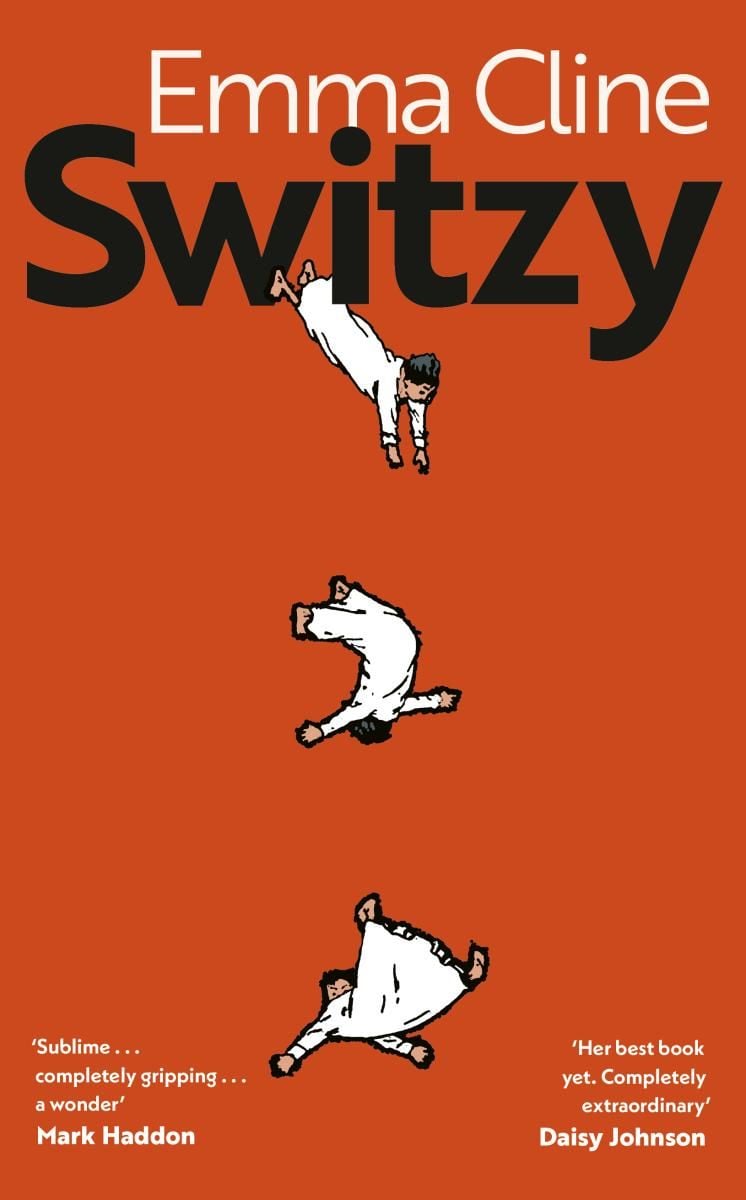
Switzy
Written by Emma Cline
- Longlisted
- The Booker Prize 2026
- Published by Chatto & Windus
Buy the book
A mesmerising portrait of an ageing man’s last pilgrimage, from the New York Times bestselling author
A private plane cuts through the winter night, somewhere over Greenland. David, a retired executive, sits back in his leather seat, playing solitaire on his phone. Click. Click. Drag. Click. The notebook in his jacket pocket is filled with familiar phrases, urgent reminders to himself, but he struggles to recognise his own handwriting. A mystery, among many mysteries. The world, once so knowable, has been rendered inscrutable.
This is what David knows: Cody, his assistant, asleep in the seat next to him, will shepherd him along the voyage. A stopover in London. Dinner with his adult daughter. A meeting in France with an old friend, estranged for decades.
His final destination is Zurich.
David glides through hotel rooms and airports and foreign cities, running out the clock on his mortal life. His grasp on the present slips away, and the past rushes in: the Sunday roasts of childhood. The stiff clothes meant only for church. A summer at a school friend’s house. The losses and missteps that punctuate a life.
As David’s arrival in Zurich looms, an exquisitely rendered portrait of an unravelling mind emerges, both darkly humorous and profoundly moving. Hypnotic and startlingly original, Switzy probes the depths of human consciousness, revealing what a man is left with when the accomplishments and compromises that have defined him, and the illusions he’s relied on, vanish.
Switzy was longlisted for the Booker Prize 2026.

Emma Cline on Switzy
‘There is a real strangeness to our lives, with their endings that, for as long as we can, we keep conveniently and necessarily out of sight. David can’t keep his own end out of sight any more – it’s scheduled like any appointment on the calendar.
What would those final few days feel like? Could the impossibility of it all be a little funny, even? You wouldn’t want to start a new TV show – or would you? I wanted to try to drop into a consciousness pressurised by its own ending. And what if that consciousness was already slipping away – what remains of the self? What to make of our lives, all that has passed through us?
I wasn’t really thinking about the book in those terms when I first started – there was just an image of a man in a borrowed plane, flying through the night. But probably it all comes out of my own feelings of mortal terror and loss.’
Read the full interview here.
Cline writes vividly about the trappings of the elite – the private jets, the heirloom watches – as well as their sad social cost in a story that feels immersive, elegiac, and very real
The Booker Prize 2026 judges
What the judges said
‘We live in a time ruled by overpowered and undersocialised wealthy boy kings; Emma Cline’s mordant novel considers what, if anything, remains at the end of one such luxurious yet lonely life. David is a retired American business executive with dementia who decides to be euthanised in a Swiss clinic. As he voyages across Europe, fuzzy memories from his life slip in and out of his consciousness. There are final gestures towards intimacy with family and friends, and a whimsical cartoon becomes a symbol of a bygone childhood. What makes a life? Cline writes vividly about the trappings of the elite – the private jets, the heirloom watches, all that time spent in the office – as well as their sad social cost in a story that feels immersive, elegiac, and very real. As one of us put it: “I travel a lot, and know these guys.”’
What the critics said
Kirkus
‘The reading experience is hypnotic, eerie, and unsettling; the misheard words (pinot-barbiedoll for phenobarbital; assfart for Ausfahrt, the German word for highway exit) and misapprehended objects add a bitter sort of humor. It’s almost scary to think about what a convincing job Cline has done imagining this shattered form of consciousness, both near and far from what goes on in one’s supposedly healthy brain.
Unexpected, beautifully controlled, and almost dangerously captivating.’
Jem Calder, Independent
‘Cline is an alert, sensitised writer, and there’s real pathos in seeing her attentiveness filtered through David’s worsening cognitive decline. Poignant but unsentimental, it is her best novel yet.’

Features


- Book extract
An extract from Switzy by Emma Cline

- Book recommendations