
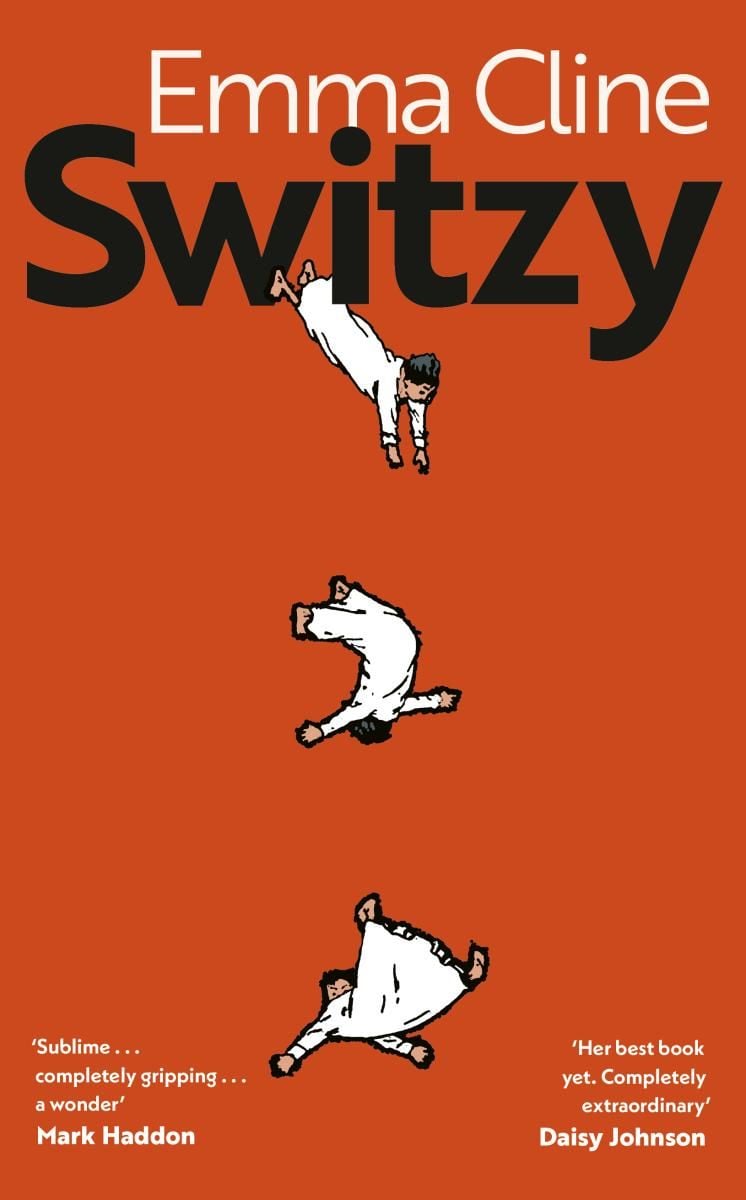

A mesmerising portrait of an ageing man’s last pilgrimage, from the New York Times bestselling author
- Published
The author of Switzy, longlisted for the Booker Prize 2026, talks about the strangeness of life’s endings, writing in hotels, and the childhood books that inspired her
Buy the book
The inspirations behind my Booker-longlisted book
There is a real strangeness to our lives, with their endings that, for as long as we can, we keep conveniently and necessarily out of sight. David can’t keep his own end out of sight any more – it’s scheduled like any appointment on the calendar.
What would those final few days feel like? Could the impossibility of it all be a little funny, even? You wouldn’t want to start a new TV show – or would you? I wanted to try to drop into a consciousness pressurised by its own ending. And what if that consciousness was already slipping away – what remains of the self? What to make of our lives, all that has passed through us?
I wasn’t really thinking about the book in those terms when I first started – there was just an image of a man in a borrowed plane, flying through the night. But probably it all comes out of my own feelings of mortal terror and loss.
The book that made me fall in love with reading
As a child, I loved the Betsy-Tacy books by Maud Hart Lovelace, first published in the 1940s. The details charmed me totally: Betsy’s trunk of writing supplies, Tacy’s plaid dress, Tib’s chocolate brown house with its stained-glass windows.
The book that made me want to become a writer
It actually might have been the Betsy-Tacy books – the series follows Betsy from age five through her early twenties, and somewhere early on in there, Betsy decides to be a writer when she grows up. That was probably all it took for me to think that I wanted to be a writer, too.
The book I read again and again
I often reread John Cheever’s journals. It’s moving to drop into this life, to get these hits of loneliness and aliveness. The beauty almost makes up for the loneliness, but not quite. Maybe that’s a difference I find in rereading – that I probably would have said that the suffering was redeemed by the beauty, but now I just think, it was really painful to be inside this head. Maybe my sense of it will shift again. There’s an episode of The Dick Cavett Show where John Updike says something like Cheever’s writing has a radiance to it. That seems exactly right to me.
The book that changed the way I think about the world
Mary Gaitskill’s Veronica is mind-altering, in that Gaitskill’s vision is so strong and almost psychedelic that it overwhelms your own perception. You can look up from the book and feel that the world around you is made up of this barely-submerged battle between dark and light.
As fiction writers, we make our little imperfect offerings to the cause of language, the literature of these human lives. The limits are many, but we do it anyway
The book that changed the way I think about the novel
While writing Switzy and thinking about how to render memory on the page, I looked to books that expanded my sense of what form that might take – I Remember by Joe Brainard, Suicide by Edouard Levé.
I love it, too, when an author is using the project of book writing in their own lives in an interesting way. The Patrick Melrose novels struck me for their scope, as did Annie Ernaux’s books – books as a container for a whole life, the life and the book not totally cordoned off from each other.
The book I’m reading right now
Vigdis Hjorth’s If Only completely absorbed me. I told a friend that it was so ‘fun’ to read, which is maybe the wrong word – it’s a relentless and harrowing and hopeless book. But the absolute intensity of the voice is such a rush.
Where and when I most like to write, and the tools I need
I write mostly at my kitchen table, or often sitting on the floor, hunched over a laptop. Every once in a while, I’ll check into a hotel and work – the blankness is helpful for me, the non-space space.
The Booker-nominated book everyone should read
Should everyone read G. by John Berger? I’m not sure, but I loved it forever ago, when it just seemed like a sexy, earthy picaresque to my college self. Picking it up now, I’m interested in the moments when Berger allows for the impossibility of ever really understanding another person: ‘Armed with the entire language of literature we are still denied access to her unique experience.’
As fiction writers, we make our little imperfect offerings to the cause of language, the literature of these human lives. The limits are many, but we do it anyway. Why? Berger puts it so nicely: ‘Why do I want to describe her experience exhaustively, definitively, when I fully recognise the impossibility of doing so? Because I love her.’
Switzy
- By
- Emma Cline
- Published by
- Chatto & Windus
A mesmerising portrait of an ageing man’s last pilgrimage, from the New York Times bestselling author


Features

- Book extract
An extract from Switzy by Emma Cline

- Book recommendations