An extract from Switzy by Emma Cline
An extract from Switzy by Emma Cline
- Written by
- Emma Cline
- Published
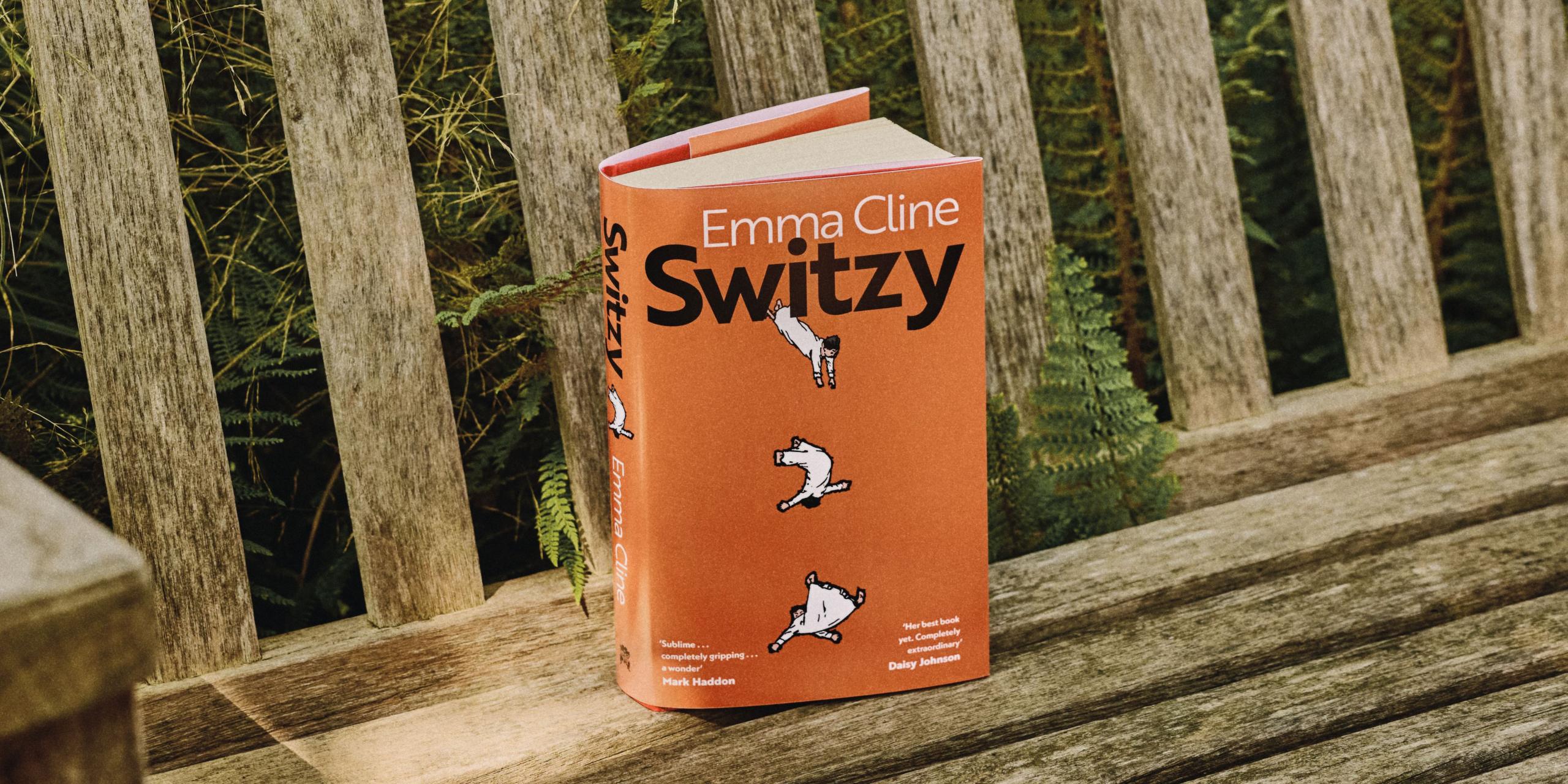
Switzy by Emma Cline is longlisted for the Booker Prize 2026. Read an extract here
A mesmerising portrait of an ageing man’s last pilgrimage, from the New York Times bestselling author.
A private plane cuts through the winter night, somewhere over Greenland. David, a retired executive, sits back in his leather seat, playing solitaire on his phone. Click. Click. Drag. Click. The notebook in his jacket pocket is filled with familiar phrases, urgent reminders to himself, but he struggles to recognise his own handwriting. A mystery, among many mysteries. The world, once so knowable, has been rendered inscrutable.
This is what David knows: Cody, his assistant, asleep in the seat next to him, will shepherd him along the voyage. A stopover in London. Dinner with his adult daughter. A meeting in France with an old friend, estranged for decades.
His final destination is Zurich.
David glides through hotel rooms and airports and foreign cities, running out the clock on his mortal life. His grasp on the present slips away, and the past rushes in: the Sunday roasts of childhood. The stiff clothes meant only for church. A summer at a school friend’s house. The losses and missteps that punctuate a life.
As David’s arrival in Zurich looms, an exquisitely rendered portrait of an unravelling mind emerges, both darkly humorous and profoundly moving. Hypnotic and startlingly original, Switzy probes the depths of human consciousness, revealing what a man is left with when the accomplishments and compromises that have defined him, and the illusions he’s relied on, vanish.
It was always nighttime there. Or in his memory he had only ever been there at night, the cobblestone streets and the strangely empty sidewalks, the black vastness of the lake as seen from the back seat of a town car. It was a city that existed in a perpetual hush, a chilly dark. As if the place had been built for these kinds of shadowed errands.
There would be snow on the ground. The middle of February. The flat, sad month. Like a house when no one is home.
The steady hum of the plane’s engine carried them along. The window shades were all closed. A flat-screen showed news without sound. David played solitaire on his phone. The green meadow of the background pulsed against the black and red and white cards.
Click. Click. Click. Drag. Click.
The cards flipped all at once, scrolling across the screen. Chaos that resolved itself into order and then back into chaos, in need of order, future order.
He put his phone down.
Cody was still asleep. His head hung slack, mouth open, though he seemed comfortable enough, his arms folded peaceably across his chest. Self-contained, unobtrusive. He’d worked for David for—his brain wandered. For years. How much time had David and the boy spent together, if you added up the hours?
The quick brown fox jumps over the lazy dog.
The quick brown fox—
They were somewhere nearing Greenland. It was not his plane. Of course it wasn’t his plane. This plane that was brand-new. A tax loophole David had been familiar with—bonus depreciation. One-hundred-percent write-off for “business equipment.” In some realms, business equipment meant planes. Millions, just x-ed off the ledger. But what-ever equipment had to be put into use by December 31 of the calendar year—Stearns had just made the cutoff. Wheels up before New Year’s Eve. This year the exemption had dropped to whatever percent. Next year, even less. In a few years, the exemption would cease to exist, or more likely, it would morph into some other sneaky form, open for exploitation, but that was out past the limits of his purview.
The plane was large, bigger than Stearns’s last one. A full bedroom, a galley kitchen. Polished doors that separated the rooms, doors that slid silently and obligingly out of sight. The windows were larger, stamped out more of the night sky.
The flight attendant was somewhere in her thirties. Young but not enough to be vulgar. Low ponytail, low heels. David had known, when she first said her name, that it would instantly become vapor. And so it had.
She had made up little passenger kits for the overnight flight. Hand wipes and squat water bottles and Chapstick and miniature tubes of face lotion and a sachet of hydrating powder that made your water more . . . wet?
He unscrewed his water bottle and tipped in the sachet of powder, or however much powder he could manage to get inside. He screwed the cap back on, shook the bottle. He took a slug. Assessed whether this water tasted particularly wet.
Hard to say.
The flight attendant was somewhere in her thirties. Young but not enough to be vulgar. Low ponytail, low heels. David had known, when she first said her name, that it would instantly become vapor. And so it had
David had a small leather notebook that fit pretty well in a jacket pocket. An overly fussy leather-worked cover, Liberty or whatever, lined pages and a gold-leaf edge. He kept notes to himself here. In blocky handwriting. It wasn’t his handwriting. But it had to be, because he had watched himself write, watched his hand move the pen across the page.
ROSE CHAIR APPLE
Hall of the Mtn King
REBECCA, MARYLEBONE—Geoffrey. Rainer, 9.
Invisible spheres
As a kid, he’d learned cursive on lined practice paper. The quick brown fox jumps over the lazy dog. The swooping tails of the g’s and the q’s, the queerly looped z—he’d filled page after page. Miss Shapiro had gone to each student, met them in their private child world. Used her own hand to press theirs into place. It was about learning to hold the pencil right. The minor ache of his fingers taking up an unfamiliar position. Awkward, at first, and then it had become natural.
Miss Shapiro, who must have been barely in her twenties.
Now he seemed to clutch at his pen with a clumsy hand, the letters shaky and juvenile, awkward again. Miss Shapiro, where are you?
The flight attendant must have been watching, discreetly, to see when Cody woke up. At the first signs of stirring, she started to prepare dinner service.
Around she came to unfold the table, reconfigure the big leather seats into their dining arrangement. Click, click, she locked the seats into their new place. She spread a white tablecloth. Laid out the salt and pepper shakers, a pair of silver mid-century blobs. They were heavy in the hand, pleasingly so. The dishware, the flatware—the choosing of these items had taken up a not-insignificant part of Stearns’s mental energy. Multiple calls to David, discussing these decisions. Curious to think of now. These concerns.
They used to wear the outfits. The girls. The flight attendants. One of his first real business trips—those Austrian Air hostesses in red, head to toe. Their stockings were red, their little caps. There were little fabric curtains on each window with the names of the cultural capitals of Europe printed in script. Mouthfuls of Champagne. A little burp, David smiling at the red nurses. Smiling at the folding tray that marked his universe. He said nurse but he knew they weren’t nurses, no. They were air hostesses, but those outfits—they had a nurse feel. Which meant they would care for you. So you could relax, all was well.
A glass of white wine for Cody. A slightly prissy sight, Cody lifting the stem to his mouth. David had three fingers of Scotch. Alcohol was to be avoided. That had been the initial wisdom. He had complied, at the beginning—fear, it turned out, was fairly motivating. David gagged a little on the supplement regimen, piously declined his evening Scotch. Then the futility was clear, and he was ashamed by his own efforts, that he had ever believed they might help.
And really, even his brief sobriety had seemed flimsy. Subject to the usual human waffling, that murky internal dialogue with which all manner of things were explained away. A lifelong Punch-and-Judy act—how one version of David pretended to himself that, yes, it was decided, no drink that night. Which, after the private gauntlet, usually meant, yes, yes, actually a drink tonight. Knowing he would have the desired thing, but first there’s just this little play we are doing in which no, no, he would not.
Frowny face, smiley face.
The liaison in Zurich was a woman named Gould, Anna Gould—he called her Ghoul. The process had taken months. Months and months.
Ghoul had messaged again.
Ghoul needed a second assessment from another specialist.
Ghoul needed another round of paperwork completed before she could send along next steps.
All the bureaucracy that had to be navigated, as in any other transaction.
It was a business exchange, ultimately—that had been a comfort.
Ghoul required the boring, expected items. Passport, birth certificate.
Did David Hastings exist? Yes, he did. Born in North Linden Hospital at 3:02 in the morning, deep in an eastern winter.
Could David Hastings travel to Zurich? Did he have the proper documents?
Yes, here was his younger face that stared out from his passport photo. A younger face, blithe, a David Hastings who did not know what would befall this current face.
Though as he understood it, it had been happening already, that many years ago, proteins circling and gumming up the brain, plaque crackling along his neurons. So this younger David already contained the information of his own senescence. As everyone did, he guessed.
This younger David did not care.
The passport meant that this older David could pass through borders and cross oceans.
A stopover in London, then he would arrive in Zurich at the appointed time.

Switzy
- By
- Emma Cline
- Published by
- Chatto & Windus
A mesmerising portrait of an ageing man’s last pilgrimage, from the New York Times bestselling author