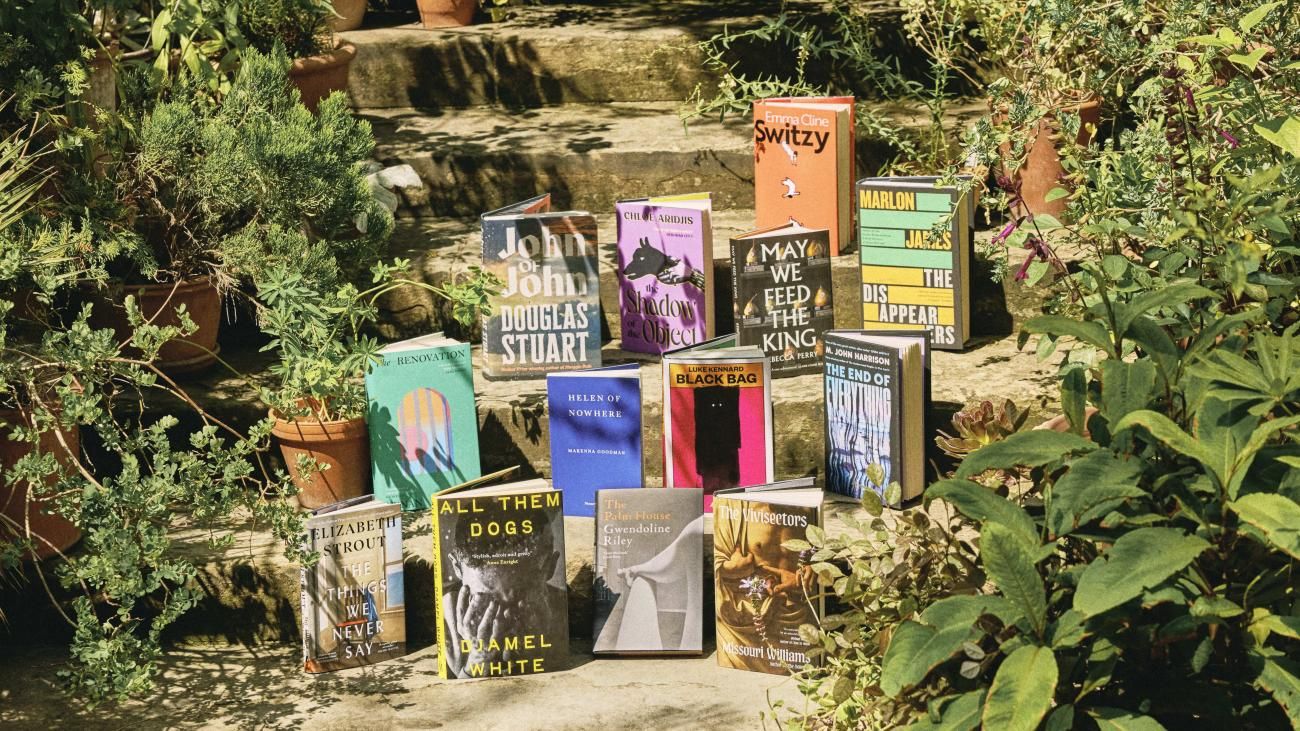
An extract from The Vivisectors by Missouri Williams
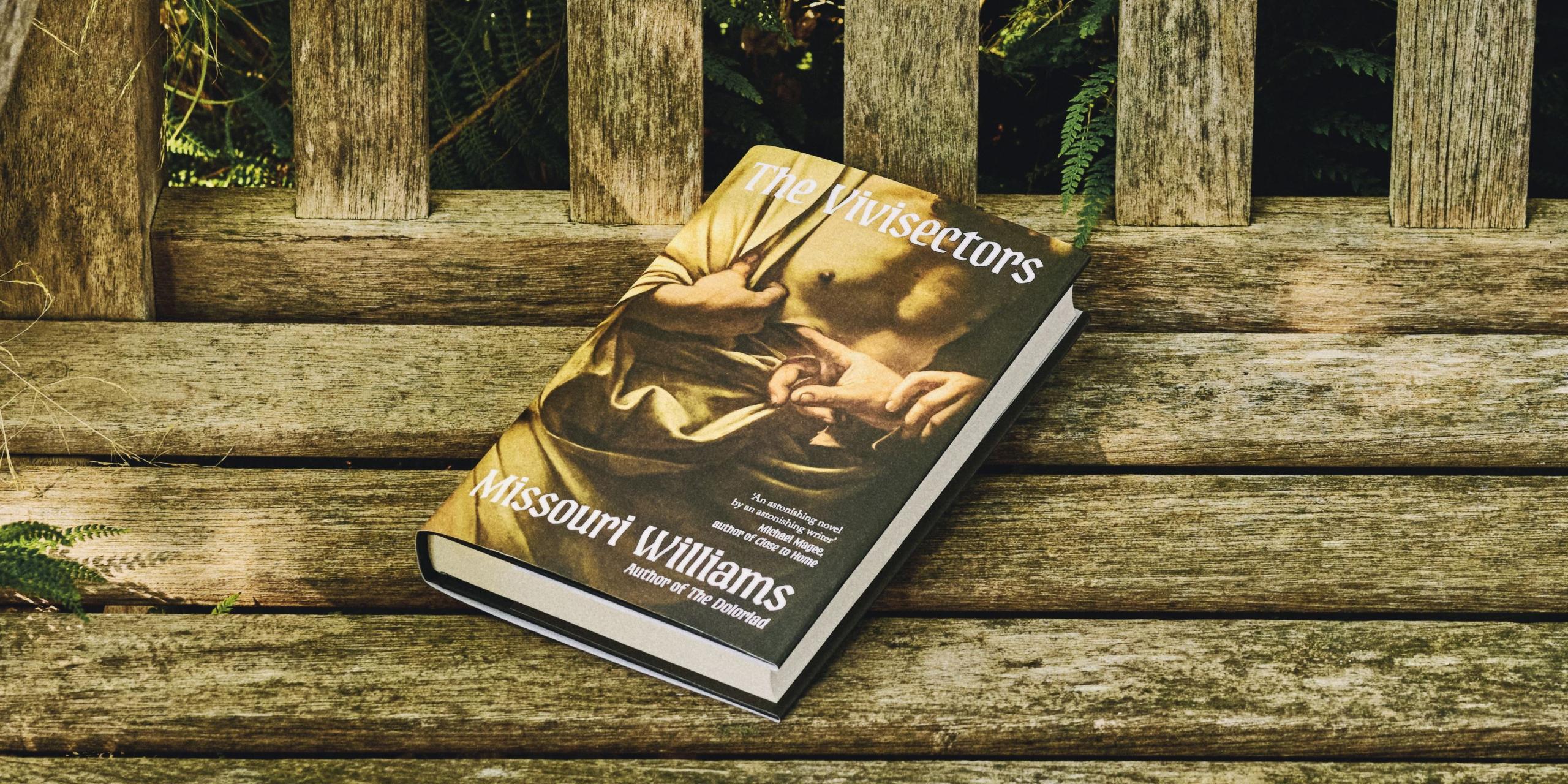
An extract from The Vivisectors by Missouri Williams
- Written by
- Missouri Williams
- Published
The Vivisectors is longlisted for the Booker Prize 2026. Read an extract here
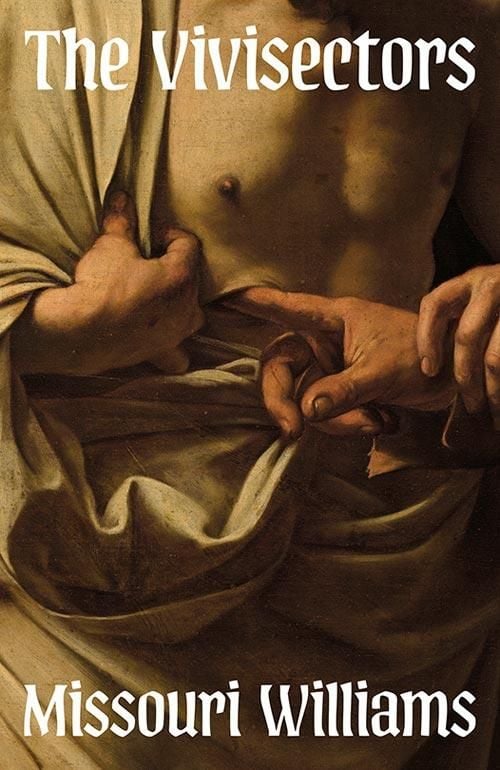
Coursing with icy suspense and rendered with violent precision, The Vivisectors is a new kind of love story for a broken era
In a famed but crumbling university city overrun by vegetation, where power is held in a fragile balance between the academics and a contingent of rogue gardeners, Agathe spends her days listlessly propping up the career of her fraudulent professor boss.
One day, a campus scandal threatens to rupture her carefully managed routine: Adam, a contrarian and the pet student of her boss, comes into heated conflict with a rising young professor, with both men claiming discrimination. As the crisis consumes the university, Agathe remains unmoved. But when her boss instructs her to turn double agent and gather information by befriending Adam, Agathe finds herself both caught up in the events tearing the city apart and increasingly drawn towards the alluring student at the heart of it all. But can anyone be taken at their word in a struggle over the truth?
In The Vivisectors, Missouri Williams holds up a mirror to humanity’s most intimate contradictions and reflects them back through a novel of blazing spiritual reckoning.
Buy the book
The morning after my mother finally tried to kill herself my uncle decided to say something to me, although we usually ate breakfast together in silence. Leaning over the dark mahogany table, which I’d taken to draping with one of his own mother’s embroidered tablecloths, he told me that if you wanted to write something terrible about somebody then it was best to use the first person, because they’ll never be able to accept that you were capable of betraying them so utterly, and so instead of seeing the obvious they’ll look at just about anything else. Disguised like this, you could tell whatever story you liked. It was the safest of all forms, my uncle concluded, because to mix up the author and their narrator was the most cardinal of literary errors. His watery grey eyes examined me briefly before drifting in the direction of the garden.
My uncle only ever approached me indirectly. He let me know his opinions through all kinds of subtle hints. But he was always trying to get me to express myself, which I thought a bad idea. Once he had even bought me a diary with carefully delineated sections for events, thoughts and feelings. I had thrown the book out my window, into the garden, and for the next few weeks we watched it disintegrate in the spring rains. Ever since I had left my parents, my uncle and I had lived together in peace. For the most part, we understood one another perfectly. He was a frail man, older than his sister, my mother, by a good twenty years. His wispy grey hair floated around his balding head like a faded corona. He never raised his voice. What communication he had with the rest of the family was conducted on the telephone, in whispers, in rooms where I never went. My uncle seemed almost ashamed of his continued connection to them, and nothing he said ever had any power to help his younger sister. But their conversations persisted nevertheless. And yesterday had been eventful.
He had been forced to speak to my father. He had told me what had happened late in the evening, stopping me as I climbed the stairs to the upper levels of the house, and then had returned to his study, presumably to await another call.
I imagined my uncle and my father conferring late at night, in the library where we were sitting now, each speaking in hushed, considerate voices while the moonlight crawled across the overgrown lawn outside. Even though I wasn’t interested in what had happened my uncle had let me know that my mother had tried to drown herself in the bath. She had drunk enough alcohol that she had almost succeeded.
After that I couldn’t help thinking about it. My dreams had been full of water.
That morning the library was dim. All that came through the wide bay windows was a weak and incapable light that failed to banish a single shadow. Outside the green plants were dripping. It had rained overnight. There was something desperate about the garden that cut through its dark and splendid indifference: the semicircle of the ruined fence, sagging hopelessly at what had once been the garden’s farthest edge, reminded me of my uncle’s tentative smile.
This disturbed me; it wasn’t what I was used to. The garden I knew and admired was wild and arrogant and enclosed my uncle’s house on all sides, and it barely registered the attempts of local gardeners to tame it: no matter what they did the garden sprang back. I would watch it gain in strength from my bedroom on the third floor. First the weeds would return, green and relentless. A carpet of nettles would spread out from the border of the trees, along with tall columns of thistle, and the yellow heads of dandelions would break up the manicured monotony of the lawn.
I observed the process with sick satisfaction. Nature doesn’t care about us at all. We can beat it down and tear it to pieces, but it just lies there mutely, saying nothing, before it comes back again. There’s no reproach and no reciprocity, nothing but the same dumb growth as always. And so nature never gives up and the truth is that one day it will overwhelm us entirely.
The same is true of human nature. My mother would have been driven by the same mechanism as the garden, there was no stopping something like that. Even if we had been there to witness it, we would have stood silently and watched the event as it unfolded, as if the following action had already been recorded, written in an ancient manuscript or sculpted in stone, which is true of all actions in one sense because everything has been determined in advance.
He was trying to help me without understanding how dangerous it is to help a person like me. Even after all these years, I don’t think he suspected how many awful things I had to say, all the hatreds I had stored up
There is almost nothing new that we can do to one another.
All of this is to say that I was used to indifference. And yet today the whole world seemed to be waiting for me to say something, to give it a sign of what I felt, though perhaps this perception of natural sympathy was simply another one of my mother’s many tricks. She had always had a talent for spreading herself around. The little light that bled through the glass collected in my uncle’s spectacles and turned his eyes into bright, impenetrable discs.
Though I couldn’t see the sky through the windows that lined the hexagonal walls of the old wooden library as they were crowded with trees, I knew that above our heads black clouds were gathering. We had heard the forecast on the radio and it was bad.
It would have been impossible to read my face clearly in the half-light, and in addition to this my uncle had cataracts. He was trying to help me without understanding how dangerous it is to help a person like me. Even after all these years, I don’t think he suspected how many awful things I had to say, all the hatreds I had stored up. However, there was no chance of him seeing the truth. In appearances, I was calm and clear-eyed and still looked like a child. I kept my dark hair short, and my complexion was smooth and clean. It was as if none of the things that had happened to me had left any mark at all, the life I’d lived before moving into my uncle’s house nothing more than the unpleasant dream of some long illness. But at the centre of my soul there was a big dead rock that wanted nothing to do with anything else, and when I thought of my name or the qualities that supposedly made me me, this was all I saw – a great big lump of stone sitting in the shadows. Sometimes at night I would dream of it, and it was still, very still, but deceptively so because as always it was somehow commensurate with that strange rolling anger, the same anger that made me feel seasick when I moved from the dark hallway into the dead light of the senile city, which after all was my city, and so resembled me. I never blamed myself for my feelings. How could I feel anything other than the same dull hatred a rock feels when I had been made with it buried inside me? Just like the events that had preceded it, my mother’s attempted suicide had left no impression – the surface was too hard. Nothing could get to me and besides that there was barely any me to get to. So when my uncle hinted that I should express myself, I could only shake my head. It would have been a terrible idea to take him seriously.
When I think about myself, I see that black stone. When I think about the world around me, I see an arrangement of walls, each enclosing and excluding different planes of emptiness, fields where nothing grows and villages devoid of inhabitants. This is the true state of things. But the truth is so painful that we pretend we can’t see it and refuse to take responsibility for what we know to be the case, even though there’s nobody else who could have made it this way because nature has no walls – the other animals don’t build them. By enclosing something you create emptiness.
All at once a space that was full of motion and constantly subject to change has only two states: either there’s something in it or there isn’t. Once something dies there’s nothing to replace it. The field is barren.
Inside my mouth my teeth are pale and stubby because I grind them at night. The constant trauma has made them nearly translucent. Because of how much I grind my teeth I often have headaches and nausea. But my uncle doesn’t know about this either. When he says something that makes me smile, I cover my mouth with my hand. And in this way my deceit continues: nobody has ever been able to see what I really am, although at times they have sensed it.
As it turns out, I did take my uncle’s advice and I’m writing this now. Only it isn’t because I want to write about my mother but because I want to write about my boss and all the things that happened to her the summer my mother tried to kill herself and for once surprised us all.
The Vivisectors
- Published by
- 4th Estate
Coursing with icy suspense and rendered with violent precision, The Vivisectors is a new kind of love story for a broken era
Features


- Book recommendations
Back to school: 10 Booker Prize novels set in classrooms, colleges and campuses


- Book recommendations