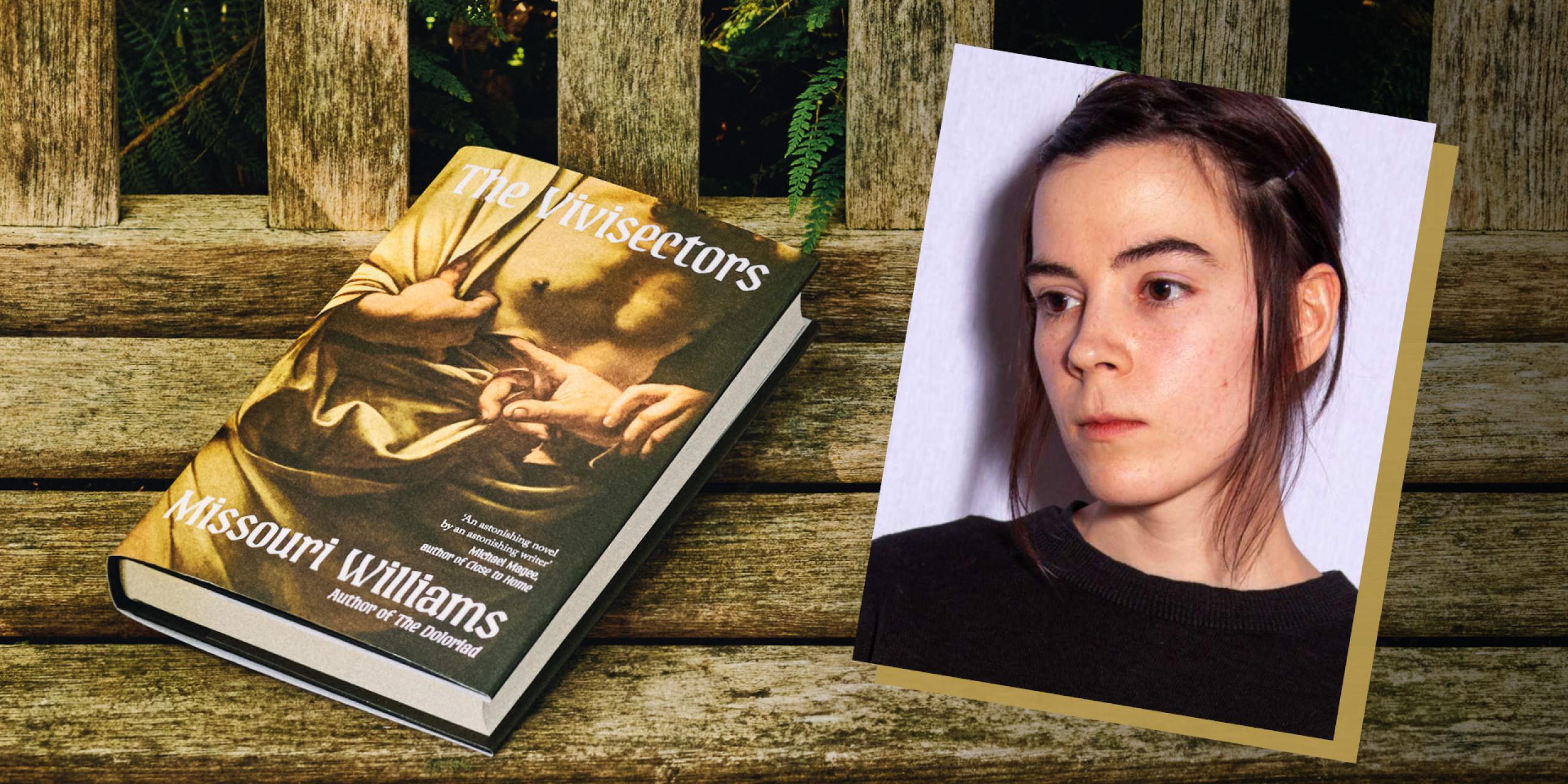
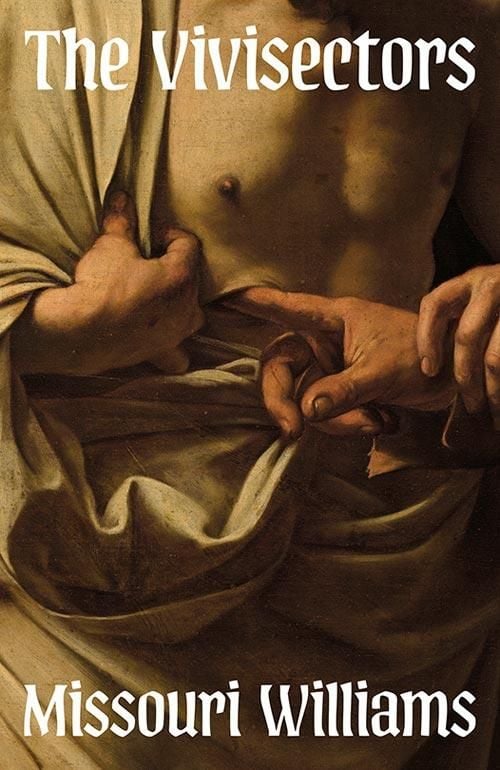

Coursing with icy suspense and rendered with violent precision, The Vivisectors is a new kind of love story for a broken era
- Published
The author of The Vivisectors, longlisted for the Booker Prize 2026, on Plato, reading and writing on the move, and the books that made her reconsider everything
Buy the book
The inspirations behind my Booker-longlisted book
I was reading Plato’s Republic and thinking about allegorical cities more generally, and The Vivisectors slowly took shape. It felt like a way to explore a set of ideas that had preoccupied me for some time, but primarily the book is a reflection on the question of what fiction is good for. I wanted to write a story that felt like a puzzle, and for there to be something essential beneath it. Writing the book helped me make sense of the things I saw happening around me.
The book that made me fall in love with reading
I was pulled in two directions as a child. I liked books about warfare or books about horses, but never at the same time. Orson Scott Card’s Ender’s Game is burned into my memory so deeply that 20 years later I still tell myself: ‘Remember, the enemy’s gate is down!’ Otherwise, the Silver Brumby books by Elyne Mitchell were everything to me.
The book that made me want to become a writer
There have been so many novels that have made me realise just how rich and masterful the form can be. Reading Dostoevsky’s The Idiot as a teenager astonished me. I remember that after I finished, the world suddenly seemed so full of possibility; everything had a strange and hidden meaning, a secret significance.
The book I read again and again
I reread Hermann Hesse’s The Glass Bead Game every couple of years. I first heard the end on the radio with no context for what was happening, and then my grandfather helped me figure out which book it belonged to when I described the leap into the lake. As a novel it’s just so stately. My relationship to it fluctuates wildly.
The book that changed the way I think about the world
I feel as if this is the whole reason why I read – I’d like to be saved from my way of looking at things. In the last few years everything that I’ve read by Marlen Haushofer has affected me deeply. No other writer explores responsibility in the same way. Her characters are very lonely and very decided. I would like for everyone to read her work.
I like to listen to the same piece of music on repeat until it becomes something that belongs to me so absolutely that I never need to think about it again
The book that changed the way I think about the novel
Ágota Kristóf’s The Notebook trilogy. Reading these books made me reconsider everything. She examines the relationship between fiction and truth so minutely. Each book repudiates the book that came before it but then also somehow strengthens its claim. And then her vision of the world is so painful that it’s hard to recover from. But it feels like an important encounter.
The book I’m reading right now
I’m reading Patrick Cottrell’s Afternoon Hours of a Hermit right now. I’m stuck midway, because I have a proof on my laptop and I’m always out walking with my baby, but it’s so brilliant and deadpan and funny and tragic all at once. The narrator is a self-described detective and writer whose subject of investigation is his adopted family. Every time he refers to ‘my mentor, Thomas Bernhard’, I crack up. This appropriated Bernhard delivers strict writing advice: ‘Thomas Bernhard said you must write the story in your head before you put down a single word, if you start off with the wrong sentence, the wrong syntax, the wrong silence, the entire foundation will crumble later on.’
Where I most like to read
Right now I can only read while walking because I have a baby who only naps on the move. So I walk in circles on predictable terrain, on the top of a hill that overlooks our neighbourhood in Prague, but then whenever my baby stirs because of a dog or a loud person, I have to stop and run somewhere else. It makes me very slow.
Where and when I most like to write, and the tools I need
If things are going well, I’ll write anywhere. I even like writing on the move. I wrote whole sections of The Vivisectors on planes and trains and buses. The only real ritual I have is that I like to listen to the same piece of music on repeat until it becomes something that belongs to me so absolutely that I never need to think about it again.
The Booker-nominated book everyone should read
Alan Hollinghurst’s The Folding Star. My agent, John Ash, told me to read it, and he might even have bought it for me, but I can’t remember. It’s incredible in every single way. And then never has a book so accurately captured the misery of the Belgian seaside.
The Vivisectors
- Published by
- 4th Estate
Coursing with icy suspense and rendered with violent precision, The Vivisectors is a new kind of love story for a broken era


Features


- Book recommendations
Back to school: 10 Booker Prize novels set in classrooms, colleges and campuses
- Book extract
An extract from The Vivisectors by Missouri Williams
- Book recommendations