The International Booker Prize 2026
The International Booker Prize 2026
- Winner
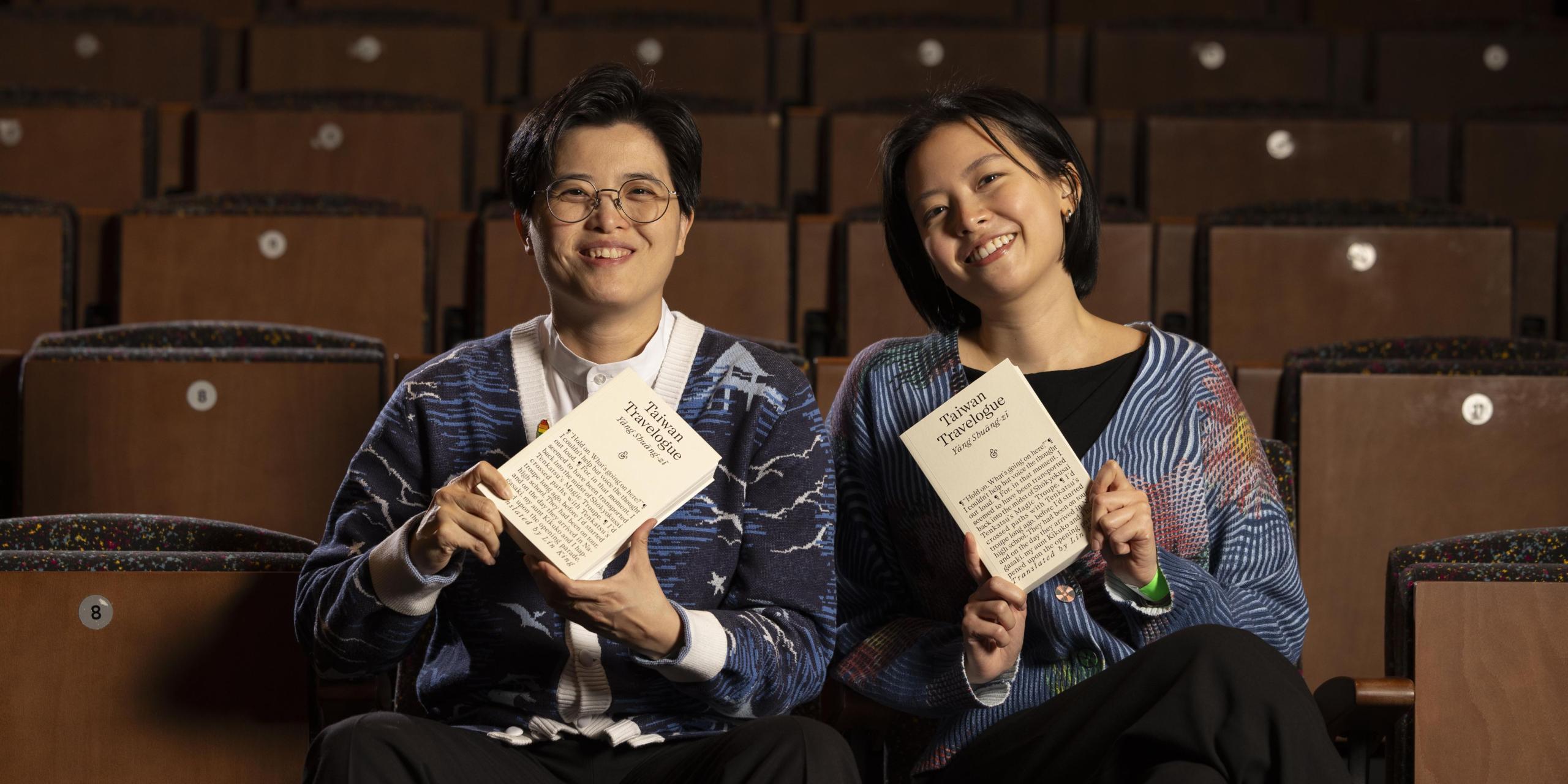
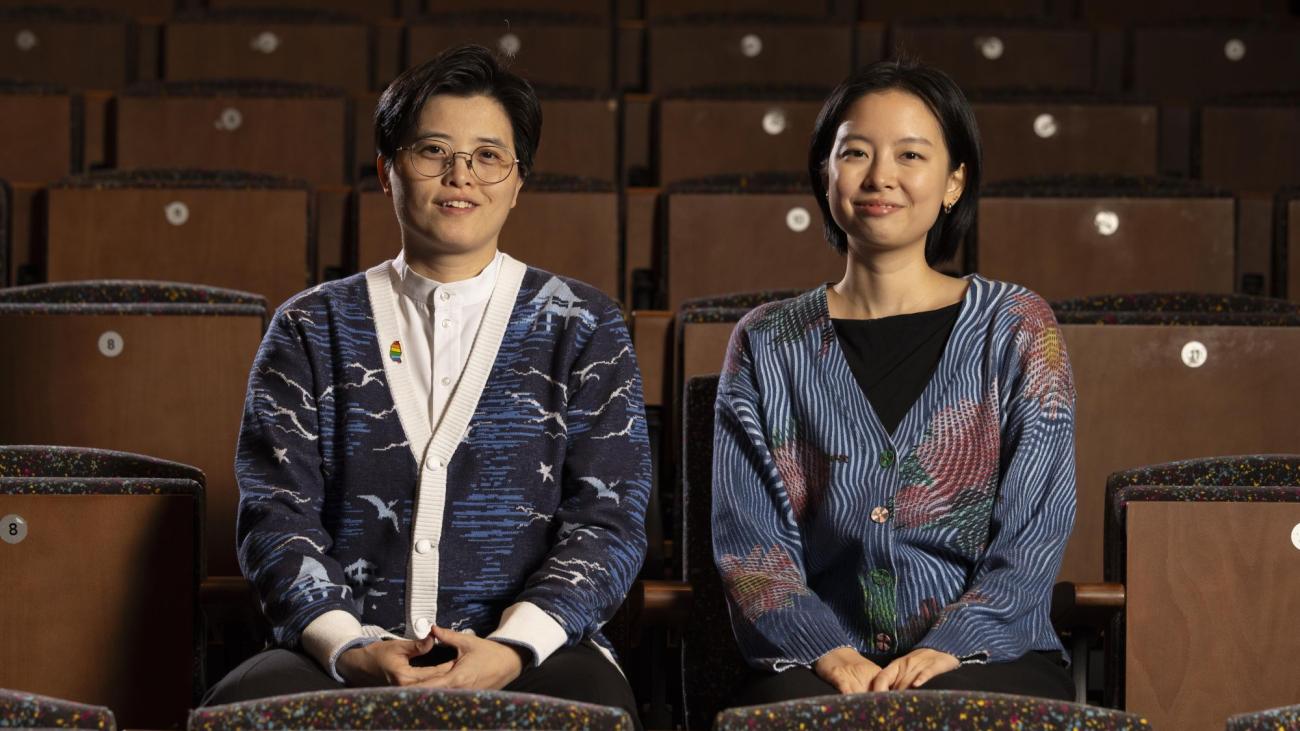
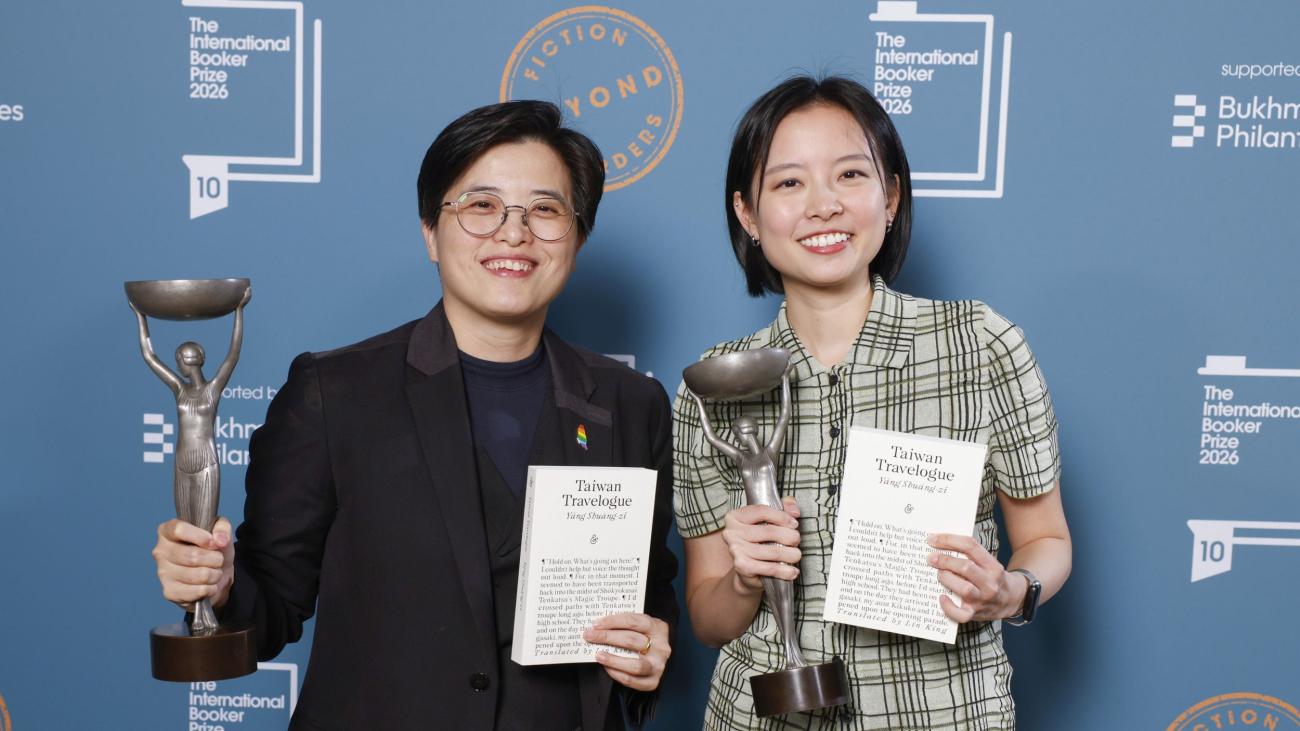
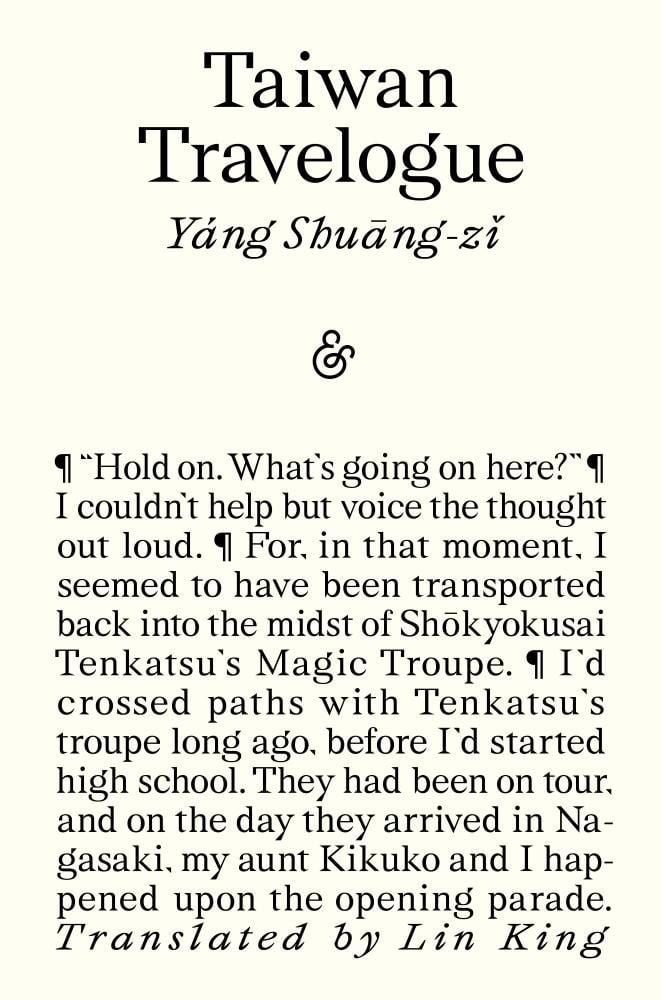
Taiwan Travelogue by Yáng Shuāng-zǐ, translated by Lin King, has won the International Booker Prize 2026, supported by Bukhman Philanthropies
Taiwan Travelogue is the first book translated from Taiwanese Mandarin to win the International Booker Prize. The novel, which takes the form of a fictional translation of a rediscovered Japanese travel memoir, explores history, power, class, colonialism and love through the lens of two women’s culinary tour across Japan-controlled Taiwan in the 1930s.
The winning book was announced by award-winning author Natasha Brown, Chair of the 2026 judges, at a ceremony at London’s Tate Modern on 19 May 2026.
The winner was chosen by the 2026 judging panel. Brown was joined on the panel by writer, broadcaster and Oxford University Professor of Mathematics and for the Public Understanding of Science Marcus du Sautoy; International Booker Prize-shortlisted translator Sophie Hughes; writer, Lolwe editor and bookseller Troy Onyango; and award-winning novelist and columnist Nilanjana S. Roy.
In selecting their winner, the judges were looking for the best work of long-form fiction or collection of short stories translated into English and published in the UK and/or Ireland between 1 May 2025 and 30 April 2026. The International Booker Prize recognises the vital work of translation, with the £50,000 prize money divided equally between the author and the translator.


Taiwan Travelogue
Winner of The International Booker Prize 2026
- Translated by
- Lin King
- Published by
- And Other Stories
The shortlist
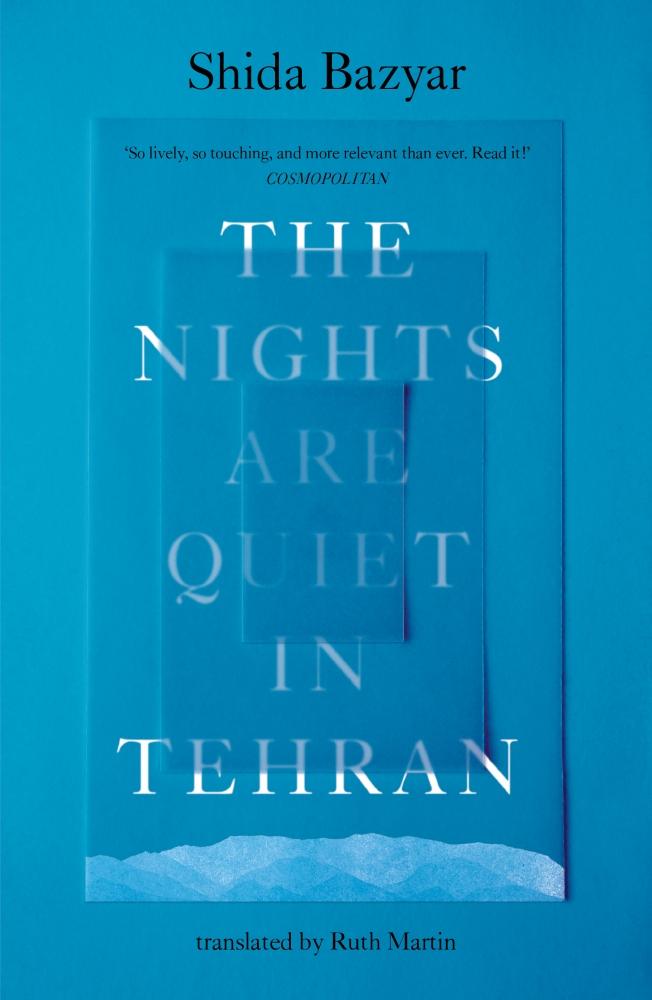
By Shida Bazyar
Translated by Ruth Martin
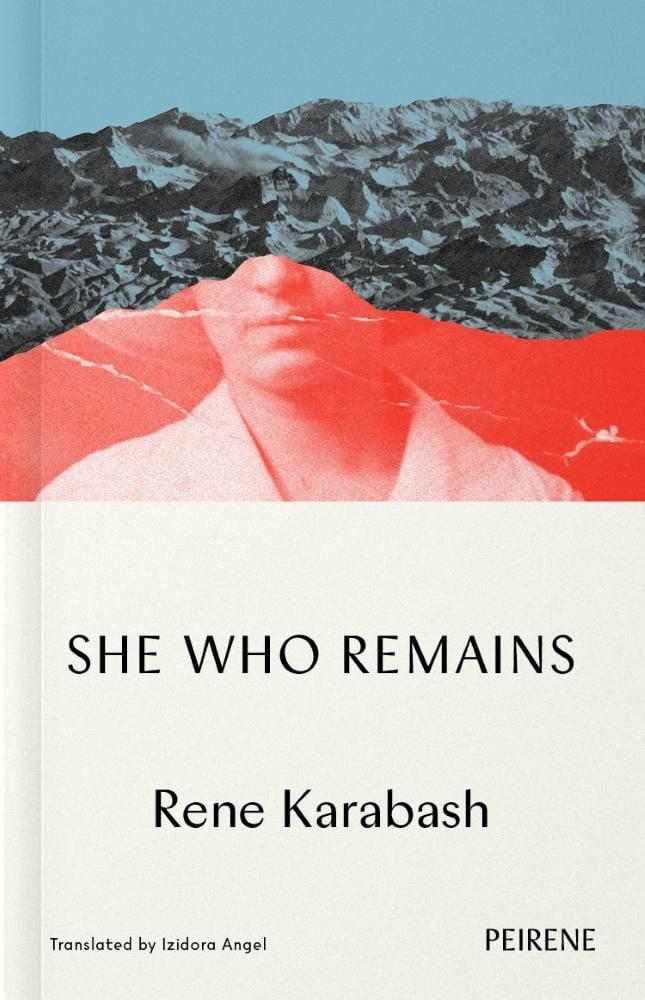
Translated by Izidora Angel

Translated by Ross Benjamin
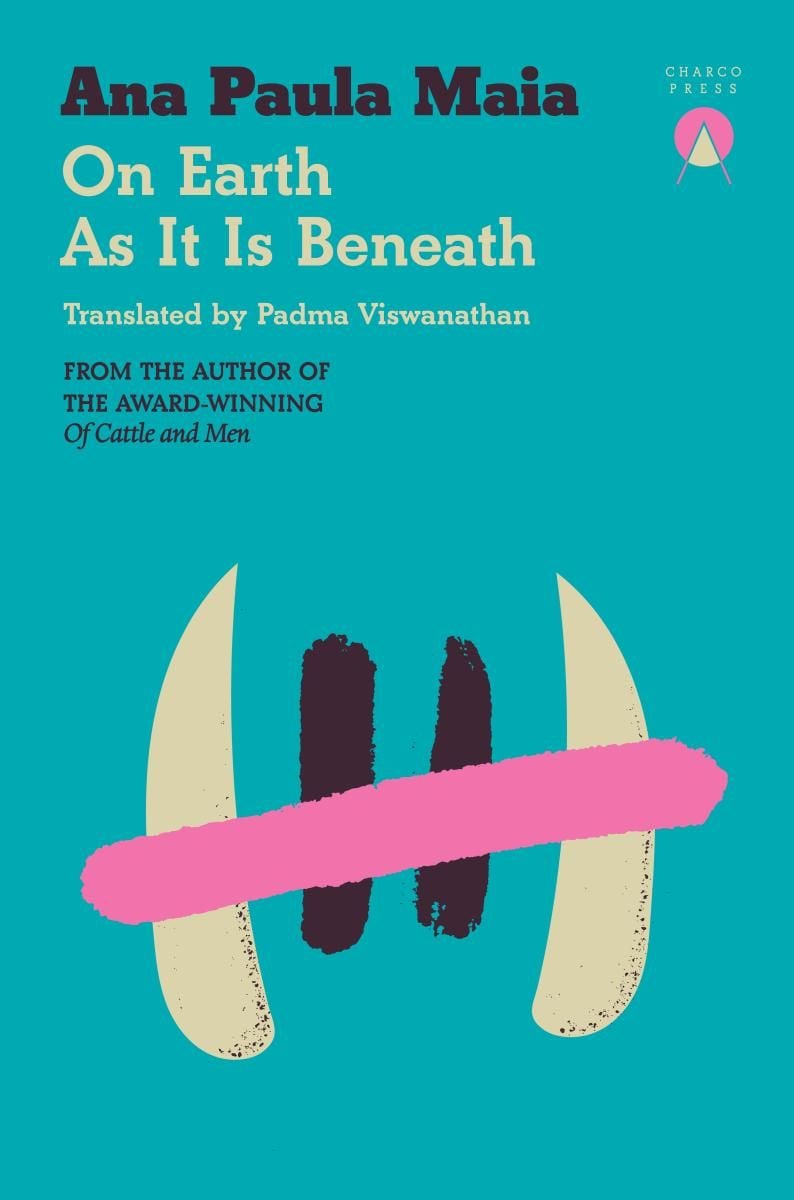
Translated by Padma Viswanathan
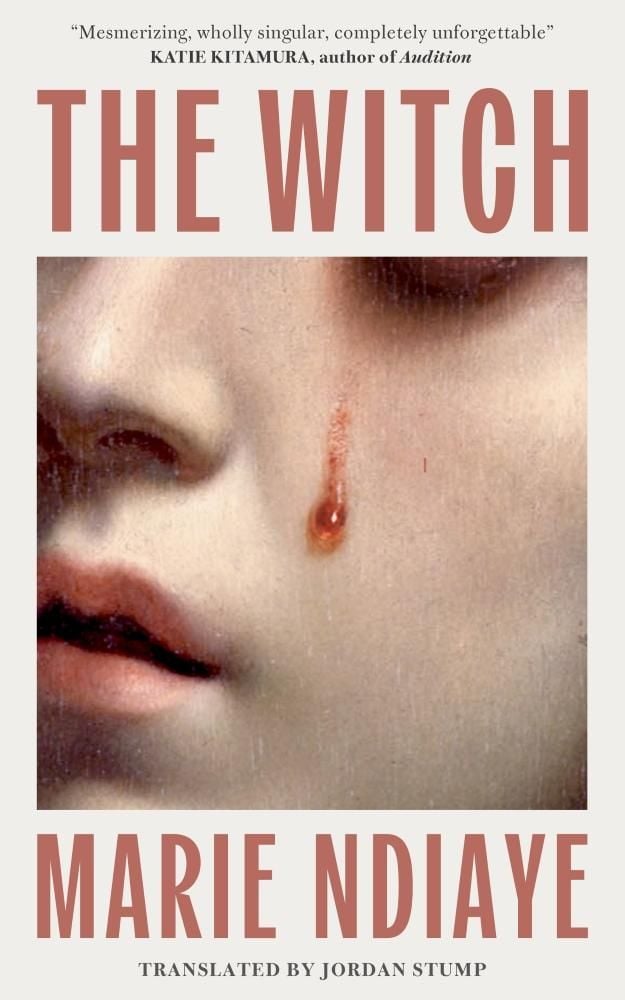
By Marie NDiaye
Translated by Jordan Stump
Translated by Lin King
The longlist
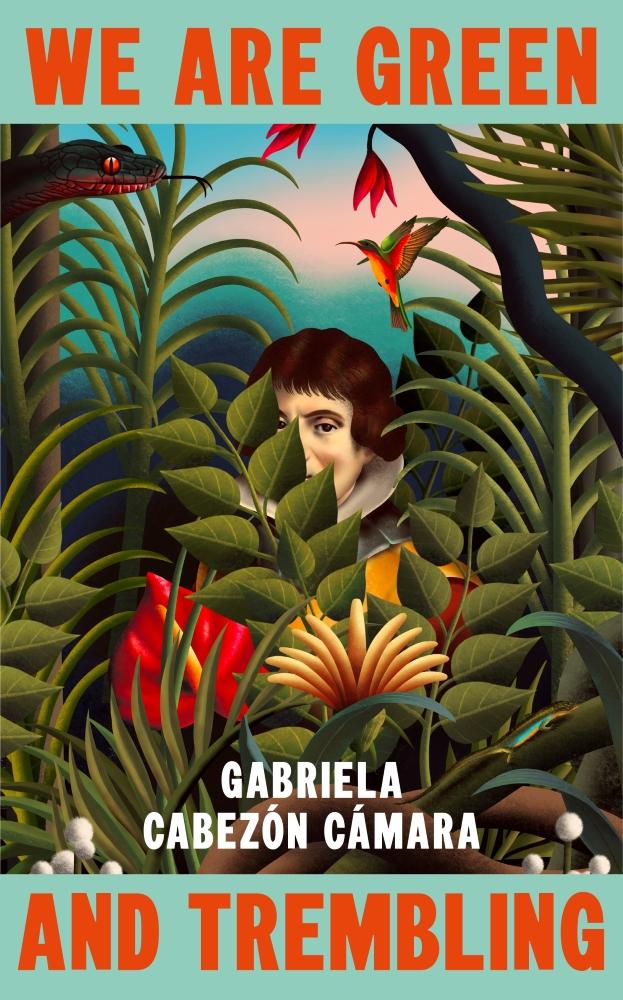

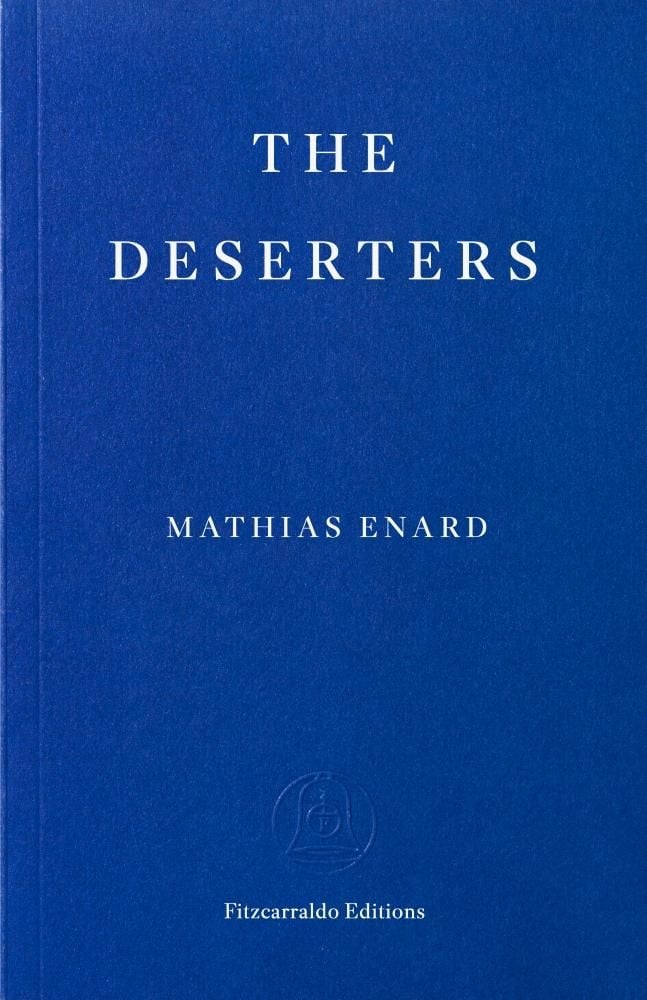
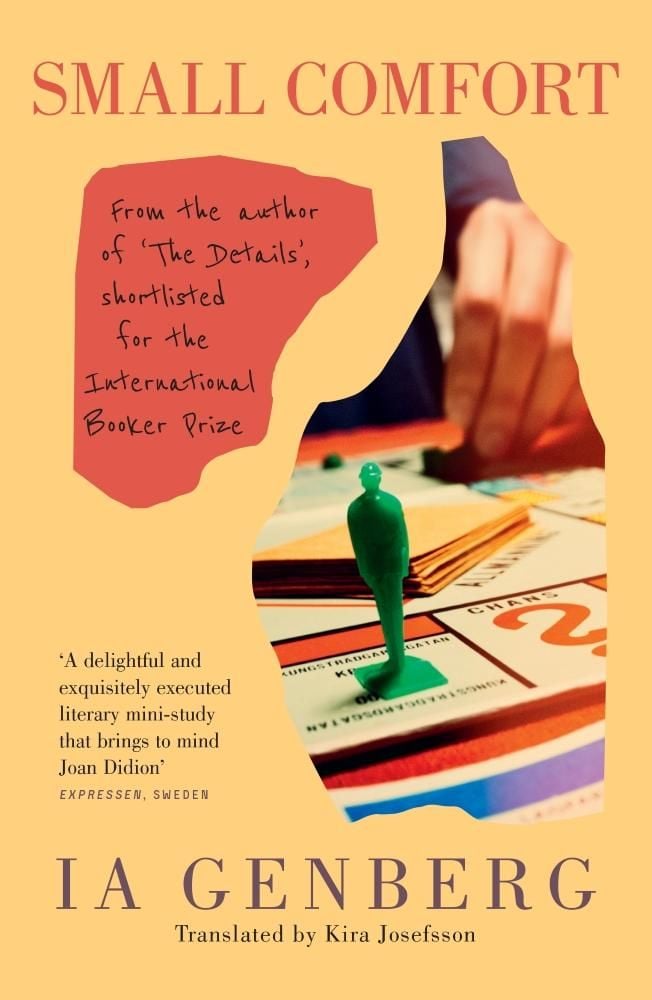

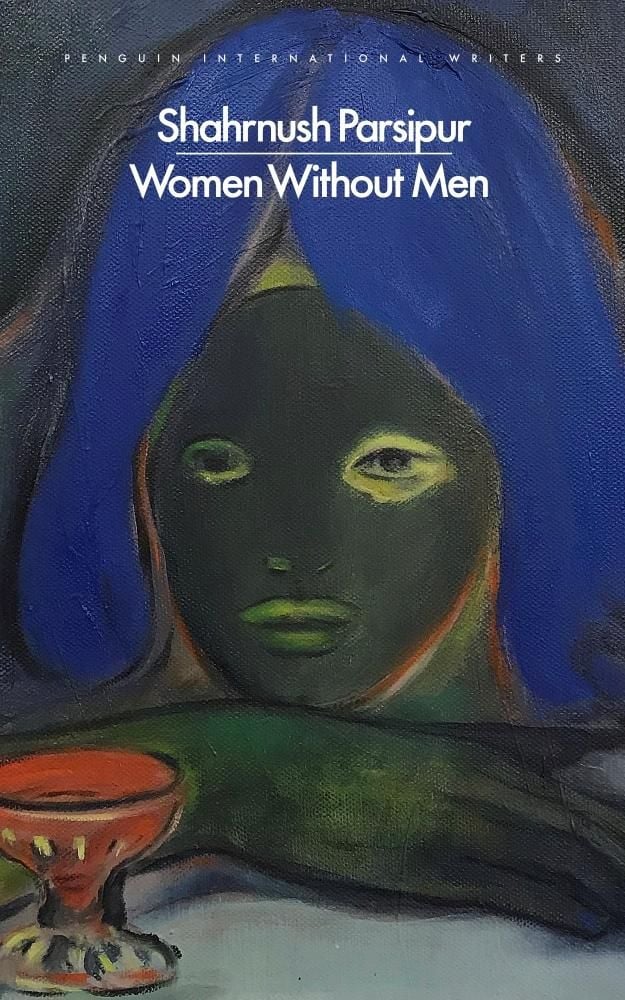
The 2026 judges


Natasha Brown, International Booker Prize 2026 Chair of judges, says:
‘Can love overcome a power imbalance? Taiwan Travelogue, winner of the International Booker Prize 2026, teases out the nuances of this question against a backdrop of 1930s Taiwan under Japanese colonial rule.
‘[It] follows Aoyama, a well-meaning author from Japan, and her Taiwanese interpreter, Chizuru, on a government-sponsored tour of Taiwan. From their first meeting, sparks fly between the two women. The power dynamics inherent to their burgeoning relationship, however, prove difficult to navigate. Chizuru is a cipher: enchanting, yet unknowable. She resists all of Aoyama’s efforts to pierce her carefully-constructed mask of professionalism.
‘This book doesn’t shy away from the complexities (both real and fictional) of its journey into the English language. Instead, it uses the hallmarks of a more traditional text – introductions, footnotes, afterwords – to wrap an intriguing metafictional layer around its core love story. Lin King’s deft translation perfectly conveys the nuances of the novel’s narrative voices.
‘Taiwan Travelogue pulls off an incredible double feat: it succeeds as both a romance and an incisive postcolonial novel. As judges, we’ve enjoyed rich discussions about the many layers of this book. It’s a captivating, slyly sophisticated novel.’
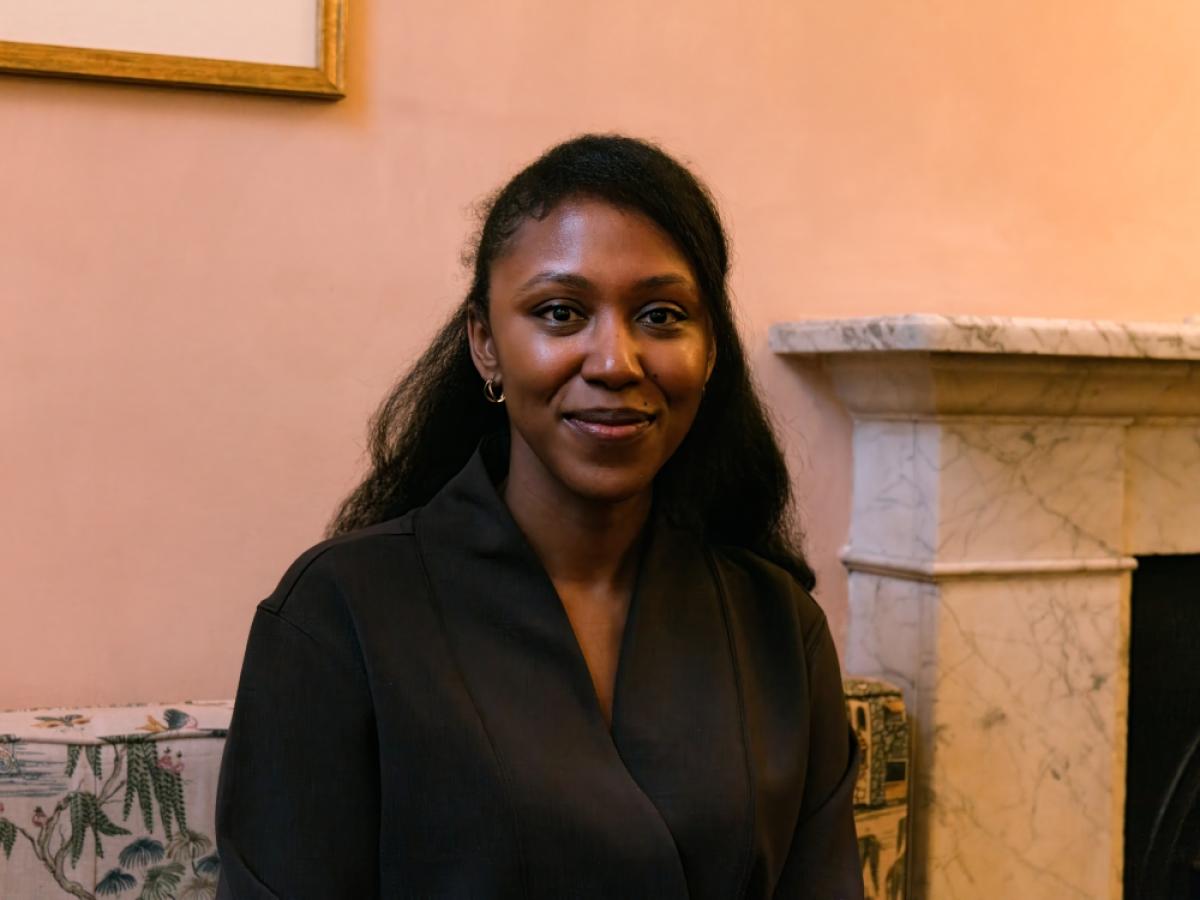
Chair of the International Booker Prize 2026 judges, Natasha Brown photographed at Poon’s London
© Sophie Davidson for Booker Prize Foundation
Taiwan Travelogue pulls off an incredible double feat: it succeeds as both a romance and an incisive postcolonial novel
Natasha Brown, International Booker Prize 2026 Chair of judges
Gaby Wood, Chief Executive of the Booker Prize Foundation, adds:
‘The judges’ meeting to decide the winner was inspiring. They had read each of the shortlisted books at least three times and they described them in turn: how the books had changed each time they read them, how aspects of them shifted as a result of the judging discussions themselves. It was a wonderful act of collective reading, in which every one of the shortlisted books – each a strong contender for the prize – was found to have acquired depth.
‘Eventually, one rose to the top: inventive, playful, witty and profound, Taiwan Travelogue is a love story that had the judges’ hearts as well as their minds. I look forward to witnessing from afar the ongoing travels of this remarkable book.’

Gaby Wood, Chief Executive of the Booker Prize Foundation
© Neo Gilder for the Booker Prize Foundation

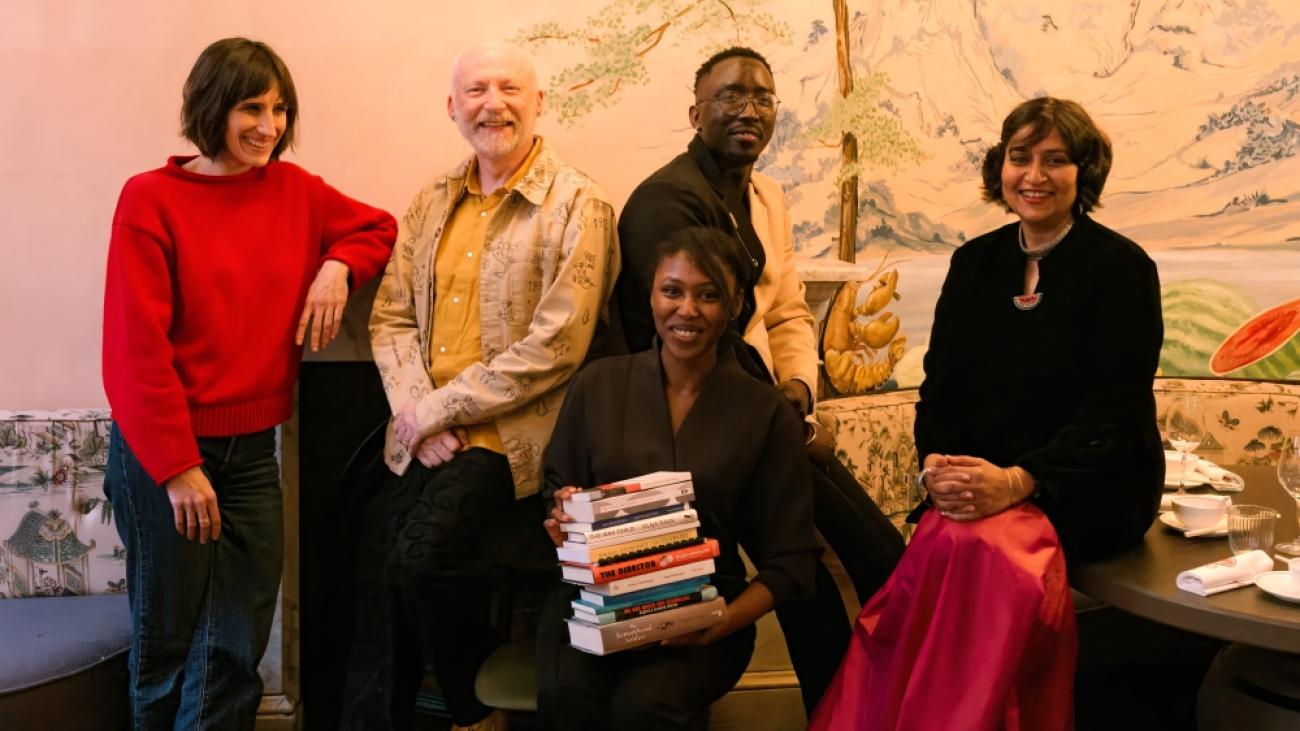


About the judges
Natasha Brown (Chair)
Natasha Brown is an English novelist. Her debut novel Assembly (2021) won a Betty Trask award in 2022. Assembly was also shortlisted for the Goldsmiths Prize, the Folio Prize and the Orwell Prize for political fiction, and has been translated into 17 languages. Universality (2025), her second novel, is also an Orwell Prize finalist.
Before writing her novels, she read mathematics at Cambridge University and spent over a decade working in the financial services industry. She was named one of Granta’s Best of Young British Novelists in 2023 and one of the Observer’s Best Debut Novelists in 2021. She has been described as ‘one of the most intelligent voices writing today’ by the Guardian and as ‘a powerful new voice in British literature’ by the Sunday Times.

Natasha Brown
© Alice Zoo
Marcus du Sautoy
Marcus du Sautoy is the Simonyi Professor for the Public Understanding of Science and Professor of Mathematics at the University of Oxford and a Fellow of New College.
In 2016 he was made a Fellow of the Royal Society. He is author of nine books including his most recent, Blueprints: How Mathematics Shapes Creativity (2025). He has presented numerous radio and TV series including a four-part landmark TV series for the BBC, The Story of Maths, a three-part series, The Code, and programmes with comedians Alan Davies and Dara O’Briain.
He wrote and performed the play I is a Strange Loop, which has been staged at numerous venues, including the Barbican in London. His second play, The Axiom of Choice, toured India in 2024. He works extensively with a range of arts organisations, from The Royal Opera House to the Glastonbury Festival, bringing science alive for the public.
His mathematical research uses classical tools from number theory to explore the mathematics of symmetry. In 2001 he was awarded the Berwick Prize by the London Mathematical Society and in 2009 he was awarded the Royal Society’s Faraday Prize, the UK’s premier award for excellence in communicating science. He received an OBE for services to science in the 2010 New Year’s Honours List.

Marcus du Sautoy
Sophie Hughes
Sophie Hughes is a literary translator from Spanish and Italian, and is the most nominated translator in the International Booker Prize’s 10-year history.
She is the translator of more than 20 novels by authors such as Fernanda Melchor, Alia Trabucco Zerán and Enrique Vila-Matas. She has been shortlisted for the Dublin Literary Award, and the Valle Inclán Prize, and in 2021 she was awarded the Queen Sofía Translation Prize. Her translations have been longlisted or shortlisted for the International Booker Prize five times. Her most recent nomination was her translation of Vincenzo Latronico’s Perfection (shortlisted in 2025).
Her translations and writing have been published in McSweeney’s, the Guardian, the Paris Review, the White Review, Frieze and the New York Times. She has also worked with the Stephen Spender Trust to promote translation in schools and is the co-editor of the anthology Europa28: Writing by Women on the Future of Europe, published in 2020 in collaboration with Hay Festival. She lives in Trieste.

Sophie Hughes
© Harry Zundel
Troy Onyango
Troy Onyango is a London-based writer and editor from Kisumu, Kenya, and the founder of Lolwe, a Pan-African literary and arts magazine.
He is also the owner of Lolwe Books, an indie Pan-African bookshop in both Kenya and the UK. His debut collection of short stories, For What Are Butterflies Without Their Wings, was published in 2022.
His work has appeared in Prairie Schooner, Doek!, Wasafiri, Nairobi Noir and Transition, among other publications. He was a finalist for the Caine Prize for African Writing and a nominee for the Pushcart Prize, and the winner of the inaugural Nyanza Annual Literary Festival Prize. He holds a Bachelor of Laws degree from the University of Nairobi, an MA in Creative Writing from the University of East Anglia (where he was a Miles Morland Scholar) and an MA in African Studies from SOAS University of London.

Troy Onyango
© Danny Bailey
Nilanjana S. Roy
Nilanjana S. Roy is a novelist and newspaper columnist, and the author of two award-winning fantasy novels, The Wildings (2012) and The Hundred Names of Darkness (2013).
Her third novel and first for adult readers, Black River (2022), is Delhi noir fiction. It was shortlisted for the CWA Gold Dagger award and was a New York Times Notable Book of the Year.
Roy has also written an essay collection, The Girl Who Ate Books, about her lifelong love of reading, and is the editor of three major anthologies: Our Freedoms (2021), Patriots, Poets & Prisoners: Selections from Ramananda Chatterjee’s The Modern Review (2016), and A Matter of Taste: The Penguin Book of Indian Writing on Food (2004).
Over two decades as a columnist and literary critic, Roy has written for publications including the Business Standard, the New York Times, the Guardian, and the BBC. She currently writes a column about books and the reading life for the Financial Times. She lives in Delhi, India.

Nilanjana S. Roy
© Gauri Gill 2021



Library and bookshop competition winners


