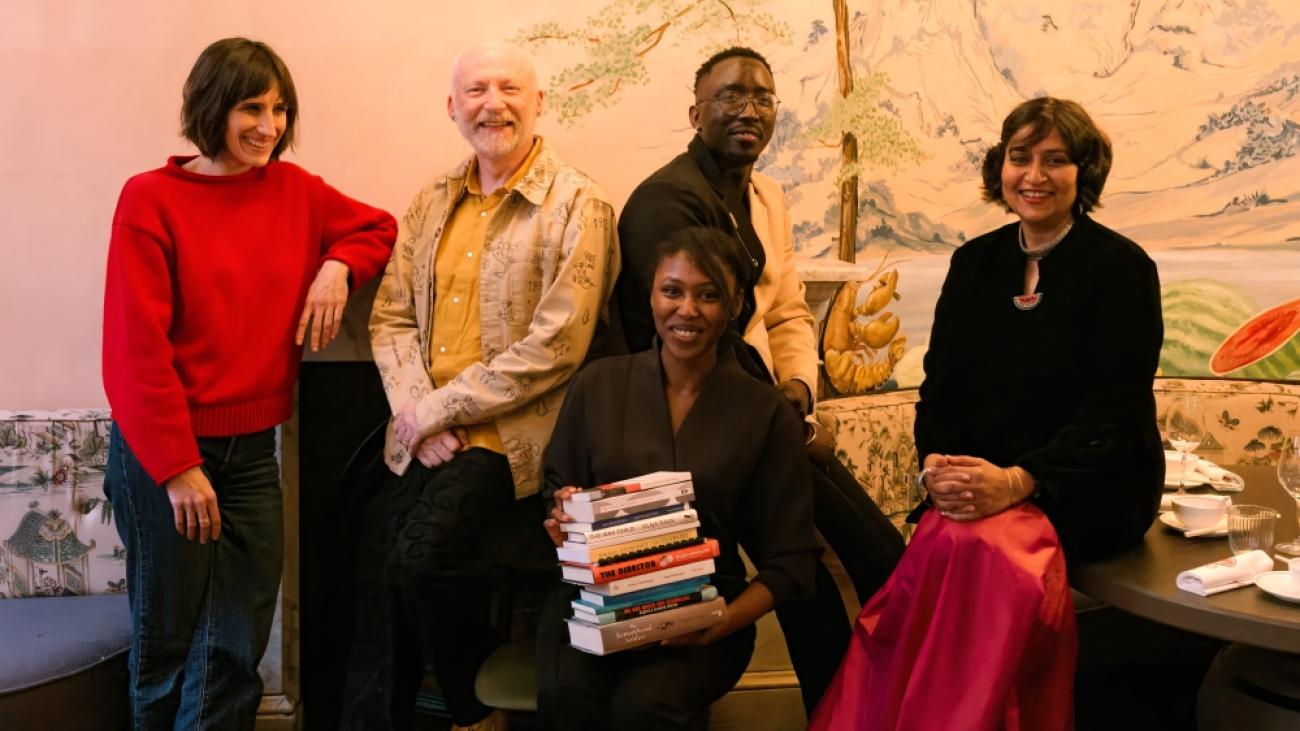
Reading guide: Taiwan Travelogue by Yáng Shuāng-zǐ, translated by Lin King
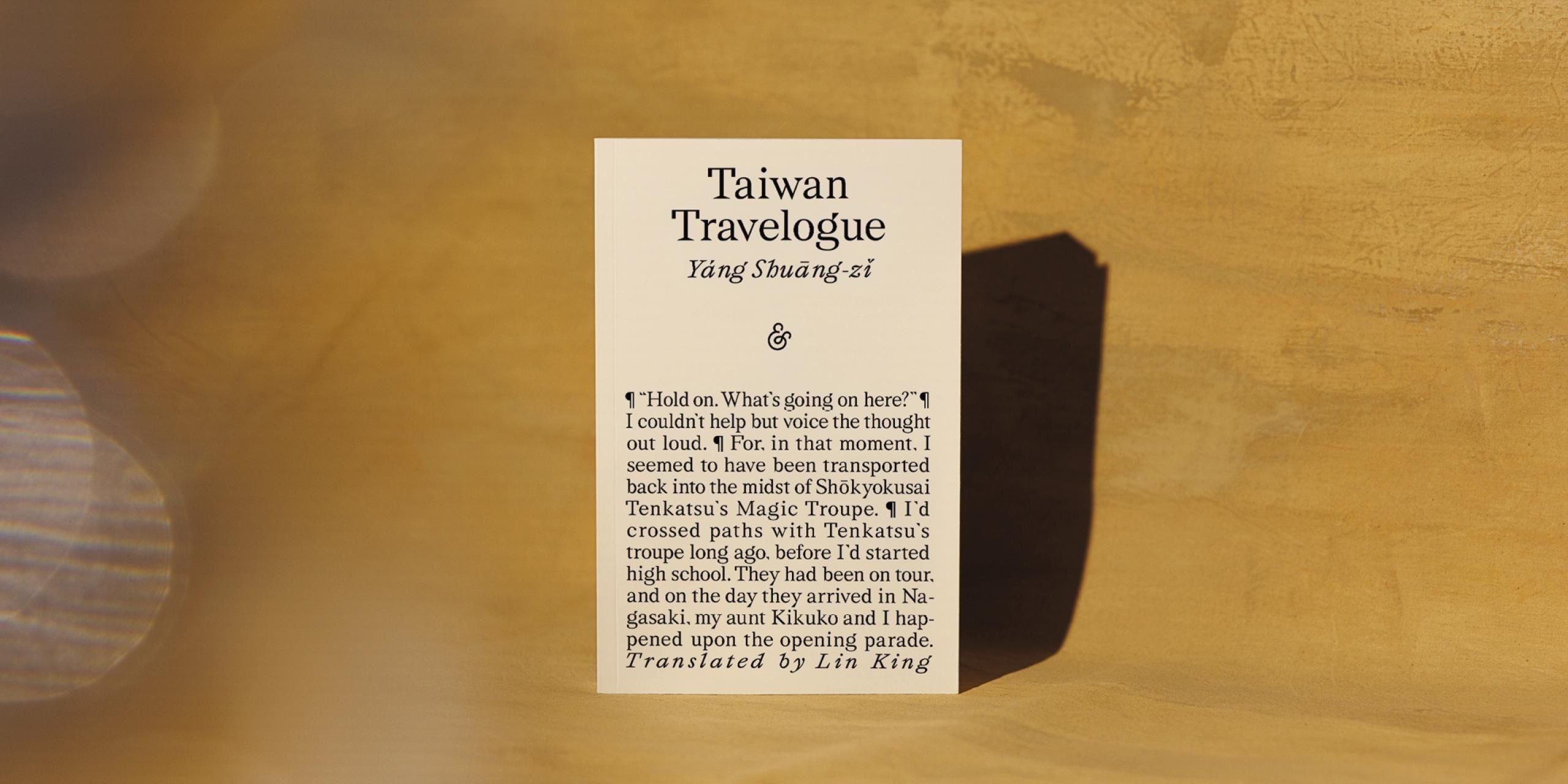
Reading guide: Taiwan Travelogue by Yáng Shuāng-zǐ, translated by Lin King
- Written by
- Helen Babbs and Emily Facoory
- Published
A bittersweet story of love between two women, Taiwan Travelogue is also an artful exploration of language, history and power. Taiwan Travelogue won the International Booker Prize in 2026
Whether you’re new to Taiwan Travelogue or have read it and would like to explore it more deeply, here is our comprehensive guide, featuring insights from critics, our judges and the book’s author and translator, as well as discussion points and suggestions for further reading.
Synopsis
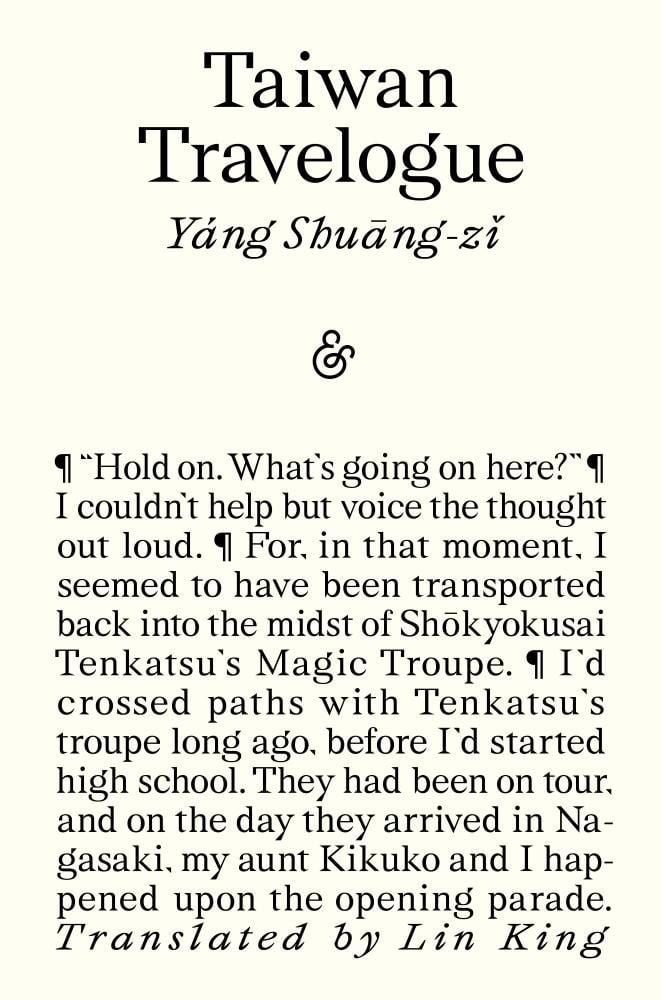
Buy the book
May 1938. The young novelist Aoyama Chizuko has sailed from her home in Nagasaki, Japan, and arrived in Taiwan. She’s been invited there by the Japanese government ruling the island, though she has no interest in their official banquets or imperialist agenda. Instead, Chizuko longs to experience real island life and to taste as much of its authentic cuisine as her famously monstrous appetite can bear.
Soon, a Taiwanese woman – who is younger even than she is – is hired as her interpreter. The charming, erudite, meticulous Chizuru arranges Chizuko’s travels all over the Land of the South and also shares Chizuko’s love of food.
Over scenic train rides and braised pork rice, lively banter and winter melon tea, Chizuko grows infatuated with her companion and intent on drawing her closer. But something causes Chizuru to keep her distance. It’s only after a heartbreaking separation that Chizuko begins to grasp what the ‘something’ is.
Taiwan Travelogue was shortlisted for the International Booker Prize in 2026.
Main characters
Aoyama Chizuko
Known mostly as Aoyama-san, she is a successful writer whose first novel has recently been adapted into a popular film. Aoyama-san temporarily moves to Taiwan and travels throughout the island, ostensibly on a lecture tour but primarily motivated by sampling as much of the local cuisine as possible. She quickly becomes infatuated with her interpreter, Chizuru, whom she affectionately calls Chi-chan.
Ō Chizuru
Known mostly as Chi-chan, she is Aoyama-san’s interpreter, travelling companion and an excellent cook. Chi-chan devotes herself to fulfilling Aoyama-san’s wishes, especially when it comes to food. But she is also mysterious and remains just out of reach, gently rebuffing her mistress’s advances.
About the author
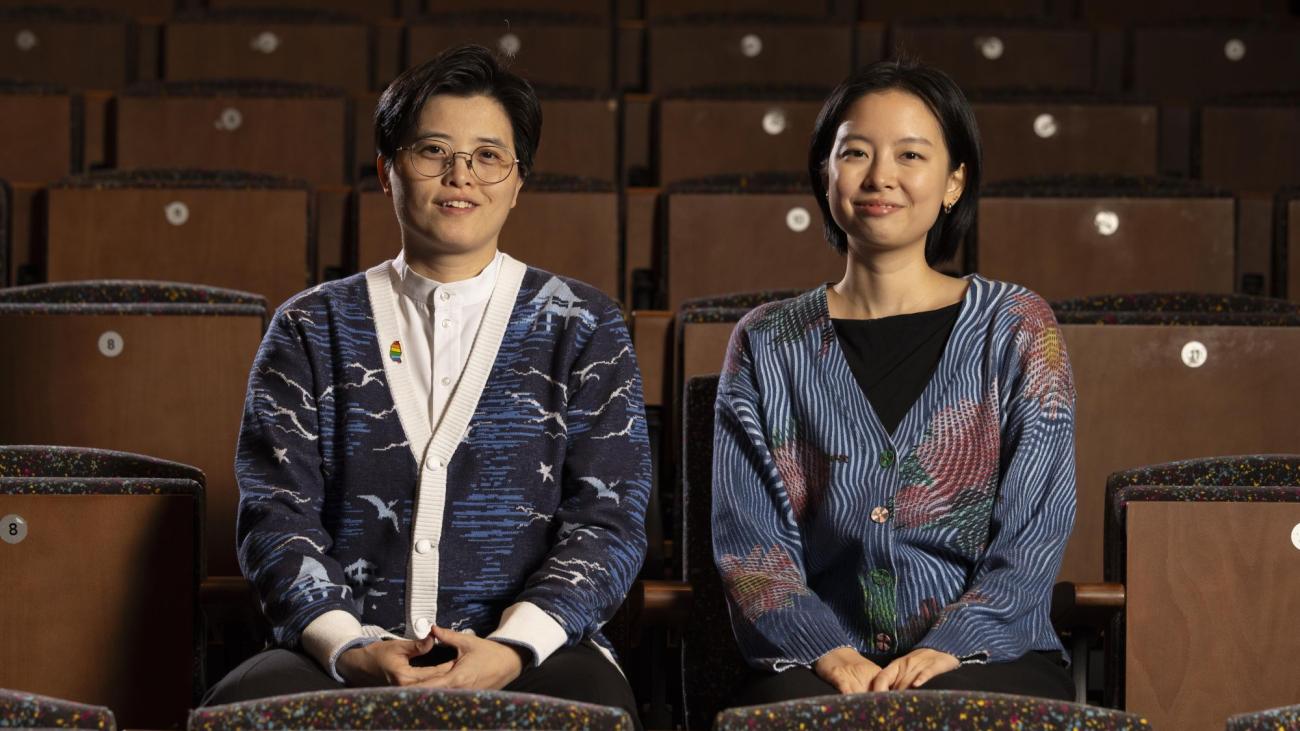
Yáng Shuāng-zǐ is a Taiwanese writer of fiction, essays, manga and video game scripts, and literary criticism.
Her novel Taiwan Travelogue, her first book to be translated into English, won the National Book Award for Literature in Translation in 2024 and Asia Society’s inaugural Baifang Schell Book Prize.
Taiwan Travelogue has been published or is forthcoming in numerous languages including Japanese, Korean, Norwegian, Ukrainian, Italian, German, Dutch, Danish, and Greek, as well as English.

Yáng Shuāng-zǐ
© YJ Chen
About the translator
Lin King is a Taiwanese and American writer and translator based in Taipei and New York. Her fiction has appeared in One Story, Boston Review, and Joyland, among others, and has received the PEN/Dau Short Story Prize for Emerging Writers.
Translations include the graphic novel series The Boy from Clearwater by Yu Pei-Yun and Zhou Jian-Xin and the novel Taiwan Travelogue by Yáng Shuāng-zǐ, which won the 2024 National Book Award in Translated Literature. Her debut novel, Weeb, is forthcoming from Holt.

Lin King
© Annette An-Jen Liu
What the judges said
‘On a government-sponsored tour of 1930s colonised Taiwan, a Japanese author with an insatiable appetite develops complex feelings towards her local interpreter. Despite the instant spark between the two women, the power imbalance inherent in their relationship proves difficult to navigate.
‘With sumptuous food writing, laugh-out-loud dialogue and metafictional twists, this novel was impossible to put down. Taiwan Travelogue pulls off an incredible double act: it succeeds as both a delicious romance and an incisive postcolonial novel.’
What the critics said
Shahnaz Habib, The New York Times Book Review
‘A delightfully slippery novel about how power shapes relationships, and what travel reveals and conceals… It is worth remembering that much of this paratext, fictional and real, is written in a world that has changed drastically since the characters’ travels and the heyday of Japanese imperialism.’
Talya Zax, The Atlantic
‘Layers of commentary serve to make the story’s emotional center more difficult to access, and more fulfilling once you’ve earned it… A straightforward story surrounded by many twisting layers of mystery.’
Marcie Geffner, Washington Independent Review of Books
‘In the end, Taiwan Travelogue is much more than a feast for foodies or a tale for armchair travelers. It’s a journey into the hearts of two unforgettable women who may or may not be able to reconcile friendship, perhaps even love, with the enormous gap in their social status and the vast cultural differences of their lives.’
Lauren Yu-Ting Bo, Words Without Borders
‘Taiwan Travelogue is a fearless record of a complicated time in Taiwan’s history. It not only captures the physical details of the period of Japanese colonization—“leather oxfords and wooden geta,” majolica tiles, and an overall merging of Chinese, Japanese, Indigenous, and Western cultures—but also the difficult social experiences of the people who lived through it.’
Michelle Kuo, China Books Review
‘An award-winning novel set in Japanese-ruled Taiwan explores the relationship between colonizer and subaltern, translator and translated — and how some distances can’t be closed.’

Taiwan Travelogue
© India Hobson for Booker Prize Foundation
What the author said
‘Using a contemporary Taiwanese lens, I wanted to untangle the complex circumstances that Taiwan’s people faced in the past, and to explore what kind of future we ought to strive toward.
‘Sometime in the second half of 2017, I came up with an outline and wrote the first chapter. I didn’t formally begin working on the project until 18 February, 2019, and completed the first draft on 20 August of the same year. Research for the novel’s central themes of travel and food changed my life in two obvious ways: my savings went down; my weight went up.’
What the translator said
‘This was my first time translating a full-length novel, and I made the mistake of being intimidated by my author. I had little professional credibility and was scared to ask Shuāng-zǐ too many questions for fear that she would find me unfit for the job. That’s a mistake I hope not to repeat.
‘On the other hand, I worked very closely with my editor at Graywolf [the book’s US publisher], Yuka Igarashi, who trusted me to run wild with a complex mix of languages, notations, and footnotes. We took a maximalist approach, broke countless translation ‘rules’, and ended up with an experimental, multilayered work that we can be proud of.’
Questions and discussion points
Author Yáng Shuāng-zǐ disguised Taiwan Travelogue as a translation of a lost Japanese text. Lin King has then translated the Taiwanese Mandarin original into English. The main characters in the book are a novelist and an aspiring translator. How did these multiple layers affect your experience as a reader? Did you enjoy the conceit?
The novel is unusual in that it has footnotes throughout, written by both Yáng Shuāng-zǐ and Lin King. These notes provide extra detail and context. What did you think of them? Were they illuminating or did they feel like an interruption?
Food is at the heart of Taiwan Travelogue – acquiring and preparing it, as well as eating it – and Aoyoma-san and Chi-chan grow closer over numerous shared meals. Aoyoma-san is famous for her ‘monstrous appetite’ and Chi-chan is adept at keeping her satiated. Did you enjoy the food writing? In what ways is food connected to identity in the novel, both personal and national?
Aoyoma-san says early on that, ‘Travel is living in a foreign place’ and ‘experiencing all four seasons of normal life’ there. She finds a house and settles in, charting her exploits over summer, autumn, winter and spring. What do you think of Aoyoma-san’s definition of travel? And how do the changing seasons affect the atmosphere of the book?
Aoyoma-san says she will never marry and that her goal is to spend her whole life writing. She doesn’t understand why Chi-chan is willing to accept her fate and be married off by her family. Considering the 1930s time period and the difference in status between the two women, are Aoyoma-san’s expectations realistic? Is it fair of her to chastise Chi-chan about these things in the way that she does?
Towards the end of the novel, Mishima talks frankly to Aoyoma about what he believes is her ‘intellectual arrogance’, explaining to her that ‘the way you talk about the Island’s flavors does not sound to me like you are appreciating them for being delicious but more for being exotic, as one might appreciate a rare animal’. It’s an important wake-up call for Aoyama. What did you think of this exchange between Mishima and Aoyoma? Was it in any way a wake-up call for you as a reader, too?
Shahnaz Habib in The New York Times Book Review described Taiwan Travelogue as a ‘delightfully slippery novel about how power shapes relationships, and what travel reveals and conceals’. How does the power imbalance between the two women affect their relationship? Do you think it would ever be possible for them to escape their employer/employee and mainlander/islander dynamics to become true friends?
In an introduction at the very beginning of the book, the fictional translator Hiyoshi Sagako writes, ‘when reading this book, please remain cognizant of Aoyoma Chizuko’s status as one of the colonisers within the story’. What do you think the translator means by this and did it have an impact on how you read the novel?
The International Booker Prize 2026 judges said, ‘Taiwan Travelogue pulls off an incredible double act: it succeeds as both a delicious romance and an incisive postcolonial novel.’ Do you agree? What does the novel reveal about colonialisation?
In an Interview with the Booker Prizes, translator Lin King said she ‘took a maximalist approach, broke countless translation “rules”, and ended up with an experimental, multilayered work’. Do you think King’s approach works, and were you conscious that rules were being broken? How does this book compare to other translated fiction you have read?

Taiwan Travelogue
© India Hobson for Booker Prize Foundation
Resources and further reading
Read with National Book Foundation: Yáng Shuāng-zǐ and Lin King discuss Taiwan Travelogue
Fairbank Center for Chinese Studies: A Conversation on Yang Shuang-zi’s ‘Taiwan Travelogue: A Novel’—Food, History, and the “Good Life”
Words Without Borders: “A Monster’s Appetite”: Food, Culture and Authenticity in Yáng Shuāng-zĭ’s Taiwan Travelogue
China Books Review: Found in Translation
If you enjoyed this book, why not try
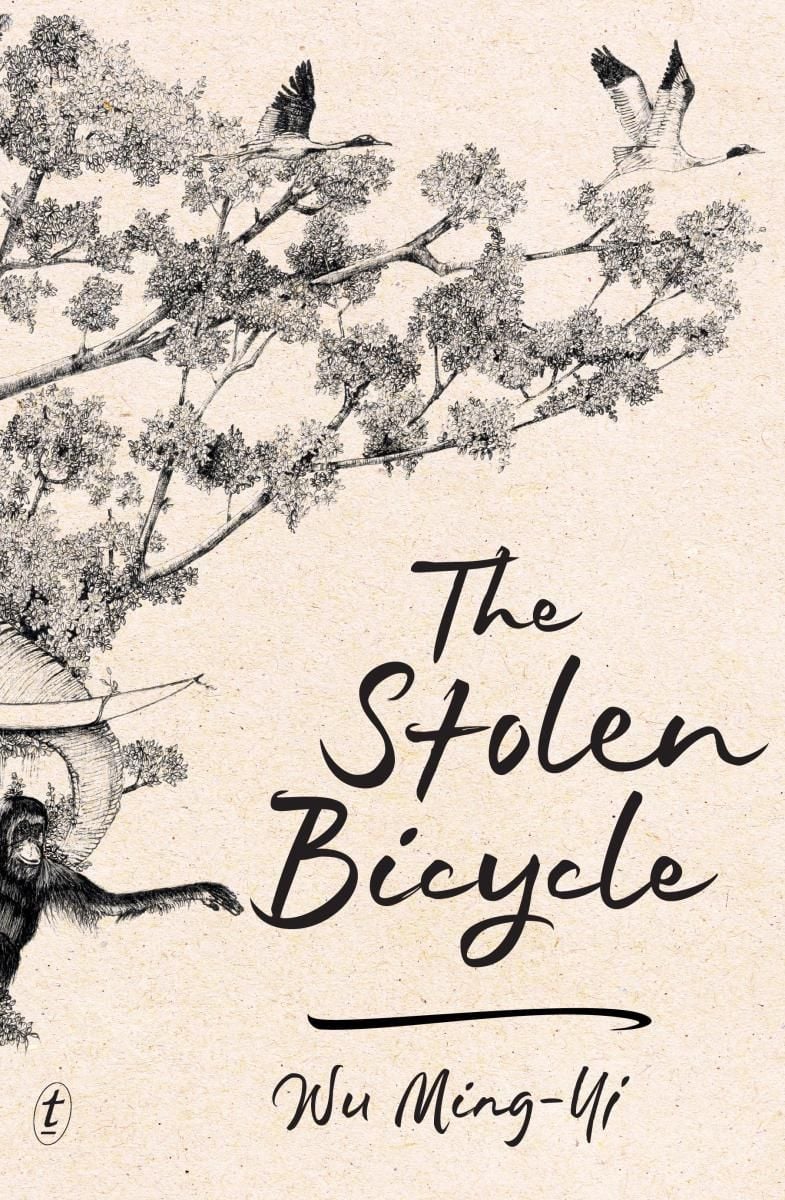



Taiwan Travelogue
Winner of The International Booker Prize 2026
- Translated by
- Lin King
- Published by
- And Other Stories