
The authors and translators shortlisted for the International Booker Prize 2026 answer questions about their inspirations and influences, and the power of translated fiction
- Published
Find out what ‘fiction beyond borders’ means to the authors and translators shortlisted for the International Booker Prize 2026
For this year’s International Booker Prize, we chose ‘Fiction beyond borders’ as our campaign theme. We wanted to acknowledge and celebrate the way translated fiction opens us up to different experiences and perspectives, creating connections across continents.
We asked the authors and translators shortlisted for the International Booker Prize 2026 what ‘fiction beyond borders’ means to them. How do they think translated fiction helps readers see beyond geographical boundaries, and why is that important?
Shida Bazyar, author of The Nights Are Quiet in Tehran
‘In a world where neither human rights nor democratic principles are being adequately defended, where wars keep breaking out and fascism is on the rise, even the most enlightened people feel so helpless that they start preferring simple bogeymen to complex realities.
‘I hope that the more we read, the less susceptible we’ll be to simple answers, because novels are a means of making concurrences and contradictions visible and manageable. Literature is also the art form that helps us to see people. Not nations, not statesmen, not ideologies – people. But in order for us to strengthen our empathy for other people in other contexts, literature has to be translated into other contexts and languages, and so I’m grateful to the publishers who take that leap of faith.’
Ruth Martin, translator of The Nights Are Quiet in Tehran
‘In the past year alone I have translated work by German writers who were born in Romania, Georgia and Israel respectively. We live in a globalised world, people and their stories migrate, and languages don’t stop neatly at international borders.
‘We might think of translated fiction as bringing a story from one country or culture to another, but very often it’s more complicated than that. Understanding these multicultural, multilingual perspectives, and cultivating our empathy as readers and as citizens, helps us combat the polarisation we see in so many places today.’
Rene Karabash, author of She Who Remains
‘I think that in a world of turbulence, wars, abuse and intense polarisation, translated fiction is the most powerful and truthful evidence of ‘the other’. It can let us not only see beyond geographical boundaries but also beyond the stereotypes the world has created. Thanks to this literature the reader can enter the sacred world of others, experience their family traumas, their love, their fears, and become part of a shared human story.
‘For me, translated fiction is like “the fool” in the room who tells the truth through his tales and jokes. Thanks to him the readers realise that their way of seeing the world is only one possibility among many and that all humans are all connected by a shared emotional foundation. That we have a collective soul.’
Izidora Angel, translator of She Who Remains
‘There is a strain of literary gatekeeping, especially when it comes to literature from minority languages, that is a form of cultural border patrolling. I’ve written about cultural trade deficits before, but I think it’s worth saying again – we don’t need another New York divorce memoir. Truly, we don’t.
‘Fiction that has travelled beyond borders puts us into a visceral conversation with our fellow humans, it enables us to metabolise a different turn of phrase, a way of looking at the world. I think that, equally, a translated book is an opportunity to hold the source and the target cultures accountable. When a text has travelled, we need to look at the context that gave birth to it.
‘Rene’s book – an epic story of forbidden queer love – was a major critical and commercial success in Bulgaria (and outside of it, too). But gay marriage is still banned in Bulgaria, let us not forget this. So, the conversations we have around art are, to me, just as important as the art. These conversations cannot happen if the gates are not open for literature from small countries.’

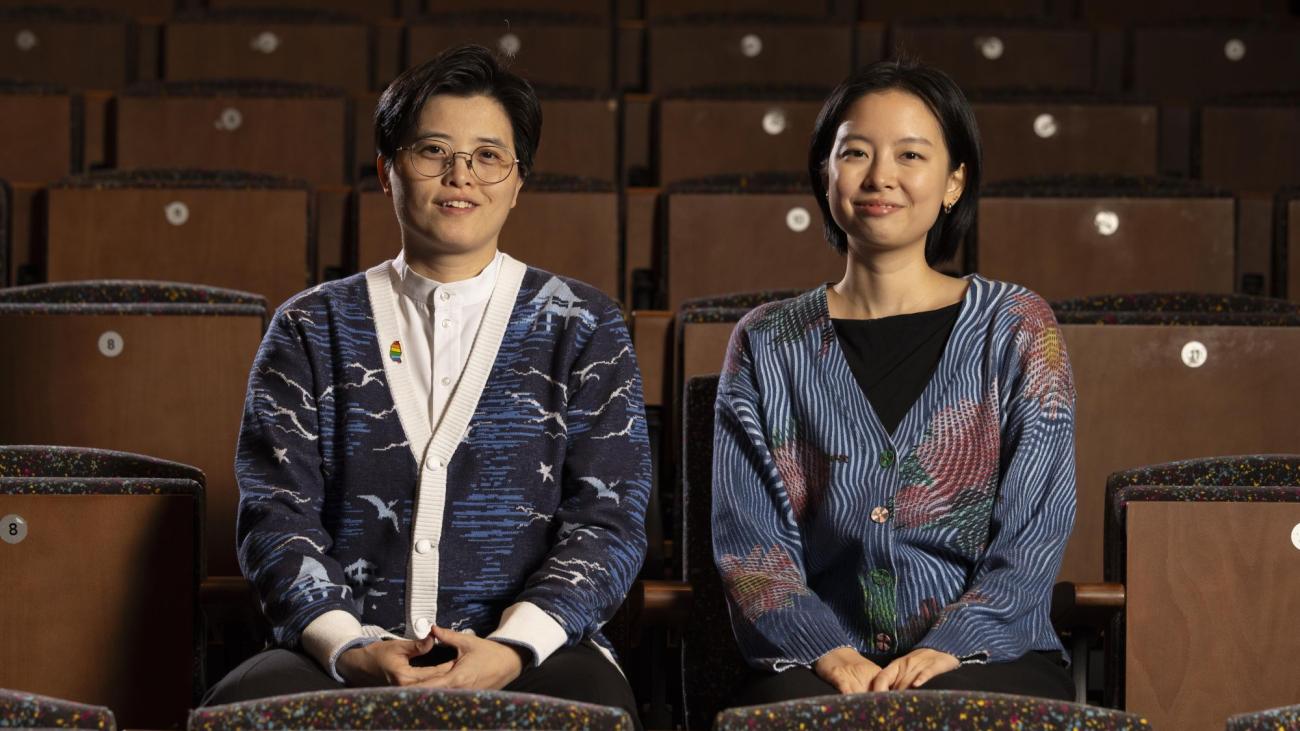
The authors and translators shortlisted for the International Booker Prize 2026
The reader can enter the sacred world of others, experience their family traumas, their love, their fears, and become part of a shared human story
Rene Karabash, author of She Who Remains
Daniel Kehlmann, author of The Director
‘Translated fiction makes you step into a mind that was formed elsewhere, in different weather, different jokes, different taboos. And suddenly you notice that the fundamental human concerns are the same. In a time when borders are being fetishised again, that double movement – toward difference and toward recognisable humanity – matters. It makes the world larger, and it makes nationalism look smaller.’
Ross Benjamin, translator of The Director
‘Translated fiction can challenge the tendency to feel that our habits of thought – our reflexes, our default ways of making sense of experience, our familiar uses of language – are simply inevitable. By letting us inhabit different cultural and linguistic perspectives, it can loosen our certainties and unsettle our complacency. Like great literature in general, it can remind us that our received assumptions are not the measure of all things.’
Ana Paula Maia, author of On Earth As It Is Beneath
‘This is an immense opportunity for different writings from so many different parts of the world to come together. Ultimately, despite our cultural differences, we are so similar insofar as we are all human beings. Understanding that pain and misery, love and moments of joy, are felt by everyone. The barriers we put up between ourselves and others distance us mostly from who we are, considering that we are all equal.’
Padma Viswanathan, translator of On Earth As It Is Beneath
‘Just as each of us has a literal genealogy, each reader is the product of a literary genealogy, constructed over the course of our reading lives. We might discover at any time a book that we will press to our heart and that will, from that moment, become part of our “genetic” makeup, changing the way we see the world and function within it.
‘When I introduce my American students to international writers I love – Viswanatha Satyanarayana, say, or Dorothy Tse, or Caio Fernando Abreu – I see them embrace perspectives they might never have encountered if not for intrepid translators smuggling them across borders.’
Marie Ndiaye, author of The Witch
‘I feel an infinite gratitude toward translators – and most particularly toward Jordan Stump, who’s been translating me for a long time now, with a steadfastness and a soundness that have earned him my very deep admiration. I who can only really read French, I know well that my experience as a reader would be horribly limited without the patient, enthusiastic work of translators, just as, without them, the audience for my books would be reduced to the French-speaking world.’
Jordan Stump, translator of The Witch
‘As an American, I find it impossible not to see the present moment in catastrophic terms: thus (among other things), although insularity and xenophobia have long hovered in the background of American life, the systematic, unthinking dehumanisation of non-anglophone non-whiteness feels new, and it sickens me. Translation is one way of fighting that; alas, the people who need to have their minds opened are probably not enthusiastic readers of translation, but one stubbornly persists in offering them that possibility – what else is there to do?’
Yáng Shuāng-zǐ, author of Taiwan Travelogue
‘For someone like me, who can only read in one language, my field of vision looking out into the world would be drastically reduced if not for translation. Translated literature is a second pair of eyes for me. But that’s not all – to me, translators are essential guides who lead readers deep down the rugged roads of unfamiliar lands.’
Lin King, translator of Taiwan Travelogue
‘I often find tourism dispiriting. Even with prior research, when you’re in an unfamiliar place, it’s easy to fall into capitalist traps and accidentally contribute to cycles of exploitation. To me, the best form of travel is with a friend who knows our destination well and can provide context, commentary, and stories. Translated fiction is like one such friend. With rising geopolitical tensions everywhere, travel via translation becomes even more important for fostering empathy across borders.’

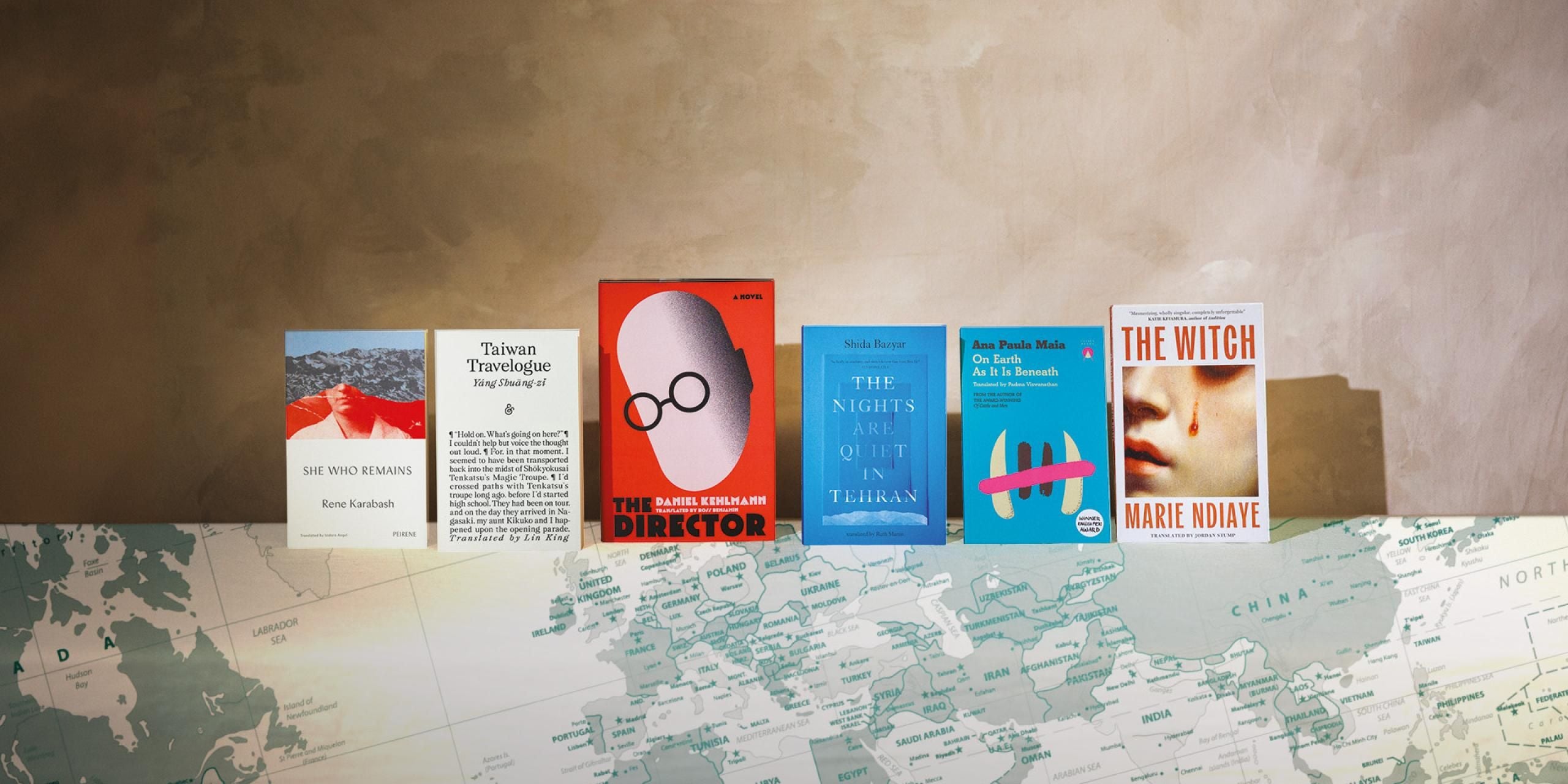
The International Booker Prize 2026 shortlist
© India Hobson for Booker Prize Foundation
Translated literature is a second pair of eyes for me. But that’s not all – to me, translators are essential guides who lead readers deep down the rugged roads of unfamiliar lands
Yáng Shuāng-zǐ, author of Taiwan Travelogue



Features


- Book recommendations
11 epics from the Booker Library for fans of The Odyssey


- Book recommendations
10 Booker Prize-nominated books with unique settings


- Book recommendations
10 Booker Prize-nominated books that explore sapphic love

- Book recommendations