
With its blend of noir, wit, and moral ambiguity, Olga Tokarczuk’s novel of ideas draws readers through a maze of uncertainty, toward a final, unsettling revelation
- Published
The translator of Drive Your Plow Over the Bones of the Dead reflects on her evolving relationship with the novel’s protagonist, and the delicate balancing act at the heart of her works of translation
What was it about Drive Your Plow Over the Bones of the Dead that made you want to translate it?
I think of it as a self-help guide: How to Get Away with Murder, and how could any translator resist that? Although Jenny Croft and Olga Tokarczuk had already won the International Booker Prize for Flights, Olga decided I should translate Plow (as we tend to call it) because she and I, exactly the same age, are rapidly evolving into full-blooded Janina Duszejkos. I fundraise for animal charities, I live alone with my cat, I have all the symptoms. The boring answer is that it’s a superbly written book that I knew I would enjoy translating.
How did you go about translating the book? Tell us about your inspirations and your process.
The work only took three months, partly because it’s a first-person narrative with a consistent voice throughout. Once I had finished I realised that Duszejko sounded too eccentric, so I revised the entire translation, reining her in, so that the reader would side with her and be her accomplice, rather than finding her annoying after a few pages. I had previously translated two of Olga’s novels and lots of her stories, knew the book’s remote setting well (the place where Olga lives), and had even met some of the people who inspired characters in the book.
How have your feelings about the main protagonist, Janina, changed over the years since you finished working on the book?
Don’t call her Janina, she hates that! In fact I haven’t evolved into her (not yet), and am rather wary of her; it fascinates me that so many people have read this book and fallen for the patter of a crazy old bird who does unspeakable things. It shows the power of manipulation, as I recently warned a huge audience of sixth-formers who were obliged to read the book at school and had apparently enjoyed it. No wonder the evil populist leaders want to destroy culture – it can be very dangerous indeed.
The novel tackles some big subjects and themes – sanity, social injustice, animal rights, hypocrisy, religion and predestination. Did you ever feel daunted by the project? What kept you motivated while you were working on this translation?
I’m just the monkey, not the organ-grinder. Olga is responsible for the content, I can only answer for the words. It’s the joy of translating – you don’t have to worry about the big ideas, you focus on the enjoyable word puzzle. But yes, it is an alarming and sinister book that confronts difficult questions head-on. Many people have read it as just a crime novel, letting the deeper meanings slide over them, but perhaps the messages sink into their subconscious. I hope Duszejko prompts courage in a world where there’s so much unfairness. Is she really crazy? Or is it the world around her?
The novel has been adapted for the stage by Complicité and has toured widely across the UK and Europe. Have you seen the play and, if yes, what did you think?
I saw it twice and was extremely impressed. Before starting, Simon McBurney [Artistic Director and Co-founder of Complicité] said rather apologetically that there wouldn’t be a script that simply quoted my text, to which I replied that, on the contrary, I expected him to go away and create his own work of art. So I was pleasantly surprised to hear my words shouted at me from the stage; the actors hadn’t worked with a script but with copies of the book. It’s a superb adaptation, brilliantly conceived so that Duszejko remains central, speaking directly to the audience. That connection is essential for the magic of the story to work.

Antonia Lloyd-Jones
© Susan Bernofsky
Many people have read Drive Your Plow as just a crime novel, letting the deeper meanings slide over them…
What impact do you think being shortlisted for the International Booker Prize in 2019 had on the wider perception of Drive Your Plow Over the Bones of the Dead, and on your career as a translator?
Olga was a previous Booker winner, and by the time we were shortlisted, she had won the Nobel Prize, so perhaps this shortlisting couldn’t add much. The publishers had warned me that after the Nobel, your work never wins again, so I’ve enjoyed several prize galas where Plow was shortlisted but couldn’t win; it’s much more fun if you don’t have to be on tenterhooks. But I always put the Booker shortlisting on my biographical notes as a calling card that gives publishers confidence. Plow has done so well that these days people look less awkward when I tell them what I do for a living.
The International Booker Prize is celebrating its 10th birthday in its current form this year – how do you think the award has changed the perception of translated fiction over the last decade?
I think of major prizes as PR exercises that exist to get people talking about books, whether they’re pleased their favourite won, or outraged that it didn’t. The IBP has the biggest and most glamorous profile, so it has a wide reach and makes a major difference. Personally I like the involvement of celebrities who choose their favourite books and read at the galas, because they do catch the public eye – and that sells books. I like the involvement of bookshops and libraries too – literature wouldn’t exist without them and both need support in today’s world.
What are the toughest decisions you’ve had to make as a translator, and with Olga Tokarczuk’s work specifically?
I once turned an excellent book down because it included themes that would be triggering for me personally. But my tough decisions usually involve individual words and will mystify non-translators. Recently I revised my 24-year-old translation of Tokarczuk’s House of Day, House of Night, finally with enough experience to tackle a section she’d thought untranslatable, in which she compares Polish words that are positive in their masculine form and negative in their feminine – it’s a feminist rant. To make it work in English I had to do some rewriting, but luckily Olga liked my solutions. Among others I used a surprising historical phrase, a ‘mankind woman,’ which means a virago.
Who do you hold closest in mind when you’re translating a piece of fiction – the author or the future reader? Is there a balance to strike between what the author needs and what the audience needs?
Both reader and author are always hovering behind me as I work. Translation is all about striking that balance. I do my best to understand the author’s intentions, I keep asking myself, ‘Why did they choose that particular word or phrase it exactly that way? What is the effect?’ and then I think of the reader, asking myself, ‘How can I reproduce it in English? What is the reader likely to know or not know?’ Then of course the editor – my first reader – does the essential job of testing the results and suggesting improvements.
How does your translation work shape your own writing, and vice versa?
I do find myself catching the style of the author I’m working on. Olga’s way of writing is particularly infectious. Translating involves such close analysis of a text that you inevitably learn a great deal about effective writing in the process. Sometimes a friend reads a translation of mine and tells me they can hear my voice in it, which surprises me. But I probably do subconsciously inject some of my own style into my translations.

Olga Tokarczuk
© Jacek Kolodziejski
Both reader and author are always hovering behind me as I work. Translation is all about striking that balance
What are you working on at the moment?
Only Those With Teeth Can Smile, a novel by Zyta Rudzka. It’s tremendously difficult, the monologue of an indigent former hairdresser trying to scrape together the money to bury her husband, who was a jockey. Her bittersweet speech is a form of literary slang, full of aphorisms (like the title) and wordplay, but concise. In the course of her quest we learn about her past, through encounters with former lovers, priests, undertakers and traders. I’m battling to find the right voice, on top of which it’s for US publication. Luckily I have lived in the States, but will be leaning heavily on my editor.
Where and when do you most like to work, and what tools do you need to translate? (tools could be a laptop, coffee, peace and quiet!)
I belong to a Facebook group named ‘Translators with CATs’. No, not computer-aided tools, but felines. No translation can be completed without my cat’s input, whether it’s offering her tail as a bookmark, switching off the laptop by sitting on it, or flopping across my open dictionaries. Or just insisting I take the occasional break. From past experience of noisy open-plan offices I’m actually very good at working anywhere, and find it easy to dip in and out of my work, even if there’s a battle going on. But I can’t really do without my many paper dictionaries.
Is there a book from your childhood that made you fall in love with reading?
I made my father read Alice in Wonderland to me so many times that I knew it by heart. But I had lots of childhood favourites and read widely and avidly. I think that early exposure is essential for any writer. I was lucky enough to grow up in a house full of books. Recently I re-read some of the Fairy Books in the series edited by Andrew Lang – actually collected and often translated by his wife Leonora – and they’re as powerful as ever. Children are too protected or preached at nowadays, we had much more freedom as readers.
And could you tell us about a book that made you want to become a translator?
The first book I translated – not knowing my future – was Who Was David Weiser?, a beautifully written novel by Paweł Huelle. It was already a hit in Poland when I met him in 1988, a time when drastic changes were imminent in Central and Eastern Europe. It was a critical period for culture from the region, and – cutting a long story short – despite thinking myself unqualified, I ended up translating it for Bloomsbury. I hadn’t been aiming for a career as a translator but I loved the experience and was determined to do more.
Do you have a favourite book in the Booker Library? What do you love about it?
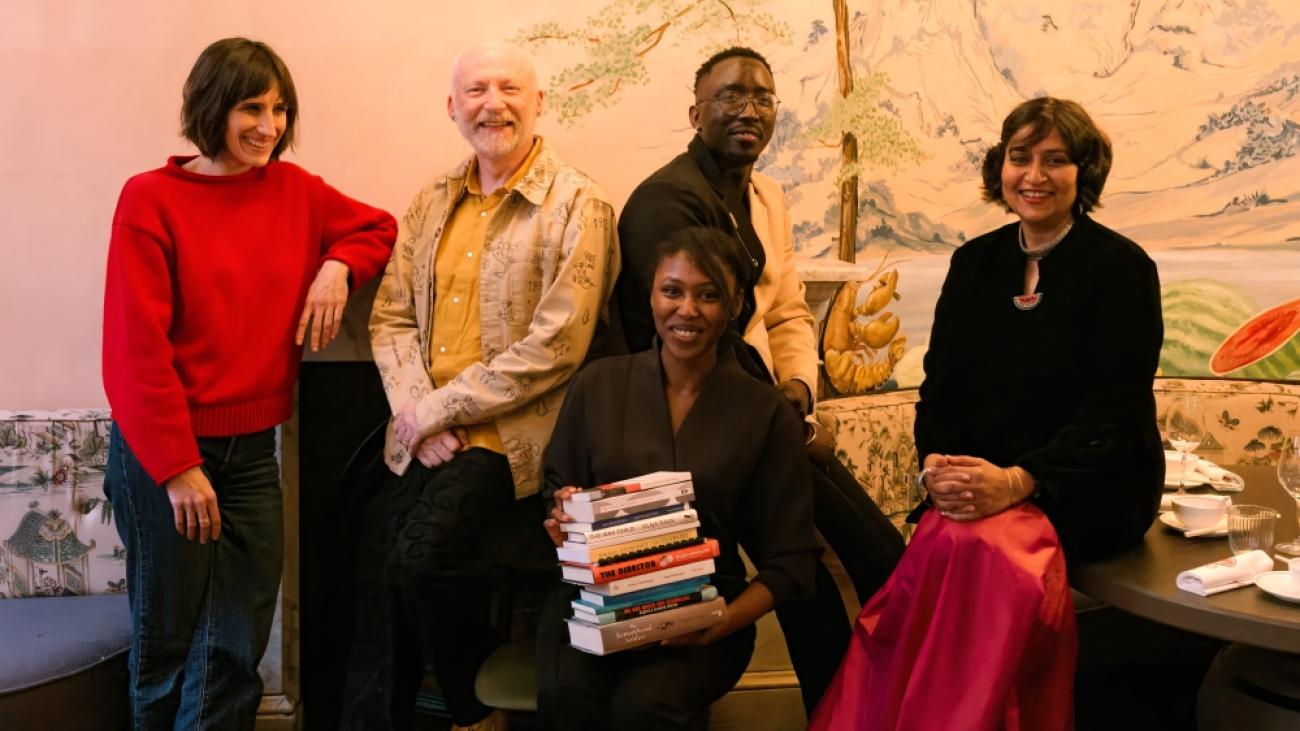
I greatly enjoyed The Director by Daniel Kehlmann, translated by Ross Benjamin. He’s a versatile and imaginative writer whose earlier books fascinated me too. This novel is based on the life of the German film director G.W. Pabst. In vivid, cinematic scenes it describes the disenchantment with Hollywood that prompted Pabst to return to Germany, and then the compromises he was forced to make in the Nazi era. It’s a chilling psychological portrait of a man faced with agonising moral dilemmas. The translation is flawless and it’s impossible to put the book down. Read it!

The Director
© India Hobson for Booker Prize Foundation


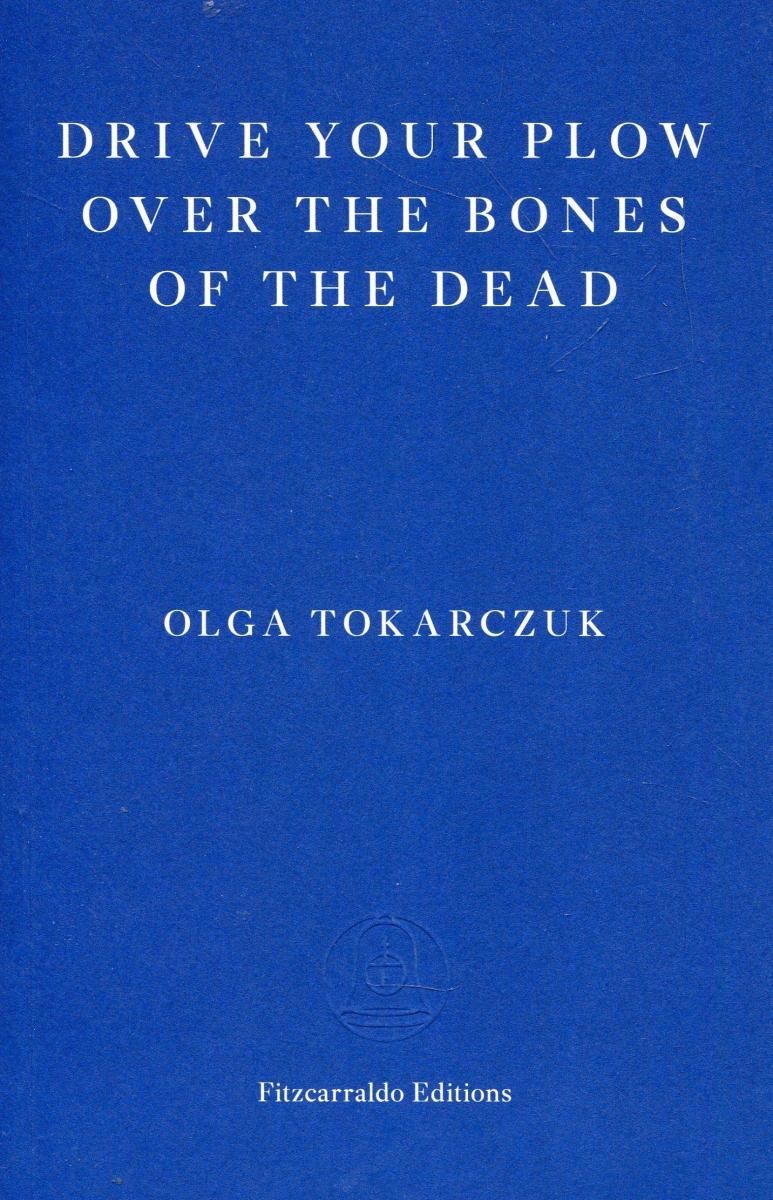
Drive Your Plow Over the Bones of the Dead
- Translated by
- Antonia Lloyd-Jones
- Published by
- Fitzcarraldo Editions
Olga Tokarczuk’s subversive, entertaining neo-noir is both gripping and thought-provoking, and anything but a conventional crime novel