
With its blend of noir, wit, and moral ambiguity, Olga Tokarczuk’s novel of ideas draws readers through a maze of uncertainty, toward a final, unsettling revelation
Where to start with Olga Tokarczuk: a guide to her best books
Where to start with Olga Tokarczuk: a guide to her best books
- Written by
- Marek Makowski
- Published
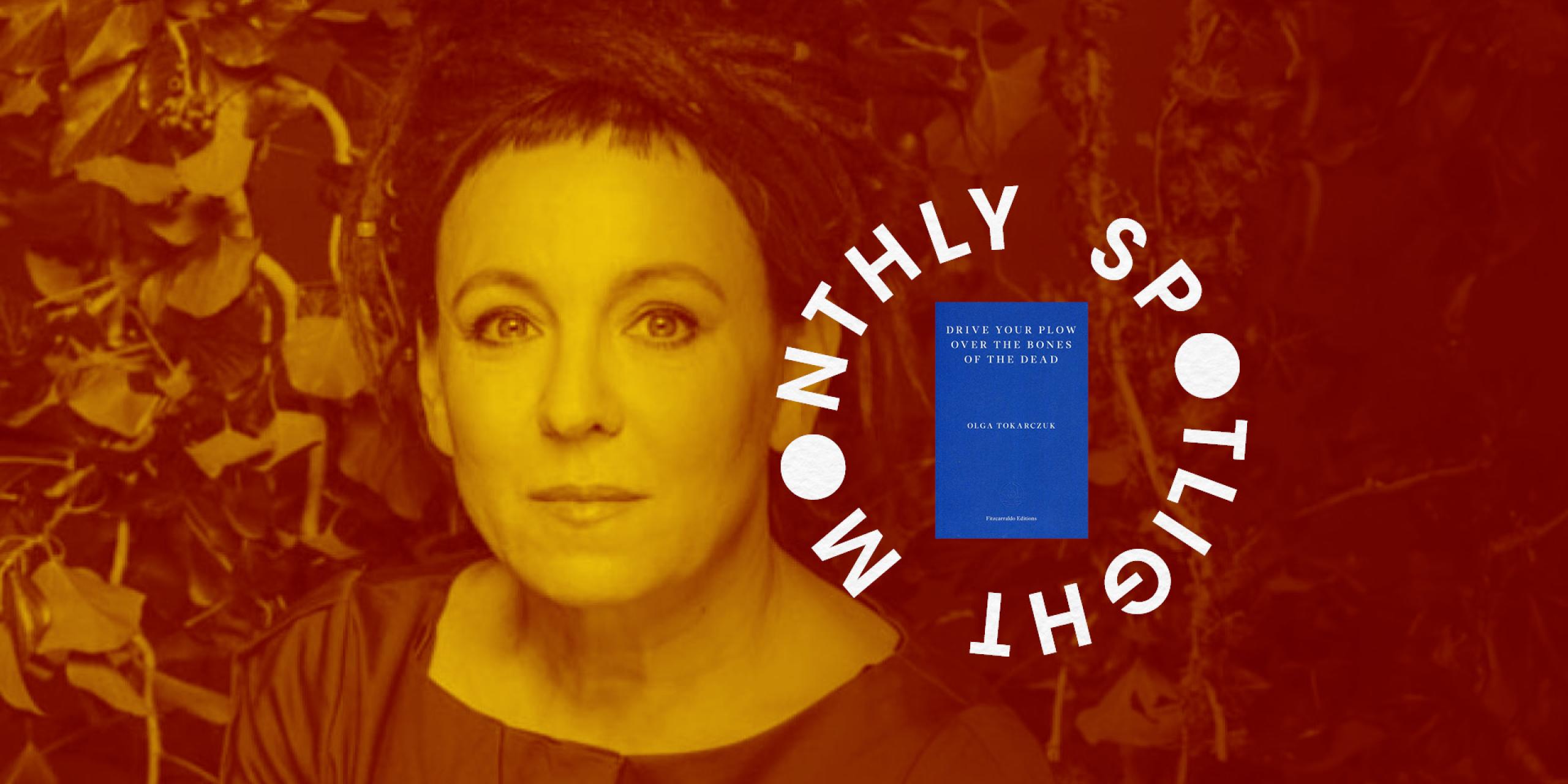
Olga Tokarczuk is one of the most critically acclaimed and distinctive voices in contemporary literature. If you’re new to her work, here’s our guide to the 2018 International Booker Prize-winner’s genre-defying fiction
When scholars look back on human narrative in the 21st century, they will study the lecture Olga Tokarczuk delivered at the ceremony celebrating her 2018 Nobel Prize in Literature. Tokarczuk described her most important narrative principles – tenderness, ex-centricity, constellation forms – and the belief that, by changing the way we tell the story of the world, we can change the world itself. Across more than a dozen works of fiction, Tokarczuk has proven this to be true, transforming not just the centuries-old form of the novel but our understanding of how fiction can depict, interpret, and even intervene in the crises of our times.
For Tokarczuk, every book presents an opportunity to experiment with genre and point of view. She plays with the conventions of the horror, mystery, historical epic, travelogue, and even the illustrated book. At the same time, she seeks to expand the capacities of her narrators, to break through the limits of the first- and third-person points of view, and to achieve tenderness, ‘a way of looking that shows the world as being alive, living, interconnected’.
Tokarczuk’s writing bursts with multiplicity. It is uncanny and eccentric but always grounded in psychological narration. Tokarczuk once practised as a clinical psychologist, and she excels in telling her stories slowly and deliberately, uncovering the world through the mind of the narrator, one thought after another. This approach has allowed her narratives, written in Polish from a village in Lower Silesia, to become universal, translated into more than 50 languages worldwide.
One can only dream that others read us the way Tokarczuk’s narrators read the world: with a radical openness, with sincerity and understanding, and with a tenderness that maintains that yes, we are all connected, small but meaningful parts of a greater whole – and that no, we are not alone.

2018 International Booker Prize winner Olga Tokarczuk and translator Jennifer Croft with Chair of judges Lisa Appignanesi
Buy the book
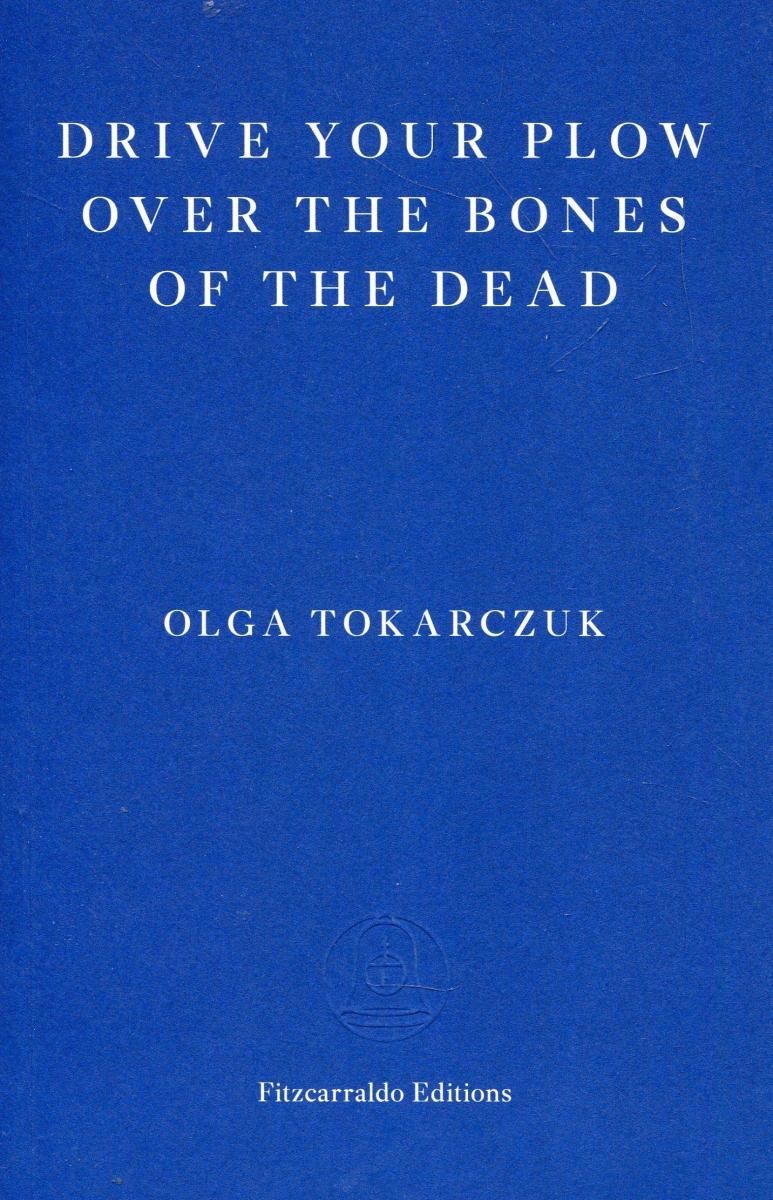
If you like philosophical mysteries – Drive Your Plow Over the Bones of the Dead
New readers to Tokarczuk should begin with Drive Your Plow Over the Bones of the Dead (2009), an entertaining and existential murder mystery that was shortlisted for the International Booker Prize in 2019, in a translation by Antonia Lloyd-Jones. Hunters in a village near the Polish-Czech border are found murdered, and the narrator suspects the culprits are local animals exacting their revenge. The narrator, Janina Duszejko, may be Tokarczuk’s most ‘ex-centric,’ as she views the world with ‘distance from the well-trodden, obvious and unoriginal center point of commonly shared opinions’. Duszejko interprets astrology, believes that ‘all knowledge of mankind lies hidden’ in feet, translates the poems of William Blake, advocates for animals, and attempts to imagine perspectives beyond her own through the eyes of bats and the bodies of stars. For Tokarczuk, writing Duszejko as an ‘ex-centric’ narrator allows her to reveal society’s assumptions and ways of life from a slightly different point of view, one that reveals its treatment of animals as cruel.
While Tokarczuk succeeds in crafting a page-turning plot, her novel ultimately endures because of the questions it poses about fate and free will, about distinctions between humans and animals, about the generative forces of mourning and rage, and about what counts as justice when the systems meant to ensure it fail. Rather than simply narrating events, Duszejko constantly searches for order, ‘correspondences hard for the ordinary mind to penetrate,’ and ‘revolutionary visions’. Some have described this novel as an eco-thriller – and perhaps there is no greater thriller than that old eternal one, the thriller of what it means to live in a world of sorrow, ‘where killing and pain are the norm,’ where we witness endless atrocities that nobody acts on, leaving us horrified and wondering: ‘What sort of a world is this? … Can it really be true? Is this nightmare really happening?’
Buy the book
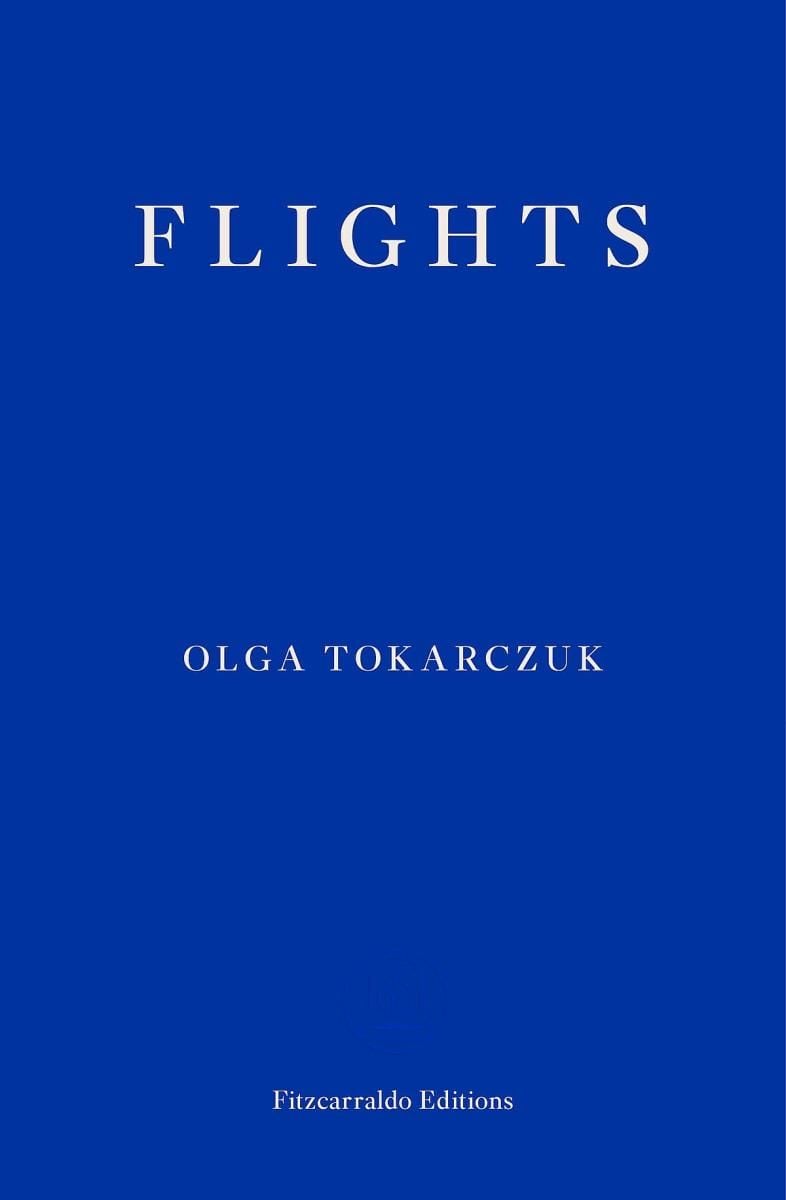
If you want to see why she won the International Booker – Flights
Flights (2007) earned Tokarczuk international renown when it won the International Booker Prize in 2018, after being translated into English by Jennifer Croft in 2017. It still feels radical and urgent, in part because it perfects Tokarczuk’s constellation form, which encourages readers to find patterns among short passages of stories, essays, letters, lectures, and other genres.
Fragmentary narratives, Tokarczuk says in her Nobel Lecture, ‘create constellations capable of describing more, and in a more complex way, multi-dimensionally’. In Flights, we can find constellations of passages about travel and the human body. We read about physical and psychological flights, about airports and maps, about plastination, wax museums, the discovery of the Achilles tendon and the smuggling of Chopin’s heart. The novel sings in praise of travel as well as change, motion, erased borders of nations and selves. Early, the narrator proclaims that ‘a thing in motion will always be better than a thing at rest,’ and ‘change will always be a nobler thing than permanence’. By the end of this genre-breaking, boundary-breaking novel, we do not merely entertain this idea: we know it to be true.
Importantly, Flights begins with autobiography: the narrator describes her parents, previous jobs, the results of her blood tests, and the banks of the rivers of her youth. But through travel and through narrating the perspectives of others, a magic trick occurs. It is the magic trick of literature, a kind of conjuring Tokarczuk has mastered. And, by the final passage, the I becomes we, the narrator harnesses a new power to imagine herself from an outside perspective, and the novel leaves us with the promise that we and the world are more interconnected than we once believed.
Buy the book
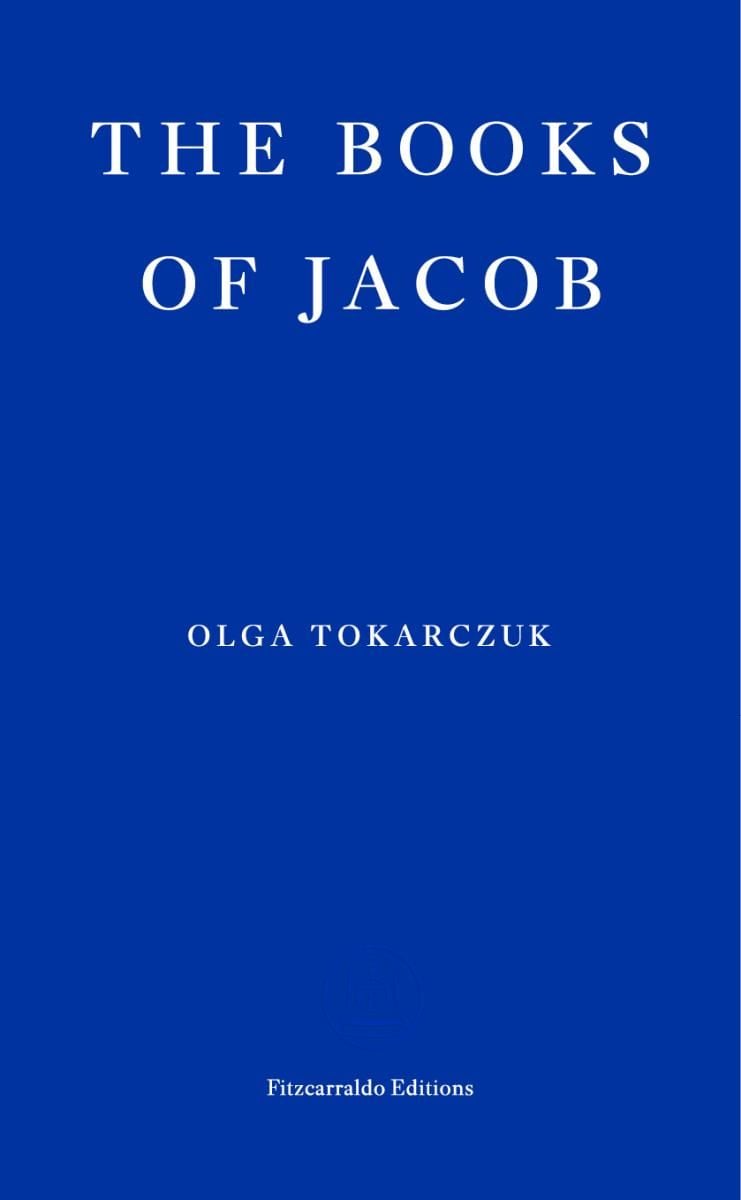
If you want to read Tokarczuk’s magnum opus – The Books of Jacob
The Nobel Committee awarded Tokarczuk ‘for a narrative imagination that with encyclopedic passion represents the crossing of boundaries as a form of life,’ qualities most apparent in this 900-page historical epic. Tokarczuk writes the story of Jacob Frank, an 18th-century Jewish merchant who proclaimed he was the messiah and led his devotees through religious conversions, heresies, and the Habsburg and Ottoman empires. The Books of Jacob, in Jennifer Croft’s translation, was shortlisted for the International Booker Prize in 2022.
Tokarczuk’s telling of this largely forgotten story obliterates the idea of the past as monolith, animating a time of fluid borders and commingled languages, identities, cultures, and peoples. In this way, The Books of Jacob (2014) rejects a conservative idea of nationhood in general and Poland in particular. When Tokarczuk received the Nike, Poland’s greatest literary prize for the novel, she said that Poland was not always an ‘open, tolerant country’. In response, extremists sent her death threats, leading her publisher to employ bodyguards, while the author herself learned to shoot a bow in self-defence.
The Books of Jacob imagines the stories of women never preserved in historical records, an act Tokarczuk compares to conjecture, when archivists ‘patch holes’ in damaged texts, seeking ‘to fill the gaps’. Tokarczuk accomplishes this with the perspective of Yente, Frank’s grandmother, who hovers between life and death, flying from scene to scene and perspective to perspective, beginning in 1752, reaching back into time and soaring into the future, to the Holocaust and the early 2010s and beyond. Yente’s mobility holds the expansive novel together and brings us to glimpse ‘all those bridges, hinges, gears, and bolts, and all the minor instruments that link distinct, singular, and unique events’. From this vantage, ‘everything can be seen flickering and ceaselessly transforming – how beautifully it pulsates’.
If you like parables about contemporary life – The Lost Soul, and Mr. Distinctive
For her two illustrated books, Tokarczuk collaborated with Joanna Concejo, who creates the cover art for the Polish editions of Tokarczuk’s books. Both are translated by Antonia Lloyd-Jones, and both tell allegorical stories about characters who lose their identities in the chaos of our digital times. The Lost Soul (2017) introduces ‘a man who worked very hard and very quickly, and who had left his soul far behind him long ago’. In Mr. Distinctive (2023), when a self-obsessed man photographs himself incessantly, his face becomes literally pixelated. Both men want to regain what makes them themselves, and both stories speak to adult readers who have similarly lost themselves in the fast, bright carnival of contemporary life. To redeem themselves, Tokarczuk’s characters require quiet, waiting, and the passing of time – and her greatest success in these books comes in allowing her readers to do the same, by evacuating most pages of her own words and letting the reader sit with the strange, uncanny, and still moving illustrations of Concejo’s, which linger like the faint dreams of past generations and our youth.

If you want to read an experimental horror – The Empusium
At the start of The Empusium (2022), Tokarczuk’s feminist retelling of The Magic Mountain translated by Antonia Lloyd-Jones, Mieczysław Wojnicz arrives at a sanatorium in Lower Silesia. Like Hans Castorp, the protagonist of Thomas Mann’s novel, Wojnicz seeks to treat his tuberculosis. And, like Castorp, he finds himself surrounded by philosophical debates. But Tokarczuk’s novel, subtitled ‘A Health Resort Horror Story,’ is much more haunted than Mann’s. We can feel the horror creeping forward as the pages turn, through the sounds coming from the attic, the rumours of what happens in the woods, and the men’s intellectual posturing, laden with misogynistic explanations of women’s inferiority.
The men’s greatest flaw is that they can only see women ‘in fragments’. And so The Empusium becomes another experiment with fragmentation and point of view. This time, the narrator is plural: we watch the novel through their eyes and join them as they flit through the shadows, observing the men. For the men, the horror becomes the horror of being watched, unable to see the world in whole. Since the narrators speak with a collective ‘we,’ we readers become implicit in the course of narration, vested with a power to intervene on the characters and the plot in a way we have not quite seen before in our centuries-old history of literature, now transformed by Tokarczuk and her experiments with perspective.


Features

- Book recommendations
Eight Booker Prize-nominated books that celebrate ‘spinster lit’

- Book recommendations
Explore the 10 winning books from a decade of the International Booker Prize

- Book recommendations
12 Booker-nominated books that have been adapted for the stage

- Book recommendations
The best Booker audiobooks to curl up with this winter, chosen by you

- Book recommendations
The best wintry reads from the Booker Library, chosen by you

- Book recommendations
Eight of the best Booker-nominated books for fans of The Traitors


- Book recommendations
Reading goals: the books you are reaching for in 2024

- Book recommendations