Explore the 10 winning books from a decade of the International Booker Prize
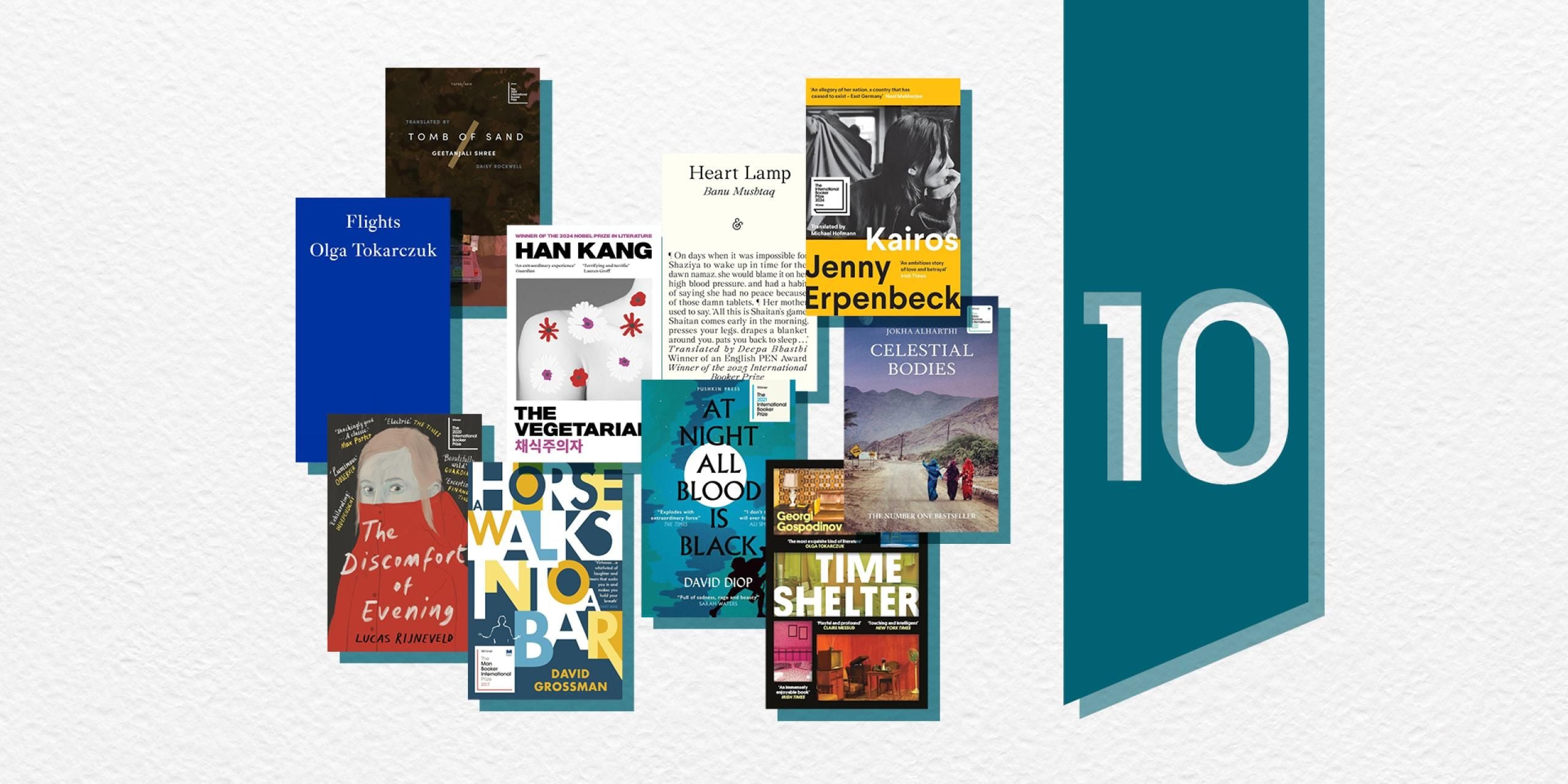
Explore the 10 winning books from a decade of the International Booker Prize
- Written by
- Helen Babbs
- Published
As the International Booker celebrates 10 years in its current form, we look back on a decade of powerful, prize-winning works, translated from 10 different original languages
It’s a decade since The Vegetarian – written by Han Kang and translated from Korean into English by Deborah Smith – won the International Booker Prize in 2016. Kang has since been awarded the Nobel Prize in Literature and, in her words, been able to ‘reach a wider readership in different cultures’. Nine more outstanding works of translated fiction have gone on to win the prize since.
2016 was an important moment for translated fiction. Established in 2005, the Man Booker International Prize, as it was then known, began as a biennial award, presented to an author for their entire body of work, and there was no stipulation that they write in a language other than English. When, in 2014, the Booker Prize had expanded to include authors of any nationality writing in English, the International Booker Prize was able to evolve into its current shape: an annual award for a single book, written in another language and translated into English, and published in the UK and/or Ireland. The award gives equal recognition to authors and translators, with the prize money split 50:50.
Most of us have towering to-be-read piles – why read translated fiction especially? Samuel McDowell, publisher at Charco Press, argues that, like all books, translated fiction offers us ‘the opportunity for escapism, for adventure, to have a laugh, and to be provoked… What translation offers on top of this is the ability to experience it all from someone who perhaps has had very different life experiences… It helps us better understand and appreciate each other.’
These are immersive books that create connections, beyond borders. Viv Groskop, an International Booker Prize judge in 2022, says, ‘There’s something magical about translated fiction… It’s one of the most direct and intimate human experiences we can share with someone who has a different native language to us. I’m in awe of the translators who facilitate that connection.’
In his book The Philosophy of Translation, the International Booker Prize-shortlisted translator Damion Searls explores both the theory and practice of his work. He explains, ‘Everything I do is a case of believing that one language can and always will carry traces of another, that the boundaries are permeable, and that English is capacious enough for “other” languages.’
This reading list is your guide to the 10 books, authors and translators awarded the International Booker Prize since 2016, and a route into a world where boundaries are permeable and magical things happen. These are books that are – in the words of the judges –exquisite, surprising, subversive, disturbing, mischievous, gleeful, frightening, playful, luminous and kaleidoscopic.

The 10 International Booker Prize-winning books since 2016
© Indira Birnie for Booker Prize Foundation
Buy the book
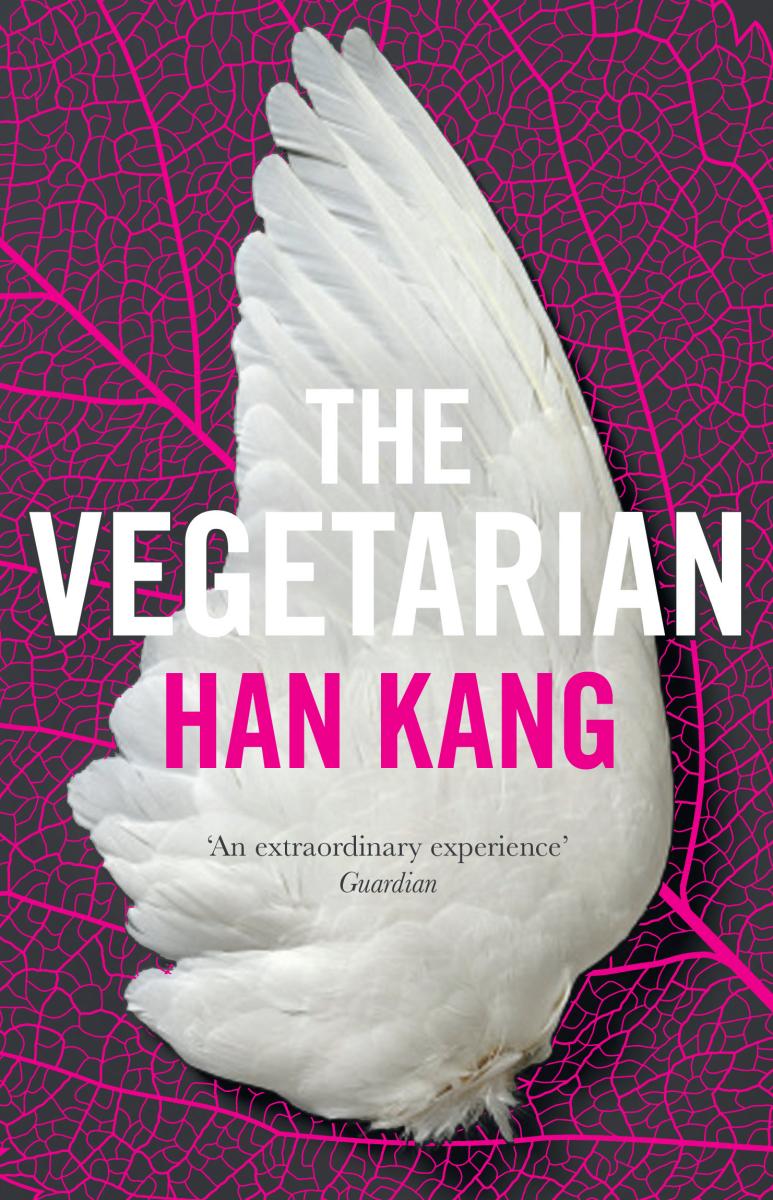
The Vegetarian by Han Kang, translated by Deborah Smith
International Booker Prize 2016 winner
Original language: Korean
Han Kang’s novel, translated by Deborah Smith, is about contemporary South Korea, but it’s also an exploration of shame, desire and our faltering attempts to understand others’ actions.
The International Booker Prize 2016 judges described it as a ‘compact, exquisite and disturbing book’ that will ‘linger long in the minds, and maybe the dreams, of its readers’.
Yeong-hye and her husband are ordinary people. He is an office worker with moderate ambitions and mild manners; she is an uninspired but dutiful wife. But then Yeong-hye, seeking a more ‘plant-like’ existence, commits a shocking act of subversion: overnight, she vows to give up eating meat.
Despite her husband and family’s attempts to intervene and force her to come to her senses, her rebellion manifests in ever more bizarre and frightening forms. Gradually, Yeong-hye spirals further and further into her fantasies in the hope of abandoning her fleshly constraints altogether.
Max Porter, who edited the English translation of The Vegetarian, has discussed how he, Smith and Kang collaborated on the novel: ‘Korean and English are… profoundly different languages, so there is no point striving for fidelity or exactitude; the translator needs to create a new but related book that succeeds as an English language novel…
‘It took a little longer than a book in English might to deliver into production, but I think translations should take longer. The conversations we have as editors, writers, translators or readers about translation are some of the most important and interesting conversations we can have in the fields of language and literature.’
Buy the book
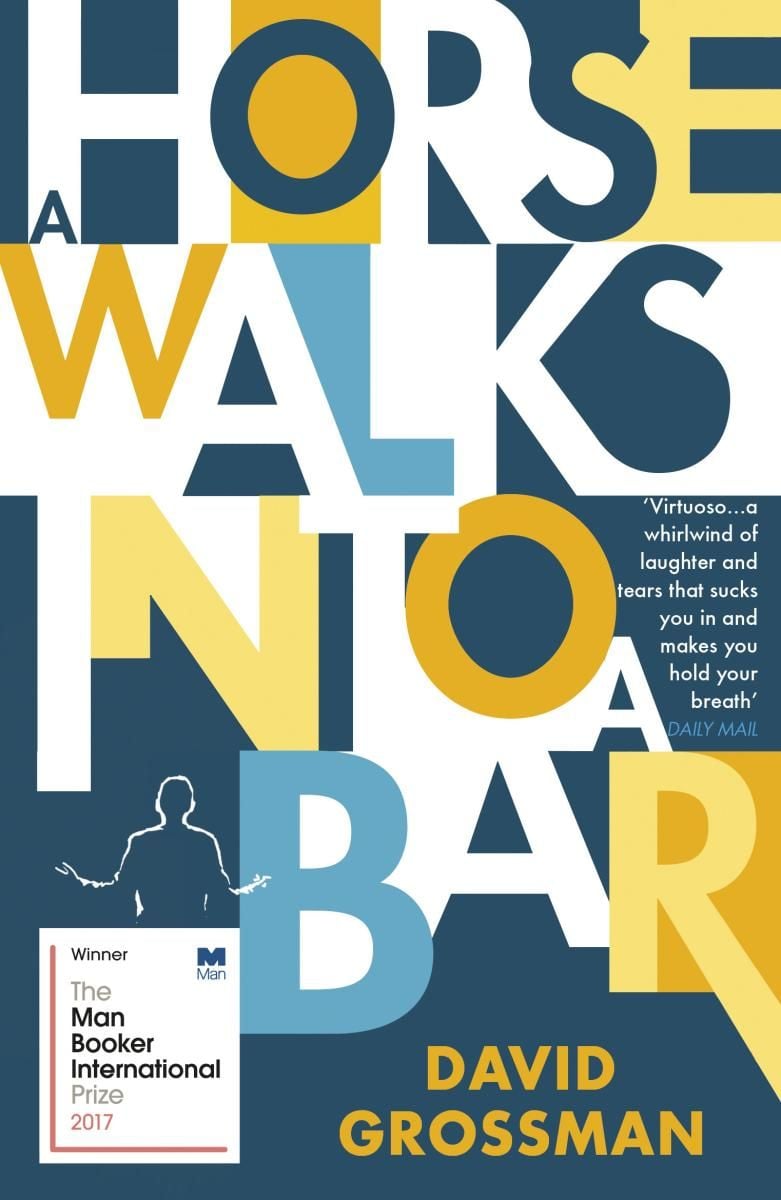
A Horse Walks into a Bar by David Grossman, translated by Jessica Cohen
International Booker Prize 2017 winner
Original language: Hebrew
In David Grossman’s visceral novel, translated by Jessica Cohen, a stand-up comedian delivers a shockingly cruel routine about guilt and betrayal.
The International Booker Prize 2017 judges said they were ‘bowled over by Grossman’s willingness to take emotional as well as stylistic risks: every sentence counts, every word matters in this supreme example of the writer’s craft.’
In a comedy club in a small Israeli town, veteran stand-up Dovaleh G exposes a wound he has been living with for years: a fateful and gruesome choice he had to make between the two people dearest to him.
Flaying alive both himself and the people watching, his act provokes a mixture of revulsion and empathy from an audience that doesn’t know whether to laugh or cry. And all this in the presence of a former childhood friend who’s trying to understand why he’s been summoned to this hellish show.
In a review for the Guardian, Ian Sansom said, ‘A Horse Walks into a Bar – again translated by Jessica Cohen, who has long proved herself capable of keeping up with Grossman’s twists and turns of style – is more like a parable, about the loss of parents and the losses of a nation… This isn’t just a book about Israel: it’s about people and societies horribly malfunctioning. Sometimes we can only apprehend these truths through story’.

Buy the book
Flights by Olga Tokarczuk, translated by Jennifer Croft
International Booker Prize 2018 winner
Original language: Polish
Olga Tokarczuk’s unique novel – translated by Jennifer Croft – interweaves reflections on travel with an exploration of human anatomy, examining life and death, motion and migration.
The International Booker Prize 2018 judges explained that they ‘loved the voice of the narrative – it’s one that moves from wit and gleeful mischief to real emotional texture and has the ability to create character very quickly, with interesting digression and speculation.’
In the 17th century, the Dutch anatomist Philip Verheyen dissects and draws pictures of his own amputated leg. On to the 18th century, where a North African-born slave turned Austrian courtier is stuffed and put on display after his death.
Next stop is the 19th century, as we follow Chopin’s heart making the covert journey from Paris to Warsaw. Finally, to a Croatian island and the present day, and the harrowing story of a young husband whose wife and child mysteriously vanish while on holiday.
Amanda Demarco, in a review for the Times Literary Supplement, said, ‘Though billed as a novel, it is really a potpourri of stories and observation about travel (broadly conceived) that intermingles fact and fiction and takes theme, not narrative, as its guiding star. It contains countless airports and trains, sundry hotels, hostels and sleeping bags… Tokarczuk’s writing is like the modulating course of a river, unstructured, with one thing flowing into the next.’
Buy the book
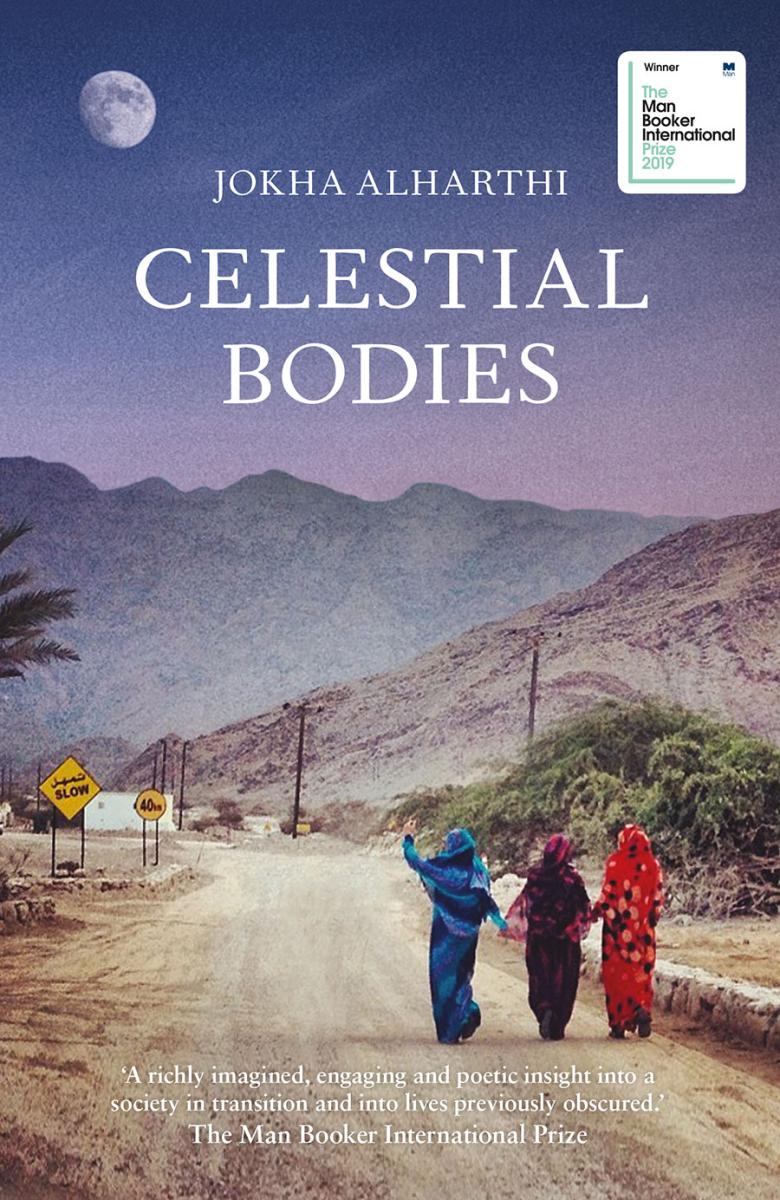
Celestial Bodies by Jokha Alharthi, translated by Marilyn Booth
International Booker Prize 2019 winner
Original language: Arabic
Jokha Alharthi’s elegant novel explores a country’s coming-of-age through the prism of one family’s losses and loves, in a translation by Marilyn Booth.
The International Booker Prize 2019 judges said they fell in love with the book: ‘We felt we were getting access to ideas and thoughts and experiences you aren’t normally given in English. It avoids every stereotype you might expect in its analysis of gender and race and social distinction and slavery. There are surprises throughout.’
In the village of al-Awafi in Oman, we encounter three sisters: Mayya, who marries Abdallah after a heartbreak; Asma, who marries from a sense of duty; and Khawla who rejects all offers while waiting for her beloved, who has emigrated to Canada.
These three women and their families witness Oman evolve from a traditional, slave-owning society that’s slowly redefining itself after the colonial era, to the crossroads of its complex present.
Ruth Franklin, in The New York Review, said, ‘The structure of Celestial Bodies might be described as labyrinthine, with characters retracing similar paths again and again, retelling old stories from changed perspectives or revisiting past wrongs after acquiring new information…
‘Alharthi constructs a tapestry of interlocking lives, some seen over the course of decades, others at just a single pungent moment. Rarely have I encountered a work of fiction in which form and idea were so inseparably, and appropriately, fused.’
Buy the book
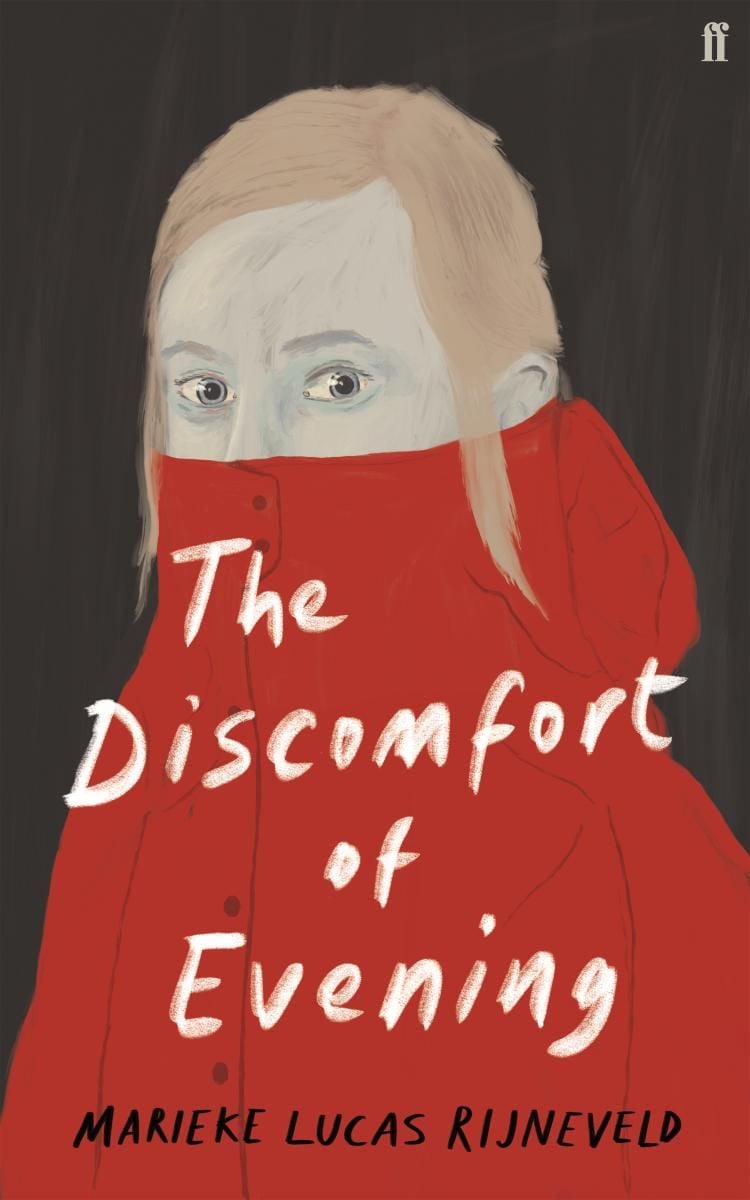
The Discomfort of Evening by Lucas Rijneveld, translated by Michele Hutchison
International Booker Prize 2020 winner
Original language: Dutch
Lucas Rijneveld’s unsettling debut novel – translated by Michele Hutchison – is studded with images of wild, violent beauty, creating a world of language unlike any other.
The International Booker Prize 2020 judges remarked on the book’s ‘ability to make the world new’ and its power to ‘absolutely root you where you are in the irreducible truth of another life.’
Ten-year-old Jas has a unique way of experiencing her universe: the feeling of udder ointment on her skin as protection against harsh winters; the texture of green warts, like capers, on migrating toads; the sound of ‘blush words’ that aren’t in the Bible. But when a tragic accident ruptures the family, her curiosity warps into a vortex of increasingly disturbing fantasies – unlocking a darkness that threatens to derail them all.
In a review for the Guardian, Theodora Danek said, ‘Tragedy shapes the darkly ritualistic world of three children in a Reformed farming family… The novel will find both admirers and detractors for its poetic, mannered language, realistic bleakness and descent into surreal darkness.’
Buy the book
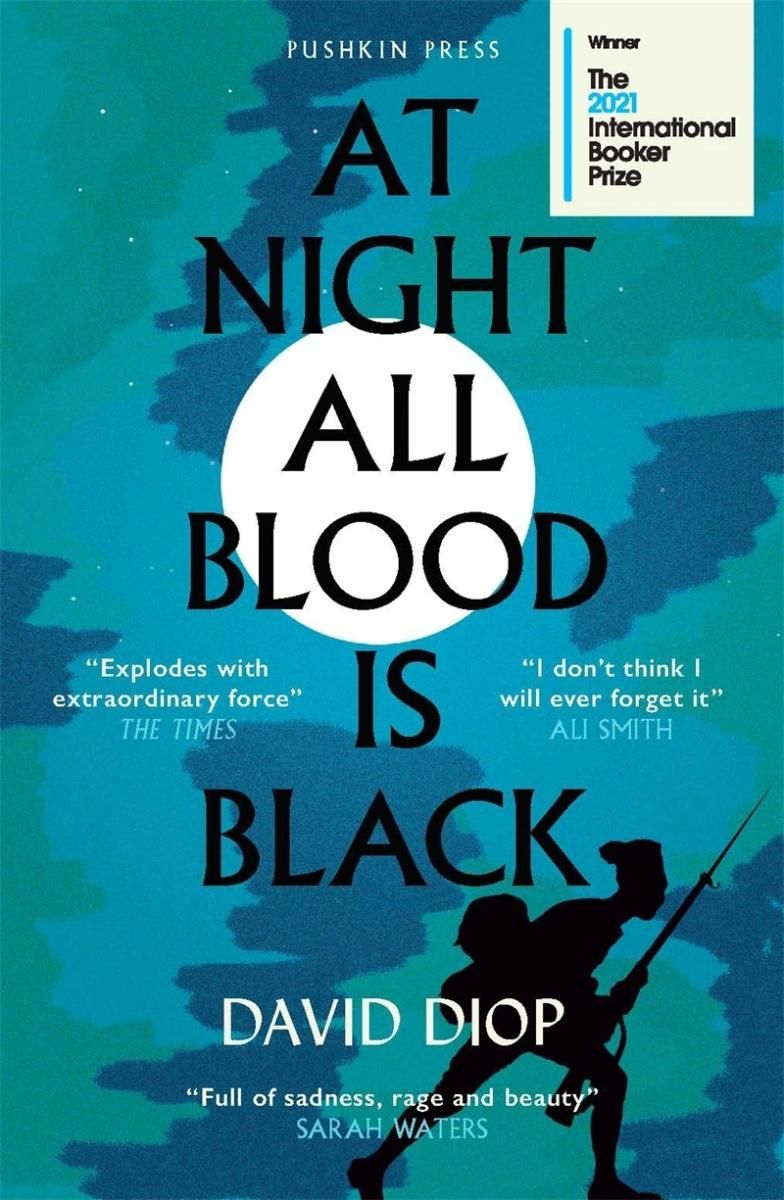
At Night All Blood is Black by David Diop, translated by Anna Moschovakis
International Booker Prize 2021 winner
Original language: French
David Diop’s incantatory novel, translated by Anna Moschovakis, heartbreakingly renders a mind hurtling towards madness, shattered by grief and the horror of war.
The International Booker Prize 2021 judges found the book to be frightening and hypnotic. As you read, they said, ‘Your emotions are all jangled up, your mind is being opened to new thoughts… The protagonist is accused of sorcery and all of us, we judges, did feel this book had somehow put a spell on us.’
Alfa and Mademba are two Senegalese soldiers fighting in the First World War, dutifully climbing out of their trenches to attack whenever the whistle blows. Then Mademba is mortally wounded and dies in a shell hole, his belly torn open.
Without his more-than-brother, Alfa is alone and lost amidst the savagery of the conflict. He devotes himself to the war, to violence and death, but soon begins to frighten even his own comrades in arms. How far will Alfa go to make amends to his dead friend?
Samuel Fury Childs Daly, writing in the Los Angeles Review of Books, said ‘A short, visceral book, it tells the story of an African soldier’s imbrication in World War I. Like many novels about the Western Front, it puts the horror of trench warfare front and center. The book’s incantatory gore makes it a critique of war along the lines of All Quiet on the Western Front, but in Diop’s hands something else is also going on.’

Buy the book
Tomb of Sand by Geetanjali Shree, translated by Daisy Rockwell
International Booker Prize 2022 winner
Original language: Hindi
Geetanjali Shree’s novel, translated by Daisy Rockwell, is an urgent yet playful protest against the destructive impact of borders, whether between religions, countries or genders.
The International Booker Prize 2022 judges described it as a ‘luminous novel of India and partition, but one whose spellbinding brio and fierce compassion weaves youth and age, male and female, family and nation into a kaleidoscopic whole.’
In northern India, an 80-year-old woman slips into a deep depression at the death of her husband, then resurfaces to gain a new lease of life. Ma’s determination to fly in the face of convention confuses her bohemian daughter, who is used to thinking of herself as the more ‘modern’ of the two. To her family’s consternation, Ma insists on travelling to Pakistan, confronting the unresolved trauma of her teenage experiences of partition.
In a review for Litro magazine, Hannah Weber said, ‘Ma’s journey embodies both heaviness and light and presents them together as a whole – a remarkable feat of storytelling. Tomb of Sand is a poet’s novel, exquisitely modern, and not in that thorny Joycean way. It venerates eccentricity, laughs at its own ingenuity, and blurs borders in language and life. That, for some readers, will make it a future classic. “Marvelous beings, stories,” the narrator says. I can’t agree more.’
Buy the book
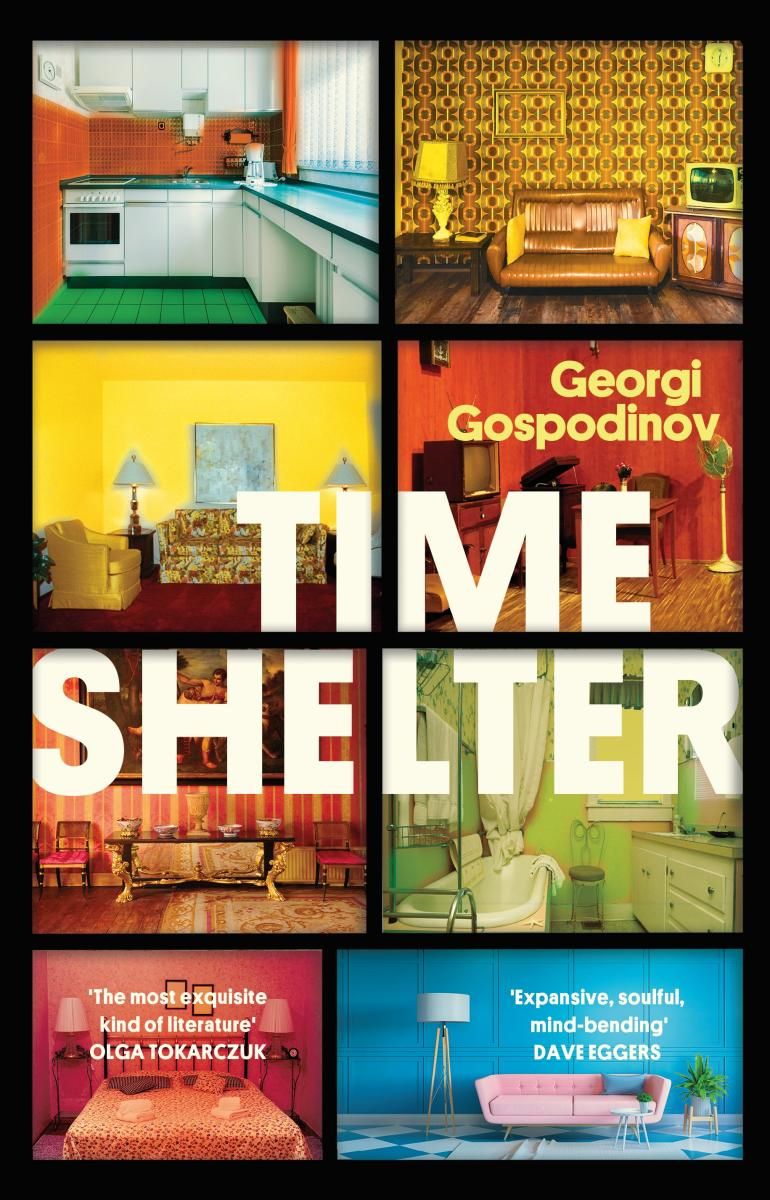
Time Shelter by Georgi Gospodinov, translated by Angela Rodel
International Booker Prize 2023 winner
Original language: Bulgarian
Georgi Gospodinov’s intricately crafted novel – translated by Angela Rodel – is about a ‘clinic for the past’ run by an enigmatic therapist who offers a promising treatment for Alzheimer’s sufferers.
Each floor in the clinic reproduces a decade in minute detail, transporting patients back in time to a familiar, safer, happier moment. An unnamed narrator is tasked with collecting the flotsam and jetsam of the past, from 1960s furniture and 1940s shirt buttons, to scents and even afternoon light.
But as the rooms within the clinic become more convincing, an increasing number of healthy people seek refuge there, hoping to escape the horrors of modern life – a development that results in an unexpected conundrum when the past begins to invade the present. Soon, entire countries want to emulate the idea, with referendums taking place to decide which particular version of the past will shape each nation’s future.
The International Booker Prize 2023 judges described Time Shelter as ‘an inventive, subversive and morbidly humorous novel about national identities and the seductive dangers of memory and nostalgia… It compels us to question our concepts of identity: not just national, individual, societal, but also historical and temporal.’
Asked what inspired him to write the novel, Georgi Gospodinov told the Booker Prizes website that, ‘My urge to write this book came from the sense that something had gone awry in the clockworks of time. You could catch the scent of anxiety hanging in the air, you could touch it with your finger. After 2016 we seemed to be living in another world and another time.’
Buy the book
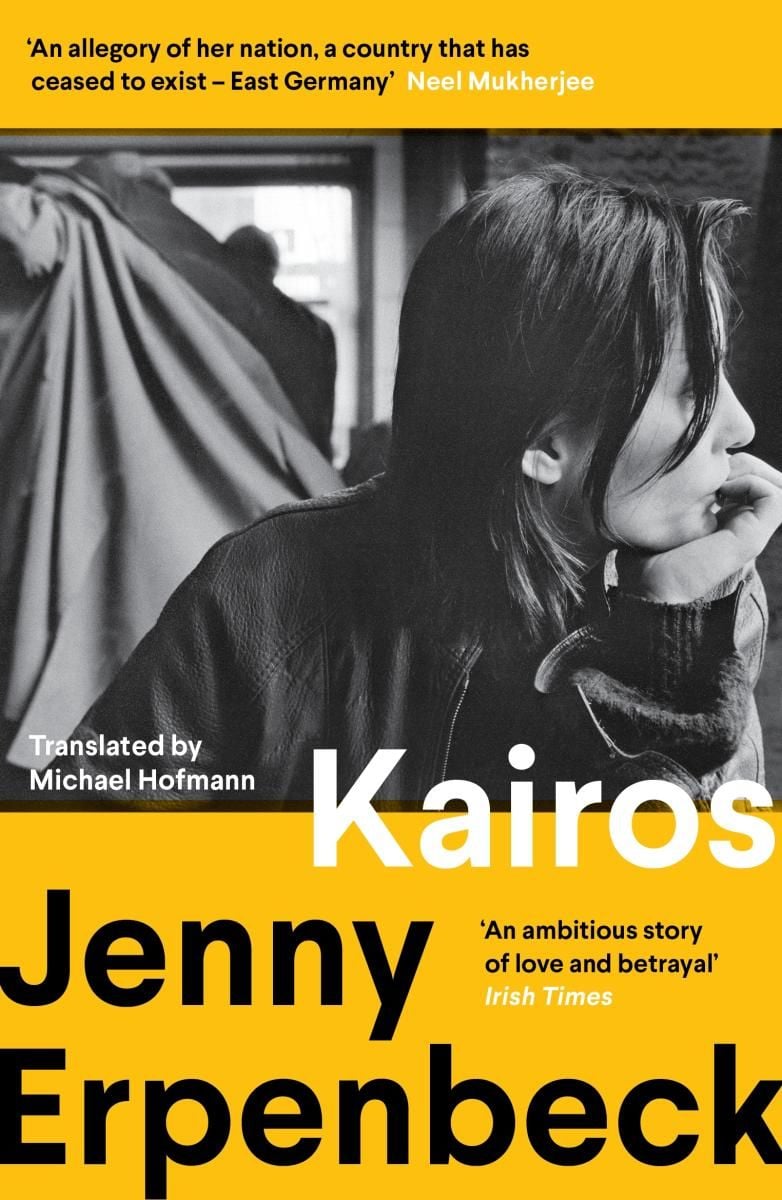
Kairos by Jenny Erpenbeck, translated by Michael Hofmann
International Booker Prize 2024 winner
Original language: German
Jenny Erpenbeck’s novel, translated by Michael Hofmann, is an intimate and devastating story of a ruinous love affair, set against the backdrop of a seismic period in European history.
The International Booker Prize 2024 judges said the book was ‘both beautiful and uncomfortable, personal and political’, noting that ‘Michael Hofmann’s translation captures the eloquence and eccentricities of Erpenbeck’s writing, the rhythm of its run-on sentences, the expanse of her emotional vocabulary’.
Berlin. 11 July, 1986. They meet by chance on a bus. She is a young student, he is older and married. Theirs is an intense and sudden attraction, fuelled by a shared passion for music and art, and heightened by the secrecy they must maintain.
But when she strays for a single night he cannot forgive her and a dangerous crack forms between them, opening up a space for cruelty, punishment and the exertion of power. And the world around them is changing too: as the GDR begins to crumble, so too do all the old certainties and loyalties, ushering in a new era whose great gains also involve profound loss.
Natasha Walter, writing in the Guardian, said Kairos was one of the ‘bleakest and most beautiful’ novels she had ever read. Walter concludes, ‘Throughout these personal and political journeys, Erpenbeck never reaches for the stock phrase or the known response. While the novel is indeed bleak in its view of love and politics, spending time with Erpenbeck’s rigorous and uncompromising imagination is invigorating all the way to the final page.’

Buy the book
Heart Lamp by Banu Mushtaq, translated by Deepa Bhasthi
International Booker Prize 2025 winner
Original language: Kannada
In a collection of 12 short stories, translated by Deepa Bhasthi, Banu Mushtaq exquisitely captures the everyday lives of women and girls in Muslim communities in southern India. It was the first short-story collection to win the International Booker Prize.
Heart Lamp features an array of vivid characters, including sparky children, audacious grandmothers, buffoonish maulvis and thug brothers, oft-hapless husbands, and mothers, above all, surviving their feelings at great cost. Witty and excoriating, Mushtaq emerges as an astonishing observer of human nature, building disconcerting emotional heights out of a rich colloquial style.
The International Booker Prize 2025 judges said, ‘Heart Lamp returns us to the true, great pleasures of reading: solid storytelling, unforgettable characters, vivid dialogue, tensions simmering under the surface, and a surprise at each turn. Deceptively simple, these stories hold immense emotional, moral, and socio-political weight, urging us to dig deeper.’
Writing in the Times Literary Supplement, Kate McLoughlin described the stories in Heart Lamp as ‘searing, phantasmagorical, unclassifiable… Here are wicked in-laws, bedazzled officials, revered mother figures. Feuds fester until families are left rancid. The gossip is radioactive.’





Buy the International Booker Prize-winning books
Save 15% when you buy three or more International Booker Prize-winning titles from BookKind, or enjoy 10% off individual books. Receive fast, free UK shipping; international rates apply. Plus, 10% of your purchase will be donated to the Booker Prize Foundation, helping fund our work to support readers and writers of the future.

The 10 International Booker Prize-winning books since 2016
© Harry Zundel for Booker Prize Foundation
Features

- Book recommendations
Six body horror books nominated for the Booker and International Booker Prize

- Book recommendations
Fashion in fiction: how clothes shape the story in Booker Prize novels

- Book recommendations
12 Booker-nominated books for music lovers


- Book recommendations
11 epics from the Booker Library for fans of The Odyssey

- Book recommendations
South Asian Heritage Month: 12 books to read from the Booker Library

- Book recommendations
Where to start with Olga Tokarczuk: a guide to her best books


- Book recommendations
