
‘It was then that I heard a knocking on the windowpane. And there, behind the glass, stood Nelso Tabiòna. He was looking at me in silence, in keeping with his most personal principle of discretion. As a matter of fact, he deems it proper to announce himself in this manner.’
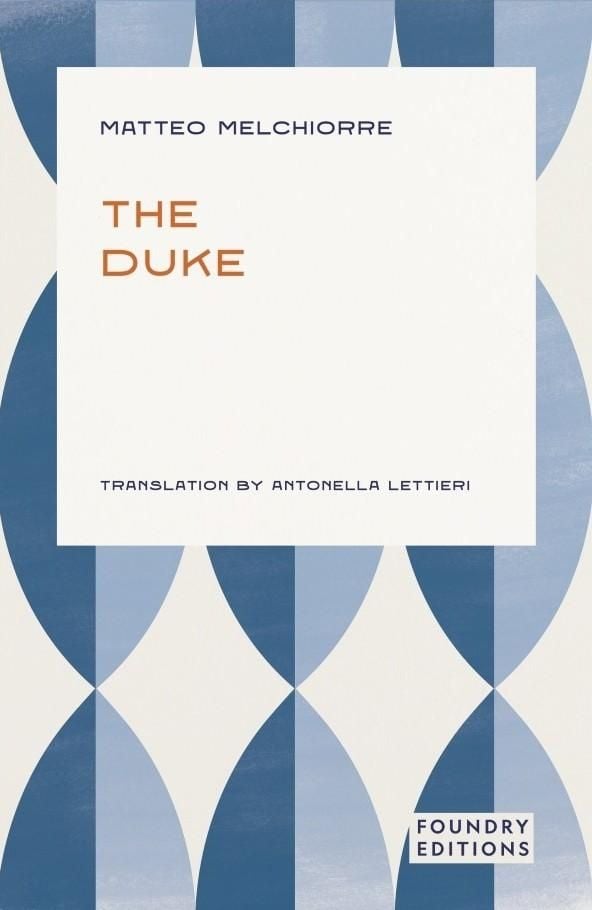
- Longlisted
- The International Booker Prize 2026
- Published by Foundry Editions
Buy the book
A character study of both its protagonists and of life in a tiny mountain village governed by nature, The Duke presents a new vision of Italy
Outside Vallorgàna, a tiny, isolated village high in the foothills of the Dolomites, the ‘Duke’ lives in the villa of his aristocratic ancestors. The last of the Cimamonte family, he spends his days on his land and absorbed in his archive, tolerated, if gently ridiculed by his neighbours.
When the Duke finds out that the village big man is taking timber from his land, he has a decision to make. Will he stay in his glorious isolation, or will he honour his ancestral blood and take action against this affront?
Matteo Melchiorre creates a sweeping portrait of the idiosyncratic character of the Duke and the world of Vallorgàna. With the pace, panorama and plot twists of a 19th-century classic, the breathless story of the Duke’s ensuing feud unfolds, asking 21st-century questions about our relationships with privilege, the past, the natural world and each other.
The Duke was longlisted for the International Booker Prize 2026.


Antonella Lettieri
Antonella Lettieri is a translator working between English and Italian
More about Antonella Lettieri A feud between two men set in a claustrophobic village in the Dolomites slowly escalates. Wonderfully evocative and packed full of plot twists, this is storytelling at its best
The International Booker Prize 2026 judges
What the judges said
‘The Duke is the story of a feud between two men set in an Italian village in the Dolomites. The build-up of tension as the quarrel gradually escalates is electric, as each move they make turns the heat up one more notch. Anyone who’s been in a dispute will recognise the reluctance to step away from the fight. The characters that the author paints are wonderfully evocative, including many of the minor figures who form part of the village. The village itself is one of the strongest ‘characters’ and we loved the feeling of claustrophobia of the place as the narrative unfolds. Packed full of plot twists, this is storytelling at its best.’
What the critics said
Alice Banks, European Literature Network
‘Melchiorre’s ornate prose has been stunningly captured in Antonella Lettieri’s brilliant translation, one that truly sweeps the reader up into the drama of the feud and transports us straight to the beautiful but hostile village of Vallorgàna… A brilliant, fun novel, that does not shy away from the big questions of our time.’


