



Find out more about the books and authors in the Booker Library that explore dark futures or terrifying alternative realities for humankind.
Seven Booker Prize-nominated novels that explore AI
Seven Booker Prize-nominated novels that explore AI
- Written by
- Max Liu
- Published
Artificial intelligence is no longer confined to the pages of science fiction. Here, Booker Prize novelists consider what happens when the boundary between human and machine begins to blur
Will artificial intelligence transform the way we live and work for the better, or is it a con that transfers even more power from individuals to corporations and their cheerleaders in government? Does the truth lie somewhere in between? Whatever you think about AI, it has caught the attention of writers in recent years. The film adaptation of Klara and the Sun (2021) by Kazuo Ishiguro, who won the Booker Prize for The Remains of the Day (1989), will be released in October. The eponymous Klara is an AF (Artificial Friend) in a story set in a US of the near future, although Ishiguro said when the novel was published that it was about the world we were already living in: ‘This isn’t some kind of weird fantasy… We just haven’t woken up to what is already possible today.’
The work of other Booker authors has proved prophetic about AI, with the American four-time Booker Prize nominee Richard Powers exploring the subject in his 1995 novel Galatea 2.2, in which programmers train a machine to write in ways which bear a striking resemblance to today’s AI language models, and Booker Prize 1998 winner Ian McEwan examining the ethical dilemmas posed by AI in his 2019 counterfactual novel Machines Like Me. In Luke Kennard’s Black Bag, from this year’s Booker Prize longlist, AI is one of the factors threatening to dilute the arts and impoverish artists.
Concerns about AI, and the potential for it to overpower its creators with catastrophic consequences, have been around for a long time – from clunky mid-20th century sci-fi depictions of metal robots onwards. But the following list of Booker Prizes fiction that features AI shows that it has become increasingly prominent in contemporary literature from around the world in the past decade. All but one of the works featured were published in the last seven years and there are likely to be more in the future, whatever that holds.
Buy the book
Cloud Atlas by David Mitchell
David Mitchell’s second novel to be shortlisted for the Booker Prize, in 2004, following his debut number9dream, is about six protagonists, connected by a birthmark and less obvious details. Their stories unfold in settings ranging from the Pacific Islands in the 19th century to 22nd-century post-apocalyptic Hawaii, where artificial intelligence and cloning are rampant. Memorable characters abound, such as Robert Frobisher, a composer in 1930s Belgium, journalist Luisa Rey on the trail of skulduggery in 1970s California, and vanity publisher Timothy Cavendish in present-day London.
It is Cavendish who reads ‘The First Luisa Rey Mystery’ in one of several instances that reveal what we have read earlier in the novel to be a work of fiction within the larger fiction of Mitchell’s novel. Mitchell was influenced by the metafictional techniques of Italo Calvino, which draw attention to a novel’s artifice, and Thomas Pynchon’s scepticism about the increasing power of corporations, particularly in the chapters about Nea So Copros, a totalitarian state which uses AI to control and disenfranchise the populace, with cloned ‘fabricants’ used for labour. Above all, Mitchell’s language is dazzling, brilliantly sustained and entirely his own in a novel that established him as one of the premier prose-stylists of his generation.
Buy the book
Frankissstein by Jeanette Winterson
This blend of historical fiction and sci-fi was a departure for Jeanette Winterson, who began the book by writing about Mary Shelley in Italy in the 19th century. Lord Byron and Alan Turing also appear as characters before the novel works its way to 2010s Britain and the story of a young transgender doctor and their sex doll manufacturer lover. It’s as lively as it sounds and, along the way, Winterson explores the idea that AI is already having a profound impact on our lives in undetected ways. She wrote it, she told me in an interview with The i Paper on publication, out of concern that we are ‘living in an ahistorical world where people don’t know how we got here.’ AI could make that worse if it is not used responsibly, as is the case with a character who wants to bring about ‘accelerated evolution’, but Winterson’s Booker Prize 2019 longlisted novel also indicates that the technology contains possibilities that could help us transcend our bodily limitations and achieve new forms of consciousness.
Buy the book
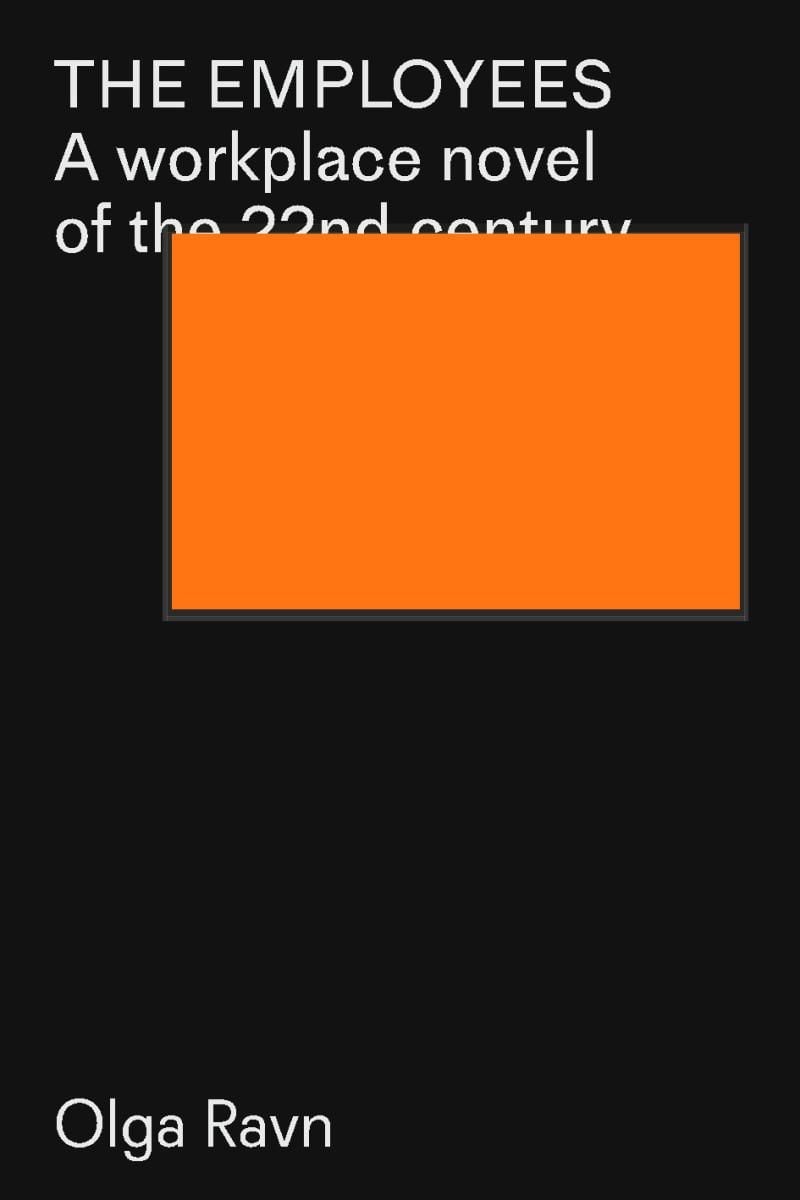
The Employees by Olga Ravn, translated by Martin Aitken
In a mesmerising feat of compression, Danish writer Olga Ravn brings us a workplace dystopia that pits human and AI-programmed humanoid workers against each other in her International Booker Prize 2021 shortlisted novel. In short passages, often running to no longer than a single page, the crew of the Six-Thousand Ship respond to the Board of Directors’ survey about how they are finding their jobs since the recent arrival of alien objects from another planet. The creeping sense that the workers are being divided and controlled by the Directors, and the melancholy longing that pokes through their accounts, is masterfully handled by Ravn and her translator Aitken, who brings their finely modulated voices into English. Each testimony reads like a prose poem of disenfranchisement and yearning. ‘I don’t think I’ve got a heart any more,’ says one human to convey their alienation, while a humanoid declares: ‘I may have been made, but now I’m making myself.’
Buy the book
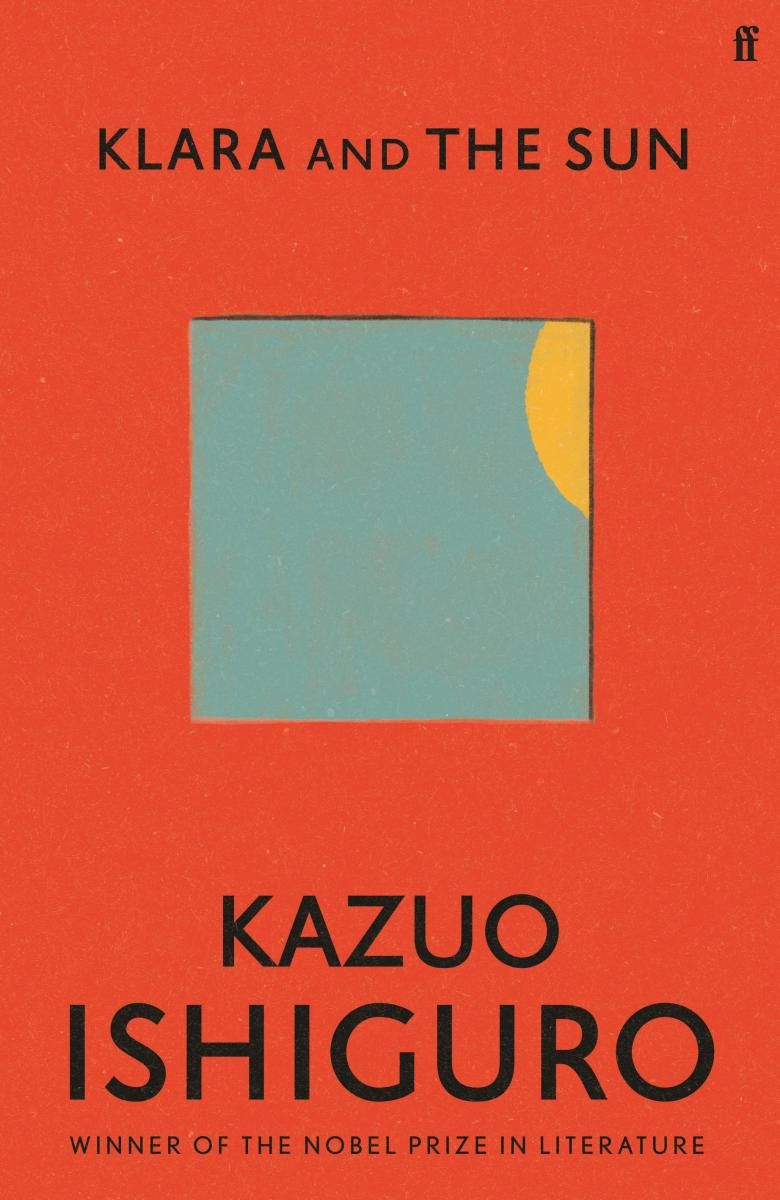
Klara and the Sun by Kazuo Ishiguro
For long-time Ishiguro readers, one of the most intriguing aspects of his Booker Prize 2021 longlisted novel, about unhappy American teenager Josie and her solar-powered ‘AF’ (artificial friend), is how it develops themes he previously explored in his most celebrated books. Service, subjectivity, thwarted connections and what it means to be human were all present in Ishiguro’s Booker Prize 1989 winner The Remains of the Day and again in his 2005 shortlisted novel Never Let Me Go and, despite the futuristic setting, they are present again in Klara. Ishiguro writes compassionately about Josie, who suffers from a mysterious illness which may be connected to her grief for her dead sibling, and the girl’s sense of being misunderstood dovetails with Klara’s loneliness. When Klara comes close to forming bonds with humans, she’s reminded of her status as a robot and servant. ‘I believe I have many feelings,’ says Klara and the novel asks whether there really is ’ something unreachable inside each of us’ that amounts to a soul. Meanwhile, sinister events unfold in the background, with fascism on the rise in the unnamed American city where Josie and Klara live, and the novel moves towards a frightening denouement.
Buy the book
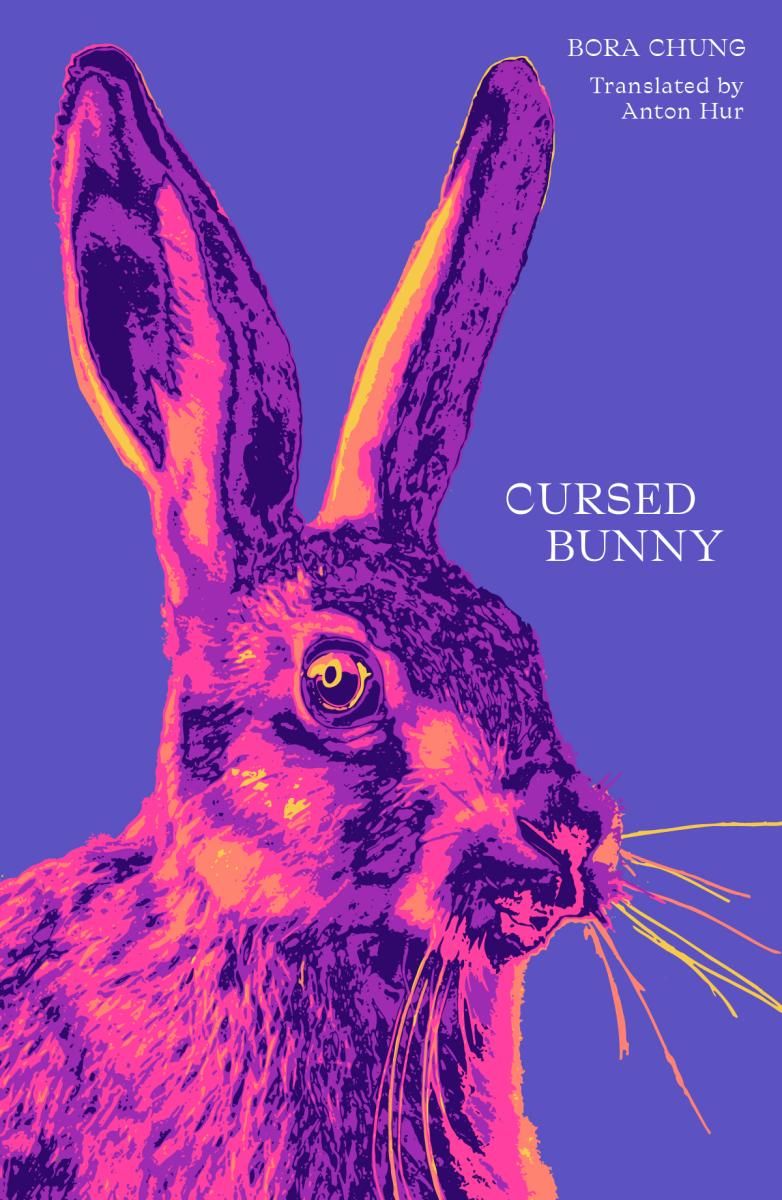
Cursed Bunny by Bora Chung, translated by Anton Hur
In this collection of 10 short stories, which was shortlisted for the International Booker Prize in 2022, Korean writer Bora Chung explores society’s expectations of women and how they struggle to live up to them in an era of economic downturn and limited prospects. The protagonist of ‘Embodiment’ finds herself pregnant – a bizarre side effect from taking contraception for too long, while in ‘The Head’ a woman is terrorised by a creature that lives in her toilet. There are grotesque details, and the collection is not for the squeamish, but there are deep insights to be gleaned from these stories. Chung blends genres, such as magical realism, horror and, most pertinently on the topic of AI, sci-fi in ‘Goodbye, My Love’. This story is about a woman who makes androids and develops romantic attachments to them. When she upgrades from Model 1 to an improved version, she can’t bear to part with the original which is, she thinks, unique in being ‘completely and utterly mine’. Her possessiveness, and her complacency about where the power lies between human and android, prompt her demise.
Buy the book
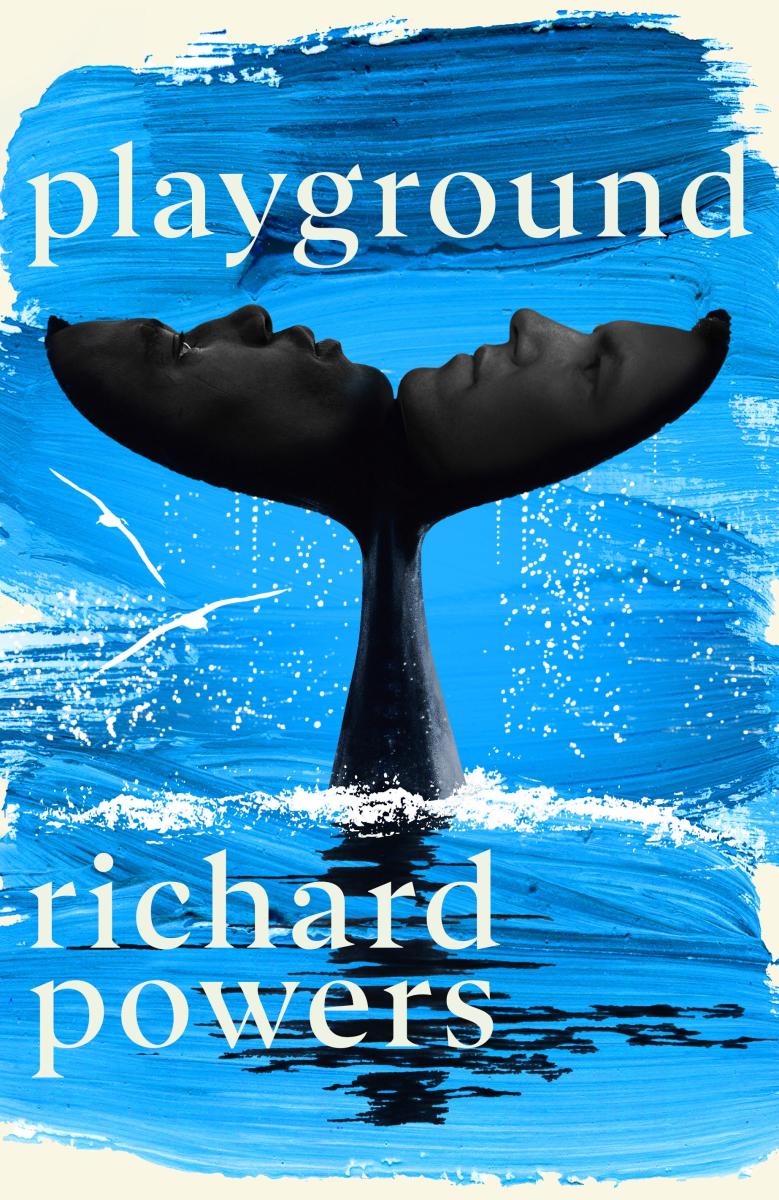
Playground by Richard Powers
Powers tackled AI in his Booker Prize 2021 shortlisted novel Bewilderment and again in this 2024 longlisted work about a terminally ill tech entrepreneur, his two old friends and a nonagenarian scuba diver, whose stories converge in Polynesia, which shows again that the American is one of its most clued-up chroniclers. Here, tech plays a crucial part in neo-colonialism as the entrepreneur tries to buy access to the island for a controversial ‘seasteading’ venture that will mine for phosphate and create ‘floating, autonomous cities’ in the open sea. He promises the venture will make the island rich and dispatches an AI assistant to answer questions from concerned islanders. The machine is, of course, there to convey its designer’s agenda – as the islanders realise. Powers explores this facet of AI, its relationship with storytelling, the threat that it poses to creativity and the natural world in this luminous novel.
Buy the book
Under the Eye of the Big Bird by Hiromi Kawakami, translated by Asa Yoneda
The future of humanity looks bleak in this Japanese novel, shortlisted for the International Booker Prize 2025, which is told in interconnected stories and has its real-world basis in concern about declining fertility rates. Men are rare and those who do exist are often too weak to make women pregnant. Children are made in factories out of animal DNA, and the possibility that the human race will die out looms over everything, creating an atmosphere of anxiety. Memories are suppressed by a government that creates ‘Mothers’ – advanced AI beings that oversee isolated communities of humans which they raise from children, nurturing individuals and monitoring reproduction to guide the survival of the race. The novel finishes on a note which asks whether human beings are right to see themselves as the end point of evolution. (ENDS)


Features

- Book recommendations
Eight novels to read in autumn, nominated for the Booker Prizes

- Book recommendations
Six body horror books nominated for the Booker and International Booker Prize

- Book recommendations
Seven Booker Prize-nominated post-apocalyptic books

- Book extract
An extract from Klara and the Sun by Kazuo Ishiguro

- Reading guides
Reading guide: Klara and the Sun by Kazuo Ishiguro

- Book recommendations
Staff picks: our favourite Booker Prize-winning books

- Book recommendations


