

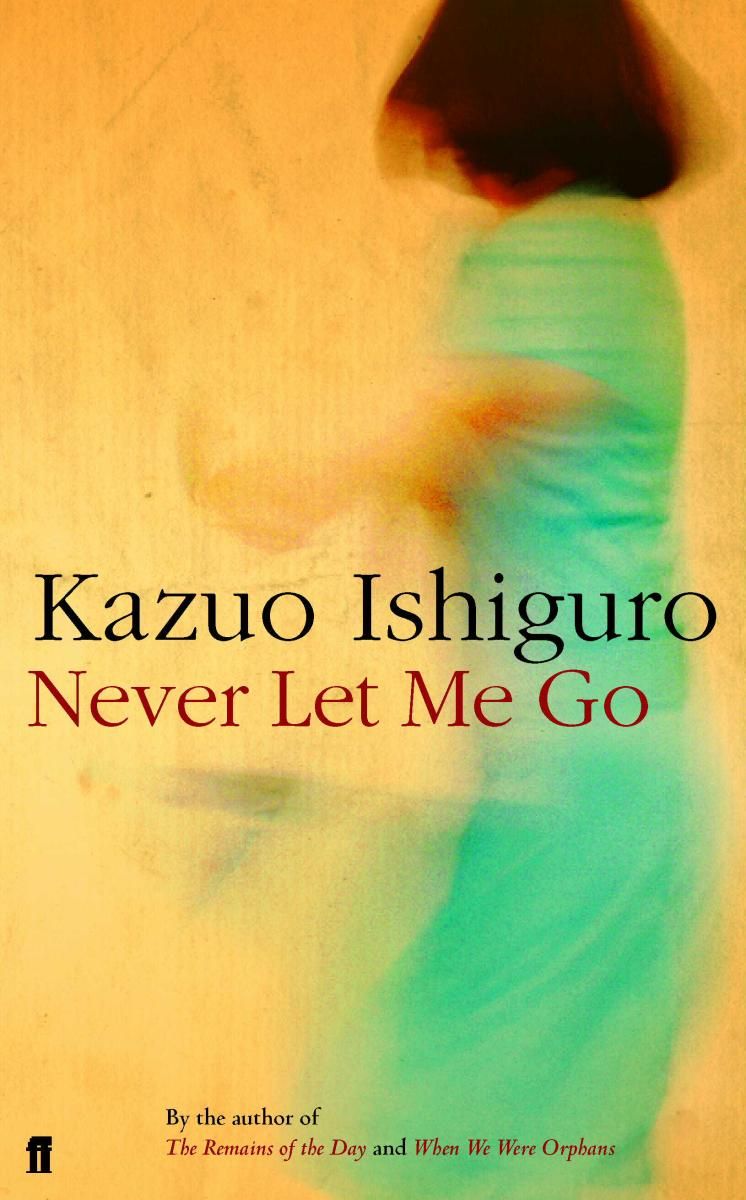
Never Let Me Go
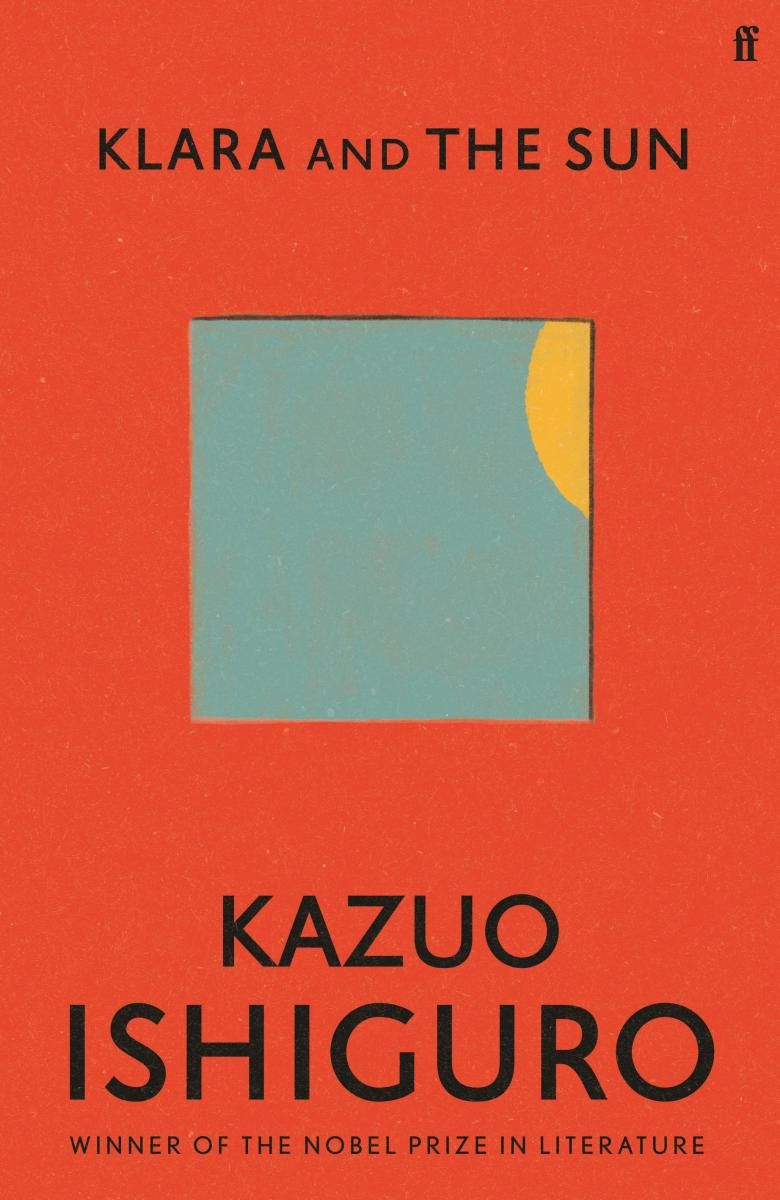
by Kazuo Ishiguro

From her place in the store, Klara, an Artificial Friend, watches customers and passers-by intently, hoping to be chosen. But when the possibility arises that her circumstances may change forever, she is warned not to put too much faith in human promises
Whether you’re new to Klara and the Sun or have read it and would like to explore it more deeply, here is our comprehensive guide, featuring insights from critics, our judges, and the book’s author, as well as discussion points and suggestions for further reading.
Klara and the Sun examines our rapidly-changing world through the eyes of a unique narrator to explore a fundamental question: what does it mean to love?
From her place in the store, Klara, an Artificial Friend with outstanding observational qualities, watches carefully the behaviour of those who come in to browse, and of those who pass in the street outside. She remains hopeful that a customer will soon choose her, but when the possibility emerges that her circumstances may change for ever, Klara is warned not to invest too much in the promises of humans.
Klara and the Sun was longlisted for the Booker Prize 2021.
Klara
Klara is an artificially intelligent android, called an Artificial Friend (AF), and the narrator of Klara and the Sun. She is an older, outdated model of an AF, yet despite this, she is unusually observant and empathetic. Klara grows to love Josie, the child for whom she is bought, or who ‘chooses’ her. Klara is a quick learner and is constantly learning about life and love through the world around her. She is solar powered, relying on the Sun for energy, and comes to see it as a powerful, almost divine presence. Throughout the story, she makes attempts to communicate with it.
Josie
Josie is the 14-year-old girl who ‘chooses’ Klara to be her AF. She is chronically ill, but still lively and adventurous. Josie is ‘lifted’, meaning her mother agreed for her to be genetically edited so she is better equipped for survival in the modern world. However, the procedure has left her with an illness that varies in severity throughout her life. Josie is artistically inclined and highly intelligent, and able to handle her illness with more fortitude than the people around her.
The Mother/Chrissie
Chrissie is Josie’s mother, a high-powered professional who is burnt out from her job and caring for her ill child. Her other daughter, Sal, died and Chrissie lives consumed with grief. This makes her fiercely protective of Josie, and she is determined to do all she can to give her a chance at a good life. Chrissie’s mental state declines as Josie grows more ill, and the depth of her grief and fear is revealed later in the novel.
Rick
Rick is Josie’s best friend since childhood. Unlike Josie, Rick was not ‘lifted’ as a child, and this marks him as an outsider among their peers. He lives with his mother in a shabby, dilapidated house. Despite not being lifted, Rick is intelligent and has a natural aptitude for engineering. He hopes to go to university with his self-built portfolio of drones. Rick loves Josie fiercely, and does all he can to be there for her.
Klara and the Sun (2026)
© Columbia Pictures / Alamy
Kazuo Ishiguro’s works of fiction have earned him many honours around the world, including the Booker Prize 1989 for The Remains of the Day and the Nobel Prize in Literature 2017.
He was born in Nagasaki, Japan and moved to Britain at the age of five. His work has been translated into over 50 languages. The Remains of the Day and Never Let Me Go were both made into acclaimed films, and have each sold more than two million copies. Ishiguro was awarded a knighthood in 2018 for Services to Literature. He also holds the decorations of Chevalier de l’Ordre des Arts et des Lettres from France and the Order of the Rising Sun, Gold and Silver Star from Japan.
© Alamy
‘Great artists, like Ishiguro, are distinguished by their more expansive vision. I know that’s something of an old-fashioned conceit, as is the word, “masterpiece”; nevertheless, I’ll go for broke and call Klara and the Sun a masterpiece that will make you think about life, mortality, the saving grace of love: in short, the all of it.’
Anne Enright, the Guardian
‘The relation between society’s increasingly invidious, focussed, and sinister patterns of selection (fascism, genetic engineering, “lifting”) and the cosmic arbitrariness of our ultimate destinies has been Ishiguro’s great theme: our nasty efforts at “favoritism” versus God’s or the universe’s inscrutable lack of it. For we die unequally but finally equally, in ways whose randomness seems to challenge all notions of pattern, design, selection. Theology is, in some guises, just the metaphysics of favoritism: a prayer is a postcard asking for a favor, sent upward. Whether our postcards are read by anyone has become the searching doubt of Ishiguro’s recent novels, in which this master, so utterly unlike his peers, goes about creating his ordinary, strange, godless allegories.’
James Wood, The New Yorker
‘Ishiguro doesn’t get tangled up in the complexities of neural networks, machine learning, algorithms or the difficulties of getting computers to understand symbolic logic. But it doesn’t matter how Klara’s mind works, because she isn’t really a robot. She’s a much older form of artificial intelligence, a much older kind of artificial friend: she’s a fictional character. It may be inherently impossible to write a novel that openly poses such questions as whether robots can be said to have souls, or to be conscious, or capable of feeling love, or of inspiring and reciprocating sympathy in people. By making them characters in a story, you aren’t asking the question: you’ve already answered it. Klara thinks in ways similar enough to us, is human enough, to function as a conventional narrator of a novel.’
Thomas Jones, London Review of Books
‘Look at the characters Ishiguro gives voice to: not the human, but the clone; not the lord, but the servant. Klara and the Sun complements his brilliant vision… when Klara says, “I have my memories to go through and place in the right order,” it strikes the quintessential Ishiguro chord. So what if a machine says it? There’s no narrative instinct more essential, or more human.’
Radhika Jones, The New York Times
‘The novel is interested in human loneliness and isolation at the fundamental, ‘human condition’ kind of level, rather than in the everyday sense of individuals missing company or friends. Klara is a machine whose primary goal – her mission, if you like – is to prevent her teenager from becoming lonely. That’s the social and commercial purpose for her existence. But because Klara has the urge to learn about the world far beyond her function, ‘loneliness’ soon becomes something she explores as part of the condition of being human. Each human is complex, unique and individual. That might give each a special status, a special set of rights. But by the same token, because of the complex individuality of each human, they are necessarily held apart from one another.’
Kazuo Ishiguro in an interview with Waterstones.
‘What stays with you in Klara and the Sun is the haunting narrative voice – a genuinely innocent, ego-less perspective on the strange behaviour of humans obsessed and wounded by power, status and fea.’ r. This is a fiction that not only asks in general about the nature of consciousness and personal dignity but presses home the assumptions we make about how we value some consciousnesses more than others and how we make others serve the cause of our survival
The Booker Prize 2021 judges.
Klara and the Sun explores love from a variety of perspectives, both human and machine. Were you challenged by the novel’s notion that love can be created artificially? Discuss what Klara and the Sun made you think about the meaning of love.
The novel is narrated in Klara’s calm, observant voice, even when she encounters upsetting or unsettling events. How did this signature restraint in Ishiguro’s writing affect your reading of the novel? Did it make the darker elements more powerful, or create emotional distance?
Klara is artificially intelligent, an ‘AF’, yet she has distinctly human qualities, including her worship of the Sun. Her belief in the Sun could be compared to human religious faith. Did you see Klara as a spiritual character, and what does her faith suggest about whether spirituality is uniquely human?
This is a science fiction novel that shows how humanity might advance, or decline, in the future. One example is ‘lifting’: a process of genetic editing that enhances children’s abilities but can have serious health consequences. What did you think of this process? What might Ishiguro be saying about the ethics of technology to come?
When Klara is compared to a vacuum cleaner, she finds this hurtful. Although she might be described as a household appliance of sorts, we understand Klara to be sentient. Did Ishiguro push the boundaries of what sentience is, and did you feel empathy towards Klara, as an AF?
Klara’s fate can be read as a metaphor for the way humans create, value and ultimately discard things once they have fulfilled their purpose. What wider ideas about obsolescence and human responsibility do you think Ishiguro is exploring through the novel?
Ishiguro said that he used children’s picture books to model Klara’s perspective and the book’s visual atmosphere: think of the bright skies, powers of the sun, wide landscapes and characters’ simple, hopeful innocence. In your reading experience, did you notice a sense of childlike wonder as the author intended?
A review of the novel in the London Review of Books said that ‘more unusually’ for a novel of this genre, ‘Ishiguro doesn’t show much interest in “world building”: the differences that distinguish Klara’s world from our reality are adumbrated with a few carefully placed brushstrokes.’ Despite no complex rules, factions or regimes, this is still a dystopian novel. Did Klara and the Sun differ from other dystopias you’ve read, and what does Ishiguro bring to the genre?
AI has become an increasingly visible part of everyday life since Klara and the Sun was published in 2021. How does reading the novel now, in the age of generative AI, affect your interpretation of Ishiguro’s vision of the future?
In an interview with the Guardian, Ishiguro said that he hopes this book will be read as a ‘cheerful, optimistic novel’, despite its difficult subject matter. What did you think of the novel’s relationship with hope? Did you find the novel as hopeful as Ishiguro intended, or did its darker themes make it feel more like a cautionary tale?
Times Literary Supplement: Faith in the Bildungs-robot
London Review of Books: Oh you darling robot!
The New York Times: A Humanoid Who Cares For Humans, From the Mind of Kazuo Ishiguro
The New Yorker: Kazuo Ishiguro Uses Artificial Intelligence to Reveal the Limits of Our Own
by Kazuo Ishiguro
by Martin MacInnes
by Doris Lessing