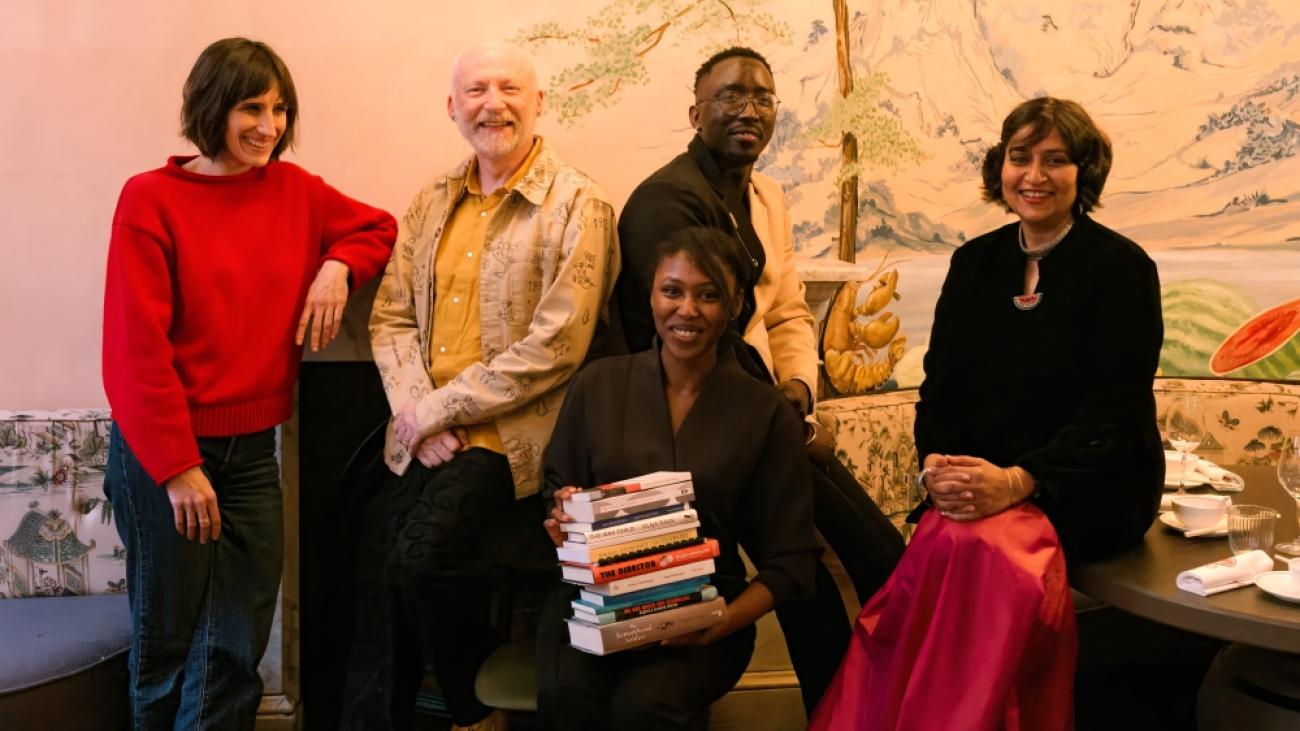

From witchcraft to warfare, trauma to transformation, resilience to cruelty, this year’s longlist shines a light on a vast range of experiences
An extract from The Director by Daniel Kehlmann, translated by Ross Benjamin
An extract from The Director by Daniel Kehlmann, translated by Ross Benjamin
- Published
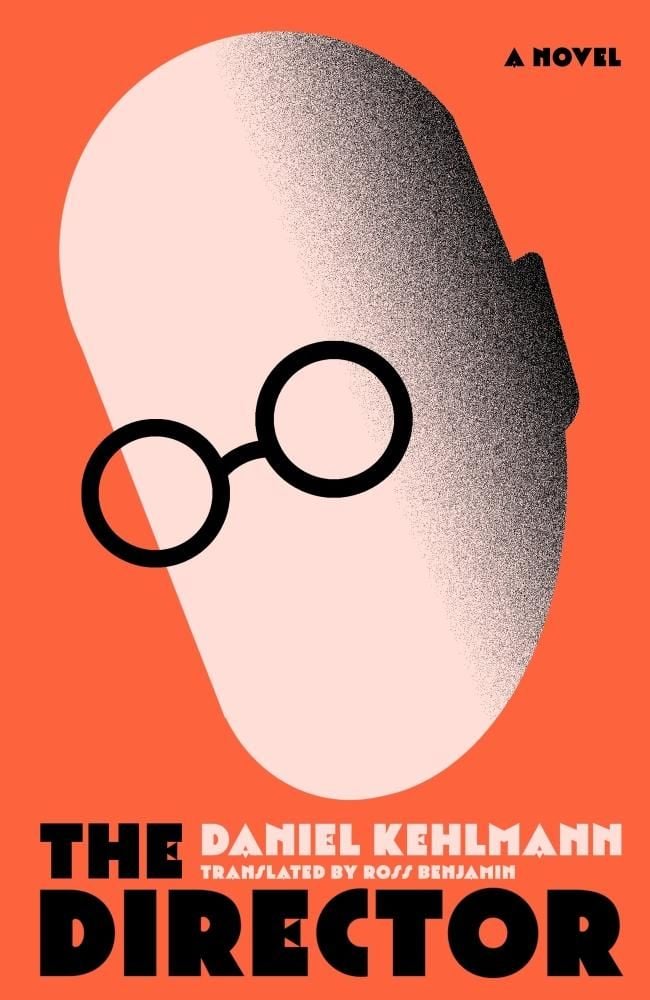
The Director is shortlisted for the International Booker Prize 2026. Read an extract here
The Director explores the complicated relationships and distinctions between art and power, beauty and barbarism, cog and conspirator.
When the Nazis seize power in the 1930s, G.W. Pabst, one of cinema’s greatest directors, is filming in France. To escape the horrors of the new Germany, he flees to Hollywood. But under the dazzling California sun, the world-famous director suddenly looks like a nobody. Not even Greta Garbo, whom he made famous, can help him.
When Pabst receives word that his elderly mother is ailing, he finds himself back in his homeland of Austria, which is now called Ostmark. Pabst, his wife and his young son are confronted with the barbaric nature of the regime, but the minister of propaganda in Berlin wants the film genius. He won’t take no for an answer, and he makes big promises.
While Pabst still believes that he will be able to resist these advances, that he will not submit to any dictatorship other than art, he has already taken the first steps into a hopeless entanglement.
The Director is published in the UK by riverrun. This extract is taken from the novel’s opening chapter.
Buy the book
What’s New on Sunday?
Why am I in this car?
I’ll sit still. Sometimes, if you don’t move, your memory comes back.
But it’s not working. One thing is certain, the driver is smoking. The vehicle is filled with heavy smoke. My eyes are burning. I feel sick. The man has gray hair, dandruff on his shoulders. On the rearview mirror a small cross is swinging on a string of pearls.
One thing at a time. The driver picked me up, held the door open for me, and the others looked on open-mouthed, scrawny Franz Krahler, stupid Frau Einzinger, and also the small man whose name I can never remember.
Because actually, at the Abendruh Sanatorium, every day is the same as the next. At breakfast the radio is on, you go to the park, your back hurts, there’s lunch, you look at the newspaper and get annoyed, while the TV is on; some are watching, others are sleeping, someone is always coughing pitifully. Then it’s already half-past three and dinner is served, and then you lie awake and have to go to the bathroom every half an hour. Sometimes there are visitors, but never for me. Sometimes someone dies and is taken away. But those who are still alive are not usually picked up by a black car with a chauffeur.
We stop at an intersection, where three teenagers with long hair are crossing the street very slowly. The driver rolls down the window and yells that another war would do young punks like them some good, and when they ignore him, he only gets angrier. He drives off, still ranting.
And now it comes back to me: to the television studio.
“But which program?” I ask, leaning forward.
The driver turns around and looks at me through the clouds of smoke, not understanding.
I repeat the question.
“I don’t care!” he shouts. “Why should I give a damn?”
So I don’t say anything else.
But he’s getting worked up. “I want to be left alone, just left alone! Is that too much to ask?”
When we stop in front of the broadcasting studio, he has just pulled himself together. He gets out, walks around the car, opens the door for me. He grabs me by the elbow, pulls me up. This is rude, but it actually helps me get on the street without falling.
The facade of the broadcasting studio is even grayer than the surrounding facades. All the buildings in Vienna are gray now, except for a few that are dark brown. The whole city seems covered with dirt. In winter the sky is stony and low, in summer yellowishly damp. Even that was different once. If you’re old enough, you know that in this city of garbage, coal smoke, and dog shit, even the weather is no longer what it was.
The revolving door rotates haltingly, and for a moment I’m afraid that my journey will end here, but I get through, and in the lobby someone is actually waiting for me: a very thin young man with a clever face and round glasses, who shakes my hand and introduces himself as Rosenzweig, the editor in charge.
“Very good,” I say. I’m always pleased when young people are polite. It doesn’t happen often these days. “In charge of what?”
“Of the program.”
“What program?”
He looks at me for a few seconds before he says: “What’s new on Sunday?”
“I don’t know.”
“The program!”
“What?”
“That’s the name of the program. What’s New on Sunday.”
What is this person talking about?
“This way please!” He points to a door at the other end of the lobby. I follow him down a short corridor; then we’re standing—and this isn’t good at all—in front of a paternoster elevator.
The first compartment passes by, followed by a second. I suppose I have to step into the third, I’m frightened, it passes by too. Come on, I tell myself, you’ve experienced worse. As the fourth compartment rises in front of me, I close my eyes and stagger forward. I make it inside, but would have fallen down if he hadn’t held me by the shoulder. It’s a good thing he reacted so quickly.
“Let go of me,” I say sharply.
Getting out is even harder, of course. But he sees it coming, places his hand on my back, and gives me a little push. I stagger out, he holds me steady again, thank God.
“Stop that!” I say.
It smells of plastic; from somewhere comes the hum of large machines. We walk down a corridor with signed photos of grinning people hanging to the left and right. A few of them I recognize: Paul Hörbiger, Maxi Böhm, Johanna Matz, and there’s Peter Alexander, who for some reason has scrawled With great thanks to my dear, dear audience under his signature.
The young man opens a door with the word makeup on it. A fat fellow with a full beard is sitting in front of a mirror, with a makeup artist standing behind him, working on his face with a brush. When she steps back, he leaps up so suddenly that I flinch, and he hugs me. He smells of aftershave and beer. In a voice quivering with happiness, he asks: “How are you, Franzl?”
I mumble that I’m doing fine, which is actually never true, least of all right now. I’m trying not to inhale. His beard is tickling my cheek.
“And you?” I gasp.
“Oh Franzl, what can I say? Liesl died two years ago, and the thing with Wurmitzer didn’t end well. And I even say to him: Ferdl, you have to do it now because of the old friendship, but did he want to listen? And, as you know, then I preferred to stay with Stenger, but he wasn’t honest.”
I can’t breathe. Who the hell is this? Who are the people he’s talking about? At last he lets go of me, takes a loden jacket with staghorn buttons from the coat hook, big as a tent, throws it on, and walks out.

The Director
© India Hobson for Booker Prize Foundation
The Director
- Translated by
- Ross Benjamin
- Published by
- riverrun
An artist’s life and a pact with the devil: this is a novel about the dangerous illusions of the silver screen