Reading guide: The Witch by Marie NDiaye, translated by Jordan Stump
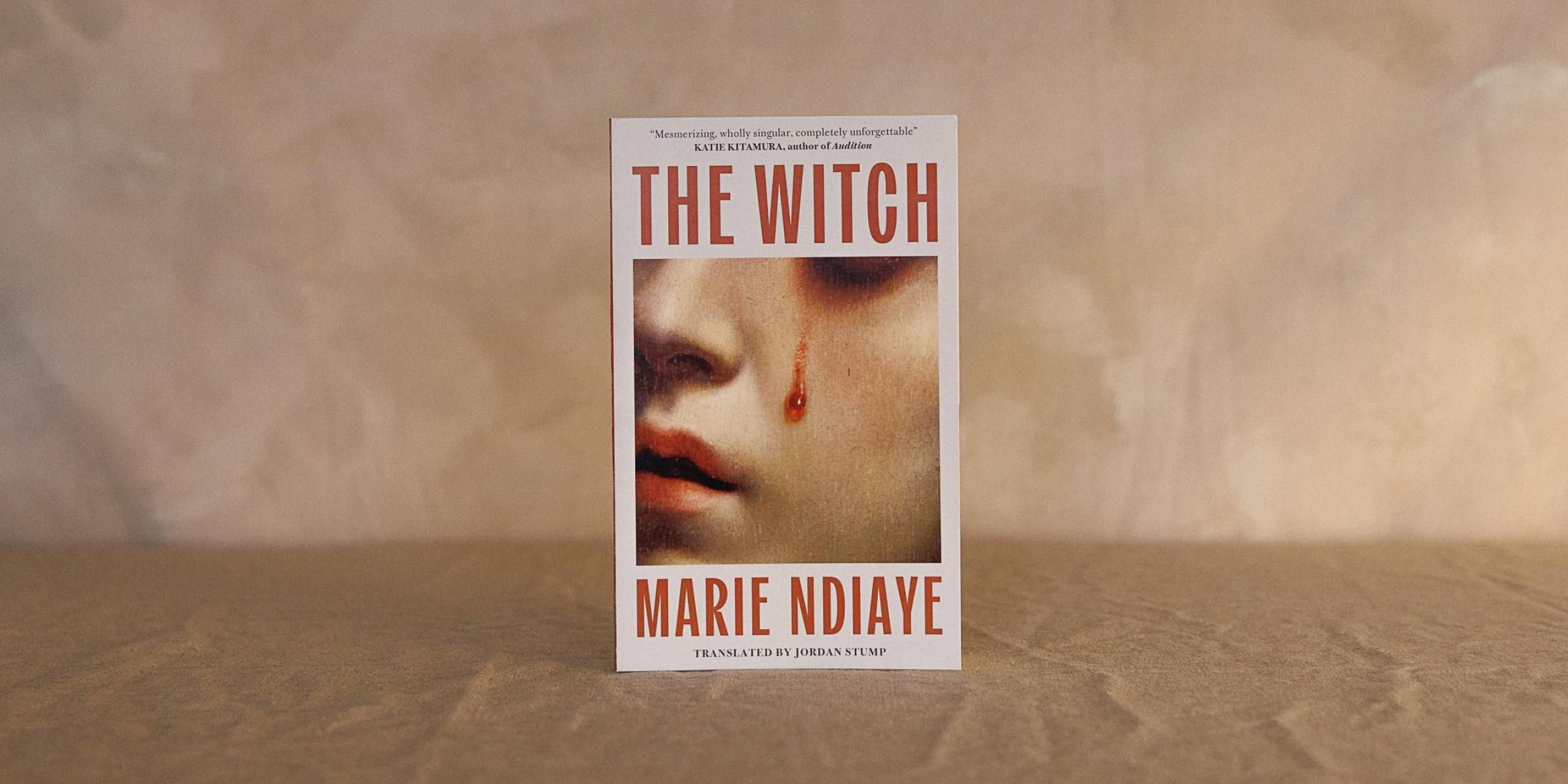
Reading guide: The Witch by Marie NDiaye, translated by Jordan Stump
- Written by
- Helen Babbs and Emily Facoory
- Published
Dreamlike and unsettling, The Witch is set in a small French town where a mediocre witch passes on her gifts to her twin daughters, who turn out to have skills far beyond her own
Whether you’re new to The Witch or have read it and would like to explore it more deeply, here is our comprehensive guide, featuring insights from critics, our judges and the book’s author and translator, as well as discussion points and suggestions for further reading.
Synopsis
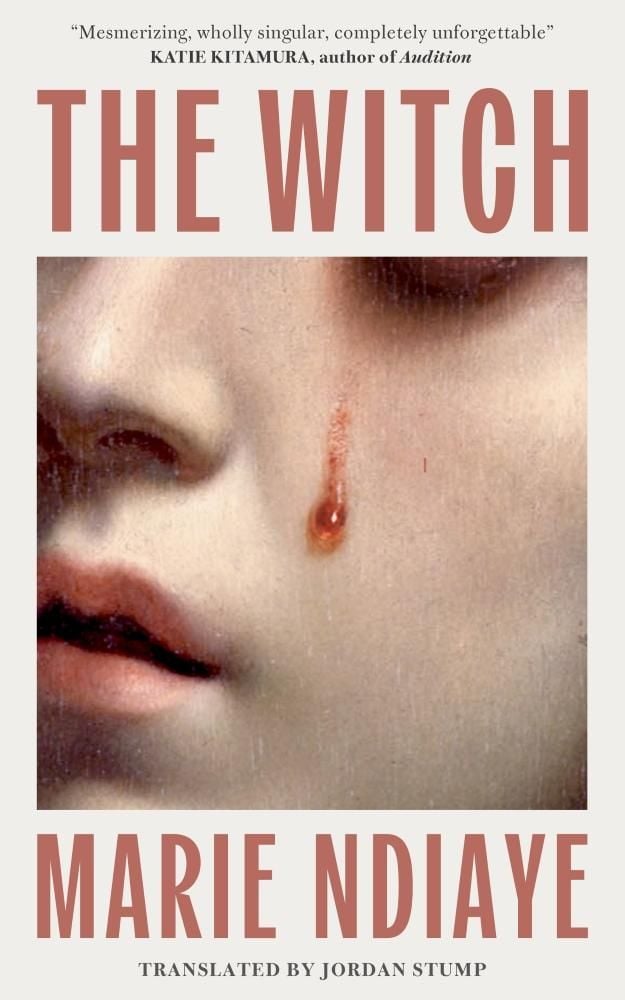
Buy the book
Lucie comes from a long line of witches; powers are passed down from mother to daughter. Her own mother was formidable in her powers, but ashamed of her magic. Perhaps as a result, Lucie’s own gift is weak: she can see into the future, sometimes, but more often she can only see the present of some other location.
Lucie’s own children are initiated into their family’s peculiar womanhood when they reach 12 years of age, and in a few short months, Maud and Lise are crying the curious tears of blood that denote their magical powers. Having learned, they take off quickly and fly the nest. Literally.
The Witch brings the mysteries of womanhood and motherhood into sharp relief and leaves us teetering on the edge, unbalanced, as seemingly unbreakable relationships break down left and right.
The Witch was shortlisted for the International Booker Prize in 2026.
Main characters
Lucie
A suburban witch with little confidence in her abilities. She’s the mother of Maud and Lise and married to the distant and disdainful Pierrot. Lucie feels obligated to pass on ‘the gift’ to her daughters, whose powers end up far surpassing her own. As Lucie’s marriage starts to unravel, she becomes preoccupied with her ageing parents’ failed relationship.
Maud and Lise
Lucie’s 12-year-old twin daughters. The girls are arrogant and aloof, and an increasing mystery to their mother. They’re bored by Lucie’s efforts to pass on her powers, but ultimately embrace their status as witches with much more energy than she ever has.
Isabelle
Lucie’s neighbour and, later, her boss. Isabelle is a busybody and a bully. She often appears out of nowhere, uninvited. Isabelle is the mother of Steve, a young boy whom she treats with cruelty and contempt. Lucie is intimidated by Isabelle and unable to resist her.
About the author
Marie NDiaye was born in France and published her first novel at the age of 17. Her works have won the Prix Femina (Rosie Carpe in 2001) and the Prix Goncourt (Three Strong Women, 2009). Her play Papa Doit Manger has been taken into the repertoire of the Comédie Française.
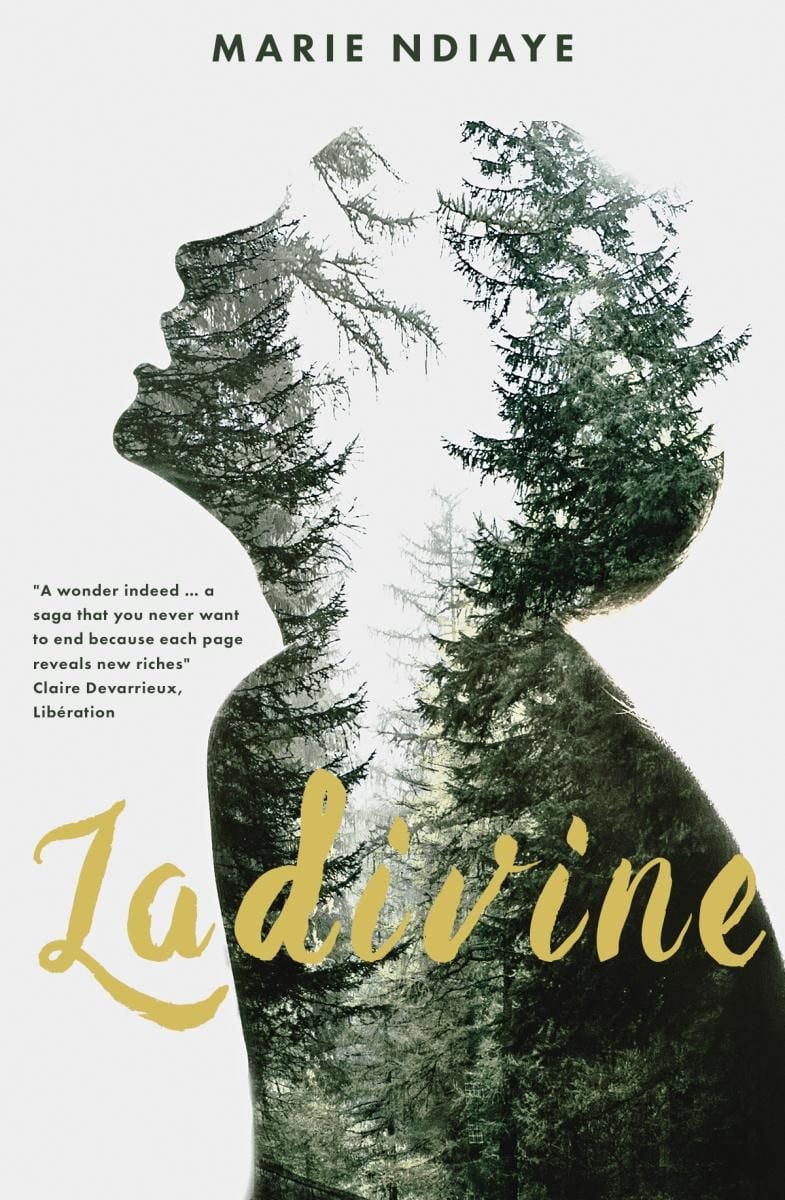
NDiaye’s novel Ladivine (translated into English by Jordan Stump) was longlisted for the International Booker Prize in 2016, and in 2020 she was awarded the Prix Marguerite Yourcenar for her entire body of work. Stump’s translation of her novel The Witch, first published in French in 1996, was shortlisted for the International Booker Prize in 2026.

Marie Ndiaye
© Hélie Gallimard
About the translator
Jordan Stump has translated many authors into English from French, including Marie Redonnet, Eric Chevillard, and Honoré de Balzac. His translation of Jardin des Plantes by Claude Simon won the 2001 French-American Foundation translation prize, and he was named a Chevalier de l’Ordre des Artes et des Lettres in 2006.
Stump’s English language translations of works by Marie NDiaye have been nominated for the International Booker Prize twice. Ladivine was longlisted for the prize in 2016, and The Witch was shortlisted in 2026.

Jordan Stump
– author photo supplied by MacLehose Press
What the judges said
‘Lucie, a long-suffering housewife, inducts her daughters into a secret practice passed down by the women in her family: witchcraft. As the two girls begin to explore their new powers, Lucie’s husband disappears, upsetting the balance of their stifling, suburban life.
‘The language in this novel – and in Jordan Stump’s translation – is exquisite: sentences twist and transform in unexpected ways. Each character is observed with icy precision. Through Lucie’s daughters – with their nonchalant acceptance of the immense power they’re beginning to wield – the nuances of motherhood are brought into sharp focus. The Witch is pure magic.’
What the critics said
Jasmine Vojdani, Vulture
‘Family alienation meets suburban witchcraft in this short, fantastical work from one of France’s greatest living novelists, which is finally getting an English translation nearly 30 years after it appeared in France. Lucie, a middling witch, is instructing her two daughters in the family’s matrilineal talent of seeing the future – visions produce tears of blood – but their professionally disempowered father all but approves. As the bitter marriage at the center of the family unravels, the girls embrace their new gift more fully than Lucie could have imagined. This is NDiaye at her disquieting best.’

The Witch
© India Hobson for Booker Prize Foundation
What the author said
‘I wrote this book in the same way as all my other novels, over about two years. One year of thinking and one year of writing. I was still living in Normandy at the time. My three children were very small. Their presence was a great inspiration for the description of the average-family sort of life you find in the book. I was living that kind of life myself.’
What the translator said
‘Getting the voice right is always paramount in translation, particularly with NDiaye, whose voice is wonderfully hard to pin down even as it is very adamantly itself. Starting from a very bad rough draft, I revise endlessly, always asking myself, “Does this word, this phrase, this ambiguity sound like NDiaye?” – a hard question, particularly given the difficulty of knowing what the meaning of ‘sound like’ is, not to mention that, since it’s in English, none of it will ever sound just like NDiaye.
‘Eventually, after more revisions than I can count, I read through a draft and find a voice emerging that’s not mine, nor exactly NDiaye’s, but that sounds like the voice of this novel. That’s a most exhilarating feeling.’
Questions and discussion points
In an interview with the Booker Prizes, translator Jordan Stump said that ‘the novel’s casual mix of the banal and the magical, the gently comic and the understatedly tragic’ were some of things that made him want to translate The Witch. Did you find this mix of the ordinary and extraordinary appealing, too? What examples stood out for you?
The Witch offers us an unusual and disquieting portrait of motherhood – not just Lucie’s experiences, but also her mother’s and mother-in-law’s, as well as Isabelle’s. What did you make of the mothers you encountered in the book, and the relationships they have with their children?
In the novel, women and girls who have ‘the gift’ cry tears of blood after they perform any kind of magic or divination. What do you think the symbolism of these bloody tears is?
Once they have been initiated as witches, Maud and Lise’s ties to their family weaken and eventually break. Considering their age, did you find what happens to the girls shocking, or something else?
After Pierrot leaves, Lucie becomes preoccupied by her mother and father’s failed marriage and convinced she needs to fix things between them. Why do you think she wants to reunite her parents? Were you surprised by the specific way in which her scheme to bring them together backfires?
The main protagonists in the novel are women, but there are also several male characters within its pages, including Lucie’s husband and her father, who both undergo different but dramatic transformations. How did you feel about the men in The Witch and their interactions with the women around them over the course of the book?
Towards the end of the novel, Lucie takes a job at ‘Isabelle O’s Women’s University of Spiritual Health’, teaching ‘Objective Knowledge of Past and Future for Self and Others’ to 18- to 25-year-olds. What did you make of Isabelle’s educational establishment and Lucie’s involvement with it?
Historically, being set on fire was one of the terrible punishments meted out on women accused of witchcraft. At one point, it seems like Lucie might suffer a similar fate. What did you think of the scenes involving the gendarmerie?
The Witch was originally published in French in 1996, as La Sorcière. The International Booker Prize 2026 judges said, ‘Women in the novel grapple with balancing a career and having a family, division of household labour, social pressure to be “nice”, losing financial independence, and whether to turn ex-husbands into snails. All concerns (except perhaps that last one) that feel crushingly relevant today.’ Do you agree? Could you tell the novel was first published 30 years ago?
In an interview with Vulture, Marie NDiaye said, ‘Staying in an ambiguity, even in a form of discomfort — that suits me very well’. Did you find anything about The Witch to be ambiguous or discomforting? How did that feel as a reader?

The Witch
© India Hobson for Booker Prize Foundation
Resources and further reading
Harshaneeyam Podcast: Jordan Stump on translating Marie NDiaye’s ‘The Witch’
The Booker Prizes: Sarah Bernstein on Marie NDiaye: ‘Her characters and settings remain opaque, they keep their secrets’
The Paris Review: Marie NDiaye, The Art of Fiction No. 268
If you enjoyed this book, why not try





The Witch
- By
- Marie NDiaye
- Translated by
- Jordan Stump
- Published by
- MacLehose Press