
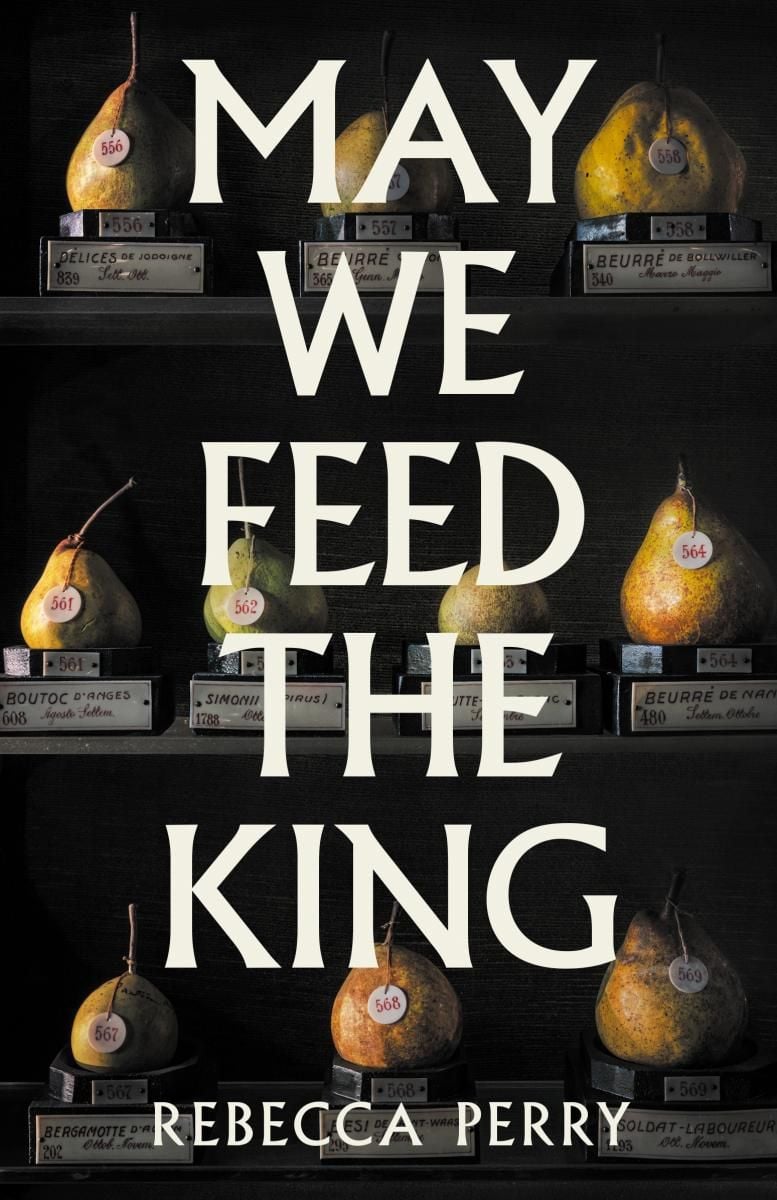

Laced with desire and longing, May We Feed the King is a playful, stirring meditation on history and storytelling: on what makes a King ‘Great’, and a life meaningful
- Published
The author of May We Feed the King, shortlisted for the Booker Prize 2026, on writing in the bath and the poem she re-reads regularly
Buy the book
The inspirations behind my Booker-longlisted book
Two characters – a woman using replica food scenes to conjure spirits in her home and a young attendant to a dying King – came to me separately, and I was writing them in two short stories. At a certain point I realised their world, in a way, was the same one and I embarked on the novel.
I knew I wanted to write historical fiction somewhat outside of the genre and, as the book developed, I became preoccupied by questions of memory, agency and imagination. Concurrently, horrifying global events unfolding on the orders of cruel, tyrannical men began feeding into questions the book had about power and responsibility.
The book that made me fall in love with reading
I had a large hardback book of (what seemed to me like hundreds) of fairy tales. I found them utterly transportive. In particular, I loved a Scottish story called The Black Bull of Norroway – the imagery was out of control (a young woman riding on the back of a bull, eating from its left ear and drinking from its right, a smith making her special iron shoes so she can scale a mountain of ice) and I think that settled somewhere very deeply inside of me.
The book that made me want to become a writer
At the risk of cliché, I never made a decision that I wanted to become a writer – I’ve just written for as long as I can remember. To answer an adjacent question, Percival Everett’s The Trees was the book that opened my mind to the possibility that I might be able to write a novel. It was like a kind of magic – that book and May We Feed the King have almost nothing in common, but I doubt my book would exist without it. And I always credit Federico García Lorca with being the writer that opened my eyes to the capacities of language.
The book I read again and again
I rarely re-read whole books (sorry!), though I often intend to. But I do return to Anne Carson’s ‘The Glass Essay’ all the time – it’s just a masterclass in atmosphere and feeling and precision. True to the winter solstice girlie stereotype, I also take time to read ‘A Nocturnal upon St Lucy’s Day’ by John Donne multiple times every December 21st. It was taught to me so well in school by my English teacher Mrs Peate that I feel it lives in my bones.
The book that changed the way I think about the world
Another Country by James Baldwin, along with pretty much everything else he ever wrote or said, is mind altering. I was also incredibly moved by Buzz by Thor Hanson, on the beauty and necessity of bees.
I love to read on aeroplanes and trains because there’s no danger of suddenly realising or feeling like there’s something else you should be doing
The book that changed the way I think about the novel
I think every novel I read does this in some way, but notable mentions though for The Rehearsal by Eleanor Catton, which I adored, and Margery Kempe by Robert Glück, which is one of the most inventive novels I’ve ever read.
The book I’m reading right now
I have two books on the go, one fiction and one non-fiction, as is often the case! I’m loving a proof of Compensation by Augustine Cerf, out from Fig Tree in January 2027 – it’s outrageous and brilliantly observed and so compelling. I’m also reading Your Presence is a Danger to Your Life: Voices from Gaza by Samar Yazbek (translated by Leri Price), published by Fitzcarraldo. It contains testimony from hundreds of survivors of the Gazan genocide – as you’d expect it’s devastating and astonishing.
Where I most like to read
I love to read on aeroplanes and trains because there’s no danger of suddenly realising or feeling like there’s something else you should be doing. Same for reading on holiday, where often the only responsibility I have is to read. Bonus points if there’s a body of water nearby.
Where and when I most like to write, and the tools I need
At the risk of becoming dubbed ‘the bath woman’, I wrote almost all of May We Feed the King in the bath, with snacks and my cat Patsy sitting beside me looking out of the window onto the garden. I suppose what that tells you is that I need peace, sustenance, water, a wooden bath tray and to be physically constrained.
The Booker-nominated book everyone should read
A truly hideous question! If I had to choose, I’d say The Line of Beauty by Alan Hollinghurst. It’s just canon.
May We Feed the King
- Published by
- Granta
Laced with desire and longing, May We Feed the King is a playful, stirring meditation on history and storytelling: on what makes a King 'Great', and a life meaningful


Features


- Reading guides
Reading guide: May We Feed the King by Rebecca Perry


- Book recommendations
The Booker Prize 2026 shortlist: what our judges said

- Book recommendations