

The Remains of the Day
by Kazuo Ishiguro (prize winner)
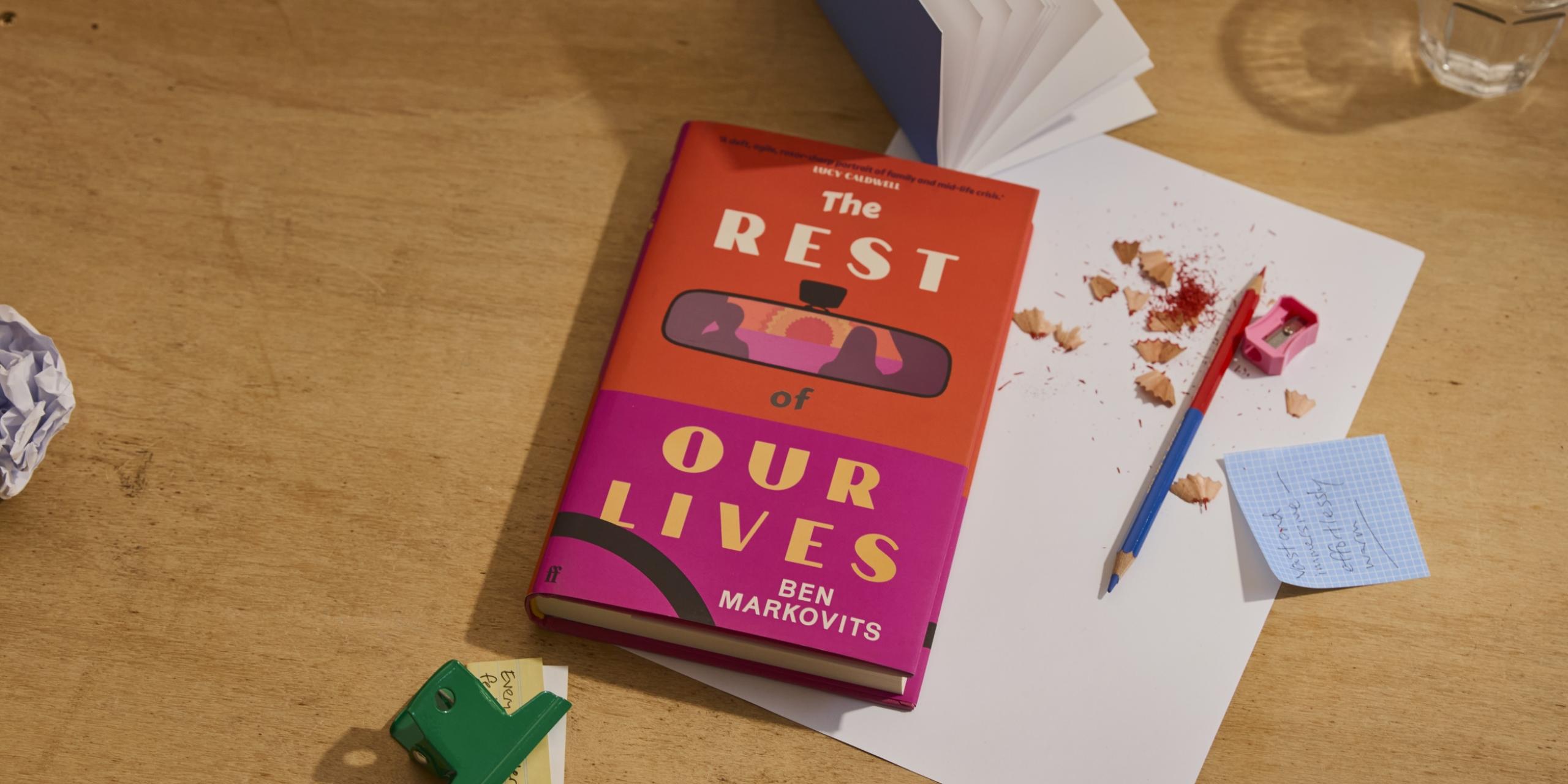
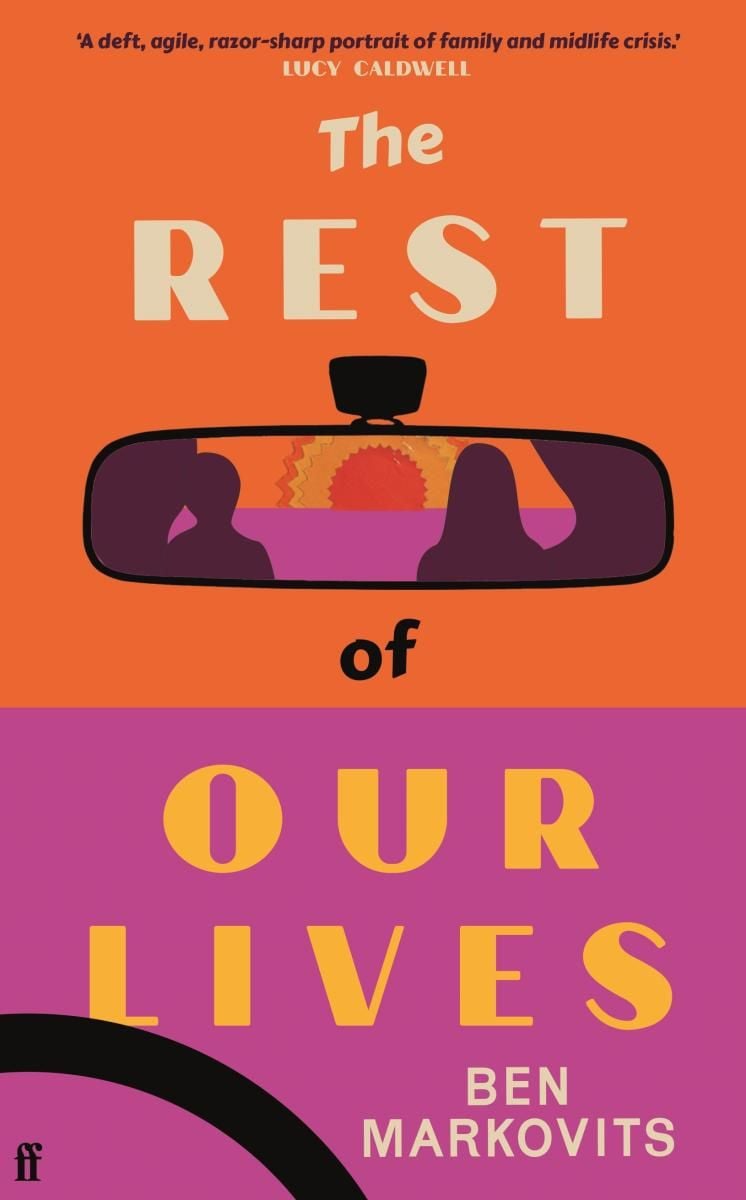
An unforgettable road trip of a novel about a middle-aged academic whose marriage, career and body are failing him
Whether you’re new to The Rest of Our Lives or have read it and would like to explore it more deeply, here is our comprehensive guide, featuring insights from critics, our judges and the book’s author, as well as discussion points and suggestions for further reading.
What’s left when your kids grow up and leave home?
When Tom Layward’s wife had an affair, he resolved to leave her as soon as his youngest child turned 18. Twelve years later, while driving his daughter to Pittsburgh to start university, he remembers his vow.
He is also on the run from his own health issues, and the fact that he’s been put on enforced leave at work – something he hasn’t yet told his wife.
So, after dropping Miriam off, he keeps driving, with a vague plan to visit various people from his past – an old college friend, his ex-girlfriend, his brother, his son – en route, perhaps, to his father’s grave in California.
Pitch perfect, quietly exhilarating and moving, The Rest of Our Lives is a novel about family, marriage and those moments which may come to define us.
The Rest of Our Lives was shortlisted for the Booker Prize 2025.
Tom Layward
Tom is a middle-aged law professor who initially sets out in his car to take his 18-year-old daughter to university. After dropping her off, he decides to continue driving west, visiting family members, friends and an ex-girlfriend, and playing basketball along the way.
Amy Layward
Amy has been married to Tom for 30 years. She had an affair 12 years ago and is afraid that Tom will leave her now that Miriam has left home. She has her own struggles, including unresolved family tension and complex beliefs.
Miriam Layward
Miriam is Tom and Amy’s 18-year-old daughter who is about to begin her studies at Carnegie Mellon university. Her boyfriend has just broken up with her as he believes that they both should have ‘the full college experience’.
Michael Layward
Michael is Tom and Amy’s 24-year-old son. He’s a graduate student, living in Southern California. Tom visits him during his road trip. Unlike his sister, Michael knows about his mother’s affair and is worried about his father’s health.
Novelist Ben Markovits grew up in Texas, London and Berlin. He studied at Yale University and the University of Oxford. After graduating, he became a professional basketball player in Landshut, Germany.
His 11 adult novels include Either Side of Winter, You Don’t Have to Live Like This, The Sidekick and The Rest of Our Lives.
He has published essays, stories, poetry and reviews in the Guardian, Granta, the Paris Review and the New York Times, among others. In 2013 Granta selected him as one of their Best of Young British Novelists and in 2015 he won the Eccles British Library Writer in Residence Award and the James Tait Black Memorial Prize. He lives in London and teaches creative writing at Royal Holloway, University of London.
Ben Markovits
© Kat Green
‘This was something we enjoyed most: the fact that there are several stories, all relevant, seamlessly happening at the same time. The Rest of Our Lives is a basketball novel, a family saga, a book about sickness, and structurally, a road trip chronicle. And because of this road trip schema, this novel naturally became a story about how we say goodbye.’
Alex Preston, Guardian
‘The Rest of Our Lives is another quiet triumph, an elegant, devastating book that lays bare the way time calcifies our failures, how we find ourselves trapped not by circumstance but by the slow erosion of the will to escape. Markovits has long been one of our most under-appreciated novelists; this is yet more proof that he deserves far greater recognition.’
George Cochrane, Telegraph
‘Fluently written and effortlessly wise about families and middle age, it tells a compelling story that packs a serious emotional punch.’
Philip Womack, Times Literary Supplement
‘We all fear irrelevance as technology and society outpace us, and as the young outgrow us. Yet, reading Ben Markovits’s gentle, powerful and funny novel, we are reminded that family love can ground us and keep us together.’
Jude Cook, The Spectator
‘The Rest of Our Lives explores marital breakdown, betrayal, the empty nest and a myriad mid-life malaises, including life-threatening illness. It’s quietly enthralling and full of the small epiphanies that more maximalist writers wouldn’t deem worthy of notice.’
Chris Allnutt, Financial Times
‘Tom may not be an adolescent, but his clumsy rediscovery of freedom after years of stagnant family life is credible and entertaining.’
The Rest of Our Lives by Ben Markovits
© Yuki Sugiura for Booker Prize Foundation
‘A few years ago, I had an idea for the opening line, then sat down and wrote the first page (more or less), and put it aside. Later, I came back to it. My kids were getting older and I wanted to write something about a certain period of family life coming to an end.
‘When I started working on the novel I had symptoms nobody could diagnose and put that in the book, too – it seemed like a useful symbol of what happens to you in middle age, the gradual decline that you can’t quite understand. By the time I finished the first draft both Tom, my narrator, and I knew what we had, and I was going through chemo.’
‘You asked me what the book was about earlier, and my glib answer was that it’s about a guy whose wife had an affair when the kids were small, and he makes a deal with himself that when his youngest leaves for college, he can walk out on the marriage. But the reason that’s not quite right is that he does tell himself that in the aftermath of the affair, but ten years have passed, and part of what he finds awkward and embarrassing about it is that he doesn’t know, even in his own head, what the status of that arrangement that he made with himself is.’
Tom and his wife Amy don’t communicate well, often hiding their true feelings and avoiding difficult conversations. Tom tells himself: ‘If you call Amy now the person you talk to will not be the person in your head, for whom you have these warm and simple feelings. It will be another person, who doesn’t like you much these days, with whom you get into stupid arguments.’ Did you feel that Tom and Amy love each other, despite their problems?
The Booker judges were impressed with the way Markovits, ‘without emulating sentence structure’, evokes several ‘Big Names’ in American literature, including Raymond Carver, Denis Johnson, Philip Roth and John Updike. Did you notice any similarities between the book and those – or other – writers?
Tom is put on leave from work after he gives legal counsel to the owner of a basketball team accused of racism and sexism, and refuses to include pronouns in his email signature. He tells his daughter this but doesn’t tell Amy: why do you think this is?
The Booker Prize judges commented that, ‘The star of this novel is Tom’s voice: the lodestar and the ‘why now’. He is a democratic guide, he’s delightfully embarrassed, and he is as observant as he is negligent. But what’s most impressive is Markovits’ dedication to Tom as an averagely flawed human.’ What did you think of the book’s conversational narrative style? Did you find it engaging, and do you, like the judges, find Tom to be a ‘ridiculously relatable narrator’?
After dropping Miriam off at college, Tom visits an ex-girlfriend, Jill, to whom he hasn’t spoken for around 10 years. Jill says to him, ‘I forgot what you’re like’ and ‘You don’t really care about anything’. Do you think her statement is a fair assessment and in what ways does Tom give her this impression?
Ben Markovits told the Booker Prizes website that the book contains autobiographical elements: ‘My kids were getting older and I wanted to write about a certain period of family life coming to an end.’ While writing the novel, Markovits, like Tom, had undiagnosed symptoms that turned out to be a serious illness. Does knowing this affect your reading of the book and Tom’s portrayal?
Michael’s friend Betty is interested in healing and asks: ‘Is the idea of healing to get you back to the way you used to be or to turn you into something new?’ What do you think of this quote in relation to Michael, or other characters in the book?
There is a scene in the book where Tom comes across a teenage girl on the side of the road. She says she needs help as she’s fallen off her skateboard and asks Tom if he can drive her home. Tom hesitates, unsure if it’s a scam, and decides not to help. What did you make of this interaction and what does it reveal about Tom’s character?
Over the course of the novel, Tom experiences a range of symptoms that clearly indicate a health problem. Why do you think he chose to ignore his symptoms even when his family and friends were so insistent that he seek medical advice? Do you think he knew more than he let on? And what does his response to his symptoms tell us about Tom as a person?
At the very end of the book, the last thing Tom says to Amy is ‘Let’s go home.’ Did you imagine that the couple will be able to mend their relationship and have a future together?
The London Magazine: The Rest of Our Lives: Benjamin Markovits in Conversation
Rippling Pages: Benjamin Markovits on Basketball, Family, and Illness
Lit with Charles: Ben Markovits, author of “The Rest of Our Lives”
3:AM Magazine: A General Love Of Books: An Interview With Benjamin Markovits
by Kazuo Ishiguro (prize winner)
by Graham Swift (prize winner)
by Valeria Luiselli
by Elizabeth Strout
by David Szalay (prize winner)