
‘What we obviously had, even when things smoothed over, was a C-minus marriage, which makes it pretty hard to score much higher than a B overall on the rest of your life’
- Published
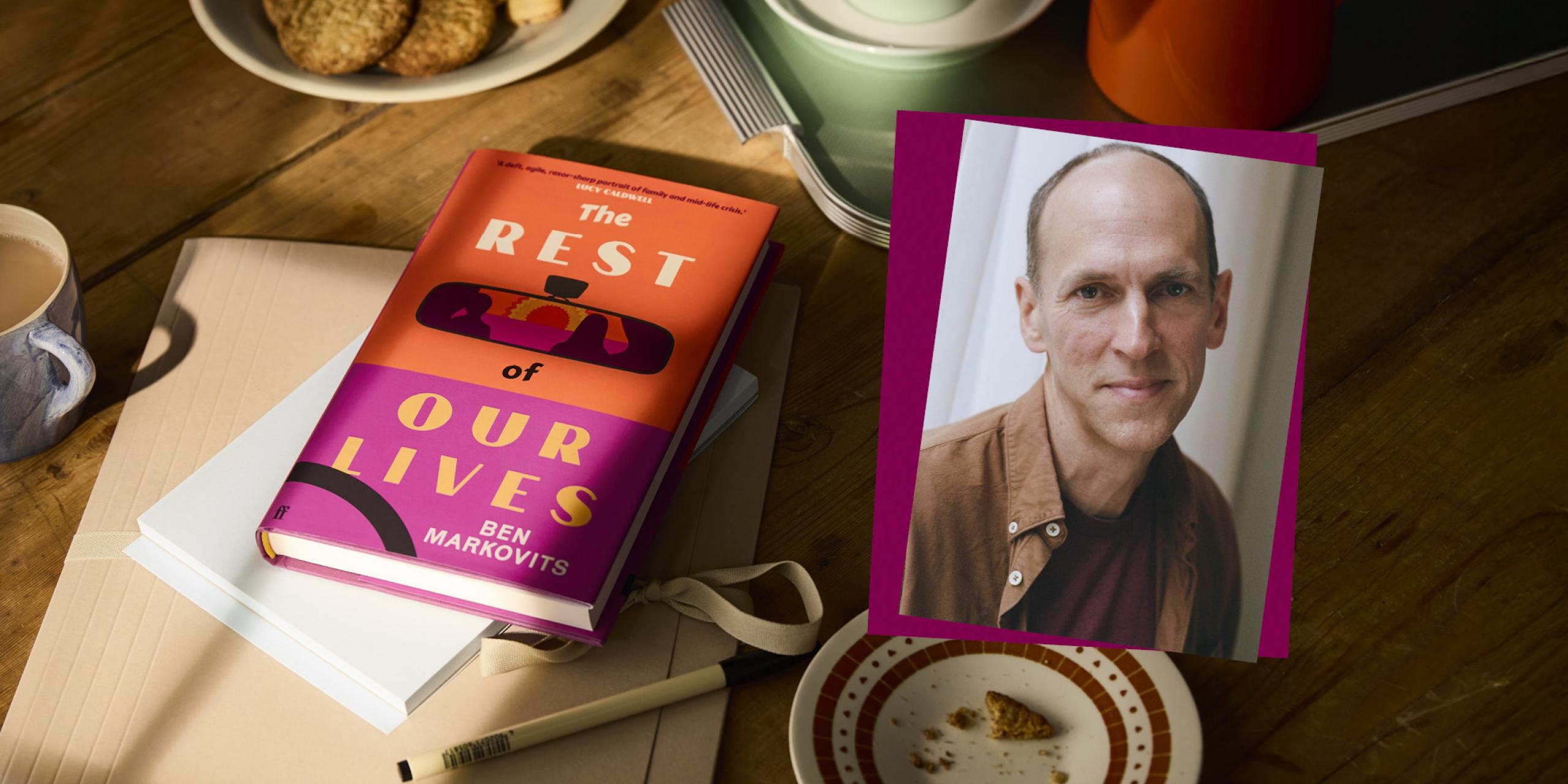
The author of The Rest of Our Lives, shortlisted for the Booker Prize 2025, on writing about middle age, an anthology that inspired him, and the book club that gave him a taste for Philip Roth
Buy the book
The inspirations behind my Booker-longlisted book
A few years ago, I had an idea for the opening line, then sat down and wrote the first page (more or less), and put it aside. Later, I came back to it. My kids were getting older and I wanted to write something about a certain period of family life coming to an end.
When I started working on the novel I had symptoms nobody could diagnose and put that in the book, too – it seemed like a useful symbol of what happens to you in middle age, the gradual decline that you can’t quite understand. By the time I finished the first draft both Tom, my narrator, and I knew what we had, and I was going through chemo.
The book that made me fall in love with reading
For my bar mitzvah, somebody gave me a copy of Edith Sitwell’s Atlantic Anthology of British and American Poetry – for which she wrote a series of eccentric but also wonderful introductions to the poets she admired. This is the kind of thing she wrote: ‘Swinburne had one of the most flawless and wonderful vowel techniques in our language’. I didn’t know anyone had a vowel technique, but it opened up a world where writers seemed to be talking to each other through time. After that I started chasing down old volumes in second-hand bookshops. I liked the way one book led to another.
The book that made me want to become a writer
When I was 17, my family lived in Berlin for a year. We had moved often in my childhood, but for some reason I had reached the limit of how often I was willing to start over socially. So I read instead, any English-language books I could lay my hands on. One of them was Goodbye to All That by Robert Graves. Something about the low-key prose, his descriptions of teenage awkwardness, his interest in family and writing, hooked me, as much as his account of the First World War. I reread it several times that year, just for its conversational stye. It kept me company.
The book I read again and again
Pnin by Nabokov. Partly because I teach it but also because I love it – I’m always glad to come back to it. It’s very clever, but very warm, too. One of the great things about it is that, even though on some level it’s a novel about the culture gap between Russians and Americans (and the misunderstandings between them, often played for comedy but not always), Pnin loves America, and most of the Americans get and are charmed by Pnin.
When I started working on the novel I had symptoms nobody could diagnose and put that in the book… By the time I finished the first draft both Tom, my narrator, and I knew what we had, and I was going through chemo
The book that changed the way I think about the world
Moneyball by Michael Lewis, his account of the 2002 Oakland As, who are trying to compete with big baseball clubs like the Yankees on a much smaller budget. It’s really a book about storytelling. Lewis describes different factions on the As, the scouts, the players, the managers, the analytics nerds, who each have a story to tell about what works and what doesn’t. The argument is that if you can identify the ‘real story’, you’ll win. But the book turns out to be more complicated than that. Even though Lewis sides with cold analytics in the end, he’s still clearly in love with more conventional narratives, of failure and redemption.
The book that changed the way I think about the novel
The Adventures of Augie March by Saul Bellow. I didn’t know you could write like that. Athletes when they move seem not just stronger and quicker than most people, but somehow more natural, too; that’s how he wrote.
The book I’m reading right now
The Party by Tessa Hadley. Her books are very good at capturing the intensity of ordinary life, but there’s also an element of fun – you can feel the pleasure she took in writing them. This one starts out with a woman on her way to a party. She gets changed after leaving the house, to hide her outfit from her parents.
The Booker-nominated book everyone should read
Quartet in Autumn by Barbara Pym. I’ve been on a Pym kick this year. Philip Larkin, who was one of the judges, once wrote about her protagonists that they tempered ‘an ironic perception of life’s absurdities with a keen awareness of its ability to bruise’. The early novels are funny and sharp; Quartet in Autumn is later and heavier and sadder.
Where and when I most like to write, and the tools I need
I have a desk in a corner of the sitting room, and I try to write more or less from breakfast until lunch. All I need is the computer.
My dream book club, what we’d read, and where we’d meet
I was only in a book club once, years ago, and I mostly failed to read the book under discussion, though it did give me my first taste of Philip Roth. I suppose my answer should include the writers who have meant most to me, like Roth and Henry James and Jane Austen, Byron, Philip Larkin, Alice Munro, Larry McMurtry. (The list is much longer.) But the truth is, I don’t know that I’d really like to meet them; it’s enough to read them. So I’ll choose instead some of the people I’ve always liked talking books with, my high school and college buddies, a few grown-up friends, siblings, my wife and my kids. We’d meet at the Salt Lick, a BBQ restaurant outside Austin, and discuss, I suppose, Roth and James and Austen…
The Rest of Our Lives
- Published by
- Faber
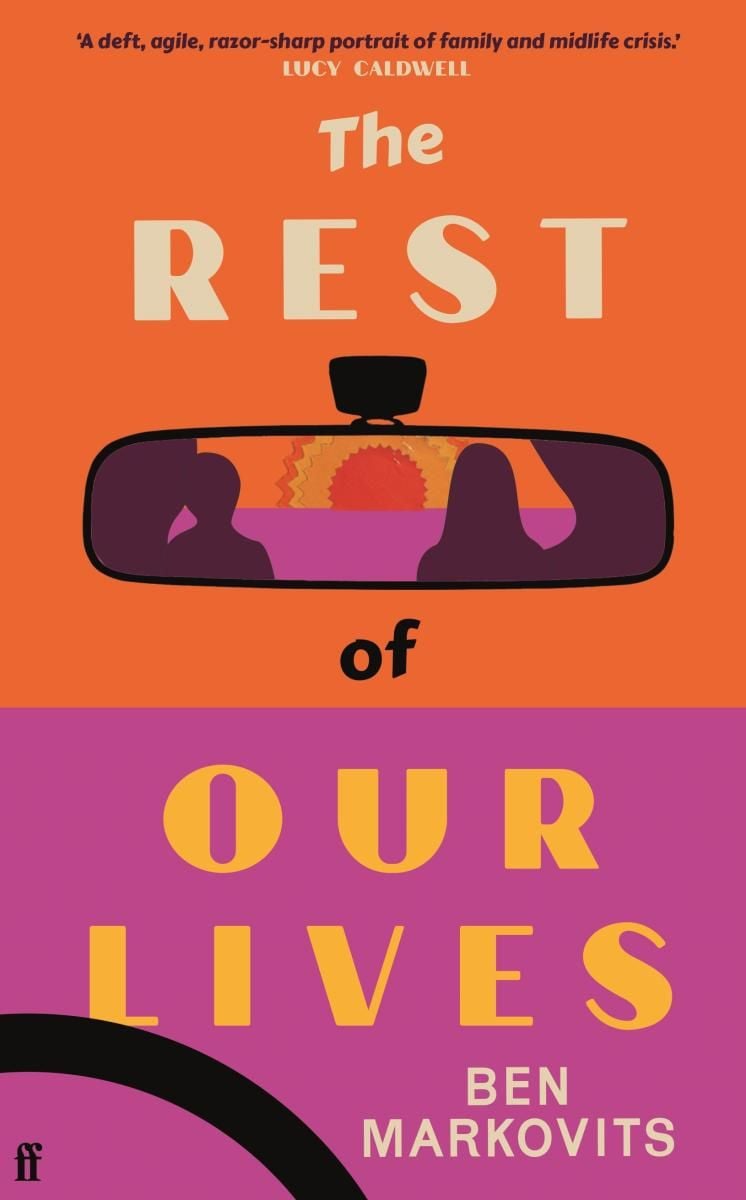
An unforgettable road trip of a novel about a middle-aged academic whose marriage, career and body are failing him


Features

- Book recommendations
10 Booker Prize-nominated books that explore mid-life crises

- Book recommendations
The Booker Prize 2025 longlisted authors on the books they reread again and again

- Book recommendations
The best children’s books for Christmas written by Booker Prize authors

- Book recommendations