
- Book recommendations
An extract from The Rest of Our Lives by Ben Markovits
An extract from The Rest of Our Lives by Ben Markovits
- Written by
- Ben Markovits
- Published
The Rest of Our Lives is shortlisted for the Booker Prize 2025. Read an extract here
What’s left when your kids grow up and leave home?
When Tom Layward’s wife had an affair, he resolved to leave her as soon as his youngest daughter turned 18. Twelve years later, while driving her to Pittsburgh to start university, he remembers his pact.
He is also on the run from his own health issues, and the fact that he’s been put on leave at work after students complained about the politics of his law class – something he hasn’t yet told his wife.
So, after dropping Miriam off, he keeps driving, with the vague plan of visiting various people from his past - an old college friend, his ex-girlfriend, his brother, his son - on route, maybe, to his father’s grave in California.
Pitch perfect, quietly exhilarating and moving, The Rest of Our Lives is a novel about family, marriage and those moments which may come to define us.
The Rest of Our Lives is published in the UK by Faber. This extract is taken from the novel’s opening chapter.
Buy the book
When our son was twelve years old, my wife had an affair with a guy called Zach Zirsky, whom she knew from synagogue. He was a little younger, three or four years, had three boys, all younger than our two kids, but was in some sense in the same position as my wife – they both had partners who made good money, which meant they didn’t have to do much and got bored and restless and maybe even depressed. Zach’s wife was head of oncology at Westchester County. I saw Zach touch Amy’s hand under the foldout table at the Purim food bank drive, under the paper cloth. He was short, about five-eight, broad shouldered and dark. He wore linen shirts open at the chest; his chest hair had started going gray. On Sundays, he played guitar for the kids at Temple Beth and taught them Jewish songs, like “Spin Spin Sevivon” – very pro-Israel, in a tree-planting, happy-clappy way. He was the kind of guy who danced with all the old ladies and little pigtailed girls at a bar mitzvah, so he could also put his arm around the pretty mothers and nobody would complain. Even before I saw them holding hands I didn’t like him.
My parents are Catholic but my dad thought religion was just a big fancy dress party, and he hated fancy dress. Maybe this is why I never got involved in the synagogue, which meant Amy had a whole social network where she had an identity and I didn’t.
She told me about Zach after I already knew and after it was already over. Amy had highly developed guilt feelings, which were so strong she couldn’t help being mad at whoever she felt guilty toward. Which was often me. She said she wanted to make me mad, too; she just wanted some kind of reaction, that’s all she was looking for, but that’s not really my style. If there’s something you can do to fix something, I try to do it. But in this case, I wasn’t sure what. She said, you don’t feel anything about anything. I said, everything I do I do for you and the kids. Nothing else matters to me.
So what do you want to do? I asked her. Do you want a divorce?
But she didn’t want that. At least, not until the kids had left home – the home and the kids were all she had to show for the last twelve years of her life. The thing with Zach didn’t mean anything. It was more like a kind of self-harm. (She knew that I knew that when she was a teenager she used to cut herself on the thigh.) A bid for attention. But Amy’s a person who tells stories about her motives and actions, which are very persuasive, to her as well, so it’s sometimes hard to talk about or even work out what’s really going on.
You fall in love with somebody when you’re twenty-six, and you see them in all kinds of different lights and according to their potential, but after years and years of marriage and shared parenting and all the other shared decisions you have to make just to get through the days, you accumulate a lot of data about that person that after a while just seems … more or less accurate. If you continue to have illusions, that’s your fault. So if you stay married it’s because you’ve accepted that this is what they’re like, and what your life with them is like, and you stop expecting them to do or give you things you know perfectly well they’re unlikely to do or give you. It’s like being a Knicks fan.
But I also made a deal with myself. When Miriam goes to college, you can leave, too. Maybe this was just another one of those illusions, but it helped me get through the first few months after Amy told me about Zach, and for the sake of the kids we had to pretend that everything was fine. When in fact what we obviously had, even when things smoothed over, was a C-minus marriage, which makes it pretty hard to score much higher than a B overall on the rest of your life.
What we obviously had, even when things smoothed over, was a C-minus marriage, which makes it pretty hard to score much higher than a B overall on the rest of your life
Twelve years later, Miriam turned eighteen. We spent the first few weeks of August on Cape Cod. Amy’s family had a house in Wellfleet, which you had to book a year in advance; and even then there was a lot of overlapping and arguing about beds. It had a studio in the yard where you could potentially sleep as many people as you had mattresses for, and for that reason, in one corner there was a pile of old mattresses under the eaves. If you didn’t mind sharing a bathroom or walking out in the morning to take a leak off the deck. Normally I stayed in the city and came up only on the weekends, but it was Miriam’s last summer at home, so I took two weeks off.
Amy’s big brother Richard had the main house with his new wife – they had a new baby. His other two kids were in their thirties, one of them had a baby of her own. That’s why they got the house and we got the studio, which seemed reasonable to me, although Amy thought it was just another example of how her family prioritized Richard. Her dad, whom she idolized, had died years ago, when Amy was still in high school. Her relationship with her mother was more complicated. Anyway, one of the funny little things that happened is that Esther (Amy’s mother) let Richard and Kelsey stay in the master bedroom, which had the only en suite, even though in the past when we shared the house with Esther, she insisted on sleeping in her own room. That’s because Tom only comes for the weekend, she explained. (I’m Tom.)
So on some level of course it was my fault.
But there are too many Naftalis to keep track of them all, and most of them don’t matter to this story.

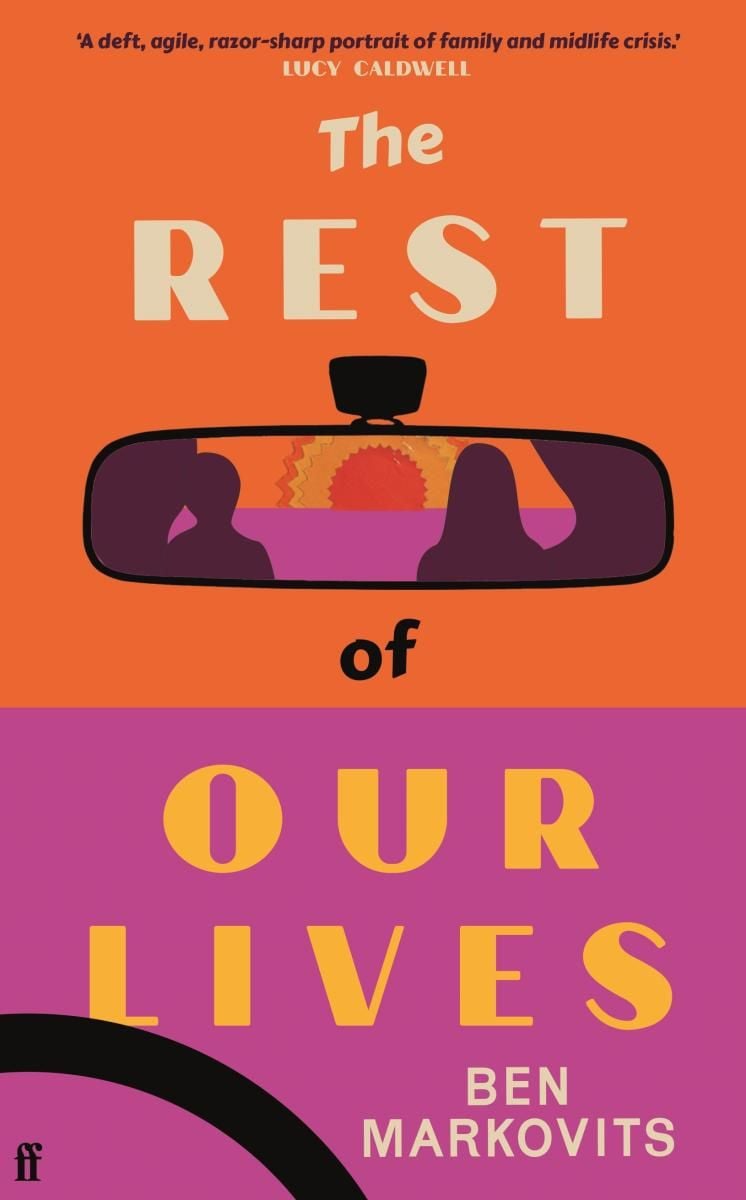
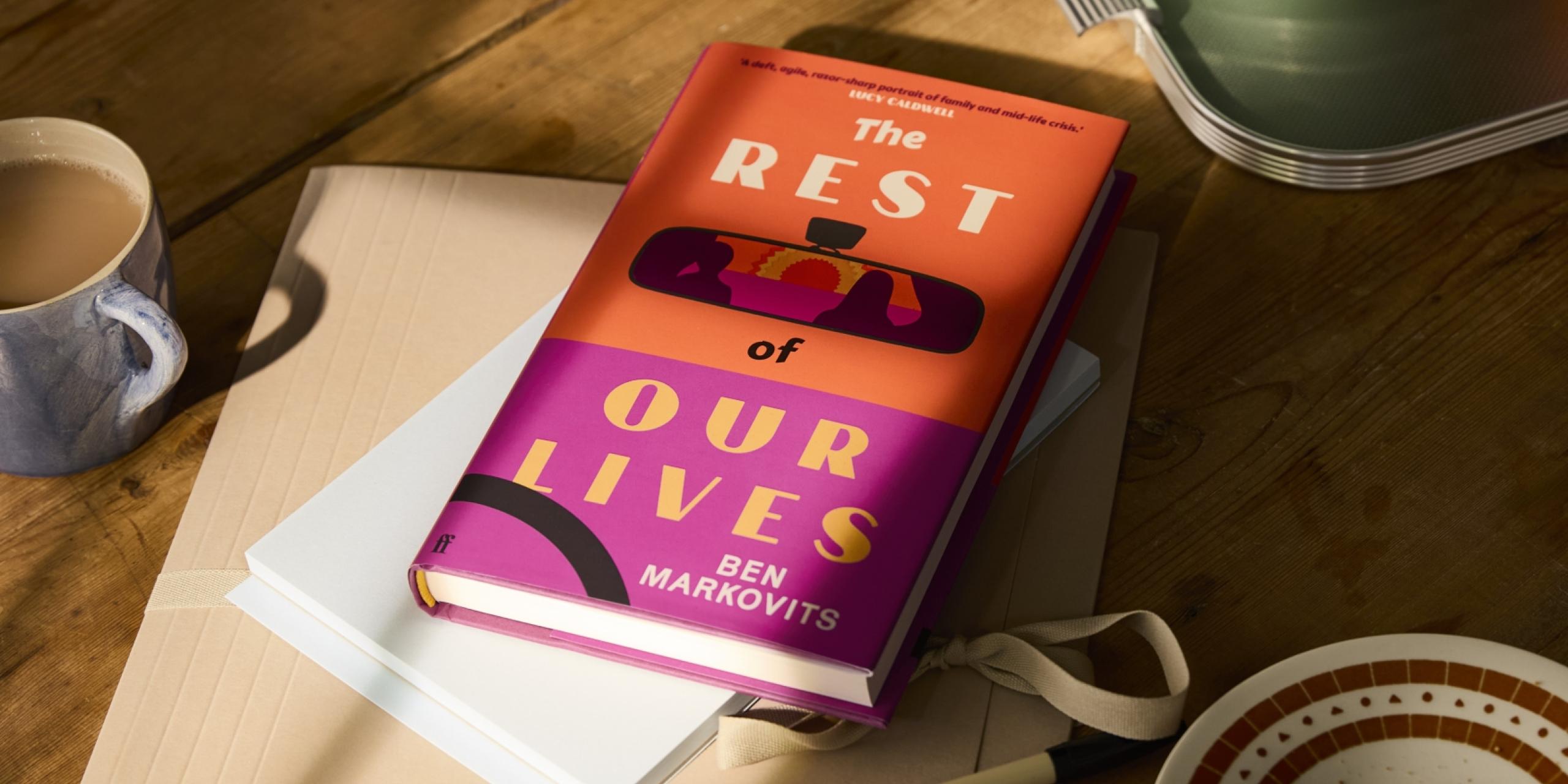
The Rest of Our Lives by Ben Markovits
© Yuki Sugiura for Booker Prize Foundation
The Rest of Our Lives
- Published by
- Faber
An unforgettable road trip of a novel about a middle-aged academic whose marriage, career and body are failing him
Features

- Book recommendations
The Booker Prize 2025 longlisted authors on the books they reread again and again

- Book recommendations
The best children’s books for Christmas written by Booker Prize authors

- Book recommendations