Reading guide: On Earth As It Is Beneath by Ana Paula Maia, translated by Padma Viswanathan
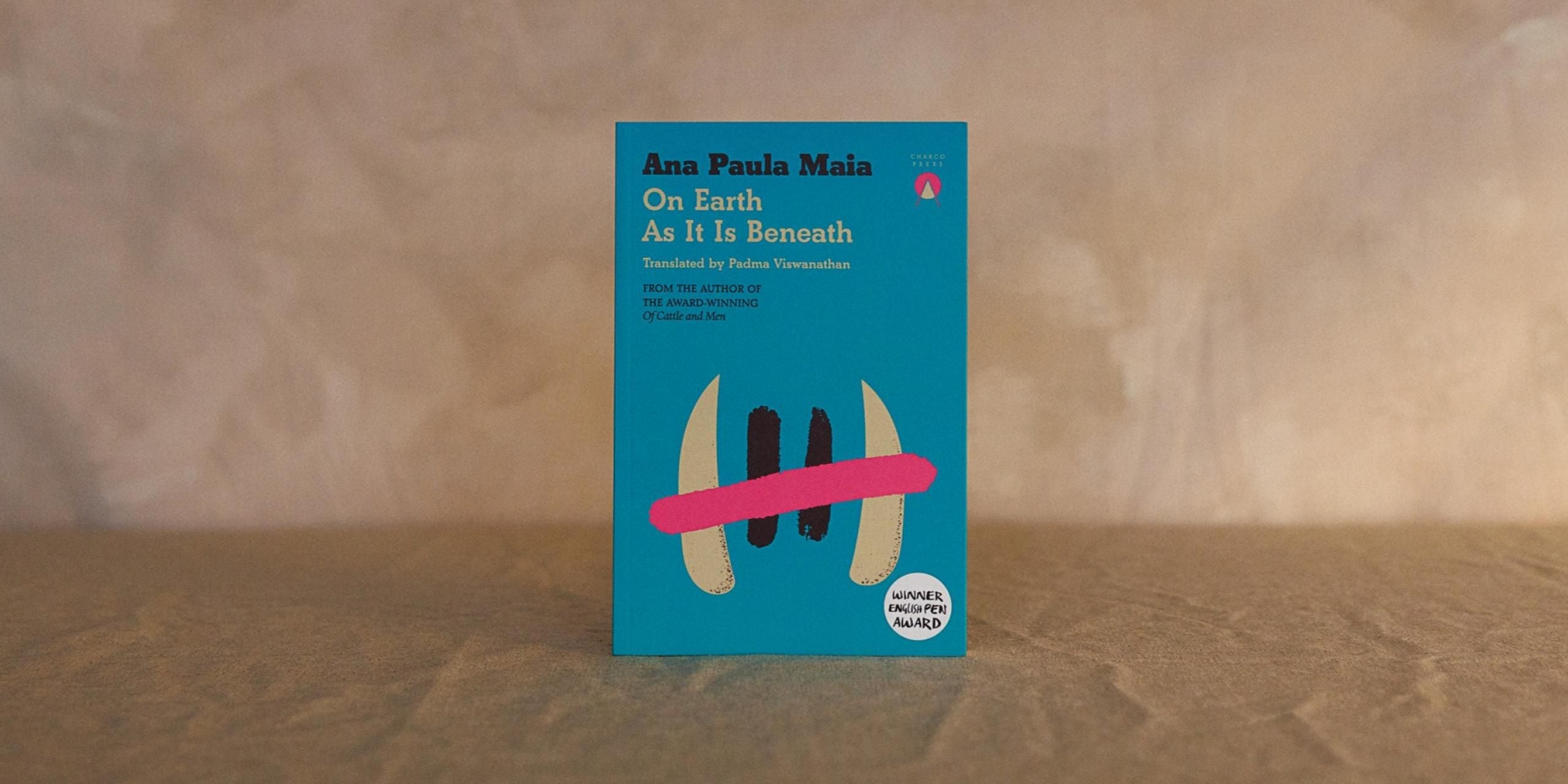
Reading guide: On Earth As It Is Beneath by Ana Paula Maia, translated by Padma Viswanathan
- Written by
- Helen Babbs and Paul Davies
- Published
Stark and unsettling, On Earth As It is Beneath is set in a forgotten prison in remote Brazil where life has taken a sadistic, deadly turn
Whether you’re new to On Earth As It Is Beneath or have read it and would like to explore it more deeply, here is our comprehensive guide, featuring insights from critics, our judges and the book’s author and translator, as well as discussion points and suggestions for further reading.
Synopsis
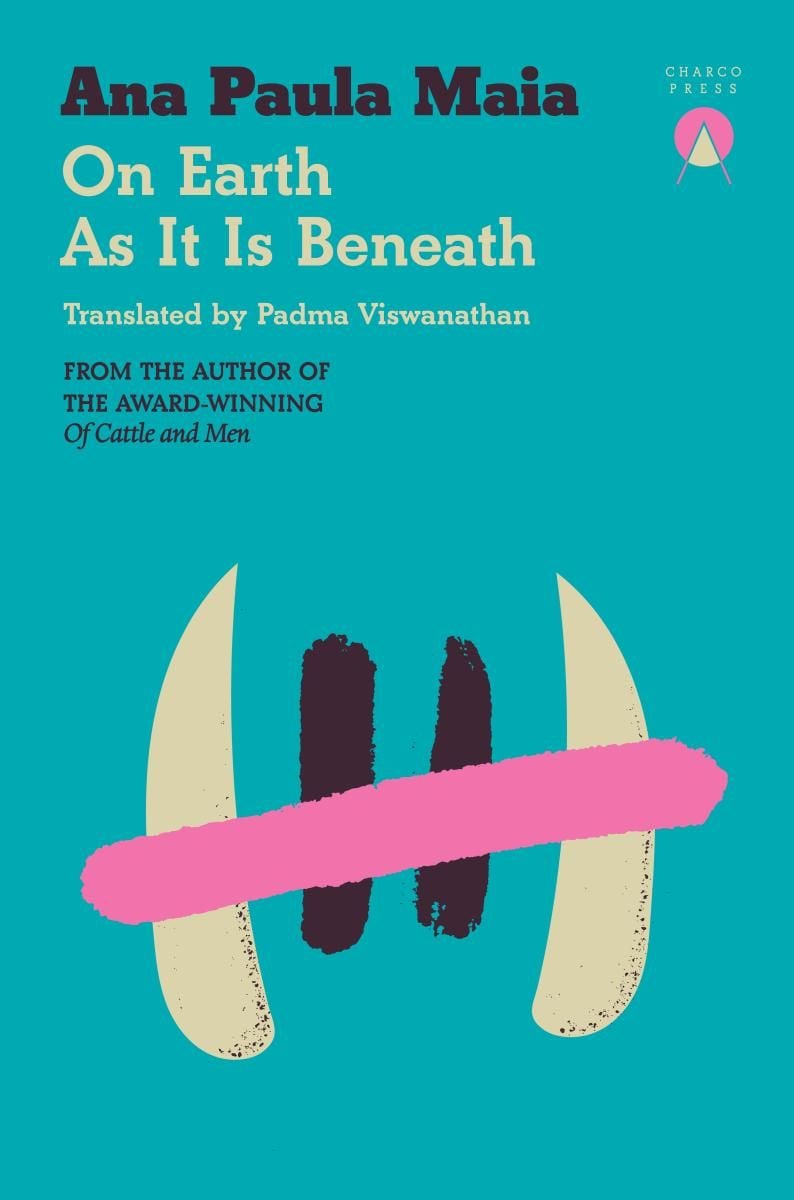
Buy the book
On land where enslaved people were once tortured and murdered, the state built a penal colony in the wilderness, where inmates could be rehabilitated, but never escape. Now, decades later, and having only succeeded in trapping men, not changing them for the better, its operations are winding down.
But in the prison’s waning days, a new horror is unleashed: every full-moon night, a selection of inmates are released, the warden is armed with rifles, and the hunt begins. Every man plans his escape, not knowing if his end will come at the hands of a familiar face, or from the unknown dangers beyond the prison walls.
On Earth As It Is Beneath was shortlisted for the International Booker Prize in 2026.
Main characters
Bronco Gil
A tough, physically imposing prisoner, also known as ‘Indian’. Convicted of murder, he knows he is not a good man and believes he will die in jail. However, he thinks about escape often. Gil also appears in Ana Paula Maia’s novel Of Cattle and Men.
Melquíades
The prison warden. Melquíades is violent, psychopathic and unpredictable. After receiving news that the penal colony is to be shut down, he becomes even more frightening and sadistic.
Valdênio
A prisoner and cook. Valdênio is 65 and has spent half of his life incarcerated in some way. He is institutionalised and no longer wants his freedom.
Pablo
A prisoner. He works alongside Valdênio in the prison kitchen. After noticing a weakness in the walls surrounding the prison, Pablo starts to plot his escape.
Taborda
The prison guard. Taborda has worked as a prison guard for 10 years. He does as he is told, obeying Melquíades’ every order, although with a heavy heart. He is afraid of his boss. Trapped, he doesn’t seem all that different from the prisoners he watches over.
About the author
Ana Paula Maia was born in Nova Iguaçu, Brazil. She is an author and scriptwriter and has published seven novels, including O habitante das falhas subterráneas (2003), De gados e homens (2013), and the trilogy A saga dos brutos, comprising Entre rinhas de cachorros e porcos abatidos (2009), O trabalho sujo dos outros (2009) and Carvão animal (2011). Her books have been published in translation in Germany, Argentina, France, Italy, Serbia, the United States and Spain.
She is also the author of many short stories that appear in anthologies and which have been translated into languages including German, Croat, Spanish, English and Italian. Her novel A guerra dos bastardos (2007) won praise in Germany as among the best foreign detective fiction. As a scriptwriter she has worked on a wide range of projects for television, cinema and theatre.
She has won the Prêmio São Paulo de Literatura: Melhor Romance do Ano prize two years in a row: in 2018 for her novel Assim na Terra como embaixo da Terra, and in 2019 for Enterre Seus Mortos.

Ana Paula Maia
© Pablo Contreras
About the translator
Padma Viswanathan is a Canadian-American writer and translator. Her novels have been published in eight countries and shortlisted for the PEN USA Prize, the Scotiabank Giller Prize, and others.
She has published short fiction, essays and translations in Granta, The Boston Review, BRICK, and elsewhere. Full-length translations include São Bernardo by Brazilian novelist Graciliano Ramos and Where We Stand by Djamila Ribeiro. Her most recent novel, The Charterhouse of Padma, was published in 2024.
She is Professor of Creative Writing at the University of Arkansas-Fayetteville, where she is Founding Director of the Arkansas International Writer-at-Risk Residency Program.

Padma Viswanathan
© Alex Tran
What the judges said
‘Set in a remote penal colony built on land scarred by slavery and colonialism, this vivid and haunting novel unfolds in a landscape where punishment has replaced justice and cruelty has become the norm. As the colony nears its end, the warden introduces a ritualised full-moon hunt, releasing prisoners into the forest for sport.
‘Through spare yet masterful prose, Ana Paula Maia renders a closed world thick with dread, brutality and moral decay. The prisoners and guards alike are trapped within a system that corrodes and suffocates everyone it touches. On Earth As It Is Beneath is a stark, unsettling exploration of power, violence, destruction and institutional corruption that will linger with readers long after the final page.’
What the critics said
Gabino Iglesias, New York Times
‘It is inventive and unflinching. And while the atmosphere is heavy with brutality and murder, Maia’s prose offers the perfect counterbalance – it is beautiful and gripping.’
Leo Boix, Morning Star
‘By the time the book reaches its chilling conclusion, Maia has delivered a masterclass in suspense and allegory, a hypnotic descent into the underworld of cruelty and survival.’

On Earth As It Is Beneath
© India Hobson for Booker Prize Foundation
What the author said
‘I write stories that reflect man’s relationship with work, and how performing certain daily tasks affects and shapes his worldview, and builds his character and opinions. This structure is part of all my books, and in the case of On Earth As It Is Beneath specifically, the confined space in which convicted criminals receive a second sentence was challenging…
‘I wanted to talk about the prison system. Not to judge it, but to try and get a deeper understanding of it. It took me about seven months to write this book. I did a lot of research reading newspapers articles, public statements, and so forth, but more than anything else, I spent a lot of time reflecting about it all.’
What the translator said
‘I wanted to capture the book’s blocky, roughhewn language, tenderness toward the prisoners and occasional elevation into lyricism or vaguely biblical tones.
‘Repetition is key, with the original sin of slavery echoing as a curse down the ages. The vocabulary is straitened and incantatory, a constant reminder of the men’s confinement and the way the penal colony bears the past’s unreconciled atrocities into the present – cycles of haunting that tighten until they throttle whoever is left.’
Questions and discussion points
The prison warden Melquíades is a frightening presence throughout; his behaviour violent and unpredictable – he may even have been driven insane. What did you make of him as a character and why do you think he has come to behave in this way?
The prisoners all wear electronic tags attached to their ankles, believing them to be bombs that will explode if they go beyond the prison colony’s walls. Why are these tags important and what do you think they symbolise?
In a review in The Hindu, Vasudevan Mukunth writes: ‘The text is guided by Maia’s female authorial gaze that strips the hyper-masculine colony of its traditional patriarchal glamour. Male authors writing about male prisons or violent outlaws often romanticise the “tough guy”, but Maia refuses to validate the violence.’ Would you agree that Maia’s female lens brings something different to this story of a male-only environment and the dark side of masculinity?
At one point, Taborda tells Heitor, a visitor from the justice department, ‘Whenever we dig a hole in the ground, we usually find others buried. All that’s left are bones with ropes tied around the wrists and ankles. There are more men underneath than up here, that’s for sure.’ At another moment, a coffin filled with children’s bones is discovered. What do you think is the significance of the bodies buried on the site of the prison, and how does what’s buried underground relate to the horrors on the surface?
Ana Paula Maia’s work has been compared to that of Cormac McCarthy in its depiction of bleak landscapes and humanity’s capacity for violence. If you are familiar with McCarthy’s work, do you see similarities between the two authors?
In an interview with the Booker Prizes, translator Padma Viswanathan described the vocabulary in the novel as ‘straitened and incantatory, a constant reminder of the men’s confinement and the way the penal colony bears the past’s unreconciled atrocities into the present’. What did you think of the language and use of repetition in the novel? In what ways do they feed into an atmosphere of dread and entrapment?
The judges said that ‘Bronco Gil is perhaps the most memorable presence in the novel: a quiet, intimidating figure whose past is marked by violence, yet who occasionally reveals moments of unexpected tenderness. That tension between brutality and vulnerability makes him strangely human and deeply compelling, and we root for him despite his past.’ What did you think of Bronco Gil and how his character develops? By the end of the book, do you feel hopeful for his future?
Author Ana Paula Maia said in an interview with the Booker Prizes, ‘The more I reflected on the prison system in Brazil and other parts of the world, the more I realised that beyond the application of laws to criminals, in the end, we are all imprisoned in this world, with walls that may or may not be visible.’ What do you think she means by this and do you agree?

On Earth As It Is Beneath
© India Hobson for Booker Prize Foundation
Resources and further reading
India Express: ‘Tamil is my next project’: Booker-longlisted translator Padma Viswanathan
PEN Transmissions: ‘Nausea: An Interview with Ana Paula Maia’
Buenos Aires International Literature Festival: Interview with Ana Paula Maia
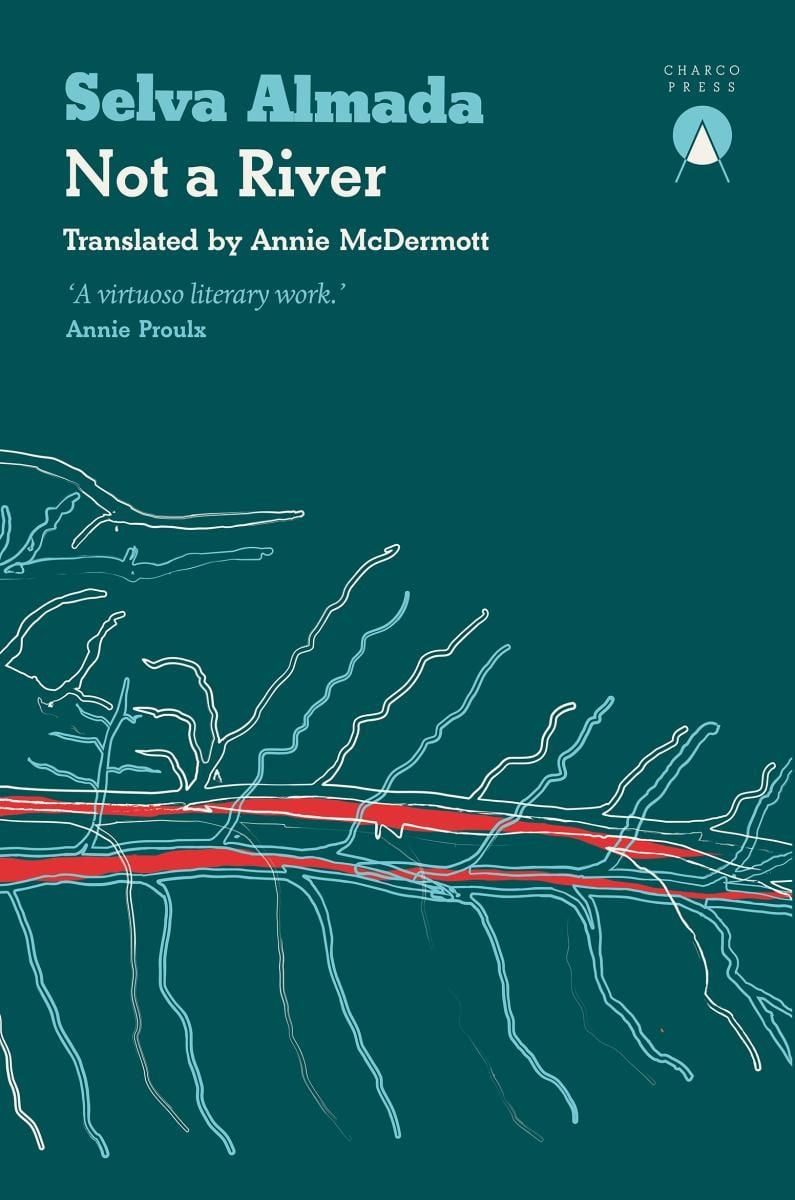
If you enjoyed this book, why not try





On Earth As It Is Beneath
- Translated by
- Padma Viswanathan
- Published by
- Charco Press