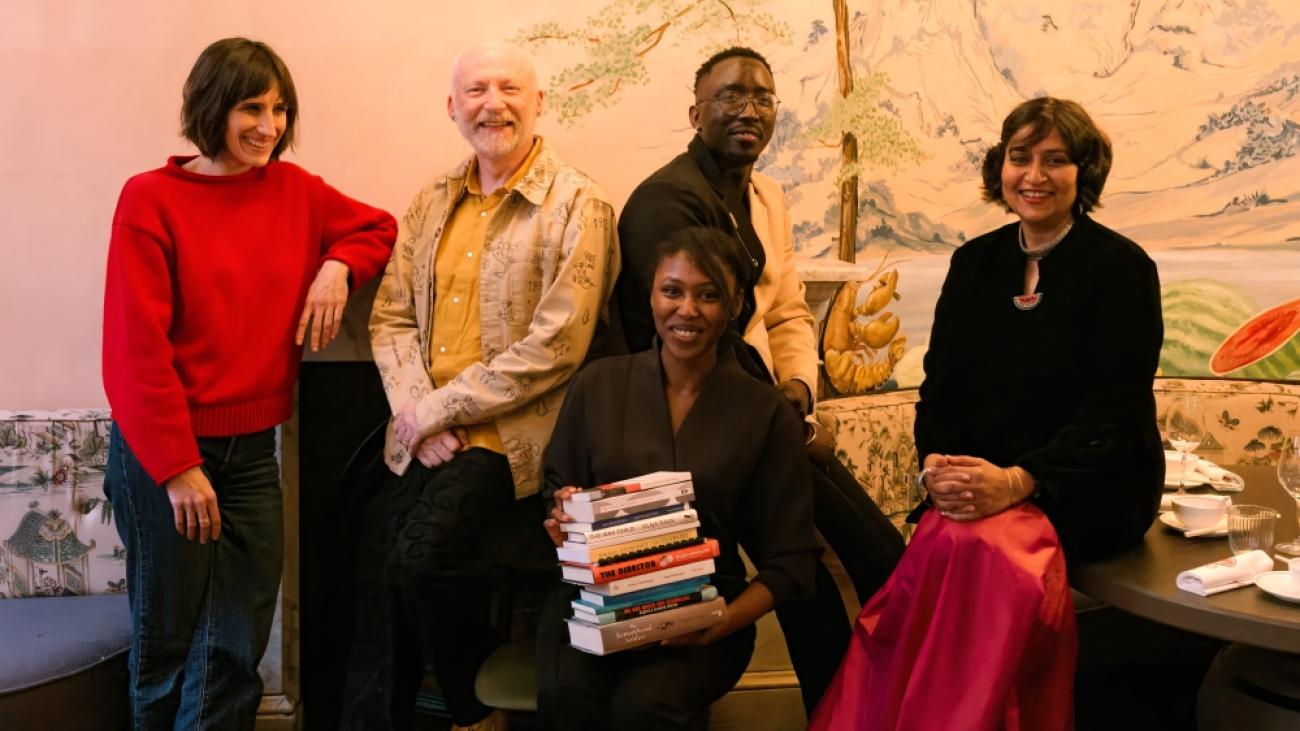

From witchcraft to warfare, trauma to transformation, resilience to cruelty, this year’s longlist shines a light on a vast range of experiences
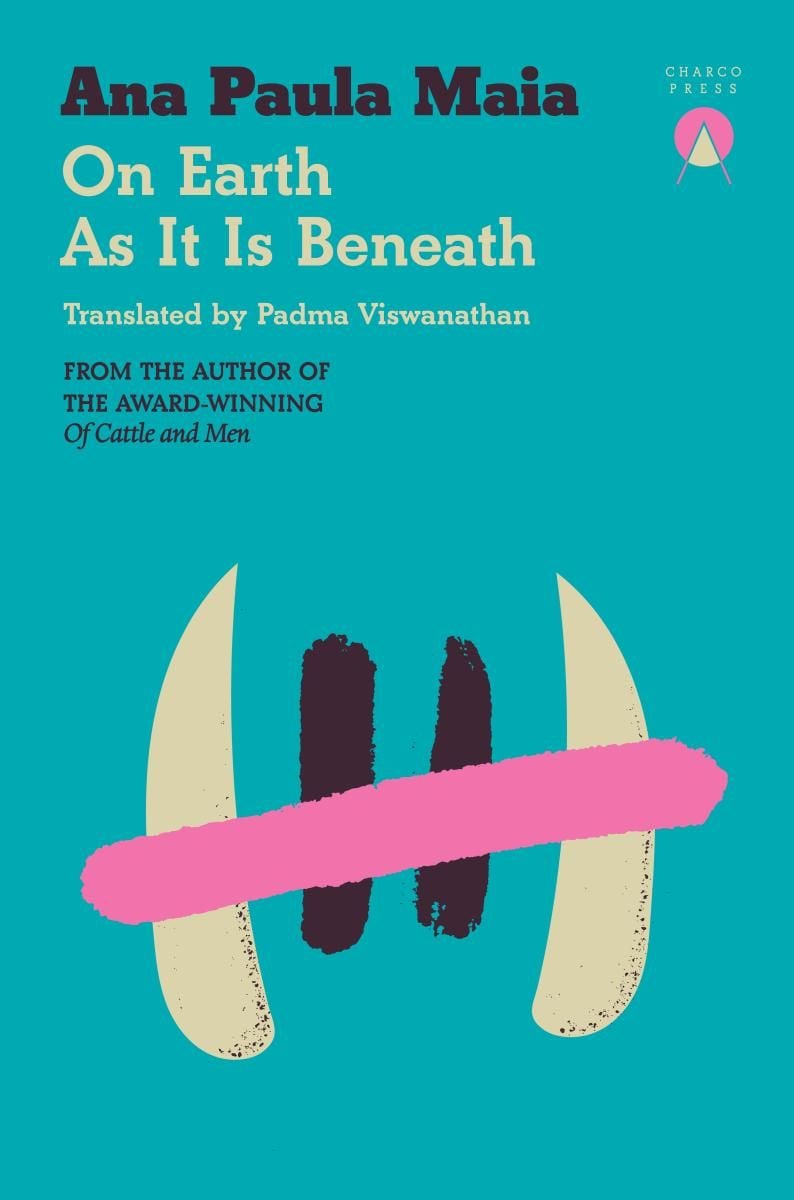
An extract from On Earth As It Is Beneath by Ana Paula Maia, translated by Padma Viswanathan

An extract from On Earth As It Is Beneath by Ana Paula Maia, translated by Padma Viswanathan
- Published
On Earth As It Is Beneath is shortlisted for the International Booker Prize 2026. Read an extract here
On Earth As It Is Beneath is an unsettling novel that sets us among an isolated group of men whose bonds break down in ways both hard to comprehend and impossible to look away from.
On land where enslaved people were once tortured and murdered, the state built a penal colony in the wilderness, where inmates could be rehabilitated, but never escape. Now, decades later, and having only succeeded in trapping men, not changing them for the better, its operations are winding down.
But in the prison’s waning days, a new horror is unleashed: every full-moon night, the inmates are released, the warden is armed with rifles, and the hunt begins. Every man plans his escape, not knowing if his end will come at the hands of a familiar face, or from the unknown dangers beyond the prison walls.
Ana Paula Maia delivers a bracing vision of our potential for violence, and our collective failure to account for the consequences of our social and political action, or inaction. No crime is committed out of view for this novelist, and her raw, brutal power enlists us all as witnesses.
On Earth As It Is Beneath is published in the UK by Charco Press. This extract is taken from the novel’s opening chapter.
Buy the book
Little is left, men or animals. Hoes and sickles lie where they were dropped, in the corners of fields dried up for lack of rain. A narrow, stinking creek provides water, but it dwindles visibly day by day, sucked dry by the fierce heat evaporating it, making the air humid and heavy. There’s still movement in the chicken coop and occasional grunts from the pigpen, guaranteeing meat in the pot for the next few days. Beyond that, the scarcity is worrying. They’re awaiting orders, a convoy to come take them somewhere else, but consternation’s been growing since they lost contact with the outside. The phone lines have been down for days, but, last they heard, an official was coming out to do a final inspection and drive them to their next stop. According to their calculations, the official’s at least seven days late, causing a steep increase in anxiety. All they can do is wait.
Valdênio uses his straw hat to swat at flies circling the mutt’s shrivelled carcass, its jutting ribs. They’ve been feeding off it for days. It died sick, with a sore on its belly that gradually expanded, rotting it. It’d lick its own wound, contemplating its withering flesh with sadness and a kind of wonder. The wound started small, about the size of a wart, coppery. The dog got more and more subdued and its excitement over kitchen leftovers dropped off. Valdênio was making gruel for it by the time it stopped eating, so weakened its feeble jaws could no longer chew. He’d smeared the wound with herbs and gunpowder, but it wasn’t enough. He spent two days searching for it when it went missing. It’d died under a nearly leafless tree. Valdênio grabs a hoe lying nearby and digs a shallow pit where he places the skeletal animal, covering it with earth.
In the distance, a man shouts his name, beckoning him. Valdênio, on his knees, finishes sticking a small cross made of two twigs into the red dirt. He gets up and makes his way over, dragging his left leg, leaning on a wooden cane.
‘Yes, sir?’ he says.
‘Melquíades wants to talk to you,’ says Taborda.
Valdênio is turning towards Melquíades’ office when Taborda asks him about the dog.
‘I’m going to miss that pup,’ Taborda remarks.
‘All of us will, sir.’
‘Never thought I’d get so attached to a mutt like that.’
Valdênio keeps quiet, noticing the prison guard’s sad expression. He waits for him to look up and give him permission to go see Melquíades, the superior officer and highest authority inside the walls.
‘Guess that’s what happens to people in a place like this. You end up latching onto any old scrap.’
Taborda finally gives him the nod, and Valdênio, leaning on his cane, walks slowly towards the main office, located in the central pavilion.
Melquíades is at his desk, sleeves rolled up and collar unbuttoned. Arms and legs crossed, waiting for God knows what.
‘Can I help you, sir?’
‘Valdênio, what’re we having for lunch today?’
‘Chicken, sir.’
‘Again?’
‘It’s what we have and…’
Melquíades interrupts. ‘But what about the piglet?’
‘What about it?’
‘We could roast it.’
‘Yes, sir. Except Pablo already killed and plucked a chicken for today.’
‘I was thinking, Valdênio, that we could keep the piglet for the day the official arrives. After all, we’re going to have to give him lunch.’
‘Whatever you say, sir.’
Melquíades jumps out of his chair and claps his hands, once. His zeal has turned increasingly strange, upsetting everyone in the Colony with his disturbing behaviour. He grabs Valdênio by the shoulders and looks into his trembling eyes.
‘I’m positive, Valdênio, that you’ll make the best roast suckling pig in this whole damn place.’
‘I’ll do my best, sir.’
‘We still have that hooch?’
‘Bronco Gil still has two bottles.’
‘Excellent. We’ll lay out a feast for the official.’
He releases Valdênio’s shoulders as forcefully as he seized them, making the man lose his balance. With the cane for help, though, he finds his footing again.
‘I was also going to say we should have a little music here, don’t you think? Does Pablo still play that harmonica?’
‘You confiscated the harmonica, sir.’
‘I confiscated it? Really?’
Melquíades furrows his brow, trying to recall confiscating Pablo’s harmonica.
‘And would you happen to know where I put it?’
‘You threw it over the wall, sir.’
‘I did?’
He spreads his hand on his chest, surprised at his own conduct.
‘When was this?’
‘Last week.’
Melquíades walks up close to Valdênio, slyly, as though to steal the man’s thoughts.
‘And could you tell me why I confiscated the harmonica?’
Valdênio keeps his eyes lowered, fixed on his bad leg. He doesn’t know whether to tell the truth or just plead ignorance.
‘If you confiscated it, sir, you had your reasons.’
‘Oh, very good. Good answer. Obviously, I had my reasons, and I’d like to know: do you agree with my reasons?’
Valdênio keeps his head down.
‘I’m sorry, sir. I just work in the kitchen. I don’t know anything about the law.’
‘I’m not talking about the law, man. I’m talking about justice. Pablo disobeyed my orders. Punishment was necessary, don’t you agree?’
‘Yes, sir,’ he answers through his teeth, his throat tight.
Melquíades positions himself in front of Valdênio, staring at his face, eyes tensing as he examines him thoroughly, not touching him, just sniffing at him.
‘Valdênio, you’re the best cook I’ve ever had in this place. We have potatoes?’
‘Yes, sir, we do.’
‘Don’t forget to make them nice and crisp. You know how I like ’em.’
Melquíades does an about-face and goes to sit at his desk. He opens the drawer, pulls out a few sheets of paper and lines them up according to a sequence that makes sense to him but that Valdênio finds impenetrable.
‘What are you doing here, prisoner?’
Valdênio opens his mouth slightly, intending to speak, but all that comes out is babble. His eyes, trembling nonstop, don’t land on anything specific. He looks down and takes a small step backwards.
‘What are we having for lunch today?’
‘Chicken.’
‘Again? I’m going to end up growing feathers. What about the piglet?’
‘Sir, you said you’d like to roast the piglet when the official gets here.’
‘Well, of course, Valdênio. That’s an excellent idea. Let’s do that. What are you waiting for?’
‘Waiting, sir, what?’
‘Standing there… what are you waiting for?’
‘Nothing, sir. If you’ll permit me, I’ll be on my way to the kitchen.’
Valdênio drags his bad leg like it’s chained to an iron ball. His gait brings to mind the plight of a prisoner, living in relative freedom, who never forgets his true state. He wears an electronic tag on his right ankle. It’s not heavy and hardly bothers him, but it’s a reminder for him, and everyone else here, that one step beyond the Colony walls, his leg would blow up. It can’t be taken off, except by the guards, way worse than an iron ball, an electronic bomb that would sever his foot.
Valdênio is old for a place like this, sixty-five. He’s spent half his life incarcerated, behind iron bars or in penal colonies like this one, doing all kinds of work. He should be free by now, but Justice keeps him here. Now, he doesn’t even want freedom in his lifetime, since no one’s waiting for him any more on the outside. He and the world both changed, but not in time with each other. Valdênio got older, sick, not much sharper. The world renewed itself. To be thrown outside the walls would be to serve another sentence of survival and resistance that he couldn’t stand to repeat. His first years in jail were tough; little by little, he’s come to understand how the system works. He was beaten up dozens of times, his skull crushed, his jaw dislocated, arms and legs broken; finally, one day, his leg was maimed after he was thrown off the roof of a pavilion. He didn’t even always know what he was being beaten for, much less that last time, when he was left to die but survived. His body, ground down in hell, awaits the end of its days. He no longer questions. He obeys, follows orders, lowers his head and steps back. He’s beaten, sometimes for a reason, sometimes not. Wherever he’s gone, they’ve spilled his blood. He’s left a trail. It’s a wonder he’s survived so long. Very few reach old age in prison.

On Earth As It Is Beneath
© India Hobson for Booker Prize Foundation
On Earth As It Is Beneath
- Translated by
- Padma Viswanathan
- Published by
- Charco Press
An unsettling novel that sets us among an isolated group of men whose bonds break down in ways both hard to comprehend and impossible to look away from