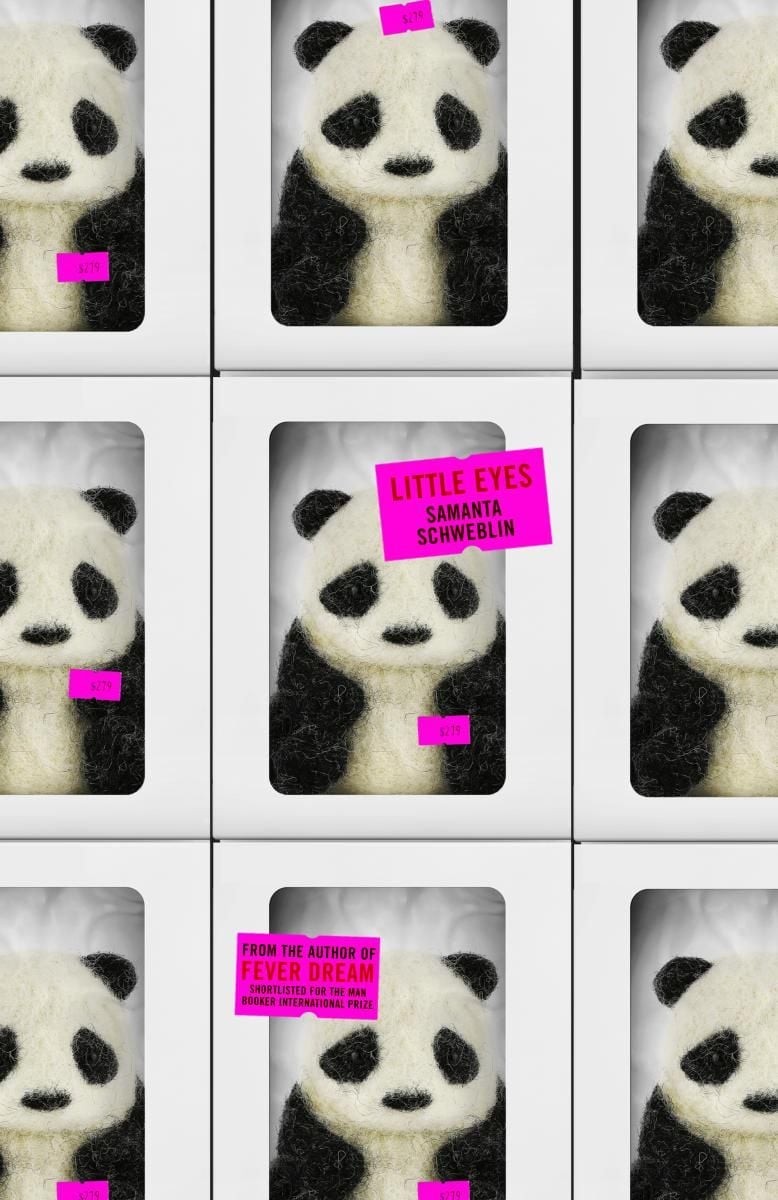

Samanta Schweblin’s wildly imaginative novel – longlisted for the International Booker Prize in 2020 – explores the voyeurism and exhibitionism inherent in our digital lives
- Published
The translator of Little Eyes on the impact of an International Booker Prize nomination, and the person she keeps in mind when translating a work of fiction
Buy the book
It’s five years since Little Eyes was longlisted for the International Booker Prize. Has the nomination had an impact on the wider perception of the book, internationally?
Absolutely – how could it not? There’s no doubt that the International Booker does great things for translated literature in general by letting people know about books that deserve to be widely read. And it has been interesting to see how the press covers the prize in Chile and Argentina and the Spanish-speaking world at large. A Booker nomination makes waves there, whereas you don’t see much in English press about the Herralde Prize, for example.
You’ve been nominated for the International Booker Prize four times, with Fever Dream in 2017, Mouthful of Birds in 2019, Little Eyes in 2020 and The Dangers of Smoking in Bed in 2021. What kind of impact has the IBP had on your career?
It’s something I’m very proud of – being nominated so many times is a clear-cut accomplishment, and you don’t get many of those in life. It’s also a goal I still think about – to fall back on a pretty sexist saying, so many times a bridesmaid makes me want to be a bride.
If you had to sum up Little Eyes in a single sentence, what would it be?
What happens if you voluntarily let a stranger’s eyes into your life… and what happens if you are those eyes?
What was your process for translating the book and how long did it take?
My process involves a lot of re-reading and reading out loud. The novel took me about 200 hours of deep work. I average around three hours of deep work a day, so let’s say 67 days of work, all told. Not that I keep track or anything.
The book features multiple characters, of all ages, spread across the world. Who was your favourite to translate and why? Who was the hardest to spend time with?
Alina in Oaxaca is the character I identified with most, which is why her violence with the Colonel was particularly shocking (and why the ending was particularly disturbing). Several of the storylines filled me with a particular sense of dread – Emilia’s and Grigor’s, for example. You know something bad is going to happen with them, but it’s hard to have any idea just what it will be. I think some of the ‘one-off’ storylines have some moving and brutal images that really stuck with me. There’s a scene at a retirement home when an old woman wades desperately into a fountain to chase a suicidal kentuki – that one gets me.
In the years since you translated Little Eyes, which piece of new technology has been most kentuki-like for you? And do you own it?
I suppose AI companions are the most kentuki-like: idealised companions that combine an echo chamber of reassurance with the faithfulness and unconditionality of a pet. These are ‘relationships’ with someone who only tells you what you (supposedly) want to hear, and who never require you to acknowledge someone else’s interiority or engage with messy and unpredictable emotions. No, I don’t use it, but I am scared of what it means for the future of human relationships.
If you had to choose – would you be a keeper or a dweller?
Once you start thinking about that question, it’s easy to be sucked down a rabbit hole. My first thought is that I would never let an anonymous person into my private life, but then I think about what Instagram is and how we let people observe our private lives to a greater or lesser extent all the time. It’s a curated view, no doubt, but I can see how someone might feel that having an audience lends meaning to the mundane aspects of your life, and then the leap to being a keeper is a short one. All that said, though, I’m definitely more of a dweller, a lurker who prefers to see and not be seen.
Several of the storylines filled me with dread – Emilia’s and Grigor’s, for example. You know something bad is going to happen with them, but it’s hard to have any idea just what it will be
Who do you hold closest in mind when you’re translating a piece of fiction – the author or the future reader? Is there a balance to strike between what the author and the audience need?
I’m not sure I could prioritise one over the other. On one hand I need to have a clear and nuanced understanding of what the writer is doing, and so I always hold them foremost in my mind. Also foremost, on the other hand, is the reader, and I have a specific one in mind: my twin sister Jessye, who doesn’t speak Spanish and who reads all my translations (probably the only person to do so). She is a smart, curious, and generous reader, and I’m often thinking of how she would read a particular text, what context she would need and what she could infer.
How does your translation work shape your own writing, and vice versa?
I’m not really a writer but I probably should be – just look at the people I’ve been learning from!
What are some of the hardest decisions you’ve had to make as a translator?
The hardest decisions are about which projects to take on. I’ve had to turn down some books I really wanted to work on just because I didn’t have time and couldn’t meet the deadlines. It’s hard to say no.
Some of the translation decisions for this particular book had to do with names: ‘keeper’ and ‘dweller’ are not the obvious translations for ‘amo’ and ‘ser’ (something like ‘master’ and ‘being’), and I thought about that a lot. I also named a character who isn’t named in Spanish (Lis, the keeper of Marvin’s kentuki). That’s a strategy I’ve used a few times since – I’ve found that names are sometimes necessary in English when they aren’t in Spanish.
Where and when do you most like to write, and what tools do you need?
From 10am to 1pm, Monday through Friday, I have an online coworking group that includes Samanta and four other people. They’ve become fundamental to the organisation of my workday, and I don’t know how I got anything done before I had their little faces keeping me company over Zoom. Aside from them, I need: my laptop, my Remarkable, two cups of coffee, and a fan (it’s hot these days!).
Where’s your favourite place to read?
Right now, Barcelona is so hot that my preferred place is anywhere with air conditioning and silence. My favourite place I’ve ever read was at the Finestres writers residency on the Costa Brava: on their covered outdoor patio with a sofa that overlooks a cove with the waves crashing below, a blanket over me and a cup of tea beside me. But the most frequent place I read is in bed.
What are you reading right now?
I’m reading Small Rain by Garth Greenwell, and I’m trying to go slowly because I don’t want it to end. It’s hard to explain why his writing is so captivating, but while you read there’s a sort of bubble that wraps you up and seems to keep you safe from time, even while you’re more vulnerable to it. There’s a part of the book where his analysis of a poem by George Oppen had me on the edge of my seat. How does he even do that?
Do you have a favourite Booker-nominated book and, if so, what do you love about it?
So many! The Memory Police by Yoko Ogawa, translated by Stephen Snyder, is a special one for me. I’ve started listening to books in bed, in a sort of regression to childhood where I need someone to tell me a story before I can fall asleep. The first one I listened to was The Memory Police, and something about being in that oneiric state of mind left me with very clear but somewhat disconnected images from the book, like flashes from a hallucination. I’ve since gone back and read it the traditional way, and I know it’s a beautiful and heartbreaking story, but my memory of it is still something like a very vibrant and disturbing dream. It’s remarkable and sort of meta to have a fractured memory about a book that deals with disappearing memories.

Megan McDowell © Sebastian Escalona


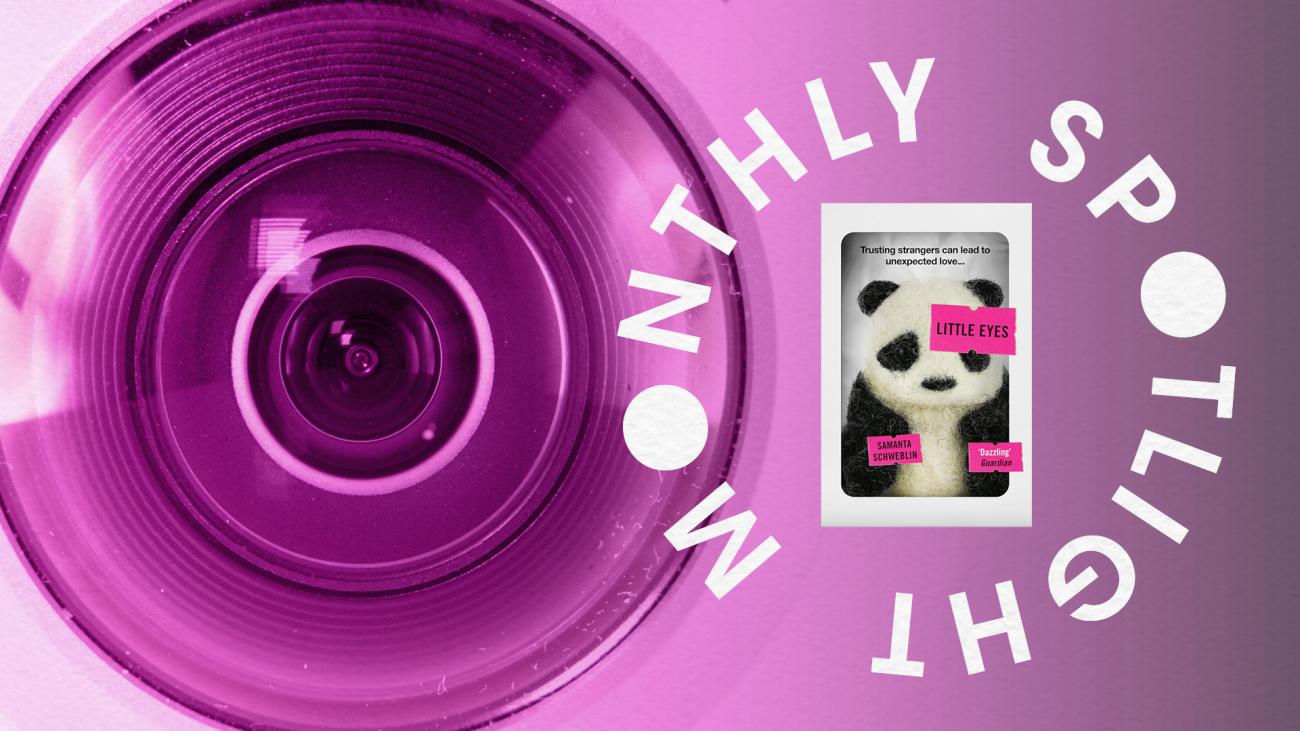

Little Eyes
- Translated by
- Megan McDowell
- Published by
- Oneworld
Samanta Schweblin creates a dark and complex world that is both familiar and unsettling – largely because we recognise it as the one we live in