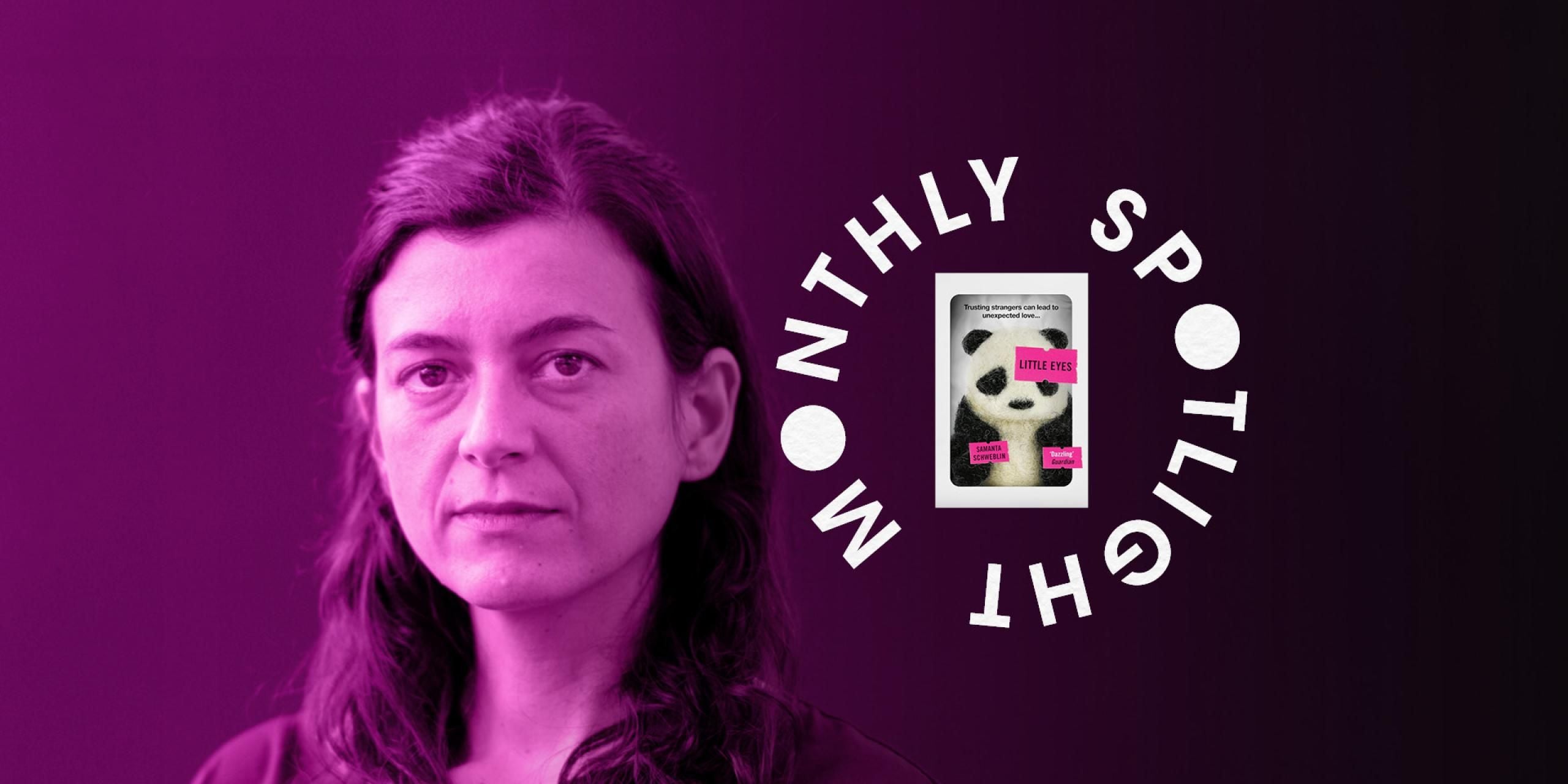

Samanta Schweblin’s wildly imaginative novel – longlisted for the International Booker Prize in 2020 – explores the voyeurism and exhibitionism inherent in our digital lives
- Published
The Little Eyes author discusses our complicated relationship with technology, and reveals that an affectionate robot vacuum cleaner helped inspire the novel
Buy the book
It’s five years since Little Eyes was longlisted for the International Booker Prize. Has the nomination had an impact on the wider perception of the book, internationally?
Yes, it’s helped a great deal. The book already had some translations, but after it was on the Booker longlist, many others came along. Today it’s been translated into 27 languages.
It was your third nomination for the International Booker Prize, with Fever Dream shortlisted in 2017 and Mouthful of Birds longlisted in 2019. What kind of effect has the IBP had on your career?
The biggest impact of the prize came when Fever Dream was shortlisted – it was crucial in terms of sales and visibility. I think the IBP has helped increase the visibility of Latin American writers in general. I’m thinking of Gabriela Cabezón Cámara, Selva Almada, Mariana Enriquez or Claudia Piñeiro, and that’s if we only list the Argentines. The prize helps with translations into smaller languages; its visibility helps support independent presses in other countries as they take the risk of publishing in translation.
If you had to sum up Little Eyes in a single sentence, what would it be?
Through stories set in 26 places around the world, the novel relates how a new electronic device has its brief moment of fame and then crashes; there is nothing novel about the technology itself, it’s merely a mirror, a sort of spell between souls that lets us talk about technology without getting caught up in technicalities. (That semicolon might be cheating!)
Which person, place and thing most inspired you to write – and the writing of – Little Eyes?
It was reading a poetry anthology. I was very struck by how, simply because they mentioned WhatsApp, smartphones, or social media, these poems were labelled science fiction, or ‘tech poetry’. I started to look into what was happening with narrative and found a similar situation. It was remarkable to see how we naturalise technology in our daily lives, but then choose to label it once it’s in a book, distancing it from our reality by locking it away in a particular literary genre – the idea of a dystopian, highly technologised world. I found myself wondering if it was possible to write fiction about new technologies and the ways they affect us without generating a sense of dystopia in the reader and straying from realism. I think that’s how the idea of the kentuki started to take shape in my head.
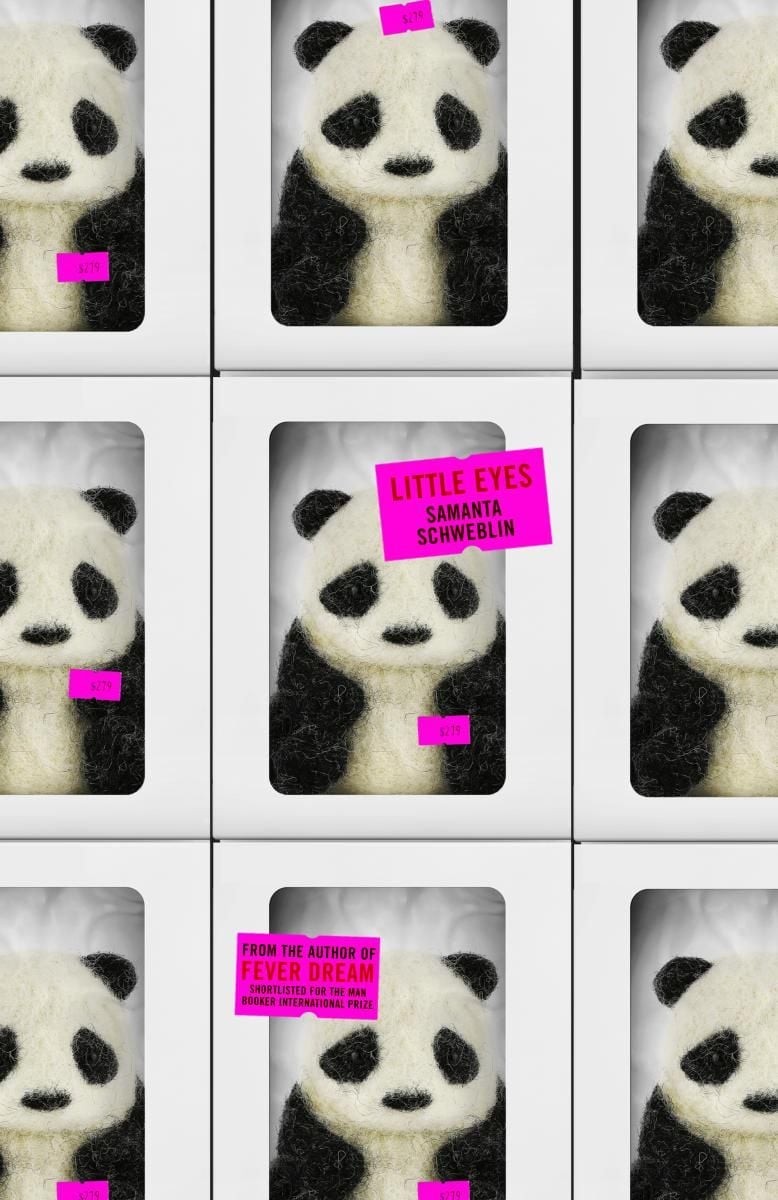
Kentukis are cute but tacky soft toys with cameras in their eyes – we meet a dragon, a mole, a bunny, a panda, a crow. How and why did you decide on the way the kentukis look?
It was important to deactivate in the reader the idea that a kentuki was something new and extraordinary. So I needed to construct a simple, almost crude object: a stuffed animal with only the most basic of cell phones beating in its chest.
The big difference between the kentuki and a stuffed animal, a household robot, or any Tamagotchi-type toy is that in all those cases the user interacts with a non-human object. A kentuki, on the other hand, is a stuffed animal that we buy for the house and plug into its charger on the floor (like those new autonomous vacuums), but with one big difference: it isn’t a robot steering them, it’s a human being from some other place in the world, forever linked to that single gadget, and commanding it from their own house. So, a Norwegian retiree, for example, can command a kentuki in the house of a Mexican family, and wander through their living room affectionately bumping into the kids’ feet under the dinner table. That, or something much darker, of course. Or more romantic, or more practical, or more malicious, or more playful.
The possibilities are infinite, but the type of ‘frictions’ that we have with these others with whom we start to have a daily relationship through technology are not so infinite, but rather they start to follow some interesting patterns about which I think we still have much to learn.
The book features multiple characters, of all ages, spread across the world. Who was your favourite to write and why? Who was the hardest to spend time with?
Creating characters so far removed from my own culture and language was challenging. I enlisted the help of special readers to ensure each character’s believability and realism. My Chinese editor followed the characters’ exploits in Da’an and Beijing; the director of a Croatian literary festival followed the events in Zagreb; a Peruvian writer read the Lima chapters. I realised how much my usual Argentine characters were a sort of personal fallback and how little I knew about the world when I tried to write outside that comfort zone.
The characters and kentukis who were the most difficult to write were the ones I had the least information about. The stories set in the Sierra Leone refugee camp and in Surumu, a tiny town on the Brazil-Venezuela border, were also hard to narrate because of the kind of situations those kentukis witnessed: dark and delicate subjects for which I didn’t have direct readers, but which I had to address for the novel to work.
I needed to construct a simple, almost crude object: a stuffed animal with only the most basic of cell phones beating in its chest
There’s a dividing line between the people who choose to keep kentukis and those who choose to dwell inside them. There’s one character in the novel, Emilia, who thinks about the differences between the two ways of being and is pushed to experiment – disastrously – with both. What’s the key difference between keepers and dwellers, for you?
Above all, dwellers are voyeurs, but not only in a sexual sense. We want to see what’s behind the curtain, not just out of morbid curiosity, but also out of fear, or the anxiety of anticipation, out of a desire to capture the truest essence of the other, right when they don’t know they’re being watched. Because dwellers are disguised by the device, keepers tend to forget that the beings moving around their houses like pets are actually other human beings, and something of this invisible reality of their lives starts to slip away from them. Being a keeper might seem like a position we wouldn’t choose a priori – most readers immediately think they would be dwellers, but struggle with the idea of having a kentuki in their house. And yet, if we think about how we use social media, we are all more keeper than dweller – the trick lies in how unaware we are of our level of exposure.
If you had to choose – would you be a keeper or a dweller?
No doubt about it – I would be a keeper. When I started the book, I thought otherwise, but as I wrote, I gradually discovered everything that this idea of ‘caring for’ and ‘possessing’ an unknown person activates in the user.
The keepers often end up physically harming their kentukis: mutilating them, drowning them, burying them alive. Why was that physicality important and why is someone being cruel to a soft toy so shocking?
The rules of this new device are that there is no way to unlink or disconnect it: if someone has a kentuki in their house and they want to cut off the communication, the only way to do it is for the kentuki to stay off its charger until its battery wears out completely, or else you can destroy it. There is no other way to sever the link or disconnect. Put in those terms it seems a little cruel, but in the more intangible space of emotional relationships, the world isn’t much different.
Personally, I think that even a love that lasts a lifetime is not eternal love, but one that death beats to the finish line. And any relationship that ends before death and against our wishes will cause us pain, frustration, and grief. The more important the relationship, the harder that ending hits us. I think there is something powerful – and also moving – about transferring that emotional battle, that intangible connection, onto the physical plane of a disconnection that is unavoidably physical.
What kinds of responses were you expecting and hoping for from readers? Have any reactions been especially pleasing or surprising?
It was interesting to see what happened in Germany, where publication of this 2018 book was pushed back so it ultimately came out at the start of 2020, coinciding with the pandemic’s most critical phase in Europe. Readers interpreted the novel in light of that situation, and I was surprised by how much traction the book had because readers sensed that its fiction was an immediate reflection of reality.
I remember how I myself entered into crisis with my reading during those first months of the pandemic. I read or watched movies and I felt like I was hovering over a representation of reality that no longer worked for me. I’d think, ‘But why are there so many people in this train station scene? That’s impossible.’ And it happened even with my favourite writers. But Little Eyes inhabits a space that filtered into reality in a different way. Not only does nothing in this book belong to the future or a dystopian world, but it could also only happen during daily confinement inside houses. The only way out is by piloting a kentuki, which is like directing a drone or remote-control car with a camera. Escape to the outside world is risky and masked, even if some people out there are going around as if the world hadn’t changed.

Samanta Schweblin
© Roberto Ricciuti / Getty Images
The first thing I do before starting to work is put my hair back in a tight ponytail. There’s something about that kind of rigidity in the body that frees the mind, that makes it run faster than ever
In the years since you wrote the book, what piece of new technology has been most kentuki-like for you? And do you own it?
A few months before the idea of the kentukis arose in my mind, my mom was turning 60, and I decided my gift would be one of those round robot vacuum cleaners. I had it working in my house for a few days before giving it to her, because the technology was new to me and I was curious. And I loved it! A strange thing happened: I grew attached to it. I was amazed at how it seemed to make decisions that were almost emotional. I imagined it thinking, ‘Ok, the floor is really dirty now, I’ll just tidy up a bit,’ or ‘I’m so tired, I’m going to rest a while on the charger and I’ll finish this corner later.’ It warmed my heart the way sometimes, when I was completely focused on my work at the desk, it would suddenly come over and start gently tapping my feet. I know what it wanted was for me to move so it could clean, but in my mind that vacuum cleaner was saying, ‘Come on, let’s go out, let’s have a snack, talk to me, it’s so boring in here and I can’t take it any more.’ When the time came to pack it up and give it to Mom, I felt like I was handing over a puppy I didn’t want to part with. I’m sure that a lot of this was transferred to the idea of the kentuki.
Where and when do you most like to write, and what tools do you need?
I’m a morning person (or a night owl, if necessary), but my head isn’t good for writing in the afternoon. The first thing I do before starting to work is put my hair back in a tight ponytail. There’s something about that kind of rigidity in the body that frees the mind, that makes it run faster than ever. It’s as if, when the body is trapped, the mind tries to escape as quickly as possible. It’s silly, but I’m aware that I can no longer write if I don’t tie back my hair. I don’t need silence – I can write when I’m travelling, or in a café, or in a waiting room. I do need some white noise around me, otherwise I have trouble concentrating. I almost always write on the computer, but sometimes, to clarify ideas, I write by hand for a while.
What are you reading and watching right now?
Last night, I finished Clear by Carys Davies, a Scottish author who is new to me. It’s a compact journey in terms of page count, but expansive in its rhythm and respiration. It’s the kind of love story we need most right now: a genuine and open one that transcends cultural familiarity and the predictability of our clichés, with existential darkness always lurking, forcing you to look at everything with your eyes wide open. A jewel of a book.
And I’m watching the Argentine miniseries El Eternauta, which has me utterly enthralled. It’s an adaptation of one of the most beloved classics of Argentine comics, so translating it to film was a risk, but so far I think it’s working wonderfully. Although we need apocalyptic fictions now more than ever (as a space to practice what to do, and how, and for whom, so that we as a species can survive uncertain futures), it’s a genre that seems ever more exhausted. Still, I find it a fascinating one, even as it disappoints me over and over.
I think that this genre has always been very expensive for film and television, which has kept it centred on the same type of dominant narrative. Now that zombie attacks, the apocalypse, and outer space have gotten easier to reproduce technologically, the genre has not only been democratised, but also, in many cases, value is recentered on content and not so much on technical resources. El eternauta is a good example of that.
Do you have a favourite Booker-nominated book and, if so, what do you love about it?
Oh, but there are so many! And so many I haven’t yet read! I have a favourite on this year’s International Booker Prize shortlist, which is On the Calculation of Volume I, by Solvej Balle and translated by Barbara J. Haveland. Who knew that the old idea of ‘groundhog day’ could still be reinvented? In such a frankly contemporary way, I mean, inhabiting a real and concrete world while at the same time opening reality to something more porous and philosophical. I found it fascinating. An old favourite is Drive Your Plow Over the Bones of the Dead, by Olga Tokarczuk, translated by Antonia Lloyd-Jones.

On the Calculation of Volume I by Solvej Balle, translated by Barbara J Haveland
© Yuki Sugiura for the Booker Prize Foundation


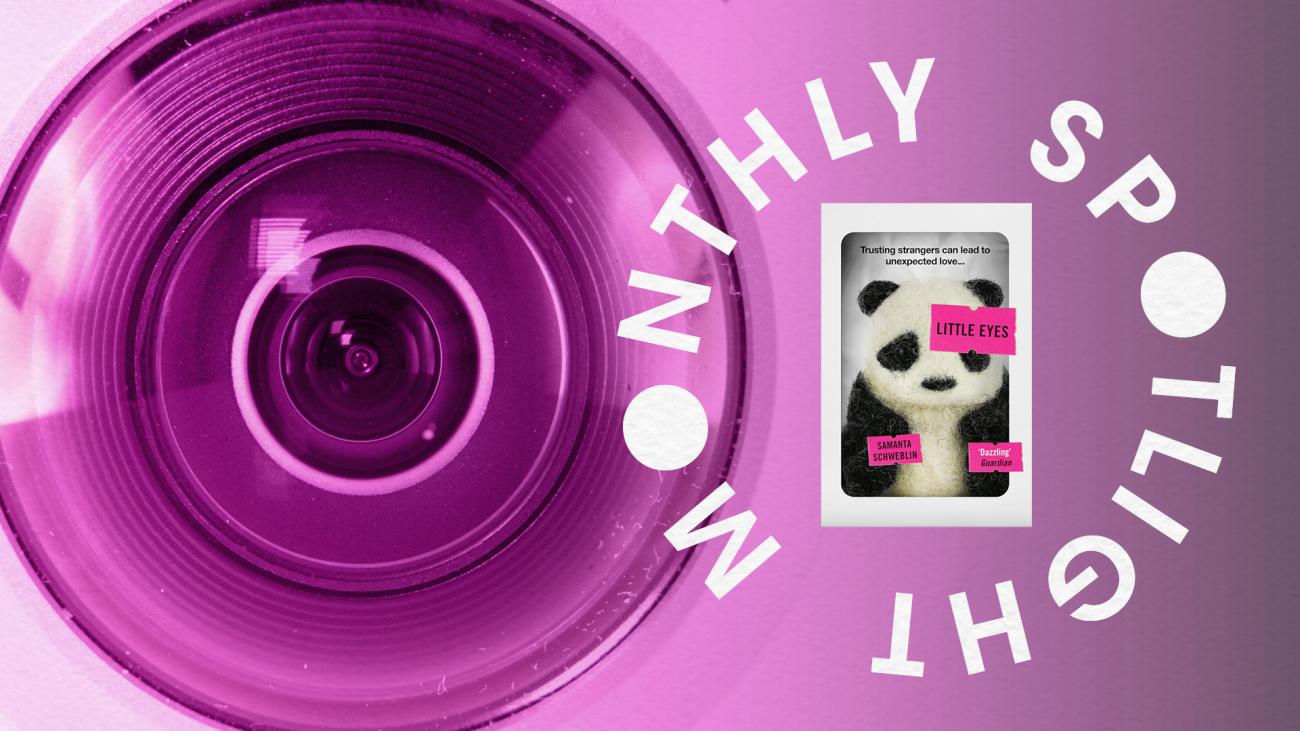

Little Eyes
- Translated by
- Megan McDowell
- Published by
- Oneworld
Samanta Schweblin creates a dark and complex world that is both familiar and unsettling – largely because we recognise it as the one we live in
Features


- Book recommendations
12 of the best Booker-nominated books by Latin American authors

- Book recommendations
10 of the best sci-fi books nominated for the Booker Prizes
- Long read
- Book recommendations