



We asked the authors nominated for this year’s Booker Prize about the inspirations behind their longlisted works, their favourite books, and where and when they most like to write
Opinion
How the Booker Prize 2025 longlist explores masculinity in all its forms

Opinion
How the Booker Prize 2025 longlist explores masculinity in all its forms
- Written by
- Max Liu
- Published
From teenagers on the brink of adulthood to grown men struggling to process trauma, this year’s longlisted books offer fascinating insights into the male psyche – and bear similarities to other Booker-nominated novels
Buy the book
From London to Malaysia, the north of England to Los Angeles, and in periods encompassing the last 60 years, five of this year’s Booker-longlisted novelists present young men who are looking for their place in the world or older men who are adrift in it. From contemporary perspectives their works examine timeless questions about fatherhood, sex, race, class and violence.
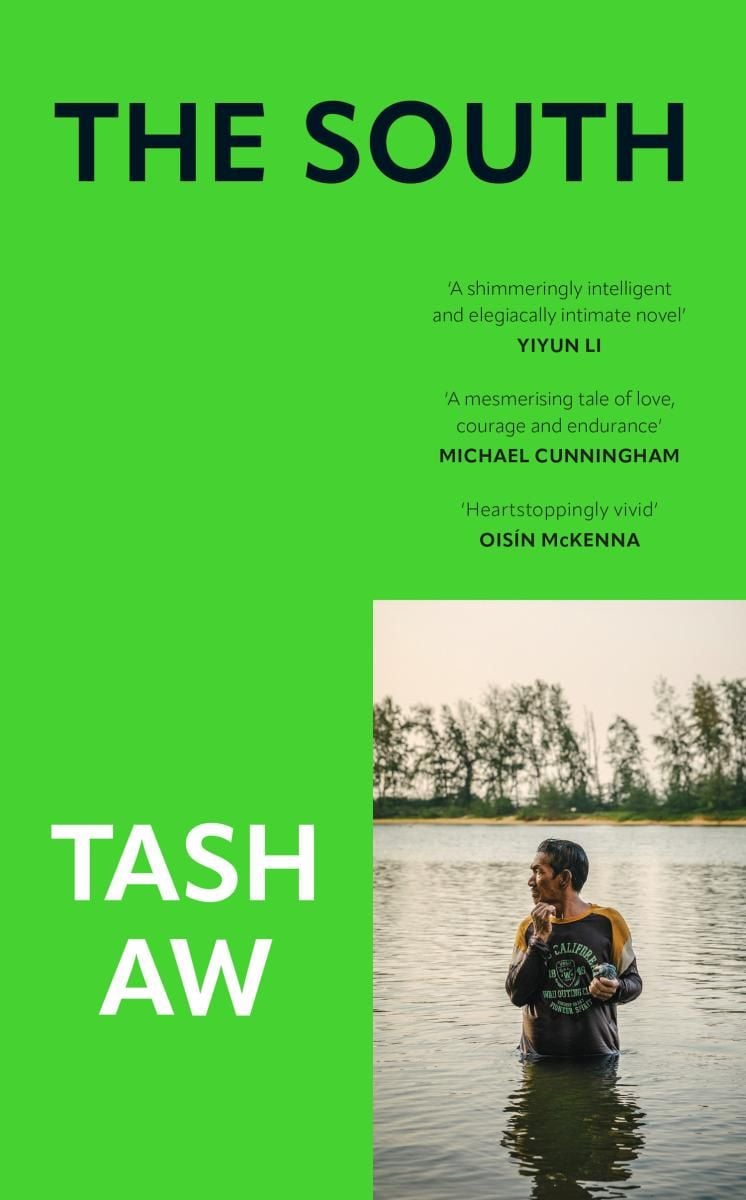
In Tash Aw’s The South, Jay is looking back on one summer in 1990 when, as a teenager on the brink of adulthood, he had an affair with the slightly older Chuan. The distant family connection between the boys further complicates their relationship – Jay’s father is the son of Jack and his wife, from whom Jay’s parents inherited their farm, while Chuan’s father was Jack’s illegitimate son. The boys grew up at opposite ends of the country, with the middle-class, urban-dwelling Jay studying while Chuan worked on the farm. Jay is protected, allowed to be a boy for longer, while Chuan must grow up and function as a man sooner.
When the boys first get together at the start of the novel, Jay wants to prolong the experience. He hopes that ‘whatever time they have together will feel like many hours, a whole day’. But he repeatedly takes himself outside of his experiences by imagining how he will remember them, rather than being present in a moment.
The South, the first part of a projected quartet, bears similarities with Alan Hollinghurst’s Booker Prize winner The Line of Beauty – another novel about a young gay man who often feels as though he is not the main character in his own coming-of-age story. Both novels are concerned with sexuality and class in societies, albeit on opposite sides of the world, that are undergoing change – Thatcher’s Britain in The Line of Beauty, Malaysia in the era of rapid modernisation in The South. Aw previously wrote about the transformation of East Asia in Five Star Billionaire, which was longlisted for the Booker Prize in 2013.
Buy the book
Thomas, the narrator of Benjamin Wood’s Seascraper, is another young man with plenty to figure out, although he could seem much older because he moves ‘with all the spryness of a care-home resident’.
Thomas has been worn down by his work as a shanker, which involves gathering shrimp off the coastal town where he lives in the north west of England. He is also a folk singer (the book is set on the cusp of the 1960s), although he hides this from his mother, with whom he has a complicated relationship, and the novel is an intelligent study of creativity and artistic dreams – a subject Wood previously took on in his novel The Ecliptic.
The dilemma Thomas faces when he meets Edgar, an enigmatic American filmmaker, is an unlikely one, but one that many people encounter in some form: the possibility of a different, potentially better life, contrasted with the certainty of rootedness and responsibility. The pressure on Thomas is palpable as he reckons with the trappings of his class and traits he inherited from his dead father. And yet Thomas is an exception among the male protagonists of novels on this year’s Booker Prize longlist in that his music gives him an outlet to explore his emotions. In one of his songs, Thomas is ‘talking to himself, the boy he used to be’.
Wood has expressed his admiration for Kazuo Ishiguro’s The Remains of the Day and, like the 1989 Booker Prize winner, Seascraper is a closely-controlled and impressively-sustained feat of narration from the perspective of a man who must seize his opportunity before it slips away.
Buy the book
As the title indicates, the body, with its potential to be both a man’s ruin and his living, is a central theme of David Szalay’s Flesh. István is 15 when a 42-year-old woman takes advantage of him on their Hungarian housing estate. When she stops, he feels rejected and accidentally kills her husband. After serving a prison sentence, István joins the army where he is cited as a hero for his bravery. When he returns to civilian life, he struggles to square his experiences of fighting in Iraq with the everyday:
‘He realises that the things that are so important to him – the things that happened, and that he saw there, the things that left him feeling that nothing would ever be the same again – they just aren’t important here… So it makes you feel slightly insane or something, to have those things inside you, when they seem to have no reality here.’
This dissociation between István’s experiences and his inability to find the language (‘or something’) to process them is crucial to understanding him. When people talk to him he tends to reply simply: ‘Yeah’ or ‘Okay’. Pages of clipped dialogue are surrounded by white space, as if the reader must fill the emptiness with their interpretation of István’s sparse words. It is very much like talking to a certain kind of man. Physically, István is an imposing figure, yet he is somebody to whom life happens and who rarely shapes events himself. Women initiate relationships with him, rather than the other way around, and he moves to wherever there is work, depending on economic and political patterns. Later, he is employed as a bouncer in Soho before getting a job as a driver for London’s super-rich. Whatever he does, István puts his body on the line. It is a vessel, buffeted by history, carrying him through the world, and his mind must follow.
Istvan is accused by his stepson of exemplifying ‘a primitive form of masculinity’, but this is unfair because, when Szalay does show us Istvan’s thoughts, they reveal his sensitivity. Watching his own son come of age, Istvan recalls: ‘And all that burgeoning physicality is held within yourself as a sort of secret, even as it is also the actual surface that you present to the world, so that you’re left absurdly exposed, unsure whether the world knows everything about you or nothing…’
This is an authentic and exemplary way to write about growing up male. Flesh reads like an extension of the chapter about Balazs from Szalay’s novel in linked stories All That Man Is, which was shortlisted for the Booker Prize in 2016. Like István, Hungarian Balazs moves to London where he works as a bodyguard and feels perplexed by a city that is ‘made of money’.
Buy the book
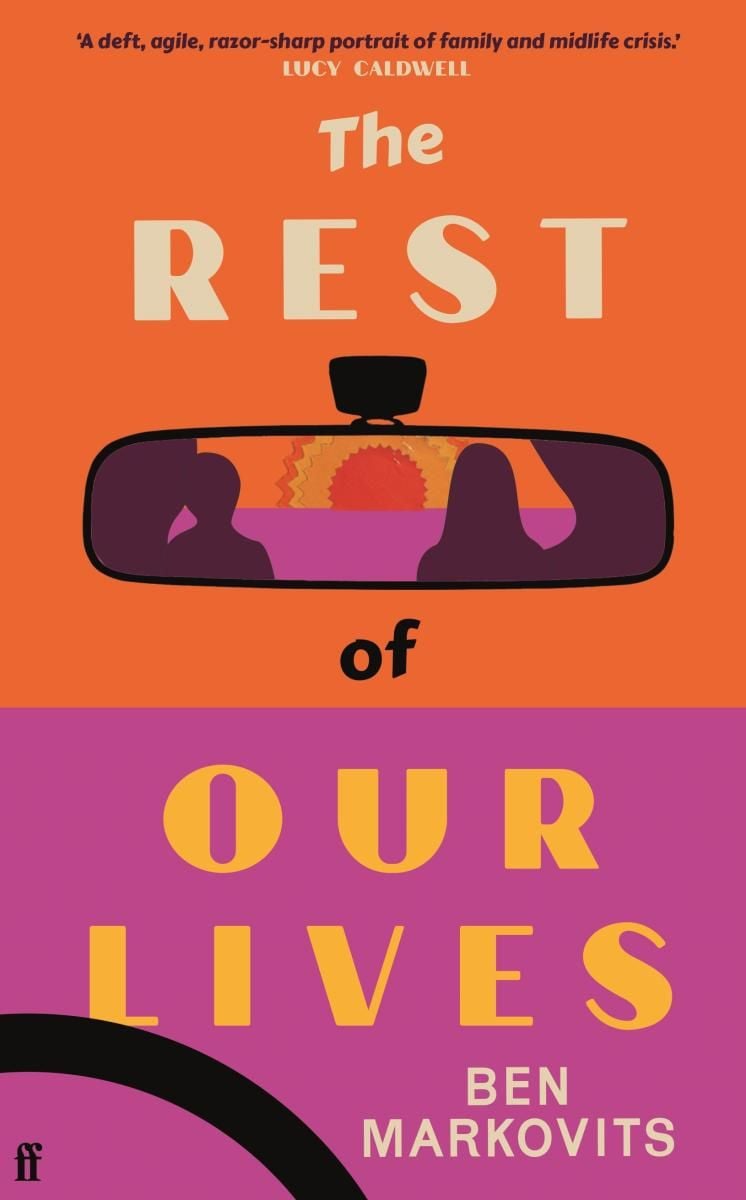
On the surface, István and Tom Layward, the narrator of Ben Markovits’ The Rest of Our Lives, are opposites – from different continents, with a significant gulf in class and education levels – but, like the Hungarian, Markovits’ American law professor quietly seethes in a world where he no longer feels in control. Tom’s daughter calls him an ‘angry white male’, even though he never loses his temper with his family. Conscious of this, he tells his son: ‘You reach a certain age and realise, the things you used to take for granted, that everybody you knew and liked agreed on, nobody agrees with you anymore about those things.’
Tom is more articulate than István, but he doesn’t say a lot to his wife and refuses to get drawn into arguments with her, so she gets drunk in front of friends and complains: ‘He’s just so cold cold cold.’ This may be one reason why Tom’s wife had an affair 12 years ago. Ever since, he has been planning to leave her, so, after dropping off his daughter at university, he begins a road trip, visiting figures from his past. He can take his time because he is on an enforced sabbatical from lecturing after defending the owner of an NBA team who was accused of creating ‘a hostile work environment, especially for women and minorities’ – something that did not go down well with Tom’s colleagues and students.
The Rest of Our Lives belongs to the tradition of the American road trip story, but Tom’s stubborn lack of self-awareness contains echoes of David Lurie, the disgraced literary academic who grapples with the complex legacies of South African apartheid in J.M. Coetzee’s 1999 Booker Prize winner Disgrace. For all their learning, both Lurie and Layward are bewildered by the changing society around them and, at least initially, unable to understand their mistakes. One of Markovits’ achievements in his deeply-intelligent novel is to make Tom a likeable man who many readers will root for, not in spite of his flaws but because they recognise them as their own.
Buy the book
Andrew Miller’s tenth novel, The Land in Winter – his second to be nominated for the Booker Prize, following 2001’s Oxygen, which made the shortlist – is about two couples living through the painfully cold winter of 1962 in the west of England. Eric Parry, a GP who is cheating on his pregnant wife, is ‘not much given to thinking about love, did not much care for the word’, while not far away, young farmer Bill Simmons is also preoccupied with his unhappy marriage, at least when he’s not thinking about silage or cows.
It is nearly 20 years since the Second World War ended but it remains well within living memory and, although both men were slightly too young to fight, its legacy is a palpable presence in the characters’ lives. Eric and Bill’s wives become friends while the two men find it difficult to connect to each other, even though, if they were better at communicating, they would find they had plenty of common ground. Their inarticulacy is a significant, and highly plausible, part of the way Miller depicts his male characters in this slow-burner of a novel.
John McGahern’s Amongst Women, which was shortlisted in 1990, provides a compelling counterpoint to The Land in Winter. McGahern’s book also takes place in a mid-20th century rural setting, albeit on the Irish border. It tells the story of a taciturn former-IRA man, his wife and daughters. Both Miller and McGahern convey intense passions in patient and restrained prose to devastating effect.
The novels discussed here are fair but unflinching in their depictions of male characters. They explore ways of writing about men’s experiences in an era when it is widely accepted that men’s stories have taken up too much space for too long. There are in the work of Tash Aw and Benjamin Wood young men whose family history is opaque but its legacies inescapable. The older men of novels by Andrew Miller, Ben Markovits and David Szalay are often confused by the present and fearful of the future. Some are seeking a form of expression for their feelings, while others are actively avoiding it. All five novels reveal their male characters’ inner lives, breaking silences, improving our understanding of them, and perhaps even of ourselves.


Features

- Book recommendations
10 Booker Prize-nominated books that explore mid-life crises

- Book recommendations
The Booker Prize 2025 longlisted authors on the books they reread again and again

- Book recommendations
The best Booker audiobooks to curl up with this winter, chosen by you

- Book recommendations
The best children’s books for Christmas written by Booker Prize authors

- Book recommendations
Booker Prize authors on the childhood books that made them fall in love with fiction

- Book recommendations