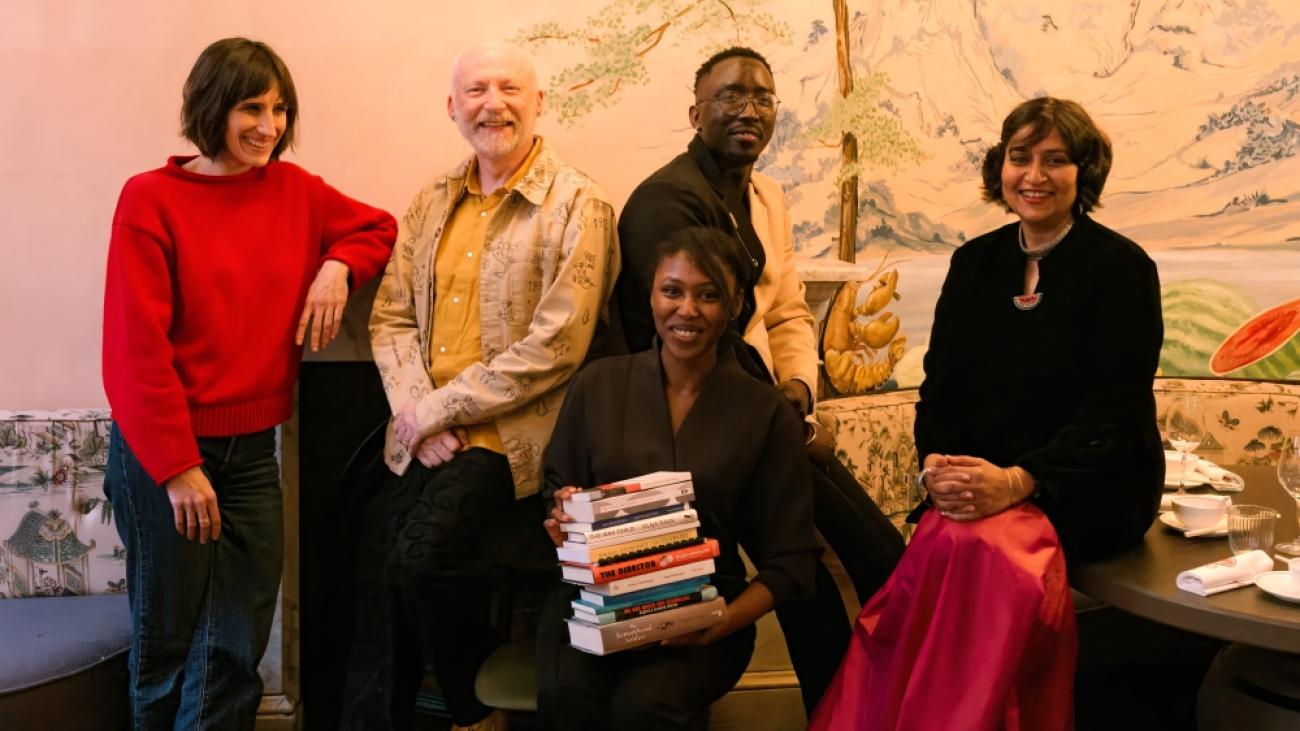

From witchcraft to warfare, trauma to transformation, resilience to cruelty, this year’s longlist shines a light on a vast range of experiences
An extract from The Nights Are Quiet in Tehran by Shida Bazyar, translated by Ruth Martin

An extract from The Nights Are Quiet in Tehran by Shida Bazyar, translated by Ruth Martin
- Published
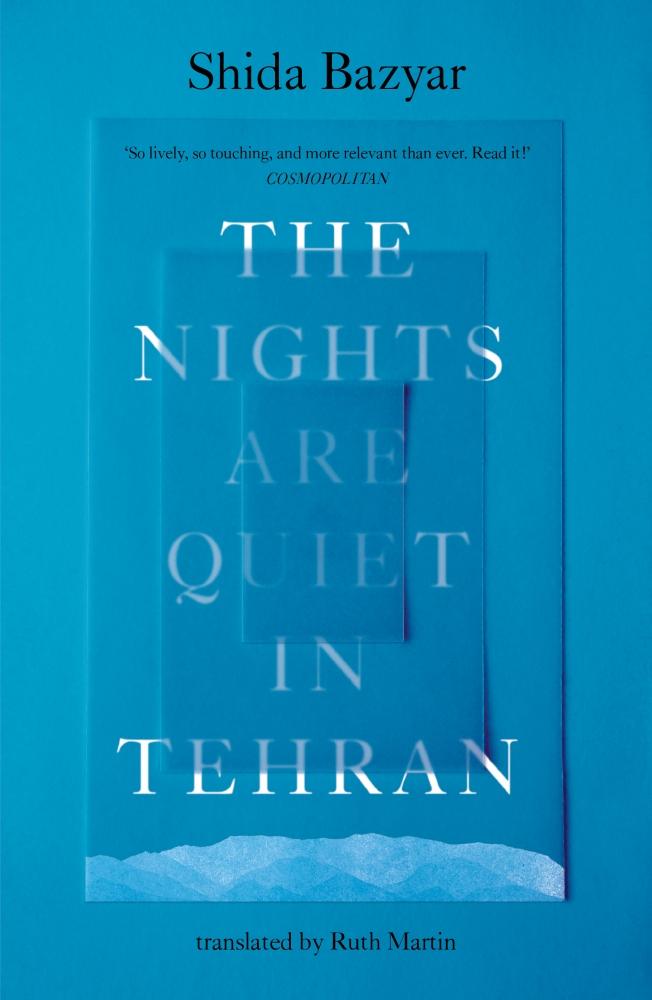
The Nights Are Quiet in Tehran is shortlisted for the International Booker Prize 2026. Read an extract here
Set across four decades, from 1979 to 2009, The Nights Are Quiet in Tehran is a polyphonic novel of one family’s flight from and return to Iran.
1979. Behzad, a young communist revolutionary, fights with his friends for a new order after the Shah’s expulsion. He tells of sparking hope, of clandestine political actions, and of how he finds the love of his life in the courageous, intelligent Nahid.
1989. Nahid lives her new life in West Germany with Behzad. With their young children, they spend hour after hour in front of the radio, hoping for news from others who went into hiding after the mullahs came to power.
1999. Laleh returns to Iran with her mother, Nahid. Between beauty rituals and family secrets, she gets to know a Tehran that hardly matches her childhood memories.
2009. Laleh’s brother Mo is more concerned with a friend’s heartbreak than with student demonstrations in Germany. But then the Green Revolution breaks out in Iran and turns the world upside down.
The Nights Are Quiet in Tehran is a moving novel about revolution, oppression, resistance, and the absolute desire for freedom. It’s published in the UK by Scribe UK. This extract is taken from the novel’s opening chapter.
Buy the book
1979
Behzad
King of kings they called him, and they said, We rejoice in him, we rejoice in his wife and her beauty; they said, We love this country, and then we said, We love this country. We had to rejoice in his newborn son, for longer than we ever would a birth in our own family, his newborn son, in the far-off Palace of Flowers.
Our parents had been told that the oil, the Americans, the English, were part and parcel of the same thing, with the Shah, against us. Our parents stopped working, took to the streets, and then went home again; they were afraid of the secret service and they said nothing more, said nothing against the Shah ever again. Sent us to school and said, We love this country; now you love its schools.
His haughty gaze above the teacher’s desk. We learned what we had to learn, got older, and decided that whatever was written in our schoolbooks, we wanted the opposite. We read Long live the Shah and thought, Death to the Shah. We heard All work is owed to the king and said, The work belongs to the workers. And when we read He leads us to prosperity, we spit on his palaces and on the English and the Americans. We smuggle books, copy them, learn them by heart, pass them on to the next person and the next. We have read and read and read, kept quiet at home and made a noise on the streets, cursed our parents and died for our children. The Shah has gone because he was sick, and the statues have fallen because the people didn’t believe in them.
The Revolution is getting older every week, and we love this country more than ever. The schoolbooks have been changed, in no time at all; we ripped out the pages about the Shah, and took his photo down off the wall. Here’s to no photo of any individual being put up in a classroom again, says Peyman. Here’s to the Ayatollah being put up there soon, back from exile, says his mother. Here’s to Marx and Engels, Che Guevara and Castro, Mao and Lenin being put up in these rooms soon, Sohrab and I say to each other at break time; we even say it in the staffroom now, louder than we ever could before. We’re just waiting for the moment when we’ll decide who fills the empty walls.
The Revolution is getting older every week, but it hasn’t even begun yet. The Shah has gone, and we’re at the beginning of a new age, a new system, a new freedom for which we are now preparing ourselves.
What remains is the turmoil on the streets, still euphoric, but a little less so with each passing week. What remains are the meetings of our movement, the plans, the pamphlets, the teaching units, the guerrilla exercises. They may once have been secret, but now they are ever more public, and we are ever more certain of victory — though sometimes our mood is more reflective, and sometimes more radical, and always with one eye on those people who also call themselves revolutionaries, but are religious with it. The real revolution, however, is still to come: the people’s revolution in the institutions. All that has happened so far is just the first step.
Long live socialism, long live our homeland, our pearl, our Iran!
The Revolution is a month old, and Dayeh is making stuffed vine leaves. They’re all sitting on the floor, my mother, my sisters, my cousins, my aunts. The wives of my older brothers. They have laid the sofrehs out on the living-room floor and are sitting around them with bowls full of rice and minced meat, herbs, lentils, and they are folding vine leaves, one after another, and laying them in a pot and talking and laughing and talking and laughing.
There were just as many women when we were little, though they were different women. Our dayeh would send my sisters and me outside; we weren’t supposed to hear the women’s conversation, to interrupt the neighbourhood gossip. You mustn’t bother people while they’re cooking, we were told, or the food will take longer to make, and we went outside, where we played marbles or pretended to shoot down the murderer of the great and oh-so-honourable Imam Hossein. That was Sohrab’s favourite game. Sohrab didn’t have any siblings of his own yet, and he would always hang around outside the house so that we and the other children would come and release him from his boredom. He’ll be waiting for me again in a few hours. Not bored, not any longer, but driven by a restlessness that we have carried within us since the first stirrings of the Revolution and since it broke out and for the whole of the past month — and which we know we must hide. Restlessness is uncertainty, and future leaders must not show any uncertainty. Only someone who has known Sohrab since he was a child can see it in him.
Dayeh doesn’t send me out these days, though she would like me to leave. Everything about her eyes, her posture says that I shouldn’t be here, that I should only come into contact with the vine leaves once they land hot and cooked and round and gleaming on the sofreh, and I shouldn’t talk about them before that, either, because before that they have no business being in my world. Dayeh has a look that is just for me. For me, sitting in the corner and smoking, a man who needs to leave already so that the women can have the interesting conversations they’ve been looking forward to all morning. Even as a child, I quite quickly realised that it was more interesting with the women. The men either talked about the politics of ages past or played cards, and I wasn’t allowed to join the game. But the women talked about real people and real problems. Which neighbour had argued with her mother-in-law; whose daughter was engaged to whose son but had shown herself to be immoral; which families had drifted into an American lifestyle; which market vendor sold the best-tasting eggplant.
My nieces and nephews run and play between the women, knowing that the moment is approaching when first I and then they will be sent out and they will have to find a new game. There isn’t much to snack on when vine leaves are being stuffed; the rice mixture isn’t very interesting, and the leaves don’t taste good without their filling. When there’s nothing to snack on, you can make a nuisance of yourself. My niece is the smallest, and she wants the smallest dolmeh. My brother Mehrdad is the fattest, and he wants the fattest dolmeh. The women give in with a laugh, planting kisses on the children’s cheeks.
If I were a mother, a sister, an aunt, I would be sitting there doing the same; I would take every opportunity to kiss these little souls, because they’re so joyful, and no matter what is happening outside, no matter what they’re learning at school, no matter that their schoolbooks are suddenly endorsing the opposite of what they did a few weeks previously, no matter if a while ago their parents were still spending their nights on the roof and their days on the streets, returning with bloodied clothes — the children still spend their days laughing, questioning, eating, interrupting, sleeping. They deserve all the kisses in the world, I think, but maybe the life that is just around the corner, still wavering a little — maybe that is the much greater gift.

The Nights Are Quiet in Tehran
© India Hobson for Booker Prize Foundation
The Nights Are Quiet in Tehran
- By
- Shida Bazyar
- Translated by
- Ruth Martin
- Published by
- Scribe UK
Set across four decades, from 1979 to 2009, this is a polyphonic novel of one family’s flight from and return to Iran


Features

- Book recommendations
11 epics from the Booker Library for fans of The Odyssey


- Book recommendations