

‘Meanwhile the dark slid itself onto her chest like a snake, organizing its weight into neatly stacked coils that might go on forever and bury her, crush her, if she didn’t leap out of bed just in time and, with deft skill, reopen the door’
- Published
The author of Flashlight, shortlisted for the Booker Prize 2025, on being haunted by childhood memories of a trip to Japan, and the richness of short novels
Buy the book
The inspirations behind Flashlight
It was a combination of being haunted by childhood memories of a trip to Japan – that was not catastrophic but was still very disruptive – and by stories about the unexplained disappearances, in the late 1970s, of ordinary Japanese people, including a schoolgirl not much older than me. As for telling the story now – it wasn’t that I chose this moment, so much as that I finally managed to finish the book! But I feel lucky, in that this moment does turn out to be a very receptive one for a story about ordinary people facing extraordinary, often malevolent forces.
The book that made me fall in love with reading
There are so many possible answers to this but, because I’m writing about him currently, what comes to mind is Donald Barthelme and his uncategorisably weird, irreverent, erudite, melancholy stories, which I discovered as a teenager and devoured. Barthelme was one of the first writers I read not because it seemed that I ‘should’ but just for the sheer pleasure of it.
The book that made me want to become a writer
All of the books I most loved as a child fall into this category, but Mary Norton’s series The Borrowers, C.S. Lewis’ Narnia books, and Susan Cooper’s The Dark is Rising series were the chief influences, the books that made me start writing very imitative, derivative stories, when I was seven or eight years old. I still totally idealise The Borrowers and The Dark is Rising – which I have not actually re-read since childhood – but I had a painful parting of the ways with Narnia, probably because I’ve read them in adulthood, since I was most determined to impose them on my own children. When I did, I realised that the books were not as I remembered them. Me and my kids put them aside.
The book I read again and again
Because I love to read and to teach short novels, I re-read The Great Gatsby and The Prime of Miss Jean Brodie – among others – all the time, and every time I do, I’m amazed by how much the authors are layering in there, despite how short the books are.
I’m not a book club person. I’d be the one who hadn’t finished the book and was causing everyone else annoyance
The book that changed the way I think about the world
This is a really difficult question because almost whenever I read a really great book – and there are many – I have the experience you describe, where I see everything differently, almost as if I’ve been dropped onto an alien planet. Sometimes the world itself seems alien. Sometimes the ways I’ve seen the world seem alien. Richard Powers’ The Overstory, Paul Kingsnorth’s The Wake, Sigrid Nunez’s The Friend, Selby Wynn Schwartz’s After Sappho, Han Kang’s Human Acts, Andre Alexis’ Fifteen Dogs are just a handful of books I’ve read relatively recently that have made me feel this way.
The book that changed the way I think about the novel
Jenny Erpenbeck’s Visitation, because she achieves so much, with such concision, in the way of the best poetry. It’s like a magic trick. It was my inspiration for Flashlight, which I had hoped would be a very lean novel full of evocative white space and which instead is the longest book I’ve ever published. And so Erpenbeck’s power of concision is now even more awesome and humbling to me.
The book I’m reading right now
I came across Giorgio Bassani’s The Garden of the Finzi-Continis translated by William Weaver in a used bookstore recently and realised I’d never read it, although I remembered the movie, and so that’s what I’m reading right now and I love it. It has the quality of making you feel as if you’re re-experiencing memories of an irrecoverably lost past, even though the lives he’s describing don’t overlap with my real life at all.
The Booker-nominated book everyone should read
Alan Hollinghurst’s The Line of Beauty, one of my favourite books of all time.
Where and when I most like to write, and the tools I need
My favourite place to write is any place where someone else is taking care of the meals.
My dream book club, what we’d read, and where we’d meet
I’m not a book club person – I’m very wayward in my reading, and it’s hard enough for me to manage to read the books I assign to my students at the same time as I’ve assigned them. I’d be the person in the book club who hadn’t finished the book and was causing everyone else annoyance. But if I could sit around and talk books with anyone living or dead, I’d be sitting around with Virginia Woolf at Monk’s House, if she wanted to invite me.
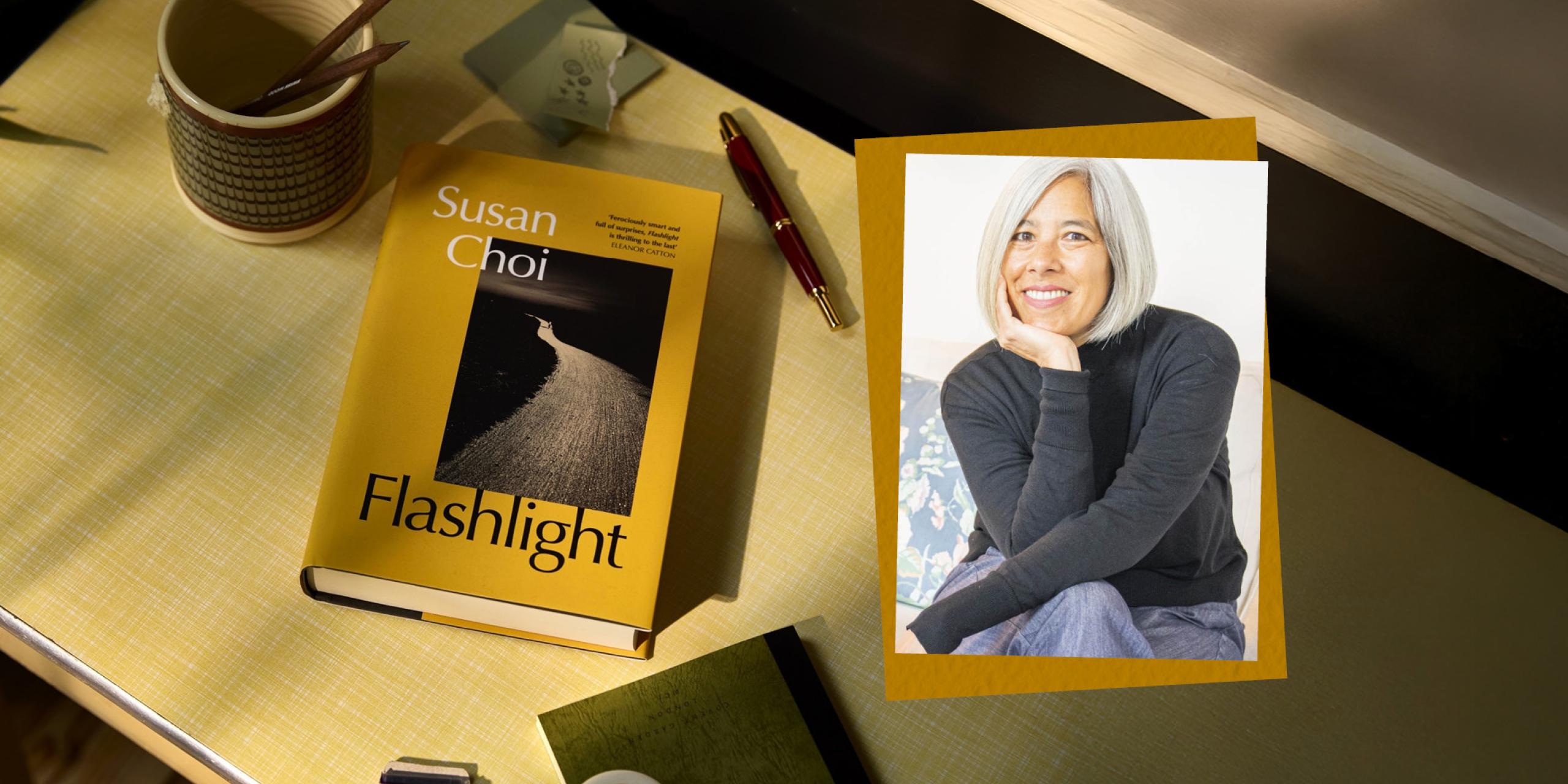
Flashlight
- By
- Susan Choi
- Published by
- Jonathan Cape
A thrilling, globe-spanning novel that mines questions of memory, language, identity and family


Features

- Book recommendations
The Booker Prize 2025 longlisted authors on the books they reread again and again

- Book recommendations
The best Booker audiobooks to curl up with this winter, chosen by you

- Book recommendations
The best children’s books for Christmas written by Booker Prize authors

- Book recommendations