Oxygen
by Andrew Miller

An atmospheric novel set during a famously freezing 1960s winter, The Land in Winter explores the minutiae of married life through the interior lives of two couples
Whether you’re new to The Land in Winter or have read it and would like to explore it more deeply, here is our comprehensive guide, featuring insights from critics, our judges and the book’s author, as well as discussion points and suggestions for further reading.
December 1962, the West Country. Local doctor Eric Parry, mulling secrets, sets out on his rounds, while his pregnant wife, Irene, sleeps on in the warmth of their cottage.
Across the field, Rita Simmons is also asleep – and also pregnant – her head full of images of a past life her husband Bill prefers to ignore. He’s been up for hours, tending to the needs of the small dairy farm where he hoped to create a new version of himself, a project that’s not going well.
When the ordinary cold of an English winter gives way to violent blizzards and deep snow, the two couples find their lives beginning to unravel. Where do you hide when you can’t leave the house? And where, in a frozen world, can you run to?
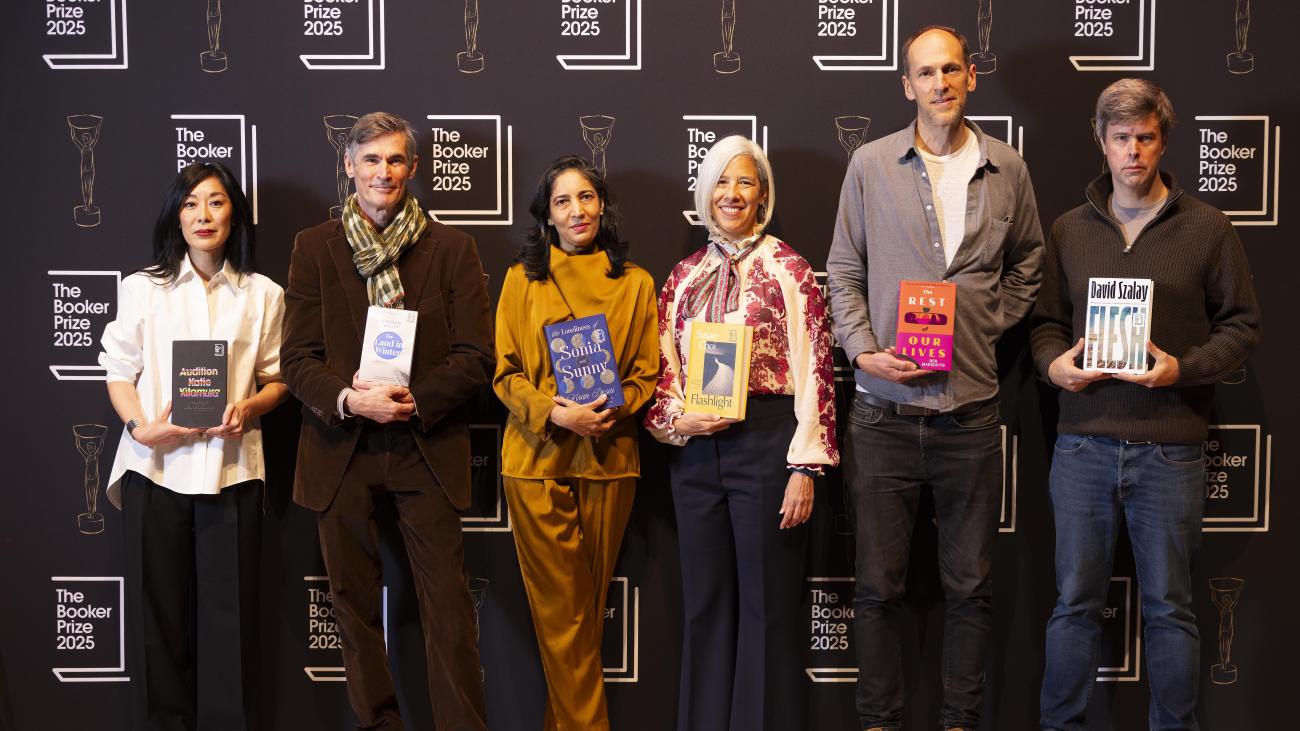
The Land in Winter was shortlisted for the Booker Prize 2025.
Eric Parry
An Oxford graduate and outwardly respectable local doctor in his 30s. Eric is married to Irene but preoccupied by an illicit affair with wealthy housewife Alison Riley. He works alongside fellow doctor Gabby Miklos at the village surgery.
Irene Parry
A solidly middle-class mother-to-be who becomes friends with her near-neighbour Rita. Irene has left behind a comfortable upbringing in the southeast to make a new life with husband Eric in the West Country.
Bill Simmons
An inexperienced dairy farmer who has recently moved to Somerset from London, partly to escape his rich, flawed father and his shady business dealings. Bill lives with his pregnant wife Rita at Water Farm, a rundown place that’s hard to heat.
Rita Simmons
Rita met husband Bill in Bristol while working for the agency that sold him the farm. Before that she worked as a dancer at a city nightclub. Playful but troubled, Rita bonds with near-neighbour Irene over their pregnancies.
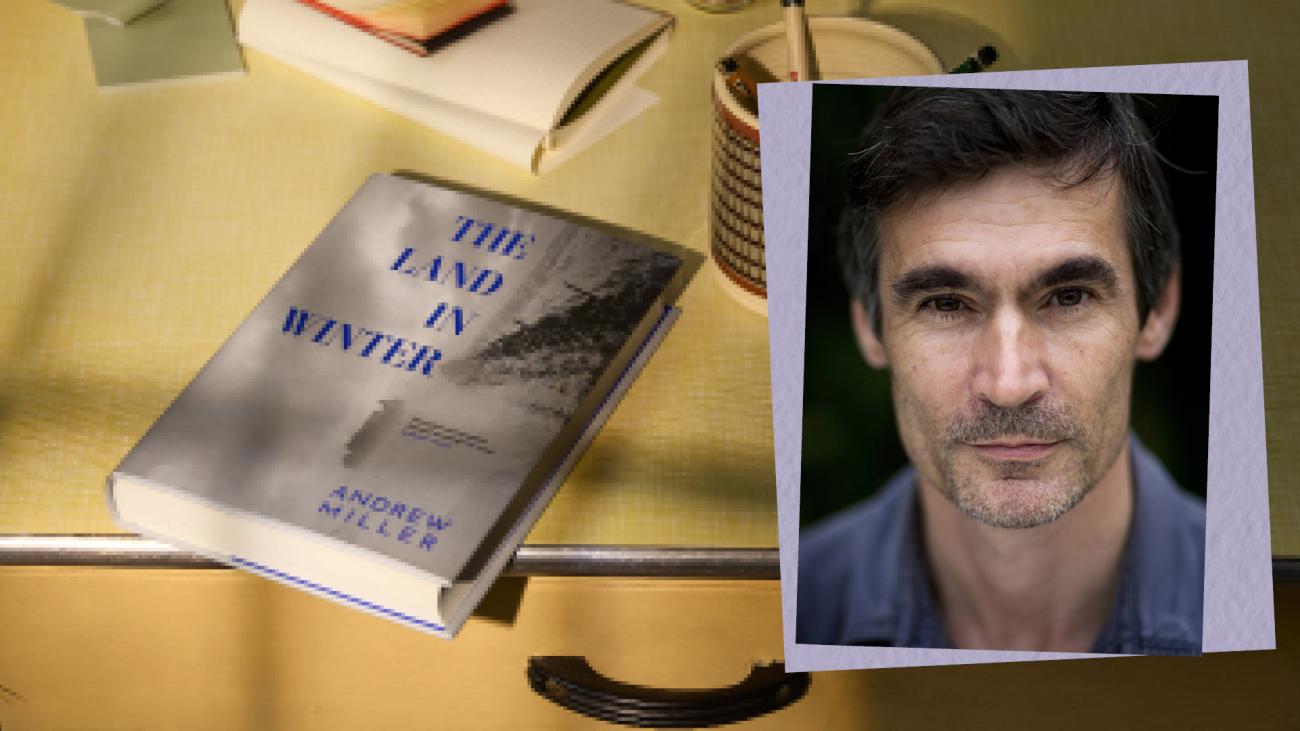
Andrew Miller was born in Bristol and currently lives in Somerset, UK. He was educated at Middlesex Polytechnic, Lancaster University and the University of East Anglia, where his tutors included Malcolm Bradbury and Rose Tremain.
Miller’s novels have been published in translation in over 20 countries. His first, Ingenious Pain, published in 1997, won the James Tait Black Memorial Prize, the International IMPAC Dublin Literary Award and the Grinzane Cavour Prize for the best foreign novel published in Italy.
It has been followed by Casanova, Oxygen, which was shortlisted for the Booker Prize in 2001 and the Whitbread Novel of the Year Award, The Optimists, One Morning Like a Bird, Pure, which won the Costa Book of the Year Award 2011, The Crossing, Now We Shall Be Entirely Free and The Slowworm’s Song. The Land in Winter won the 2025 Walter Scott Prize for Historical Fiction.
Miller has worked as a residential social worker and has taught TEFL in Japan and Spain. He is a keen sailor, has a black belt in aikido, and plays the mandolin in a folk band. In 2012, he was elected a Fellow of the Royal Society of Literature.
Andrew Miller
© Rob Macdougall
‘The novel is about the tensions within marriage and other relationships, and those tensions are the same today as they were back then. How to live: that’s the big human issue and it forms the spine of the book.
‘It’s a joy to read, a nerve-shredding pleasure.’
Martin Chilton, Independent
‘The Land in Winter is a brilliant novel, but wrap your emotions up tight because Miller steers it expertly towards a desolate, distressing ending.’
Rachel Seiffert, Guardian
‘Andrew Miller is a master of nuance, expert at exploring the various chambers of the human heart… in The Land in Winter, Miller turns to the difficulty of loving in an unlovely world.’
Lucy Scholes, Financial Times
‘This is a quiet book about quiet lives, but the delicate attention Miller affords his characters’ inner lives makes for incredibly satisfying reading.’
The Land in Winter by Andrew Miller
© Yuki Sugiura for Booker Prize Foundation
On what inspired The Land in Winter:
‘An anecdote of my mother’s that rattled around in my head for many years. Also a wish to reach back to a period that was right at the furthest stretch of what I could in any way claim to remember. And to try to make a certain kind of novel – lots of flow and momentum, and full of narrative pleasures.’
The novel is split into three parts, and the action unfolds over a couple of months. In an interview, Andrew Miller said The Land in Winter was an attempt ‘to make a certain kind of novel – lots of flow and momentum, and full of narrative pleasures’. Do you think he has achieved this? What did you think of the novel’s structure and pace?
Miller was born in Bristol in 1960 and has said the book was inspired by a ‘wish to reach back to a period that was right at the furthest stretch of what I could in any way claim to remember’. The novel is full of objects, clothes, brands and behaviours that feel specific to England in the early sixties. Did you enjoy the 1960s setting? What surprised you most about what life was like during that era?
Aside from the first chapter, the novel alternates between the interior lives of the four main characters: Eric, Irene, Bill and Rita. They are all recently married, about to have their first children, but they are also very different, with varied backgrounds and preoccupations. Each of them faces a distinct and dramatic moment of reckoning. Who did you most like spending time with and why? Were you surprised by the turn of events?
Huge social changes were just around the corner, but the women’s lives right now feel constrained and restricted. Both Irene and Rita spend a lot of time stuck at home, waiting. What did you think of the friendship struck up between the two women? What does their outing to Bristol reveal about their domestic situations?
The men are often preoccupied by their work and their fathers. Do you think either Bill or Eric actually enjoy their jobs? What did you make of Bill’s trip to London to see his family?
The Second World War, including the horrors of the Holocaust, loom in the background of the novel, although they’re rarely discussed out loud. Meanwhile several characters in the novel struggle with their mental health. What did you think of the way people’s internal troubles were represented? How does the novel expose the things that are left unsaid?
Irene throws a house party on Boxing Day, and her planning is described in meticulous detail. The party takes place at the end of part one, in the middle of the novel. It’s a set-piece moment when Andrew Miller brings his characters together in one place. What did you think of the party scene, the atmosphere Miller evokes, and where it is positioned in the book?
Alison Riley is one of the party guests, along with her husband Frank. Eric, who thinks he might be in love with Alison, believes she’s ‘the kind of person who might choose to bring the house down simply to find out what kind of noise it made’. What did you make of Alison as a character? Do you think she is portrayed fairly in the novel?
The Booker Prize 2025 judges said in their comments about The Land in Winter, ‘It’s 1962, and the most dramatic winter in living memory drops on rural England, leaving a group of brilliantly crafted characters trapped inside the weather, coping – and not coping – with the cold and the snow and one another.’ What did you think of the way Miller writes about the weather and how it shapes the course of events? Would things have turned out differently if it had been an ordinary kind of winter?
The first and final chapters of The Land in Winter stand out. The first chapter, unlike all the others, is written from the perspective of a patient in the local asylum, whose full identity we only learn later on. The final chapter is short and surreal. What did you think of the novel’s beginning and end?
BBC Radio 4: Take Four Books, with Andrew Miller on The Land in Winter
The Walter Scott Prize for Historical Fiction: shortlist spotlight: Andrew Miller
Guardian: Andrew Miller: ‘Writing is how you transform yourself, the world. It’s your politics’
Irish Times: Andrew Miller interview: New novel focuses on recovery and regret
by Andrew Miller
by Benjamin Wood
by Yael van der Wouden
by Ali Smith
by Penelope Fitzgerald
by Alan Warner