

‘The sun was still submerged in the wintry murk of dawn when Ba, Dadaji, and their daughter, Mina Foi, emerged upon the veranda to sip their tea’
- Published
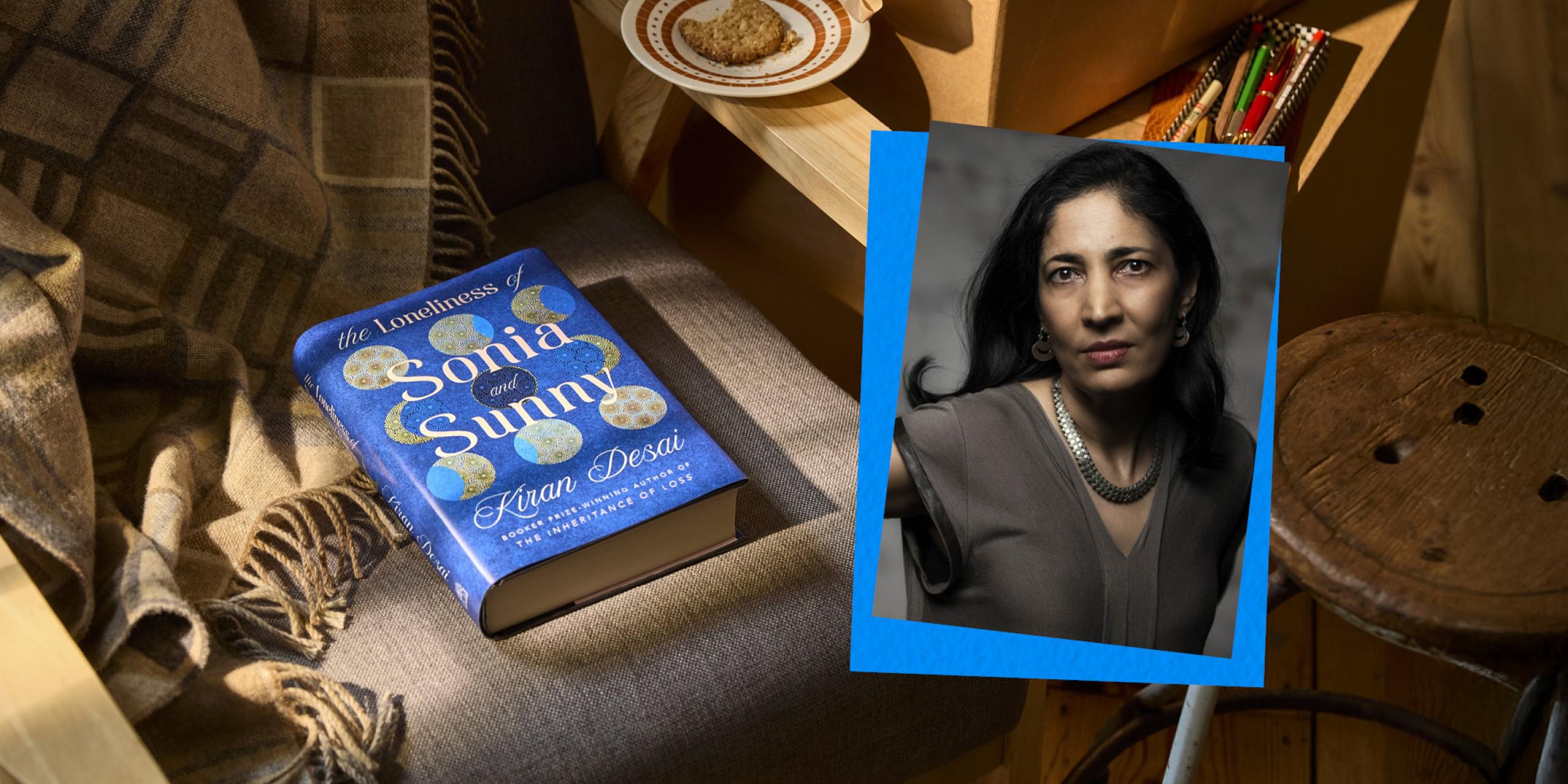
The author of The Loneliness of Sonia and Sunny, shortlisted for the Booker Prize 2025, talks about her love of The Wind in the Willows and how Latin American writers have influenced her
Buy the book
The inspirations behind my Booker-longlisted book
I wanted to write a story about love and loneliness in the modern world. I wanted to write a present-day romance with an old-fashioned beauty. In the past of my parents, and certainly my grandparents, an Indian love story would mostly be rooted in one community, one class, one religion, and often also one place. But a love story in today’s globalised world would likely wander in so many different directions. My characters consider: Why this person? Why not as easily someone else? Why here, not there? In the past people were always where they had to be. My indecisive lovers, Sonia and Sunny, meet and part across Europe, India and America, their idea of themselves turning ever more fluid. As I wrote across geographies and generations, I realised that I could widen the scope of my novel, to write about loneliness in a much broader sense. Not just romantic loneliness, but the huge divides of class and race, the distrust between nations, the swift vanishing of a past world – all of which can be seen as forms of loneliness.
The book that made me fall in love with reading
The Wind in the Willows by Kenneth Grahame. This was, after all, an Indian childhood and my bookshelf was full of English children’s books, some that I inherited from my parents’ time. My copy is a 1954 clothbound edition, the pages honeyed, but the illustrations still sharp. I loved this book about the shabby, tender joys of home, contrasting with the lure and gleam of adventure. Which way to go? The story also nurtures a profound love for the natural world. Whenever I think of Toad of Toad Hall poop pooping his automobile horn, of Mole driving out the pesky weasels with the war-cry, ‘A mole! mole!’ I laugh out loud.
I graduated to Emily Bronte’s Wuthering Heights, and R.K. Narayan’s books set in the fictional town of Malgudi. I had never seen the wild temperamental moors, but the gentle humour of Narayan was familiar and dear. ‘Conquer taste, and you will have conquered the self,’ said Jagan to his listener, who asked, ‘Why conquer the self?’ Jagan said, ‘I do not know, but all our sages advise us so.’ This is from The Vendor of Sweets.
The book that made me want to become a writer
Calvino is an author who carries the playfulness and inventiveness of a child’s world into works for adults. The Baron in the Trees, translated by Archibald Colquhoun, was in my mind when I wrote my first novel in my 20s. I loved the character of Cosimo, who fights with his family over eating snails, and goes off in a huff to live in a tree. I wrote an Indian version of a boy living up in a tree.
How do I feel about the writer now? Much later I read Calvino’s Six Memos for the Next Millennium, a work that proffers a code of aesthetics titled: Lightness, Quickness, Multiplicity, Visibility. The last one, unwritten, was to be Consistency, and was likely meant to stress underlying unity to an abundance of images and realised fantasies. I thought these tenets had an eerie parallel in Eastern philosophy, in Hindu and Buddhist thought. I became interested in the consequence – secular, artistic, spiritual – of these ideas.
The book I read again and again
Pedro Paramo by Juan Rulfo, translated by Margaret Sayers Peden. I read this book when I learned that Gabriel García Márquez knew it by heart (Love in the Time of Cholera was an inspiration for The Loneliness of Sonia and Sunny, as was a Chronicle of a Death Foretold). This is a story about a story that will not be put to rest, one of a brutal history driven by a loveless man, of souls that have transgressed and will never find peace. The first lines still give me goosebumps: ‘I came to Comala because I had been told that my father, a man named Pedro Paramo, lived there.’ A man makes a promise to his dying mother to journey into the land of the dead to seek the justice she never received during her life.
Over years of re-reading it, I learned that Mexico had something to say to India, not just to the United States. And Mexico had something to say to me. Emigrant stories are ghost stories and murder stories. I could write a book, I thought, incorporating these ideas, even if in a very different form. I think it is important that artists in countries previously only in communication through a former colonial power, now communicate directly. The poet Octavio Paz and the photographer Graciela Iturbide have held a unique mirror to India.
The book that changed the way I think about the world
Salman Rushdie said he wrote The Moor’s Last Sigh feeling fed up with being told that minorities were less Indian than the majority Hindu community. He decided to prove otherwise by writing about characters from two of the smallest communities in India, the Portuguese Catholics and the Black Jews of Cochin. When Aurora da Gama and Abraham Zogoiby meet and marry, in passages of incomparable prose, they produce, as Rushdie put it, a minority of one: Moraes Zogoiby.
I emerged from the pages of this novel thinking that a citizen’s and a novelist’s life is in devotion to that minority of one, the singular take that provides unique perspective on the whole. When we fight for human rights, for minority rights, for a secular nation, we are, in fact, also fighting for a literary landscape. To be able to write with knowledge and intimacy about people who come from other worlds. I read about the da Gama and Zogoiby families with absolute recognition and a bloom of affection within my heart. It is true: these are Indian Jews and Indian Catholics. They could come from nowhere else.
When we fight for human rights, for minority rights, for a secular nation, we are, in fact, also fighting for a literary landscape
The book that changed the way I think about the novel
When I read Roberto Bolaño’s The Savage Detectives, in translation from Spanish by Natasha Wimmer, it took my breath away. I was bewitched by this modern epic about unknown poets slipping across borders, encountering and embodying a vast cast of characters across Europe, Africa, the Americas. There is a wildness to the structure and a colloquial tang to the dialogue and the philosophical musings that are taken seriously to the point of fantastic silliness.
Bolaño is performing an impossible feat. This book does what you think is inherently opposite to a novel. It doesn’t centre a story, it explodes it into moving molecules. It isn’t tied to place, it renders the novel homeless. The details are absolutely precise. It travels swiftly, there are multiple viewpoints, but there is an underlying unity to all these stories in a theme of vanishing, of movement and anonymity, of the uselessness of a flag for people like these. It’s very pertinent to today’s world. It’s also a love letter to being young in the cafes of Mexico City. It makes those of us who have never been young in Mexico City feel nostalgic for those endless, leafy, high, cool nights.
Also, Snow Country by Yasunari Kawabata, translated by Edward G. Sidensticker, is a book that has remained mysterious and beguiling to me. A train comes up through a long tunnel and out into the snow country at night. The book is constructed out of distances, the distance between rural Japan and the world of a dilettante from Tokyo, the distance between the characters despite the intensity of their relationships, between reality and illusion. What interests me is that while Kawabata was well schooled in Western literature, this is a deliberately Asian novel, one imbued with the philosophy of Zen Buddhism and the principals of haiku, which were inspirations Kawabata spoke about in his Nobel speech in 1968. It is a book where some of the central mysteries of the plot are never revealed. We understand intuitively, by visual metaphors and reflections that unsettle the real world to create a symbolic world, and also via a deeper undertow tied to the changing seasons.
The book I’m reading right now
Pyre by Perumul Murugan, translated from Tamil by Aniruddhan Vasudevan. Murugan is a chronicler of the brutality of caste entrenchment, but Pyre also happens to be a tender love story that gives me insight into a village India that I don’t myself know. I am enjoying reading descriptions such as the one of a woman who is shocked into stillness, so much so that the ants crawling up a nearby tree begin crawling up and down her as well.
The Booker-nominated book everyone should read
Mrs Palfrey at the Claremont by Elizabeth Taylor, from 1971. It was recently reissued by NYRB Classics, which is when I found it on the shelves of my local bookstore. I was surprised to see this on the Booker list, perhaps because I found it so enjoyable, and I must therefore think that there should be an element of misery in a work that wins a literary prize. But while it is a comic novel, it is also heartbreaking to read about the occupants of a hotel for old people with nowhere to go, trying to uphold their dignity, although it is being assaulted each day. The subterfuge Mrs Palfrey must resort to – it moved me greatly.
I read Troubles, J.G. Farrell’s novel from 1970, during a Covid winter. It was freezing and pitch dark by 4pm, and I spent many long evenings with this long book set in the dilapidated Majestic Hotel full of elderly ladies and cats, the stifling atmosphere of decay, the stormy love affairs that turn out not to be love affairs. The Anglo-Irish war rumbles at the periphery of the book, suffusing it with dread. Farrell went on to write The Siege of Krishnapur and The Singapore Grip. As with Naipaul, I admire this ambition of working over borders to examine the consequences of imperialism.
Where and when I most like to write, and the tools I need
My favourite places to write are verandahs and kitchens. I remember verandahs where I worked during rainy seasons and hot summers, smacking mosquitoes alongside stray dogs desperately chasing their fleas. When there are no verandahs occupied by stray dogs, such as in my home in New York City, I work in the kitchen, which gives me a sense of writing being part of a normal existence. The kettle boils, the lettuce is washed, the words proceed.
My dream book club, what we’d read, and where we’d meet
When I came to live in the United States, I fell in love with a certain stubborn, gruff woman’s voice in fiction. A suffer-no-fools kind of voice, plainspoken to the point of rudeness, but a voice that could also shift to kindness. This voice isn’t particular to the United States, of course, but I associate it with a practical, pioneer spirit, the sort you would summon to run a cattle ranch in Wyoming, but also to write a novel. So how about a book club with Eudora Welty, Isak Dinesan, Clarice Lispector, Leonora Carrington and Natalia Ginzburg? I would add Ismat Chughtai, to include a transgressive voice from the country of my birth. What would we read? We would have to ask these ladies because they would never take dictation from the likes of us.
The Loneliness of Sonia and Sunny
- By
- Kiran Desai
- Published by
- Hamish Hamilton
A spellbinding story of two young people whose fates intersect and diverge across continents and years – an epic of love and family, India and America, tradition and modernity


Features

- Book recommendations
South Asian Heritage Month: 12 books to read from the Booker Library
- Book recommendations
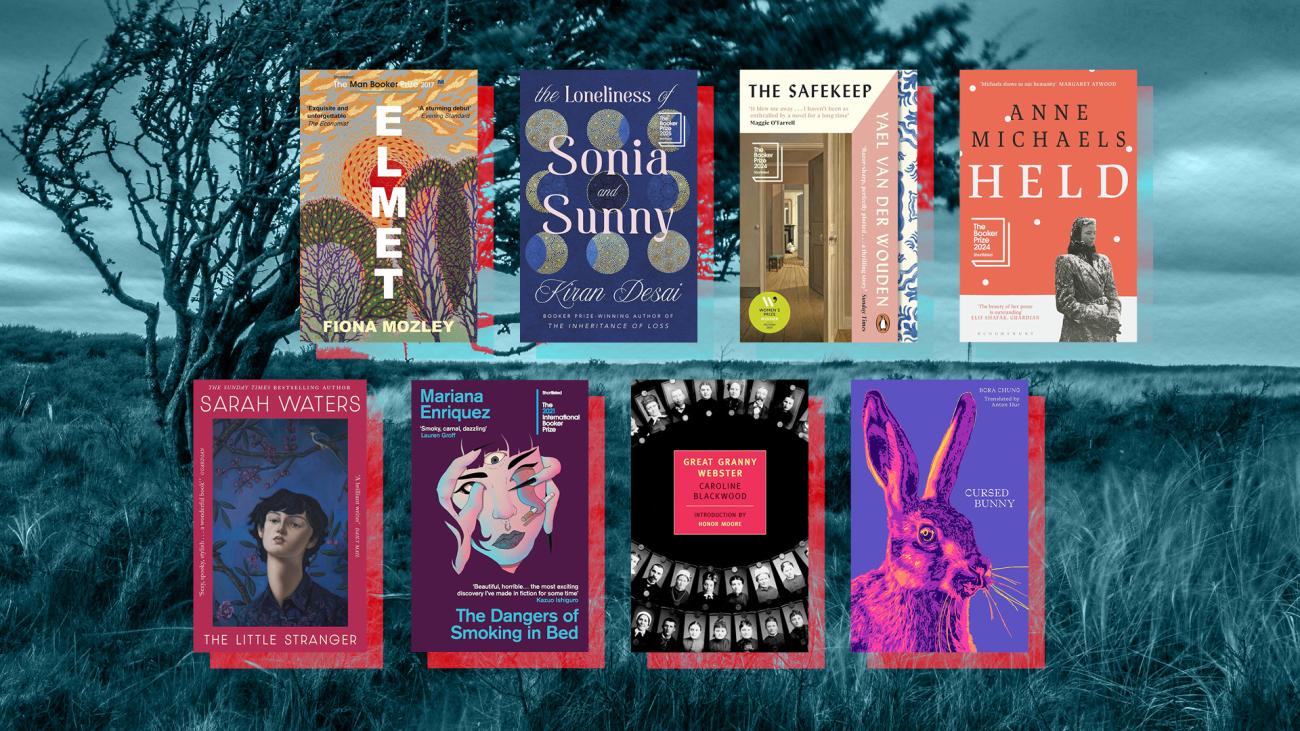
Eight Booker-nominated books for fans of Wuthering Heights

- Book recommendations
The Booker Prize 2025 longlisted authors on the books they reread again and again

- Book recommendations
The best Booker audiobooks to curl up with this winter, chosen by you

- Book recommendations