
As the International Booker Prize 2023 shortlist is announced, discover the most interesting facts and trends that have emerged in this year’s selection
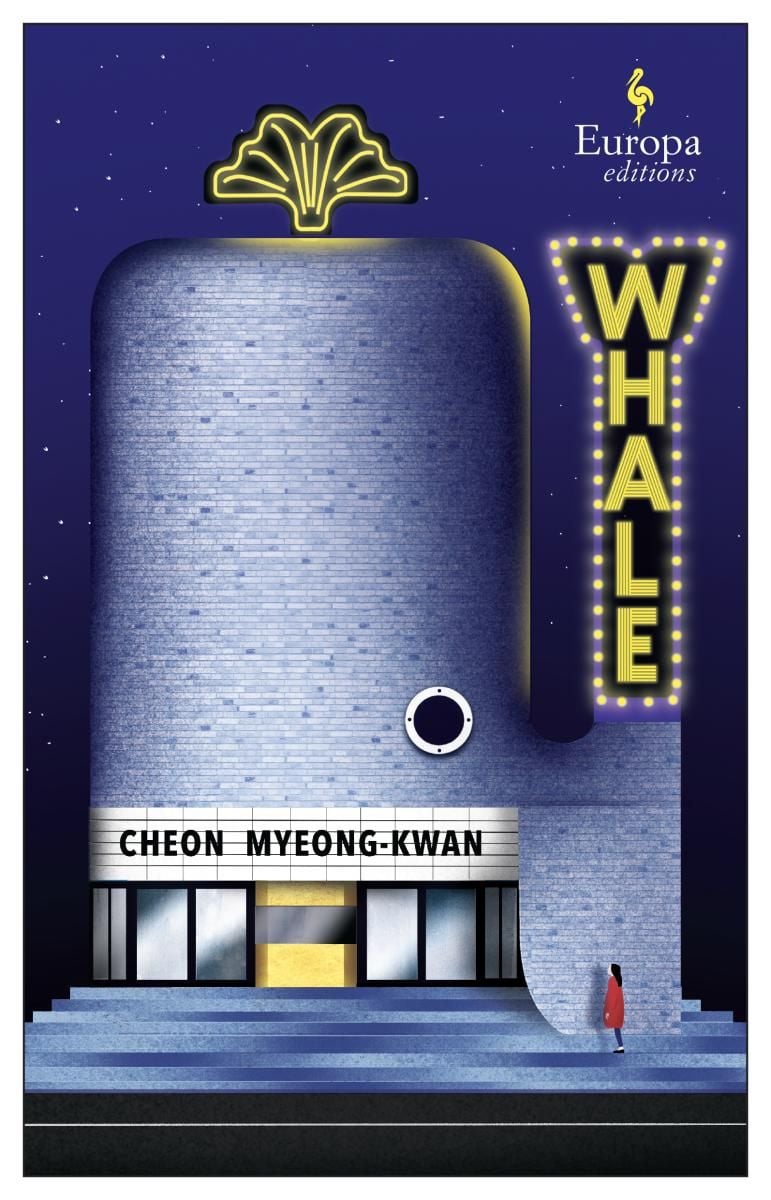
Reading guide: Whale by Cheon Myeong-kwan, translated by Chi-Young Kim
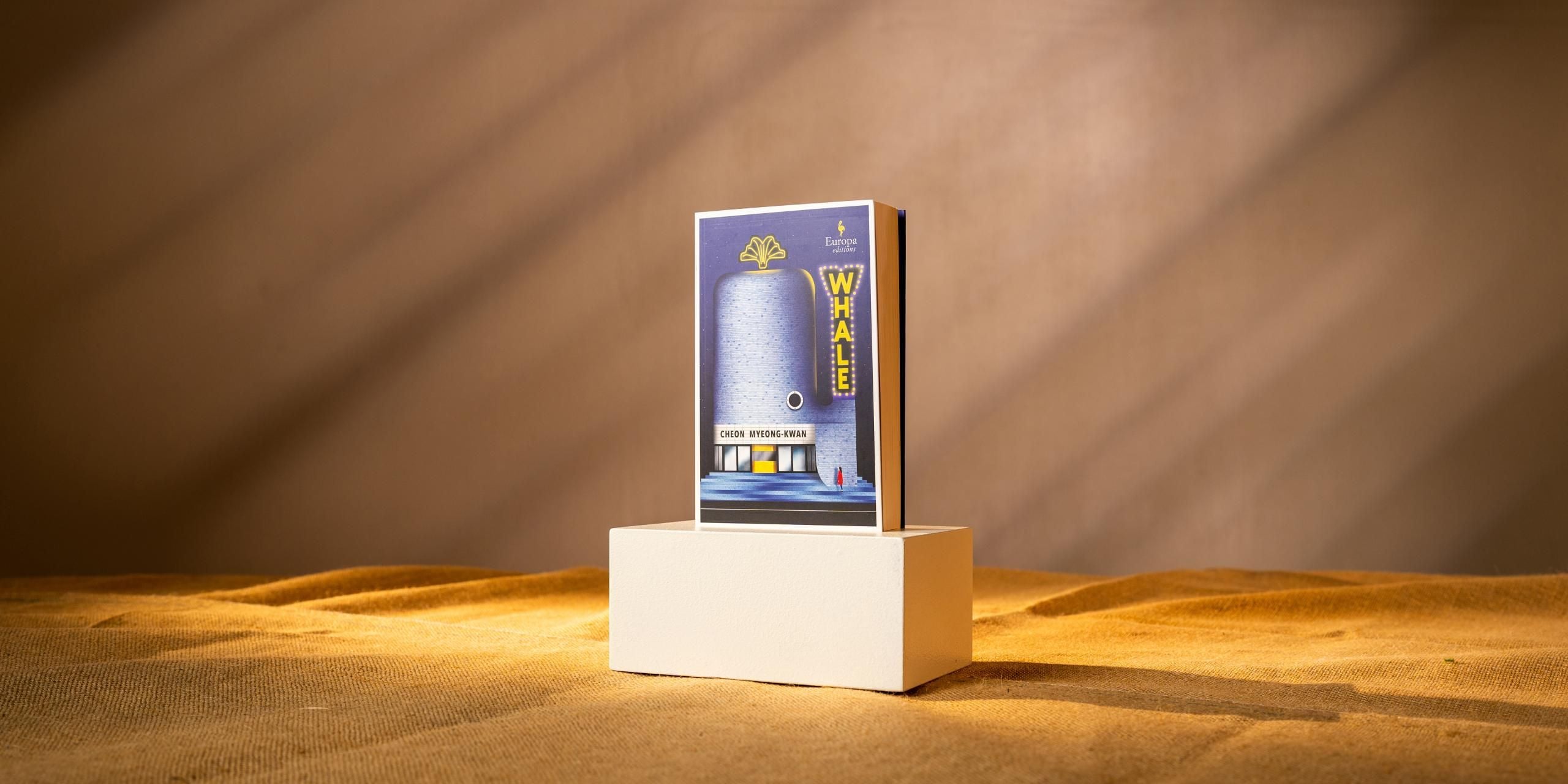
Reading guide: Whale by Cheon Myeong-kwan, translated by Chi-Young Kim
You are viewing: Contents
- Published
Shortlisted for the International Booker Prize 2023, Cheon Myeong-kwan’s novel is a rollercoaster adventure through Korean history and culture, a magical epic about life, death, liberty – and bricks
Whether you’re new to the book or have read it and would like to explore it more deeply, here is our comprehensive guide, featuring insights from critics, our judges and the book’s author and translator, as well as discussion points and suggestions for further reading.
Synopsis
Set initially in a remote village in South Korea, Whale follows the lives of three linked characters: Geumbok, an extremely ambitious woman who has been chasing an indescribable thrill ever since she first saw a whale crest in the ocean; her mute daughter, Chunhui, who communicates with elephants; and a one-eyed woman who controls honeybees with a whistle. A fiction that brims with surprises and wicked humour, from one of the most original voices in South Korea.
Whale is an adventure-satire of epic proportions, which sheds new light on the changes Korea experienced in its rapid transition from pre-modern to post-modern society.

Cheon Myeong-kwan
The main characters
Chunhui
The novel opens with Chunhui – or ‘girl of Spring’ – an enigmatic and physically imposing brickmaker. Chunhui is the daughter of Geumbok, founder of a brickmaking factory and the novel’s other main character, Chunhui is born unable to speak and grows up isolated from those around her; her closest relationship is with a circus elephant and the two of them share intimate conversations. She is blamed for a fire that kills 800 people and is imprisoned. After many years away, she returns to the brickyard.
Geumbok
Geumbok is Chunhui’s mother. She grew up in an impoverished village, but makes it out through a combination of luck, charm and skill. Over the course of the novel she runs several entrepreneurial ventures, adapting to the developing capitalist economic environment in Korea. She is often depicted as a male fantasy, but her looks come second to her steely determination through which she survives the challenges – and violence – that life throws at her.

Whale by Cheon Myeong-kwan, translated by Kim Chi-Young
About the author and translator
About the author
Cheon Myeong-kwan is a South Korean novelist, screenwriter and director whose work has been translated into eight languages. Upon publication of the author’s first story, Frank and I (2003), he received the prestigious Munhakdongne New Writer Award. Cheon’s debut novel, Whale, was published the following year. It won the 10th Munhakdongne Novel Award and has become one of the most loved novels in South Korea, where it is regarded as a modern classic.
About the translator
Chi-Young Kim is a literary translator and editor, who trained as a lawyer before taking up translation, initially as a hobby. A recipient of the Man Asian Literary Prize for her work on Please Look After Mom by Kyung-sook Shin, Chi-Young Kim has translated over a dozen books, including works by Ae-ran Kim, You-jeong Jeong, and Young-ha Kim, among others. She was born in Boston, MA and is now based in Los Angeles, CA in the United States.

Chi-young Kim
What the International Booker Prize judges said
‘Whale is a rollercoaster adventure through Korean history and culture, a magical and grotesque epic about life and death, liberty and self-fulfilment, dried fish and bricks.
‘A carnivalesque fairytale that celebrates independence and enterprise, a picaresque quest through Korea’s landscapes and history, Whale is a riot of a book. Cheon Myeong-Kwan’s vivid characters are foolish but wise, awful but endearing, and always irrepressible. This is a hymn to restlessness and self-transformation.
‘Alongside the whirlwind plot, probably the riotous sense of humour. This is real Rabelaisian stuff – grotesque bodies, violence, passion, decay and carnivalesque laughter. This makes the book very funny, but also deeply human
‘The characters have the power of archetypes – they’ll haunt your dreams. Geumbok, the protagonist, is an irrepressible entrepreneur and individualist, but with contradictions – she is sly and gullible, loving and violent, dedicated and treacherous. You can’t take your eyes off her. The story, however, really belongs to Chunhui, her daughter, who is a tragic saint and a survivor.
‘It’s a story of a woman making her way in a hostile world, and that is always relevant. This is a story full of magic and humour, but there is also profound darkness and struggle, terrible violence and prejudice. Patriarchal society eventually forces Geumbok to become a man (in more ways than one!), but you won’t have seen these problems explored in quite the same magical, brutal, bodily way as they are here.
‘The book is packed with memorable moments and images, but the most memorable were the moving ones. One that sticks in the mind is when Chunhui, neglected, lonely and unable to speak, first has a conversation (in her imagination?) with a stuffed elephant, who then becomes her only friend… it’s absurd, but it will bring a tear to your eye.’

International Booker Prize judges 2023: Parul Sehgal, Frederick Studemann, Uilleam Blacker, Leïla Slimani and Tan Twan Eng
© Hugo Glendinning
What the critics said
Financial Times:
‘Considered a contemporary classic in its native country, this sprawling 20th-century story follows the life of Geumbok, an enterprising young Korean woman from the mountains whose fortunes are emboldened by her potent effect on men and a preternatural business sense.
‘Told in an omniscient and playful narrative voice, smoothly translated by Chi-Young, this is a distinctly Korean take on Great Expectations, a tale of aspiration and folly punctuated with artisanal bricks and dried fish.’
Asian Review of Books:
‘Cheong Myeong-Kwan’s writing is funny and light while also deeply philosophical and sensual. The story often contains a twinge of wistful sadness and nostalgia that is far more common in Latin Boom literature but feels equally at home when mixed with the deeply Korean concept of han, a feeling of deep sorrow that is often claimed to be an integral part of Korean identity.’
Buzz:
‘Whale’s magical realism provides an entertaining element, imbuing hidden meaning in even the simplest turns of events.’
London Korea Links:
‘Brimming with surprises and wicked humour, Whale is an adventure-satire of epic proportions, by one of international literature’s the most original voices.’
Korean Literature Now:
‘Reading the novel, one constantly gets a feeling of watching an amazing movie: according to the author-director’s will, brief, vivid stories take turns, the protagonists’ fates intertwine, and just as one assumes that the plot about a crone who spends her entire life saving money to take revenge on the whole world is cut short early in the novel, it surprisingly reemerges, first, in the miraculous salvation of Geumbok, who is left without any means of living, and then in the cause of her death.’
Whale’s magical realism provides an entertaining element, imbuing hidden meaning in even the simplest turns of events
Questions and discussion points
Cheon’s epic saga centres on a mother, Geumbok, and her daughter, Chunhui, and how their experiences map onto developments in South Korean society. Why do you think Cheon chooses to put his character’s lives in conversation with South Korean history? What were the specific moments in time he chose to focus on?
The narrative looks closely at mother-daughter bonds amidst an oppressive and ruthless society. In Geumbok we see a woman determined to survive and succeed despite her vulnerability and the restrictions placed upon her as a woman. Chunhui, her daughter, works as a brickmaker in a factory and does not speak, marking her out as a lonely figure. What did you make of the depiction of the two women’s bond and of the novel’s examination of womanhood in South Korean society more broadly?
Cheon’s novel has been compared to Gabriel Marquez’s One Hundred Years of Solitude; both are larger-than-life magic-realist tales. What does the fantastical and fairy-tale like quality of Whale bring to the experience of reading it, and how does it work in relation to the book’s examination of historical events?
The whale is a recurring motif in the book. Geumbok first glimpses a whale when she leaves home and travels to the city, an experience that has a profound effect on her. It is also symbol embodied in the physicality of Chunhui herself and in the shape of the cinema Geumbok wishes to build. The whale has featured in art for centuries, from Herman Melville’s Moby Dick to Darren Aronofsky’s recent Oscar-nominated film. What is the significance of the whale in Cheon’s novel and how do you think it relates to - or differ from - iterations of whale symbols in other artworks?
The book was described by the FT as a ‘distinctly Korean take on Great Expectations’. What do you think is meant by this statement, and do you agree?
Cheon Myeong-Kwan’s background lies in filmmaking and screenwriting. One critic said that ‘Reading the novel, one constantly gets a feeling of watching an amazing movie.’ Has Cheon’s background in film impacted your reading of the book? Would you describe Whale as having a filmic quality?
Another critic observed that Whale contains elements of han, a uniquely Korean blend of internalised rage, resentment, grief, regret and sorrow – a concept that is somehow part of the country’s DNA and has no direct English translation. Do you recognise all of those elements in the book?
Aside from its magical-realist qualities, the book is also notable for its unvarnished depiction of violence and brutality against its central protagonists. What did you make of Cheon’s use of violence in the novel? Did you feel it served the wider aims of the novel for those scenes to exist?
In one interview the author has described the novel as a revenge play. Do you agree, and if so how exactly?
The judges found the novel to be ‘packed with memorable moments and images’ especially ‘when Chunhui, neglected, lonely and unable to speak, first has a conversation (in her imagination?) with a stuffed elephant, who then becomes her only friend.’ They write that ‘it’s absurd, but it will bring a tear to your eye.’ Was this your experience on reading this scene? What were the other moments in the book that moved you?

Whale by Cheon Myeong-kwan, translated by Kim Chi-Young
Resources and further reading
Buy the book
The Korea Herald: Cheon Myeong-kwan interview
https://www.koreaherald.com/view.php?ud=20230315000662
K Literature Writers interview with Cheon Myeong-kwan
https://www.youtube.com/watch?v=0DmFEhM7xB8
KLN interview with Cheon Myeong-kwan
https://www.youtube.com/watch?v=i2Rz9CeFfNw
Los Angeles Times: A complex feeling tugs at Koreans
https://www.latimes.com/archives/la-xpm-2011-jan-05-la-fg-south-korea-han-20110105-story.html
If you enjoyed this book, why not try…
One Hundred Years of Solitude by Gabriel García Márquez
Great Expectations by Charles Dickens
She Would Be King by Wayétu Moore
Cursed Bunny by Bora Chung
Modern Family by Cheon Myeong-Kwan



Features

- Book recommendations
11 epics from the Booker Library for fans of The Odyssey


- Book recommendations
13 of the best magical realism books nominated for the Booker Prizes





- Information
- Competition
If you loved the International Booker Prize 2023 shortlist, you'll love these films...

- Book recommendations

