All That Man Is
by David Szalay
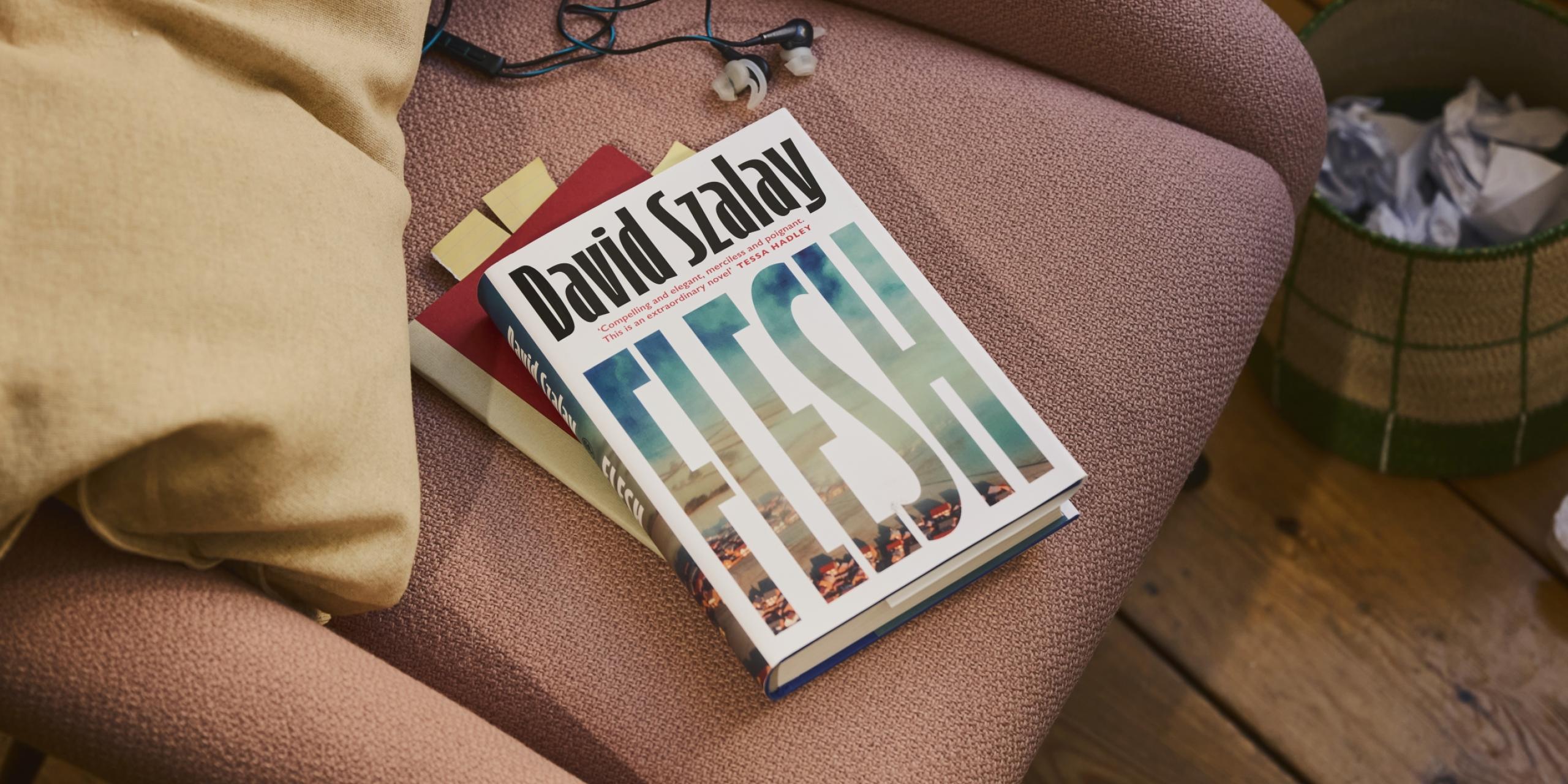
Flesh is the winner of the Booker Prize 2025. A spare but propulsive novel, Flesh follows a man from adolescence to old age as he is unravelled by a series of events beyond his grasp
Whether you’re new to Flesh or have read it and would like to explore it more deeply, here is our comprehensive guide, featuring insights from critics, our judges and the book’s author, as well as discussion points and suggestions for further reading.
Fifteen-year-old István lives with his mother in a quiet apartment complex in Hungary. New to the town and shy, he is unfamiliar with the social rituals at school and soon becomes isolated. His neighbour – a married woman close to his mother’s age – is his only companion. Their encounters shift into a clandestine relationship that István barely understands, and his life soon spirals out of control.
As the years pass, he is carried gradually upwards on the 21st century’s tides of money and power, moving from the army to the company of London’s super-rich, with his own competing impulses for love, intimacy, status and wealth winning him unimaginable riches, until they threaten to undo him completely.
Flesh asks profound questions about what drives a life: what makes it worth living, and what breaks it. It was shortlisted for the Booker Prize 2025.
István
We first meet István as a 15-year-old boy. He lives with his mother in a small flat on a housing estate. We then track István throughout his life, through some extreme highs and lows, from Hungary to England and back. The book ends when he is an old man. Passive, desultory and indifferent, we somehow still get to know and care about him.
István’s mother
We know little about István’s mother, other than she lives and works in Hungary. She’s a subtle but important presence in István’s life.
The neighbour
A bored and lonely woman in her 40s, the ‘lady in the flat opposite’ preys upon the teenage István, rejecting him when he declares his love for her.
Karl Nyman
A wealthy businessman who employs István as his driver. He’s married to Helen, and they own expensive homes in London and the Hertfordshire countryside.
Helen Nyman
Helen and István have an affair and later marry. Helen is well-connected but has no independent wealth and relies on her husband’s money.
Thomas
Helen and Karl’s son. We encounter Thomas as a teenager and young adult, struggling to understand his mother’s choices. Thomas and István have a difficult relationship.
Jacob
István and Helen’s young son, born after István and Helen marry.
David Szalay was born in Canada, grew up in London and now lives in Vienna. He is the author of six works of fiction that have been translated into over 20 languages, as well as several BBC radio dramas.
Szalay’s debut novel, London and the South-East, won Betty Trask and Geoffrey Faber Memorial prizes. All That Man Is was awarded the Gordon Burn Prize and Plimpton Prize for Fiction, and was shortlisted for the Booker Prize in 2016.
Szalay was selected for the 2013 edition of Granta’s Best of Young British Novelists, and in 2010 appeared in the Telegraph’s list of the top 20 British writers under 40.
David Szalay
© Jonas Matyassy
‘Flesh is a disquisition on the art of being alive, and all the affliction that comes along with it. The emotional detachment of the main character, István, is sustained by the tremendous movement of the plot. The pace of this novel speaks to one of the greater themes; the detachment of our bodies from our decisions.’
Luke Brown, Financial Times
‘Such novels are now rare, as male writers seem increasingly frightened to describe and reckon with the potentially destructive aspects of their character. In this context Flesh feels especially refreshing, illuminating and true. More than that, it is a moving work of art with a plot that compels and surprises and devastates.’
Johanna Thomas-Corr, Sunday Times
‘Once or twice a year, I discover a novelist who is so exciting to read I want to share their work with everyone I know – the kind of writer who makes me want to write fiction… It’s rare to find prose this spare that doesn’t feel affected, but Szalay handles surface and depth with skill, as only great novelists can. Flesh is a revelatory novel that will make you look afresh at every eastern European doorman or bouncer you encounter.’
Flesh by David Szalay
© Yuki Sugiura for Booker Prize Foundation
‘It can be hard to identify the starting point of a novel. Flesh sort of evolved into existence. I knew I wanted to write a book with a Hungarian end and an English end, since I was living very much between the two countries at the time and felt that that needed to be reflected in my choice of subject. And given that, writing about a Hungarian immigrant at the time when Hungary joined the EU seemed like an obvious way to go. So it would be, to some extent, a novel about contemporary Europe, and about the cultural and economic divides that characterise it. I also wanted to write about life as a physical experience, about what it’s like to be a living body in the world – whatever divides us, we all share that. Those were the ingredients that I started with.’
The language in Flesh has widely been described as ‘spare’ and the main character, István, as monosyllabic and emotionally detached. What did you think of David Szalay’s pared-back characters and writing style? Was István a character you felt you could connect with?
A middle-aged woman who lives across the hall grooms 15-year-old István at the beginning of the novel. What did you make of the affair between teenaged István and his neighbour? What impact do you think it has on the rest of his life, especially his relationships with women?
In the first 100 pages of the book, young István quietly experiences a series of traumas: sexual abuse, imprisonment, war. The first is underplayed and the second and third are recounted in little or no detail. In an interview with the Guardian, David Szalay said he enjoys books ‘where what happens in the gaps is as important as the chapters themselves. The way that the reader has to do their own imaginative work’. What did you think of the ‘gaps’ in Flesh that Szalay leaves the reader to fill in?
Szalay has said he ‘wanted to write about life as a physical experience, about what it’s like to be a living body in the world’, while the Booker Prize 2025 judges commented that Flesh is ‘a novel about a man who is remarkably detached from his body and desires’. What did you think of both the physicality and the detachment on display in Flesh?
István’s encounter with a former classmate who has become a doctor seems to act as a kind of catalyst. István himself isn’t forthcoming, but how do you think he feels at this point and why does it spur a change?
The action relocates to London, where István works as a doorman before becoming a driver for a rich family. His fortunes change dramatically when he starts an affair with his employer’s wife, Helen. What did you make of István and Helen’s relationship and how it develops? How significant is the power and wealth gap between them?
The descriptions of sex in Flesh are often both explicit and banal. In an interview with the Telegraph, David Szalay said: ‘I always want to depict sex as honestly as I can’. What did you think of the sex scenes in the book?
In the same interview, Szalay said ‘I’m just reporting what I see in the world, which tends to include men who lack a clear sense of what they should be doing and why.’ What do you think Szalay’s male characters reveal about modern masculinity?
After marrying Helen, István becomes stepfather to Thomas and, later, father to Jacob. What did you make of his relationships with these two boys? Did they reveal anything new about István’s character? Do you think István was a good dad?
Flesh is written in the third person throughout, mostly but not exclusively from István’s point of view. There are a few instances when the action is described from Helen or Thomas’s perspectives. How did you find those shifts of viewpoint? Were they illuminating, confusing, or something else?
We know little about István’s mother – she is emotionally detached, like her son – but she quietly directs him in important ways: help the neighbour, get a job, see a therapist. She visits István in England at one point, highlighting the vulnerability of his status there: ‘You need to do something,’ she says. ‘I know,’ he says. What are your reflections on the relationship between István and his mother? Thinking about the final pages of the novel, did you enjoy how the plot circled towards its ending?
by David Szalay
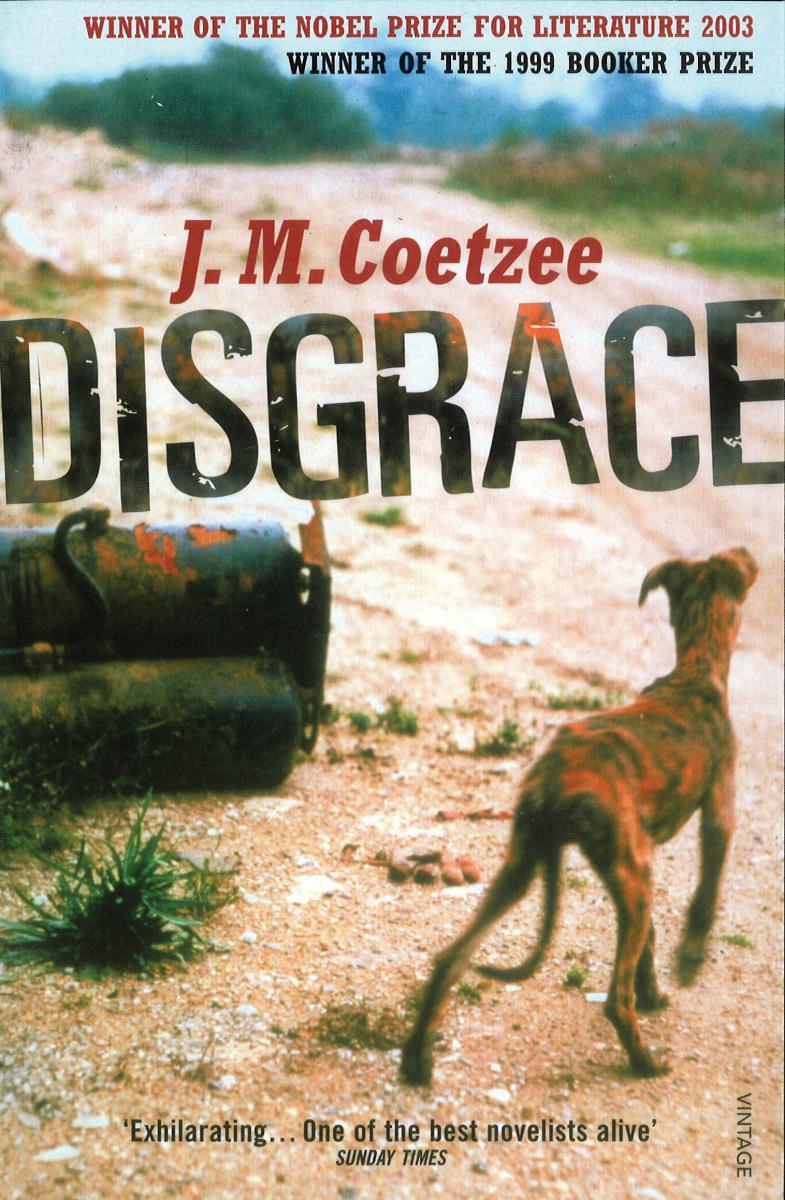
by J.M. Coetzee (prize winner)
by Benjamin Wood
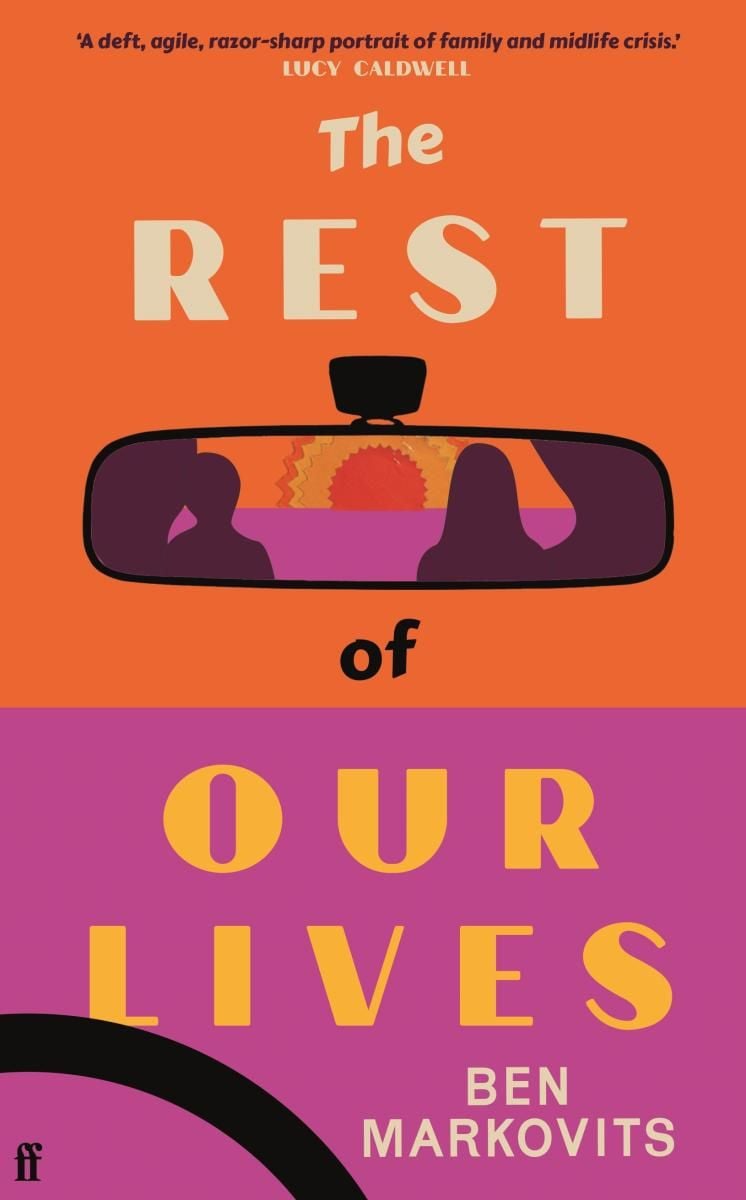
by Ben Markovits
by Martin Amis
by Hanya Yanagihara
Winner of The Booker Prize 2025