Reading guide: At Night All Blood is Black by David Diop, translated by Anna Moschovakis
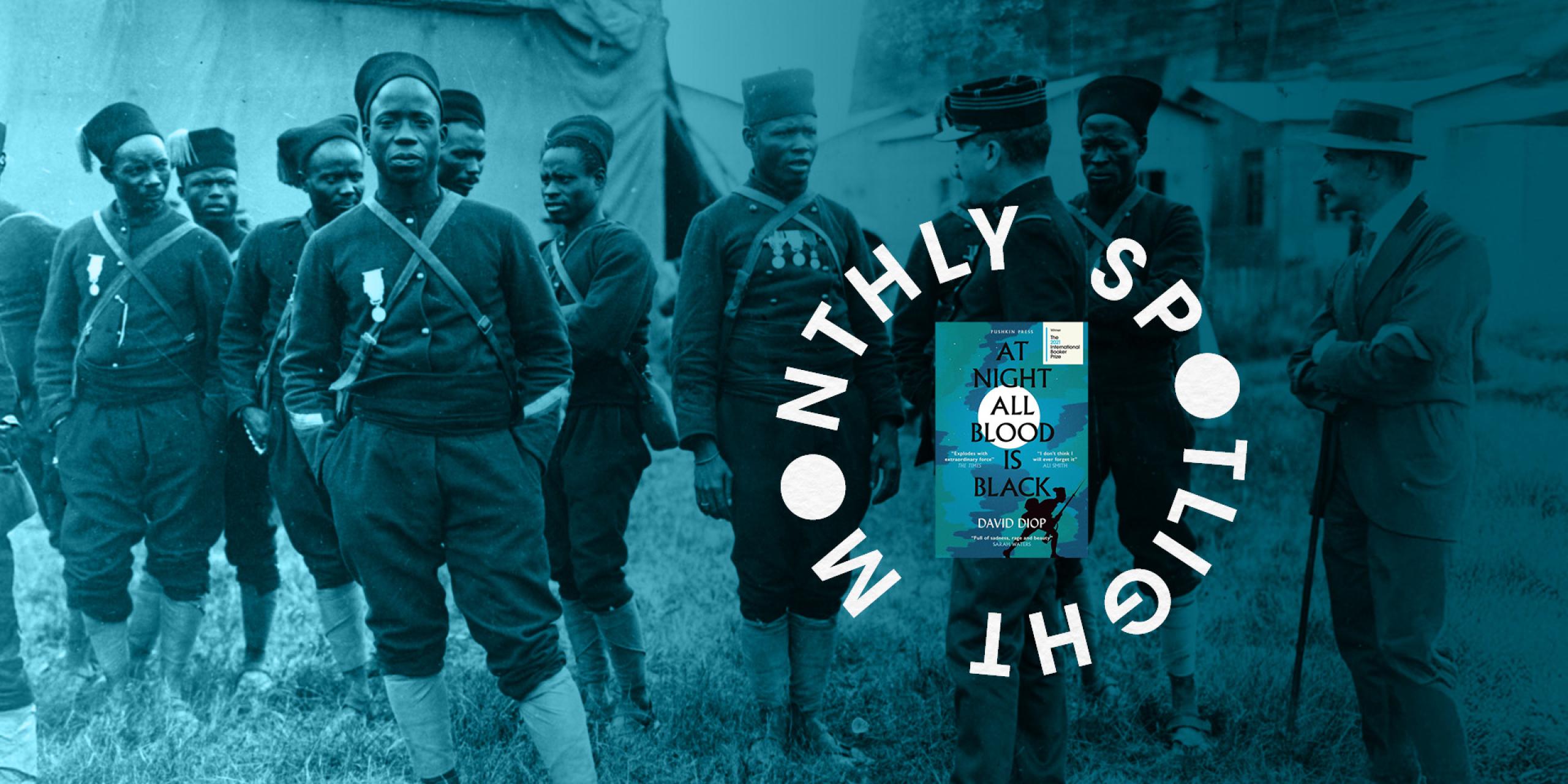
Reading guide: At Night All Blood is Black by David Diop, translated by Anna Moschovakis
- Written by
- Emily Facoory
- Published
A visceral, haunting novel that highlights the terror and gore of the First World War
Whether you’re new to At Night All Blood is Black or have read it and would like to explore it more deeply, here is our comprehensive guide, featuring insights from critics, our judges and the book’s author and translator, as well as discussion points and suggestions for further reading.
Synopsis
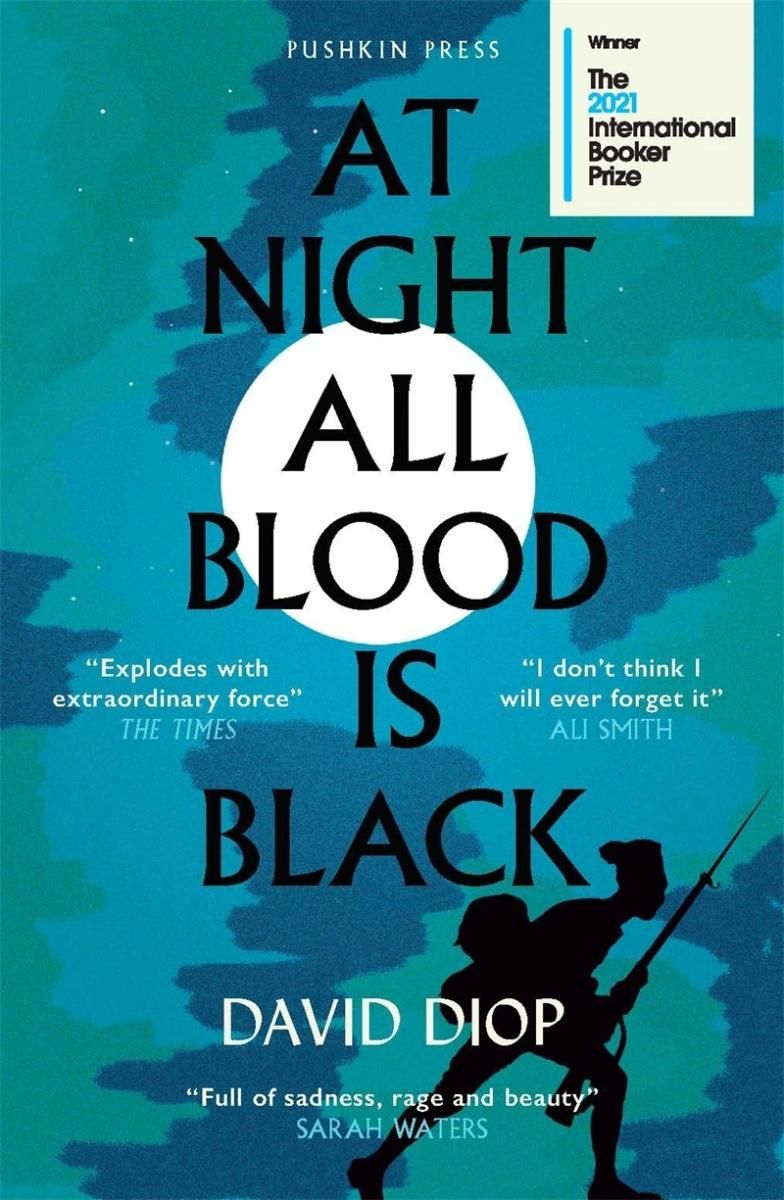
Buy the book
Alfa and Mademba are two of many Senegalese soldiers fighting in the First World War, dutifully climbing out of their trenches to attack France’s German enemies whenever the whistle blows. Then Mademba is mortally wounded, and dies in a shell hole with his belly torn open. Without his more-than-brother, Alfa is alone and lost amidst the savagery of the conflict. He devotes himself to the war, to violence and death, but soon begins to frighten even his own comrades in arms. How far will Alfa go to make amends to his dead friend?
At Night All Blood is Black won the International Booker Prize in 2021.
The main characters
Alfa Ndiaye
Alfa Ndiaye is a Senegalese soldier who is fighting for France in the First World War. After the death of his ‘more-than-brother’ Mademba, Alfa seeks out revenge by murdering German soldiers and bringing back their severed hands. He continues to grow more violent and starts to sink into madness.
Mademba Diop
Mademba Diop is the much-loved, childhood friend of Alfa and serves alongside him in the war. He is disembowelled in battle by a German soldier after he tries to prove his bravery. Mademba begs Alfa to kill him so he doesn’t have to suffer a long-drawn-out and painful death, but Alfa is unable to do it.
About the author
David Diop was born in Paris and grew up in Senegal. He now lives in France, where he is a professor of 18th-century literature at the University of Pau. At Night All Blood is Black is Diop’s second novel. It was shortlisted for 10 major prizes in France and won the Prix Goncourt des Lycéens as well as the Swiss Prix Ahmadou Korouma. It has been translated into 13 languages and won the Strega European Prize in Italy.

David Diop
© Joel Saget/AFP via Getty Images
About the translator
Anna Moschovakis is a poet, author and translator. Her works include the award-winning poetry collection You and Three Others Are Approaching a Lake. She has also written a novel, Eleanor, or the Rejection of the Progress of Love. Her translations from French include David Diop’s At Night All Blood is Black, Albert Cossery’s The Jokers, Annie Ernaux’s The Possession, and Robert Bresson’s Bresson on Bresson.

Anna Moschovakis.
© Heather Phelps-Lipton
What the judges said
‘This story of warfare and love and madness has a terrifying power. The protagonist is accused of sorcery, and there is something uncanny about the way the narrative works on the reader. We judges agreed that its incantatory prose and dark, brilliant vision had jangled our emotions and blown our minds. That it had cast a spell on us.’
What the critics said
John Self, Guardian
‘That is why it has appealed to so many prize juries: it rewards rereading, which recasts the violent opening chapters in a new, even darker light. If the measure of a book’s success is to be quite unlike anything else, then At Night All Blood is Black deserves the bouquets and trumpets after all.’
Samuel Fury Childs Daly, Los Angeles Review of Books
‘A short, visceral book, it tells the story of an African soldier’s imbrication in World War I. Like many novels about the Western Front, it puts the horror of trench warfare front and center. The book’s incantatory gore makes it a critique of war along the lines of All Quiet on the Western Front, but in Diop’s hands something else is also going on.’
Martha Anne Toll, Words Without Borders
‘Via a forceful monologue, Diop’s novel creates a tale of revenge with biblical overtones as it looks at the relatively little-known story of Senegalese riflemen fighting in the French army in the First World War.’
Gail Collins, New African Magazine
‘The book is short, almost novella-size, but it fully captures the violence and tragedy, unifying old African myths with the disturbing insanity of war in a story that whilst uneasy to read, fills you with emotion and, for me personally, a relief – that I have so far in my life not experienced war.’
Jessi Jezewska Stevens, Foreign Policy
‘As in many of the best novels of active combat, such as Joseph Heller’s Catch-22 or Czech writer Jaroslav Hasek’s The Good Soldier Svejk, Diop accentuates tragedy with bitter irony. Filtered through the perspective of an African soldier around 1914, this gallows humor lampoons not only the absurdities of war, but also racism. At Night, however, is ultimately more ghost story than hysterical picaresque. It is at once a deeply violent and gentle book. Blending modernist monologue with myth, Diop explores the disturbing outer limits of what we do to others, and of what war can do to us.’
What the author said
‘In writing At Night All Blood is Black I wanted to allow the reader to inhabit the mind of a young African man, to give them unfiltered access to his experience of war. The choice of a stream-of-consciousness narrative allowed me to amplify the internal voice of this young man who, like all his African brothers-in-arms during the French colonial period, had no way of making himself heard.’
‘Alfa and Mademba are characters who remain very close to me. Sometimes I find myself in this situation, where I have already imagined my characters before beginning to write them. They are like image-sources, both visual and sensorial, that precede their own transcription. For example, I had very precise images in mind of Alfa and Mademba as children, hunting game in the brush, which inspired a scene in At Night All Blood is Black. Because of this, rereading my text revives impressions and images that existed prior to their elaboration. As a consequence, my two characters live in my memory with the same ‘reality’ as do people I haven’t seen for a long time, or those who have passed on.’
What the translator said
‘First, I loved working with the textures and rhythms of David Diop’s language. But one of the most enjoyable things about translating this book was also one of the most challenging, and that was trying to get my head around the intricate status of language in the narration. The novel is written in first person, in French, but the narrator, Alfa, is a Wolof speaker who does not know French. The text we are reading is the text of his thinking, as he is forced by circumstances to go through a revolution in his relationship to self and world. It’s a kind of thinking that doesn’t necessarily happen in language at all, or not exclusively, so the narration already lives somewhere between language and understanding – which might also be the space of translation. There is a gorgeously stark passage in the book that explicitly addresses the failures of translation, which I found strangely comforting, and which allowed me to enjoy the work with less anxiety.’
‘I have not stopped thinking about Alfa and Mademba; they still sometimes appear in my dreams… As the years have passed, these characters – and the whole novel, really – have become internalised points of reference, like locations on the map of my consciousness where important questions or puzzles can be thought.’
Questions and discussion points
Written in a series of vignettes and told out of chronological order, the book often intersperses violent scenes of war with flashbacks of Alfa’s life back in Senegal, including descriptions of his first love. How did you find the contrast between the two extremely different realities?
After Mademba is disembowelled by a German soldier, he repeatedly asks Alfa to kill him and quickly end his suffering. But Alfa is unable to commit the mercy killing, and instead Mademba dies slowly, in agony. What do you think of Alfa’s decision, and why do you think he made it even though Mademba was begging him to put him out of his misery?
Every time Alfa kills a German soldier, he brings back a severed hand. Why do you think he chose to avenge Mademba’s death in this way, and why do you think he chose hands in particular?
Diop includes several sexual metaphors to describe the trenches, with one example comparing a trench to a woman’s body. ‘Seen from a distance, our trench looked to me like the slightly parted lips of an immense woman’s sex’ (p.9). Why do you think Diop used such explicit descriptions? What effect do they have?
When Alfa brings back the first few severed hands of German soldiers, the French soldiers praise him and call him brave, describing him as a hero. But they change their minds once Alfa keeps bringing back more hands. Why do you think the French soldiers changed their minds, after initially accepting the ritual?
Alfa reflects on the temporary madness he believes is needed to survive war, saying, ‘Temporary madness makes it possible to forget the truth about bullets. Temporary madness, in war, is bravery’s sister.’ What do you think he means by ‘temporary madness is bravery’s sister?’
In an interview with the Booker Prizes website, Diop said that he didn’t want Alfa to be a French speaker and that he had translated Alfa’s thoughts into French. Diop wanted the reader to understand that Alfa was thinking in Wolof, a language spoken in Senegal: ‘Like every language, Wolof has its own rhythm, its own unique patterns of speech, which I replicated in French through the repetition of certain phrases and constructions. The great challenge for my translator Anna Moschovakis, and her great success, was to reproduce this same rhythm in the English language, so that the reader would understand that the text is haunted by an African voice.’ What did you think of the layering of languages in the novel? Did it feel like an African voice haunted the text?
The phrase ‘God’s truth’ occurs over 100 times in the book. Why do you think Diop decided to use the phrase so frequently, and what impact does the repetition have?
According to Samuel Fury Childs Daly from the Los Angeles Review of Books, ‘One of the blurbs on the back of the book comes from the French novelist Mathias Énard, who writes that Diop ‘erects a beautiful monument to the Senegalese riflemen, and seeks to restore their African dimension; to listen to them, to understand them.’ Do you think Diop has achieved this in his novel?
In his most recent interview for the Booker Prizes website, Diop says, ‘the book’s ending is open; the narrative system is, intentionally, ambiguous. We don’t really know who is speaking. Is it Mademba, is it Alfa? This ambiguity took me by surprise when I was writing, and I decided to preserve it at all costs.’ What did you think of the ambiguous ending?
Resources and further reading
New York Times: He Is Senegalese and French, With Nothing to Reconcile
Los Angeles Review of Books: A Moral No-Man’s Land: On David Diop’s “At Night All Blood Is Black”
Times Literary Supplement: Staged savagery
Fondation Jan Michalski: Bibliotopia 2024 | Interview with David Diop
If you enjoyed this book, why not try
The Shadow King
by Maaza Mengiste
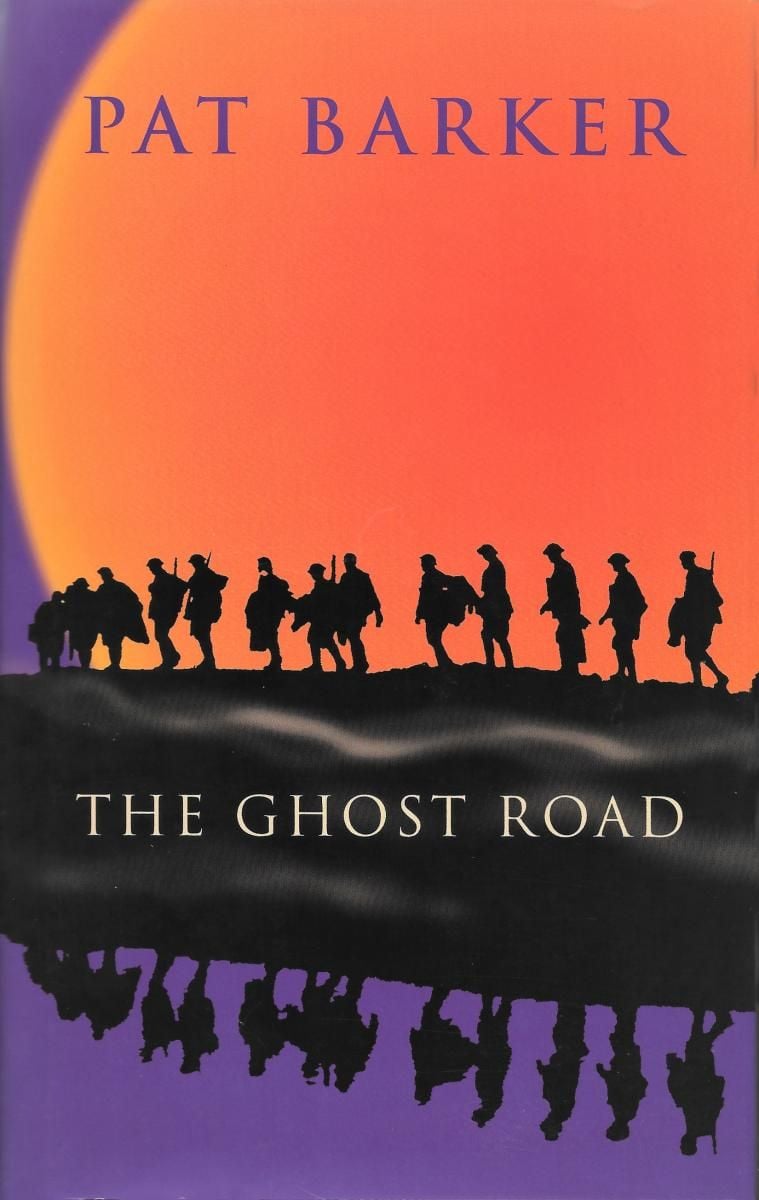
The Ghost Road
by Pat Barker (prize winner)
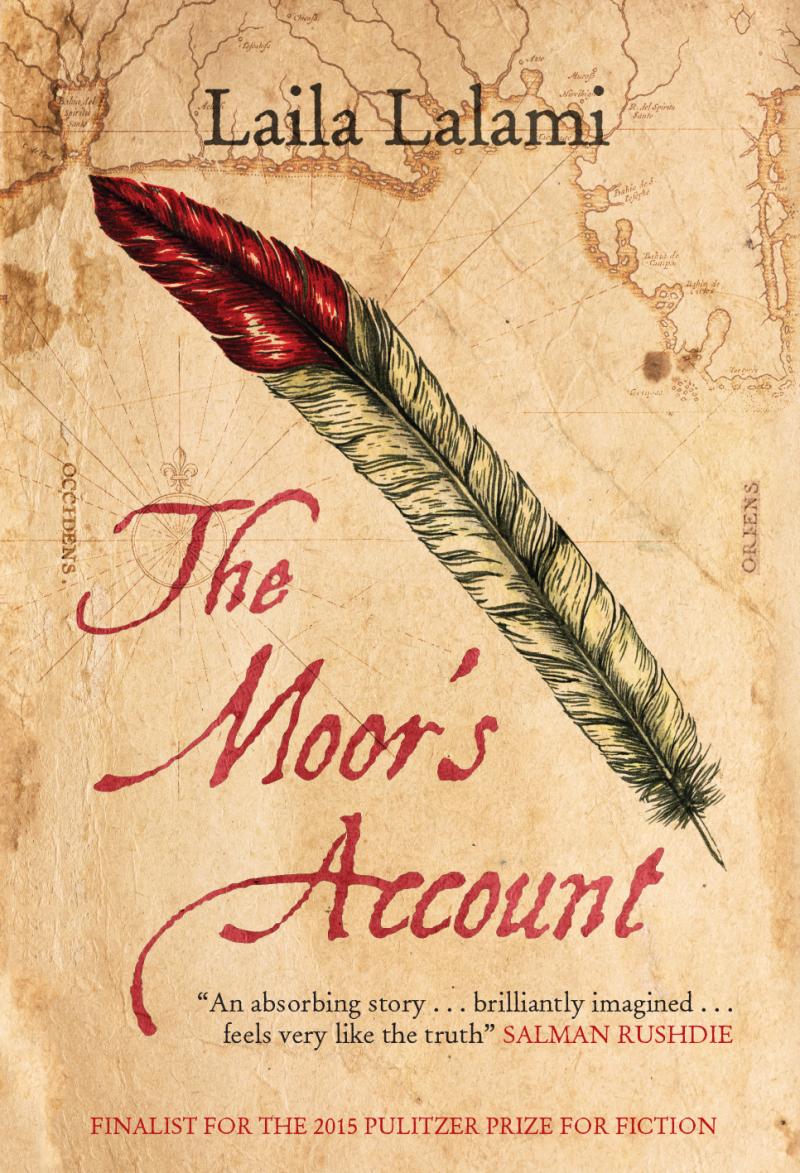
The Moor's Account
by Laila Lalami
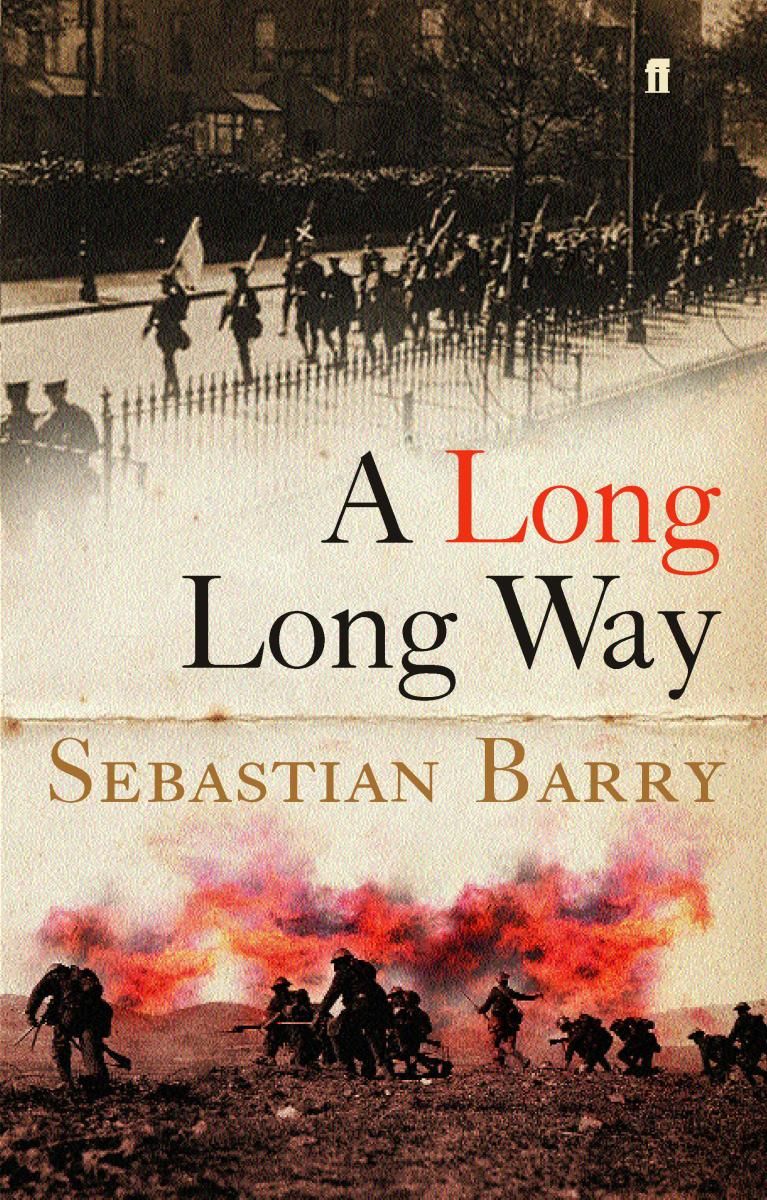
A Long Long Way
by Sebastian Barry

Goshawk Squadron
by Derek Robinson


At Night All Blood is Black
Winner of The International Booker Prize 2021
- By
- David Diop
- Translated by
- Anna Moschovakis
- Published by
- Pushkin Press
Features


- Book recommendations
Explore the 10 winning books from a decade of the International Booker Prize


- Book recommendations
The best International Booker-nominated translated fiction, as chosen by celebrities
- Book recommendations